Commercial Flat Roofing Systems for Texas & Oklahoma
TPO, PVC & EPDM membrane systems with 15-25 year lifespan. Expert installation for commercial properties.
Understanding Commercial Flat Roofing
The term "flat roofing" is actually a bit of a misnomer. True flat roofs don't exist in professional construction because they'd create catastrophic drainage problems. What we call flat roofing refers to low-slope systems, typically with pitches between 1/4:12 and 3:12 (meaning 1/4 to 3 inches of rise per 12 inches of horizontal run).
These low-slope systems dominate commercial construction for good reasons: they're cost-effective to install, provide usable rooftop space for HVAC equipment, offer straightforward maintenance access, and work well with the structural systems common in commercial buildings.
For property owners in Texas and Oklahoma, flat roofing represents about 80% of the commercial roofing market. Understanding your options and making informed choices directly impacts your operating costs, capital planning, and business continuity for the next 15-25 years.
The Three Main Commercial Flat Roofing Systems
Each system offers distinct advantages depending on your building, budget, and long-term objectives.
TPO
Thermoplastic Polyolefin
The most popular commercial flat roofing membrane in North America. Combines good performance with competitive pricing. Single-ply membrane with heat-welded seams creating a continuous waterproof barrier.
Lifespan: 15-20 years
Best for: Office, retail, light industrial
Cost: $5.50-$7.50/sq ft
PVC
Polyvinyl Chloride
The premium tier of single-ply membranes. Enhanced chemical resistance, longer proven track record (since 1960s), and superior performance in challenging environments with grease or chemical exposure.
Lifespan: 20-25 years
Best for: Restaurants, manufacturing
Cost: $6.50-$9.00/sq ft
EPDM
Ethylene Propylene Diene Monomer
Often called "rubber roofing," EPDM has been reliable since the 1960s. Available in large sheets (up to 50 feet wide), reducing seams. Can be fully adhered, mechanically attached, or ballasted.
Lifespan: 15-25 years
Best for: Warehouses, industrial
Cost: $4.50-$6.50/sq ft
System Comparison at a Glance
| System | Lifespan | Cost/Sq Ft | Best For | Energy Rating |
|---|---|---|---|---|
| TPO | 15-20 years | $5.50-$7.50 | Office, retail, light industrial | High |
| PVC | 20-25 years | $6.50-$9.00 | Restaurants, chemical exposure | Very High |
| EPDM | 15-25 years | $4.50-$6.50 | Warehouses, budget projects | Medium |
* For a 20,000 sq ft building: EPDM $90K-$130K | TPO $110K-$150K | PVC $130K-$180K
Choosing the Right System for Your Property
There's no universally "best" flat roofing system. The right choice depends on your specific situation.
TPO
Best Value
Cost: $5.50-$7.50/sq ft
Lifespan: 15-20 years
Choose TPO when:
PVC
Premium Durability
Cost: $6.50-$9.00/sq ft
Lifespan: 20-25 years
Choose PVC when:
EPDM
Budget-Friendly
Cost: $4.50-$6.50/sq ft
Lifespan: 15-25 years
Choose EPDM when:
Not sure which system is right for your building?
Texas & Oklahoma Performance Considerations
Regional climate conditions significantly impact roofing system selection and performance.
Hail Exposure
North Texas and central Oklahoma rank among the highest hail exposure areas in the United States. Standard 60-mil TPO or PVC typically survives 1-inch hail without significant damage. For 1.5-inch hail, you're looking at possible punctures.
After major hail events, we've seen entire commercial districts need roof replacements simultaneously. Planning for hail isn't paranoia—it's prudent business management.
Temperature Extremes
Texas and Oklahoma commercial roofs experience some of the most extreme thermal cycling in the country. Summer surface temperatures regularly exceed 160°F on dark roofs, while winter can bring temperatures below 0°F.
This thermal stress accelerates aging in all membrane systems. Proper installation accounts for thermal movement, ensuring seams and attachments can accommodate expansion and contraction.
UV Exposure
We get serious sun in Texas and Oklahoma. The UV degradation that might take 25 years in Seattle happens in 15-18 years here. White and light-colored membranes naturally resist UV better than black EPDM.
Regular maintenance, including keeping membranes clean and addressing surface damage promptly, extends lifespan by reducing UV penetration.
Wind Uplift
Oklahoma's tornado alley reputation isn't just folklore. Wind uplift forces during severe storms can be tremendous. Proper attachment patterns aren't optional—they're life safety requirements.
We design every system to meet or exceed local wind uplift requirements, typically achieving ratings of 90-120 mph for most commercial applications.
The Ponding Water Challenge
Let's address commercial flat roofing's biggest long-term enemy: standing water.
Even with properly designed drainage, most flat roofs eventually develop low spots where water ponds after rain. HVAC equipment settles, buildings shift slightly, and membrane attachment creates subtle high points. The result: areas where water sits for 48+ hours after rain events.
Ponding water accelerates membrane degradation through several mechanisms. The constant water exposure breaks down protective coatings, UV reflection from water surfaces increases localized heating, and the standing water's weight can create further depression—a self-reinforcing problem.
Different membrane systems handle ponding differently. PVC generally tolerates ponding better than TPO or EPDM due to its chemical composition. Thicker membranes (80-mil vs 60-mil) resist ponding damage better than thinner options.
The best approach combines proper initial drainage design with regular inspections to catch developing low spots early.
Energy Performance & Cool Roof Benefits
In Texas and Oklahoma, your roof directly impacts energy bills for 6-8 months per year.
Solar Reflectance
White TPO/PVC membranes when new
Cooling Cost Reduction
Compared to dark roof systems
10-Year Reflectivity
After normal aging and dirt accumulation
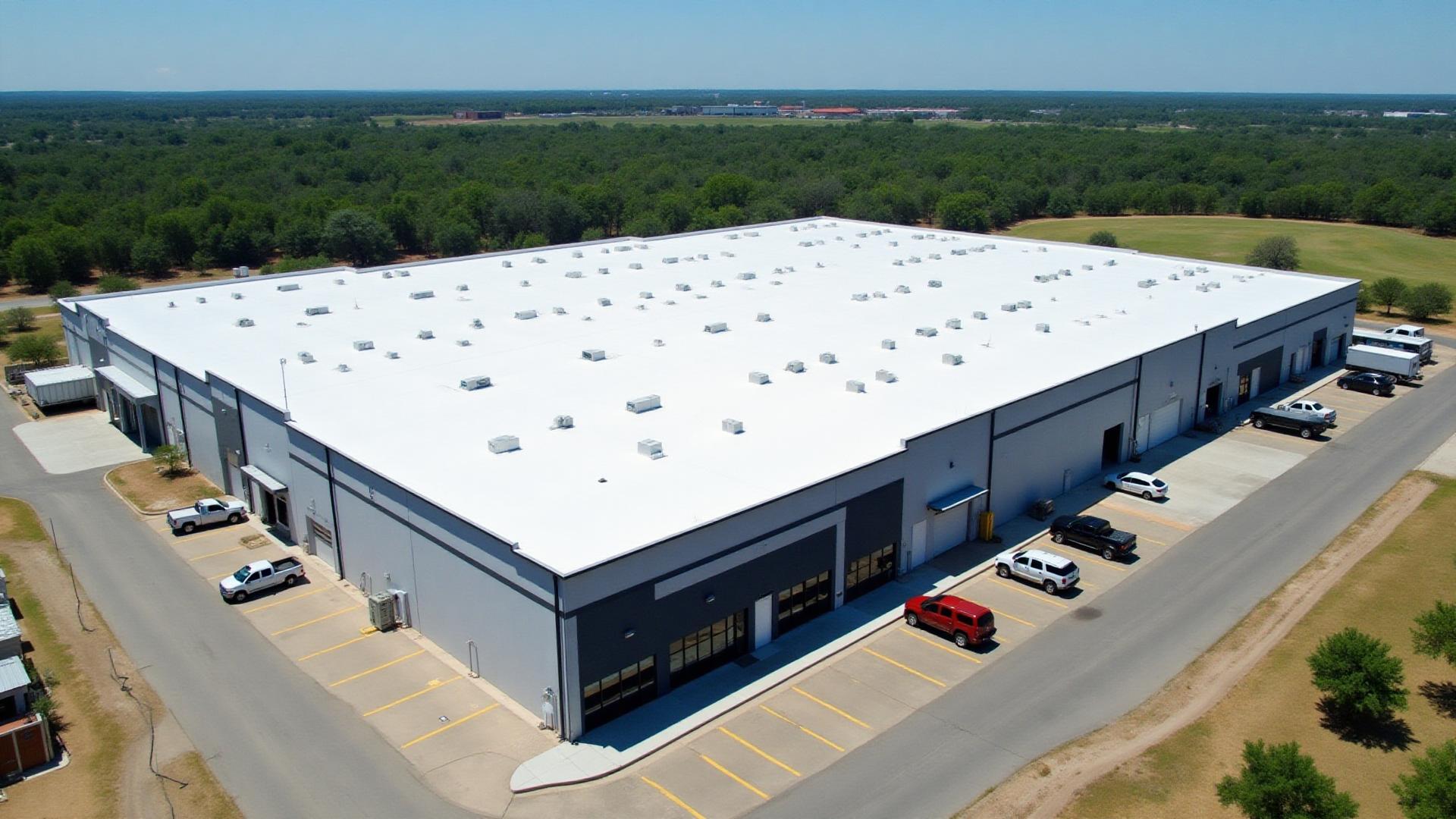
Beyond energy savings: Many Texas municipalities now require cool roof specifications for commercial buildings, and some utility companies offer rebates for high-reflectivity roofing systems. The catch—reflectivity degrades over time as membranes accumulate dirt and surface oxidation. Regular cleaning and maintenance helps preserve energy performance.
Understanding Lifecycle Costs
Initial cost tells only part of the story.
Over a 25-year ownership period, your total roofing investment includes:
A lower-cost EPDM system that requires replacement at year 18 may cost more over 25 years than a higher-cost PVC system lasting the full period. We help property owners model lifecycle costs based on their specific hold period and business objectives.
Installation Process & Timeline
Understanding what happens during installation helps you plan for business continuity.
Pre-Installation Phase (1-2 weeks before)
Detailed roof inspections, structural capacity verification, coordination with building occupants on access and noise, and material delivery timing. For occupied buildings, we discuss odor management, noise levels, and temporary waterproofing needs.
Tear-Off & Deck Preparation (2-4 days for 20K sq ft)
We section the work to maintain weather-tightness, never exposing more roof area than we can close before day's end. Deck inspection happens during tear-off—we identify and repair damaged sections, ensure proper fastening, and verify drainage slopes.
New System Installation (1-2 weeks)
Insulation installation (if specified) happens first, followed by membrane installation. TPO and PVC seams are heat-welded, creating watertight bonds. All penetrations are carefully flashed according to manufacturer specifications. Weather delays possible—we don't install in rain or below 40°F.
Final Inspection & Warranty (1 week)
Comprehensive quality control inspections, seam testing for proper welding, drainage verification, and documentation with photos and specifications. Manufacturer warranty processing takes 2-4 weeks after installation.
Maintenance Requirements
Proper maintenance extends roof life and catches small problems before they become expensive emergencies.
Semi-Annual
Spring and Fall Inspections
- • Drain and gutter cleaning (critical)
- • Seam integrity checking
- • Membrane surface condition
- • Flashing evaluation
- • Ponding area documentation
After Storms
Post-Weather Event Checks
- • Visual inspection for damage
- • Check for punctures
- • Look for displaced equipment
- • Document for insurance claims
- • Prevent secondary water damage
Every 5-7 Years
Professional Assessment
- • Assess remaining service life
- • Identify pre-leak repairs needed
- • Evaluate restoration coating options
- • Update on industry developments
- • Plan capital expenditures
Budget approximately $0.10-$0.15 per square foot annually for routine maintenance. For a 20,000 sq ft building, that's $2,000-$3,000 per year. This modest investment can add 3-5 years to your roof's life.
Roof Restoration vs. Replacement
Around year 12-15 of a membrane roof's life, property owners face a decision.
When Restoration Makes Sense
Roof restoration (cleaning and applying specialized coatings) can extend roof life by 5-10 years at roughly 30-40% the cost of replacement.
- Existing membrane is fundamentally sound
- Seams are intact and secure
- Substrate and insulation in good condition
- Need 5-10 more years before major capital expense
- Hold period matches extended roof life
When Replacement is Better
Full replacement makes more sense when restoration would only postpone inevitable larger expenses.
- Widespread membrane failure or deterioration
- Multiple seam failures indicate systemic problems
- Substrate or insulation needs replacement
- Energy codes require insulation upgrades
- Holding property 15+ years and want full warranty
We provide honest assessments of whether restoration or replacement makes better financial sense for your specific situation.
Warranties: What's Actually Covered
Material Warranties
15-20 Years
Covers manufacturing defects
Workmanship Warranties
2-10 Years
Covers installation errors
System Warranties
Combined
Material + installation coverage
What Warranties Don't Cover:
- • Hail damage
- • Wind damage beyond rated speeds
- • Building movement or settlement damage
- • Issues caused by lack of maintenance
- • Problems with owner-supplied components
- • Normal wear and tear
Frequently Asked Questions
Schedule Your Free Flat Roof Assessment
Get expert guidance on the best roofing system for your facility. We'll help you model lifecycle costs based on your specific hold period and business objectives.
Certified & Trusted Commercial Roofing Professionals