Standing Seam Metal Roofing for Commercial Properties in Texas & Oklahoma
40-50+ year lifespan. 10-25% cooling cost reduction. Superior hail and wind resistance.
What is Standing Seam Metal Roofing?
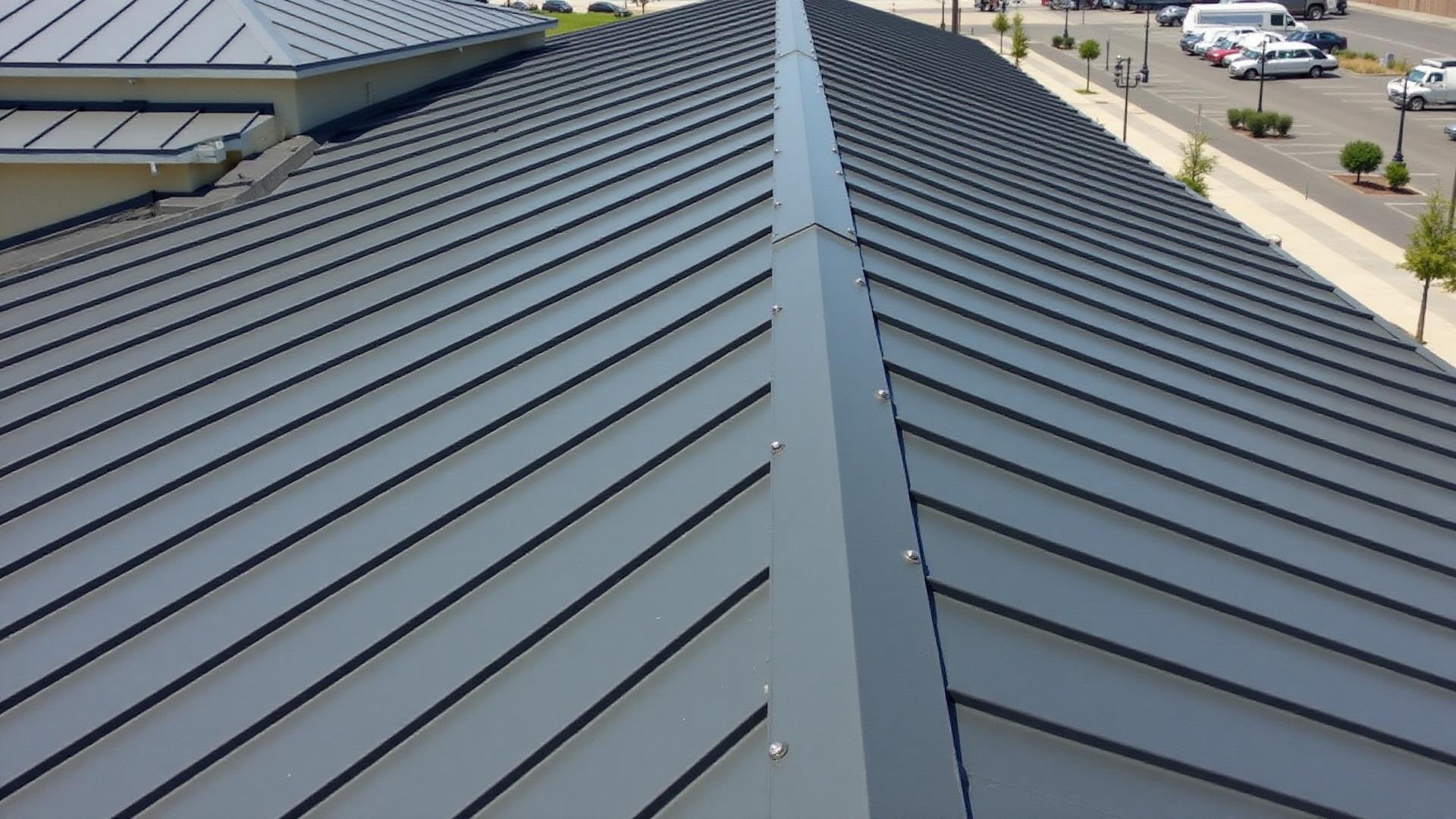
Standing seam metal roofing uses vertical metal panels with raised seams that interlock or overlap, creating a continuous, waterproof barrier. Unlike exposed fastener systems, all screws are hidden beneath the seams, which eliminates the most common failure point in metal roofing systems.
For commercial property owners in Texas and Oklahoma, standing seam represents one of the longest-lasting roofing investments available. When properly installed, these systems routinely exceed 40 years of service life, with many installations lasting 50+ years with minimal maintenance.
Why Commercial Properties Choose Standing Seam Metal
Longevity That Changes Your Budget Calculus
The average commercial TPO or EPDM roof lasts 15-25 years. Standing seam metal regularly doubles that lifespan. For property owners planning to hold assets long-term, this fundamentally changes the cost analysis. You're essentially replacing your roof half as often, which means:
- Fewer business disruptions over the building's lifetime
- Reduced long-term capital expenditure planning
- Elimination of mid-cycle roof recovers or tear-offs
- Predictable maintenance costs (minimal compared to membrane systems)
Energy Performance in Hot Climates
Texas and Oklahoma summers are brutal on roofing systems. Standing seam metal with cool roof coatings can achieve solar reflectance values of 0.65 or higher, meaning they reflect 65% of the sun's energy rather than absorbing it into your building.
The practical impact: buildings with metal roofs typically see 10-25% reductions in cooling costs compared to darker membrane systems. In Dallas-Fort Worth, where summer cooling represents the majority of annual energy costs for most commercial buildings, this adds up quickly.
Metal roofs also re-emit absorbed heat faster than membrane systems once the sun goes down, reducing overnight cooling loads.
Hail and Wind Resistance
If you've owned commercial property in North Texas or Oklahoma for any length of time, you've dealt with hail damage. Standard TPO and EPDM roofs typically suffer significant damage from 1-inch hail. Standing seam metal, especially when properly designed and installed, can withstand golf ball-sized (1.75-inch) hail without functional damage.
For wind resistance, standing seam systems with mechanically seamed or snap-lock profiles routinely achieve ratings exceeding 150 mph when properly attached. This matters in both our spring storm season and during the occasional tropical system that makes it inland.
No Ponding Water Issues
Flat roofing's biggest enemy is standing water. Even with proper drainage design, TPO and EPDM systems gradually develop low spots where water ponds after rain. This accelerates membrane degradation and creates maintenance headaches.
Standing seam can be installed on slopes as low as 1/4:12 (1/4 inch of rise per foot), and the metal panels naturally shed water without the ponding concerns that plague membrane systems. For buildings with challenging drainage situations, this represents a significant advantage.
Common Applications for Commercial Standing Seam
Manufacturing and Industrial Facilities
The combination of durability, minimal maintenance, and ability to span long distances without intermediate supports makes standing seam ideal for manufacturing buildings, warehouses, and distribution centers.
Retail and Big Box Stores
For retail properties where roof replacement means business disruption and lost revenue, the extended lifespan of standing seam reduces these events by half compared to membrane systems.
Office Buildings and Mixed-Use Properties
Class A and B office properties benefit from the clean aesthetics, energy performance, and long service life that supports investment hold strategies.
Government and Municipal Buildings
Many Texas and Oklahoma municipalities prioritize standing seam for public buildings due to lifecycle cost advantages and reduced maintenance demands on stretched facilities budgets.
Schools and Educational Facilities
School districts increasingly specify standing seam for new construction and major renovations, recognizing that today's roof choice will serve two or three generations of students.
Warehouses and Distribution Centers
Large-span buildings benefit from metal's lightweight-to-strength ratio and ability to handle thermal movement across expansive roof areas.

Standing Seam vs. Other Commercial Roofing Systems
When Standing Seam Makes Sense
Choose standing seam metal when:
- Your hold period exceeds 15-20 years
- Energy costs represent a significant operating expense
- You're in a high-hail exposure area (most of North Texas and Oklahoma)
- You want to minimize future roof-related business disruptions
- The building can support the additional weight (2.5-3.5 lbs per square foot installed)
- Budget allows for higher upfront investment for long-term savings
When Other Systems May Be Better
Consider TPO, PVC, or Duro-Last when:
- Your investment timeline is under 15 years
- The existing structure has weight limitations
- Budget constraints make the higher initial cost prohibitive
- The building has significant rooftop equipment requiring frequent access
- You're doing a recover over an existing membrane system
There's no universally "best" commercial roofing system. The right choice depends on your specific building, budget, and business objectives.
Cost and ROI Considerations
Standing seam metal typically costs $8-12 per square foot installed for commercial applications in our markets, compared to $5-8 for TPO or PVC systems. That's roughly 40-60% more upfront.
But here's where the numbers get interesting:
Over a 40-year ownership period, you'll replace a membrane roof at least once, possibly twice. Factor in the cost of business disruption, temporary relocations, and the compound effect of two or three major capital expenses, and the total cost of ownership often favors metal.
Add energy savings (typically 10-25% of cooling costs), reduced maintenance expenses, and the elimination of emergency repairs from hail damage, and most properties see positive ROI within 15-18 years of ownership.
For properties you plan to hold long-term, standing seam often represents the lowest lifecycle cost option, not the most expensive.
Years Lifespan
Double the life of membrane systems
Cooling Savings
With cool roof coatings
Years to ROI
Typical payback period
Texas and Oklahoma Installation Considerations
Wind Uplift and Attachment
Oklahoma wind codes are among the strictest in the nation, and for good reason. Our installers design clip spacing and attachment patterns to meet or exceed local wind uplift requirements, typically achieving ratings of 150+ mph for most commercial applications.
Thermal Movement
Texas summer temperatures can reach 150°F+ on metal roof surfaces. Standing seam systems are specifically designed to accommodate thermal expansion and contraction through clips that allow the panels to move while maintaining weather-tightness. Proper installation accounts for this movement to prevent oil-canning and fastener failure.
Slope Requirements
While standing seam can be installed on slopes as low as 1/4:12, we typically recommend minimum slopes of 1/2:12 to 1:12 for optimal water shedding and long-term performance, especially in areas with heavy rain events.
TriVAN's Standing Seam Installation Process
We approach every standing seam project with the understanding that installation quality determines long-term performance more than any other factor.
Pre-Installation Assessment
Structural load analysis, drainage evaluation, and existing condition documentation. We verify the building can support metal roofing weight and identify any structural reinforcement needs.
Substrate Preparation
Proper substrate is critical. We ensure the deck is clean, dry, and properly fastened, with any damaged sections repaired before metal installation begins.
Underlayment Installation
High-temperature synthetic underlayment provides an additional weather barrier and protects against condensation issues.
Panel Installation
We use factory-trained installers who understand proper clip placement, seam engagement, and thermal movement accommodation. Panels are installed following manufacturer specifications and local building codes.
Quality Control
Every seam is inspected, every penetration is properly flashed, and we conduct a thorough final walkthrough before considering the project complete.
Documentation
You receive complete warranty documentation, maintenance guidelines, and as-built drawings showing panel layout and attachment details.
Maintenance Requirements
One of standing seam's biggest advantages is the minimal maintenance required
Visual inspection for debris accumulation, loose fasteners at penetrations, and proper drainage function.
Professional inspection to check sealants at penetrations, evaluate coating condition (if applicable), and verify no loose or damaged panels.
Possible recoating with cool roof coatings to maintain energy performance and extend service life.
Compare this to membrane systems requiring semi-annual inspections, regular ponding water treatment, and frequent repairs to seams, penetrations, and aging membranes.
Warranty Coverage
Standing seam metal roofing typically comes with:
- 20-25 year material warranties from manufacturers
- Paint finish warranties ranging from 25-40 years depending on coating system
- Workmanship warranties from your installing contractor
TriVAN provides comprehensive workmanship warranties on all standing seam installations, backed by our Texas and Oklahoma presence and commitment to long-term customer relationships.
Frequently Asked Questions
Ready to Invest in Long-Term Roof Performance?
Get a free assessment and cost analysis for your commercial property. We'll help you determine if standing seam metal is the right investment for your building.
Certified Metal Roofing Professionals