
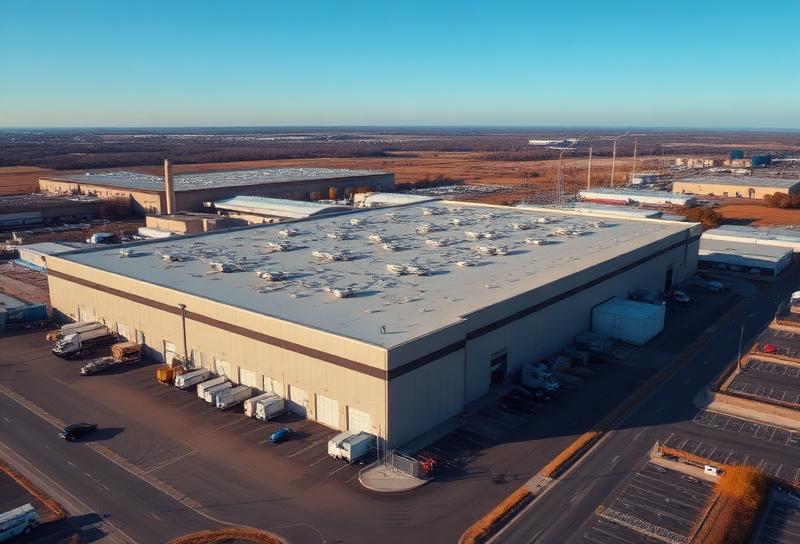
Industrial & Manufacturing Facility Roofing Solutions
Texas & Oklahoma
Engineered for 24/7 operations, chemical resistance, and minimal production disruption. Protecting your facility so production never stops.
Understanding Industrial Roofing Challenges
Manufacturing and industrial facilities face roofing challenges that differ fundamentally from office buildings, retail properties, or even warehouses. The combination of continuous operations, specialized equipment, chemical exposure, thermal management requirements, and heavy structural loads creates unique considerations for system selection and installation approach.
24/7 Production Can't Pause
Three-shift operations, automated lines, and just-in-time manufacturing mean roofing work must happen around production schedules without compromising safety or weather protection.
Heavy Equipment Loads
Overhead cranes, process equipment, dust collection systems, and dense penetration arrays create unique structural and waterproofing challenges that standard commercial approaches don't address.
Chemical Exposure
Manufacturing processes exhaust chemicals, solvents, or corrosive vapors through roof-mounted ventilation. These degrade certain membranes and attack metal components, accelerating system failure.
Thermal Management
Heat-generating processes can push roof surface temperatures above 180°F. Cold operations require precise vapor control. Both extremes demand specialized approaches.
For facility managers and operations directors in Texas and Oklahoma, these challenges compound with regional factors: extreme temperature swings affecting production environments, severe hail exposure threatening operations continuity, and the reality that any unplanned shutdown cascades through production schedules, supply chains, and customer commitments.
The Industrial Operations Reality
Industrial roofing decisions require understanding how system choices affect not just the building envelope, but production reliability, employee safety, environmental compliance, and long-term operational costs.
Production Continuity
Many manufacturing facilities operate continuously. Three-shift operations, automated production lines, and just-in-time manufacturing mean traditional "shut down the building" approaches don't work.
Roofing work must happen around production schedules, accommodate limited access windows, and maintain weather protection for valuable equipment and inventory.
Equipment & Loads
Industrial buildings routinely support loads that would overwhelm office buildings: overhead cranes, heavy process equipment on mezzanines, dust collection systems, and dense arrays of exhaust vents.
Each creates penetrations, imposes structural loads, or affects drainage patterns requiring specialized integration.
Chemical Environment
Many manufacturing processes exhaust chemicals, solvents, or corrosive vapors through roof-mounted ventilation systems.
The specific chemicals matter tremendously—understanding your facility's chemical environment informs material selection and prevents premature system failure.
System Selection for Industrial Facilities
Choose the right roofing system based on your specific operations, chemical environment, budget constraints, and facility hold period.
TPO
Typical cost: $500,000-$650,000 for 100,000 sq ft
Best for: Electronics assembly, light manufacturing, food processing without chemical exposure
- White reflective surface reduces cooling loads
- Heat-welded seams handle building vibration
- Competitive pricing fits industrial budgets
- Wide contractor availability
PVC
Typical cost: $650,000-$900,000 for 100,000 sq ft
Best for: Chemical manufacturing, petroleum facilities, pharmaceutical manufacturing
- Excellent resistance to oils, greases, solvents
- Heat-welded seams resist chemical attack
- Handles thermal cycling from processes
- Longest proven single-ply track record
EPDM
Typical cost: $450,000-$600,000 for 100,000 sq ft
Best for: Heavy manufacturing with minimal climate control, metal fabrication
- Lowest installed cost
- Proven performance since 1960s
- Good ozone and UV resistance
- Large sheets reduce seam count
Standing Seam Metal
Typical cost: $800,000-$1,200,000 for 100,000 sq ft
Best for: Steel mills, automotive plants, aerospace, 30+ year operations
- Spans 40+ feet without supports
- Superior hail and wind resistance
- Supports future solar installations
- Handles vibration through flexible clips
Specialized Industrial Applications
Different manufacturing sectors require specialized roofing approaches addressing unique operational, regulatory, and environmental requirements.
Food Processing & FDA-Regulated
FDA/USDA compliance requirements, sanitary design, white membranes for cleanable interiors, and temperature control across multiple zones from ambient to freezer areas.
Chemical Manufacturing
Chemical compatibility testing for your specific process chemicals, vapor management protecting from below, and emergency planning integrating with facility safety protocols.
Pre-Engineered Metal Buildings
Long-span rigid frames with minimal structural reserve require careful load evaluation. Thermal movement of hundreds of feet demands proper expansion detailing.
Heavy Equipment Operations
Crane operations create vibration affecting systems over time. Access restrictions and safety zones require coordination with production supervisors.
Hail Protection for Industrial Facilities
For manufacturing facilities, hail damage creates cascading problems: immediate production shutdown, extended downtime during repairs, customer delivery delays, and lost production capacity.
$7-10B
June 2023 DFW storm losses
95% from hail damage
$2.3B
May 2024 North Texas damage
Single storm system
UL 2218
Class 4 impact rating
Ask your insurer about a credit
Class 4 Systems for Critical Operations
Reinforced TPO/PVC
Class 4 rating adds 15-20% to system cost. For critical operations where production continuity matters more than minimizing capital expenditure, this premium provides insurance against shutdown from hail damage.
Standing Seam Metal
Inherently provides excellent hail resistance. While upfront cost is highest, the combination of hail protection and 40-50 year service life often represents best value for facilities planning long-term operations.
Safety & Environmental Compliance
Roofing work around active industrial operations requires enhanced safety protocols and environmental compliance beyond typical commercial construction.
Contractor Safety Training
- Facility-specific safety orientation
- Hot work permits for torch-applied systems
- Confined space training for certain areas
- Chemical awareness and emergency response
- Lock-out/tag-out procedures around equipment
Environmental Compliance
- Storm water management and containment
- Prevention of debris entering storm systems
- VOC emission controls from adhesives/coatings
- Dust control during tear-off operations
- Documentation of best management practices
Budget Considerations in Industrial Settings
Manufacturing facilities often operate on tight margins. Understanding lifecycle costs helps make informed decisions that balance upfront investment with long-term value.
The 20-Year Perspective (100,000 sq ft facility)
EPDM
$500,000 initial
Replacement at year 16-18: ~$600,000
$1,100,000 total
TPO
$575,000 initial
Performs through year 18-20
$575,000 total
PVC
$700,000 initial
Performs through year 22-25
$700,000 total
For 20-year holds, mid-range and premium systems often deliver lower total cost than budget options requiring mid-ownership replacement.
Documentation and Record-Keeping
Industrial facilities need comprehensive roofing documentation for operations, compliance, and asset management.
Installation Records
- • As-built drawings
- • Material specs
- • Warranty certificates
Maintenance History
- • Inspection reports
- • Repair records
- • Contractor contacts
Compliance Docs
- • Storm water practices
- • Air quality records
- • Safety protocols
Asset Management
- • Installation cost
- • Expected service life
- • Replacement reserves
Frequently Asked Questions
Get Your Industrial Facility Assessment
Protect your manufacturing operations with roofing engineered for 24/7 production, chemical resistance, and minimal disruption.
Explore Manufacturing Roofing by Type, System, or City
Drill into the facility type, building type, roofing system, or local market that fits your project.
By Facility Type
Food & Beverage Processing
FDA-compliant white membranes and sanitary detailing
Chemical Manufacturing
PVC systems with verified chemical compatibility
Pharmaceutical Manufacturing
Cleanroom-aware scheduling and validated documentation
Automotive Manufacturing
Long-span systems built around line uptime
Aerospace Manufacturing
Wide-bay coverage with FOD-controlled installation
Metal Fabrication
Heat, weld smoke, and crane vibration tolerant assemblies
Plastics & Rubber Manufacturing
Process exhaust resistant PVC with vapor control
Electronics Assembly
Tight humidity control and ESD-aware scheduling
Pre-Engineered & Heavy Industry
By Roofing System
By City
DFW Manufacturing Roofing
DFW industrial corridor specialists
Houston Manufacturing Roofing
Gulf Coast chemical and energy facility experts
San Antonio Manufacturing Roofing
South Texas industrial reroof and repair
Oklahoma City Manufacturing Roofing
OKC industrial corridor coverage
Tulsa Manufacturing Roofing
Tulsa energy and heavy industry roofing