
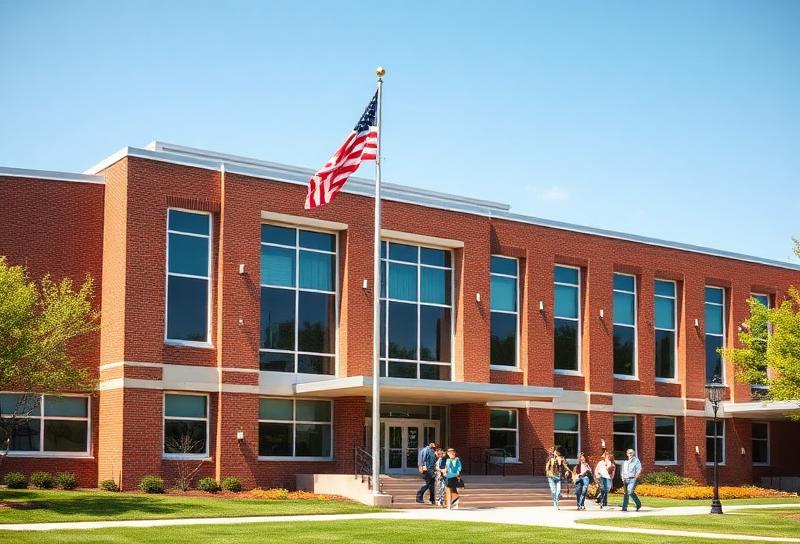
Roofing Solutions for Schools & Institutions
Protecting students, staff, and learning environments with roofing systems designed for long-term educational facility ownership in Texas and Oklahoma.
Understanding Educational Facility Roofing Needs
Schools and institutional facilities face roofing challenges that differ fundamentally from commercial office buildings, retail properties, or industrial operations. The combination of taxpayer-funded budgets, multi-decade ownership timelines, occupied buildings with children present, and community scrutiny creates unique decision-making frameworks.
For facility directors, school business managers, and administrators in Texas and Oklahoma, roofing decisions carry weight beyond immediate building performance. Every dollar spent on roofs represents dollars not available for teachers, technology, or programs. Project timing must accommodate academic calendars and student safety. System choices today affect facility budgets for the next 20-30 years.
Educational institutions need roofing partners who understand that schools aren't just buildings—they're community assets serving students, staff, and taxpayers who expect responsible stewardship of public resources.
The K-12 School District Reality
Understanding the unique constraints and requirements of public school roofing projects
Budget Constraints
Facility maintenance competes with instructional needs. Districts benefit from lifecycle cost analysis showing 20% higher initial investment for 30% longer lifespan.
Bond Funding Requirements
Competitive bidding, prevailing wages, local preferences, and timeline constraints require advance planning—start in fall for summer installation.
Multi-Year Planning
Campus-wide assessment, 5-10 year replacement schedules, and standardization across buildings create budget predictability and maintenance efficiency.
The Lifecycle Cost Perspective
Districts holding facilities for 30-50+ years benefit from analyzing total cost over the building's ownership period rather than just initial installation cost. A system costing 20% more initially but lasting 30% longer often delivers better value over decades of district ownership.
Higher Education: Different Scale, Different Challenges
Universities and colleges plan facilities 50-100 years into the future, justifying different system selection criteria
Campus Diversity
Academic buildings, dormitories, athletic facilities, research labs, and historic structures each require different roofing approaches.
Continuous Operations
Unlike K-12, universities operate year-round. Work schedules around semester breaks, research timelines, and housing move-in periods.
Sustainability Goals
Many universities pursue LEED certification and carbon neutrality. Roofing contributes to energy performance, materials credits, and solar readiness.
Safety with Students Present
Working around buildings with children present requires heightened safety protocols beyond typical commercial construction. Physical safety, air quality, and noise management all require careful planning and execution.
Background Check Requirement
Many school districts require background checks for contractors working on campus. Budget time for these processes—contractors unfamiliar with school work may not anticipate these requirements.
Essential Safety Measures
- Secure work areas preventing student access
- Fall protection preventing materials from falling to occupied areas
- Equipment placement away from playgrounds and walkways
- Daily cleanup preventing trip hazards
- Clear signage warning of overhead work
- Dust control during tear-off operations
- Scheduling around standardized testing periods
- Background checks for all personnel on campus
The Summer Advantage & Planning Timeline
The 10-12 week summer break represents the optimal window for major school roofing projects—but planning must start months earlier
Why Summer Matters
Building Access
Academic buildings are largely unoccupied, simplifying contractor access and work scheduling.
Reduced Safety Concerns
Fewer students on campus minimizes safety coordination complexity.
Weather Conditions
Summer provides consistent dry weather in Texas and Oklahoma.
Completion Before School
Getting buildings weather-tight before students return is non-negotiable.
Recommended Planning Timeline
October-December
Assess roofs, develop priorities, establish budgets
January-March
Develop specifications, release RFP, select contractors
April-May
Finalize contracts, order materials, plan logistics
June-August
Execute installation during summer break
September
Final inspections and closeout before academic year
Important: Districts beginning project planning in May face challenges completing quality work before school resumes.
System Selection for Educational Facilities
Choosing the right roofing system based on building type, budget constraints, and planning timeline
TPO Systems
The contemporary standard for K-12 schools, offering reliable performance at competitive pricing with energy efficiency benefits.
Cost Range
$5.50-$7.00/sq ft
Lifespan
15-20 years
Best For:
Most K-12 applications, climate-controlled academic buildings, districts balancing cost and performance
- White reflective surface reduces cooling costs
- Heat-welded seams provide reliable performance
- Wide contractor availability simplifies bidding
- Meets most building code and sustainability requirements
PVC Membranes
Premium performance for high schools with chemistry labs and buildings with commercial kitchens requiring chemical resistance.
Cost Range
$6.50-$9.00/sq ft
Lifespan
20-25+ years
Best For:
High schools with labs, buildings with cafeterias, districts optimizing for longest lifecycle
- Superior chemical resistance for science labs
- Better grease resistance for kitchen facilities
- Longest proven track record (1960s installations still performing)
- Premium positioning for flagship buildings
EPDM Rubber
Lowest installed cost option for budget-constrained districts or temporary structures like portable classrooms.
Cost Range
$4.50-$6.00/sq ft
Lifespan
15-18 years
Best For:
Portable buildings, temporary structures, districts with severe budget constraints
- Lowest upfront cost of membrane systems
- Proven performance in school applications
- Good option for shorter-term structures
- Straightforward installation
Standing Seam Metal
Premium option for flagship buildings where extended service life and hail protection justify the investment.
Cost Range
$8.00-$12.00/sq ft
Lifespan
40-50+ years
Best For:
Flagship buildings, high-hail areas, districts with bond funding for long-term value
- 40-50+ year service life eliminates mid-ownership replacement
- Excellent hail resistance (critical in TX/OK)
- Distinctive appearance for showcase buildings
- Can support future solar installations
Hail Protection for Schools
Recent severe hail events have damaged hundreds of school buildings across Texas and Oklahoma
$7-10B
June 2023 DFW Storm Losses
Hundreds of school buildings damaged
$2.3B
May 2024 North Texas Damage
Multiple districts affected
8-12 Years
Replacement Cycle
Standard roofs following major storms
Class 4 Systems for Schools
Reinforced TPO/PVC
Class 4 rating adds 15-20% to system cost. For critical operations where continuity matters, this premium provides protection against shutdown from hail damage.
Standing Seam Metal
Inherently provides excellent hail resistance. Combines hail protection with 40-50 year service life for best long-term value.
The School District Calculation
- Class 4 systems add 15-20% to project cost
- Reduced claim frequency and emergency repairs
- Fewer disruptions to academic programs
- Better long-term budget predictability
- Bond funding advantage: incremental cost is modest relative to total building cost
Special Facility Considerations
Cafeterias & Food Service
School buildings with commercial kitchens require PVC membranes for grease resistance. Kitchen exhaust areas need specialized flashing facilitating periodic cleaning.
PVC recommended for buildings with full-service kitchens
Athletic Facilities
Gymnasiums feature long-span structural systems requiring roofing that accommodates movement. Interior leaks can damage expensive floor systems.
Standing seam metal works particularly well on gymnasiums
Portable Buildings
Portables may be temporary (5-10 years) or semi-permanent (15-20 years). EPDM or standard TPO typically serves portable buildings well.
Match investment to expected building lifespan
Sustainability & Solar
School roofs offer excellent solar potential: large unobstructed areas, high daytime electricity consumption, and educational value.
Many districts install "solar-ready" roofing systems
Historic Buildings
Historic school buildings may require specific materials preserving architectural integrity. Grant opportunities sometimes help fund appropriate work.
Specialized expertise in preservation principles
Funding Sources
Bond funding, state programs, and energy savings performance contracts all provide options for financing school roofing projects.
Plan around bond election cycles (every 3-5 years)
Maintenance Programs for Schools
School districts often operate under severe maintenance budget constraints. A $10,000 maintenance investment preventing a $150,000 emergency replacement represents excellent ROI.
Annual Inspections (Late Spring)
Drain cleaning, membrane assessment, flashing inspection, drainage verification, photo documentation
After Severe Weather
Visual damage assessment, insurance documentation, emergency repair coordination
Every 3-5 Years
Professional comprehensive assessment, remaining service life evaluation, capital planning
Budget Recommendation
$0.08-$0.12
per sq ft annually
For a 50,000 sq ft building, expect $4,000-$6,000 annually. Proper maintenance typically extends roof life by 3-5 years.
TIPS Cooperative Purchasing for School Districts
Texas and Oklahoma school districts can skip the traditional RFP process entirely. Through TIPS cooperative purchasing, your competitive bidding requirements under Texas Education Code Section 44.031 are already satisfied. TriVAN holds active TIPS contracts for roofing services, so you can move from phone call to signed contract in days instead of months.
Learn About TIPS Purchasing →Educational Facility Specialties
Niche pages with deeper guidance for each educational facility type we reroof.
Elementary Schools
Summer-window TPO reroofs with student-safety-first sequencing
Middle Schools
Multi-wing TPO and PVC scheduled around athletics and testing
High Schools
PVC over labs and kitchens, standing seam for flagship wings
Private and Charter Schools
Faster procurement, flexible scheduling, tuition-friendly budgets
Community Colleges
Year-round campuses with break-week phasing and bond-friendly specs
Universities and Colleges
Long-hold campus roofing with LEED-aligned systems and solar readiness
University Dormitories
Summer turnover windows with quiet, resident-aware installation
University Athletic Facilities
Long-span metal and PVC over arenas, fieldhouses, and natatoriums
From elementary campuses and middle schools to comprehensive high schools, private and charter schools, community colleges, universities, dormitories, and athletic facilities.
Frequently Asked Questions
Common questions about school and educational facility roofing
Get a School Roof Assessment
Plan your next roofing project with a trusted partner who understands educational facility requirements, summer scheduling, and public procurement processes.