
Durable Single Ply Roofing Solutions – PVC Membrane Benefits
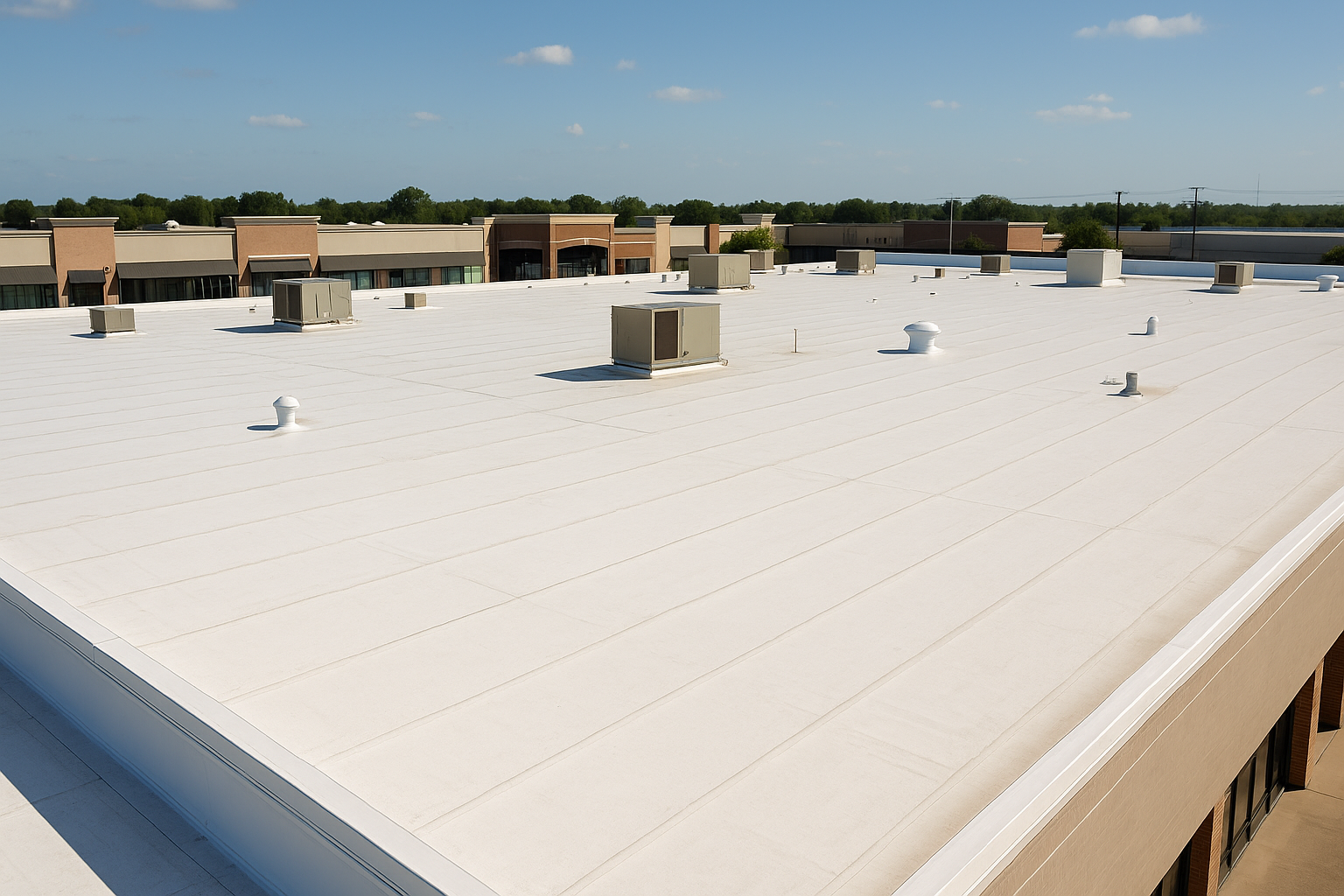
PVC roofing membranes offer durability, chemical resistance, and energy efficiency—ideal for commercial flat roofs facing harsh exposures. Learn how they compare to TPO, EPDM, and more.
PVC Performance Questions for Building Owners
Use this educational guide to understand membrane performance, heat-welded seams, and maintenance questions before choosing an assembly. For contractor services, review our commercial PVC roof installation and repair options. For material tradeoffs, use the TPO vs. PVC comparison guide; for budgeting, read our Texas PVC roofing cost guide.
Commercial PVC roofing uses a single-ply polyvinyl chloride membrane engineered for flat and low-slope commercial roofs. It balances durability, grease and chemical resistance, and energy savings through reflective finishes. This guide walks facility managers and property owners through what PVC roofing is, how membranes are made and installed, the benefits for business roofs, regional cost drivers in Texas and Oklahoma, and practical maintenance steps to extend service life. Common concerns like ponding water, grease exposure, and high cooling loads are addressed by reflective surfaces and heat-welded seam integrity. You’ll find installation methods, comparisons to other membranes, regional cost context, and inspection and repair checklists that operational teams can act on, plus clear next steps for getting a professional estimate and warranty-backed installation.
What Is Commercial PVC Roofing and How Does It Work?
Commercial PVC roofing is a single-ply system where a polyvinyl chloride membrane creates a continuous waterproof layer over insulation and the roof deck. The membrane usually contains a woven scrim for tensile strength and plasticizers or KEE modifiers for flexibility. Seams are joined by heat welding, producing continuous, monolithic joints that resist separation. Properly finished light-colored PVC reflects solar energy, sheds water, and resists grease and many chemicals, delivering both durability and improved energy performance. Those core mechanics explain why engineers and roof specifiers choose PVC for low-slope commercial applications and frame the discussion on membrane types and on-roof behavior in local climates.
What Is PVC Roofing and What Materials Are Used?
A PVC roofing system centers on the PVC membrane, available in standard, fleece-backed, or KEE-enhanced versions to boost puncture resistance and long-term flexibility. The system also includes board or tapered insulation, cover boards, mechanical fasteners or adhesives, metal or membrane flashings, and termination details. Each component affects overall performance and warranty eligibility. Fleece-backed membranes improve recover installations and accept adhesives; KEE modifiers reduce plasticizer migration and environmental stress cracking. Together, these parts form a continuous waterproof surface (the membrane) supported by insulation and accessory materials for thermal and mechanical stability.
How Does PVC Roofing Perform on Commercial Flat Roofs?
PVC membranes perform well on true flat and low-slope roofs when specified and installed correctly. Heat-welded seams remove the dependence on adhesives at joins, reducing common seam-failure modes seen with some alternatives. When combined with adequate insulation and drainage, PVC systems manage ponding water more reliably. Reinforced gauges or fleece-backed constructions increase puncture and tear resistance, which is helpful on roofs with HVAC equipment or frequent service traffic. These traits make PVC a strong choice in sun-intense climates and on buildings exposed to grease or chemical vapors, where membrane selection directly affects maintenance needs and lifecycle cost.
Evaluation of PVC Single-Ply Membrane Roofing Systems for Commercial Buildings
This study evaluated PVC single-ply membrane roofing for Army installations and found PVC can be a viable alternative to conventional built-up roofing for new roofs or reroofing failed systems. The report noted two primary concerns observed in early installations: embrittlement from plasticizer loss or UV exposure, and excessive shrinkage. Both risks can be reduced by choosing reinforced PVC membranes and manufacturer-improved formulations that resist UV degradation and plasticizer evaporation.
What Are the Key Benefits of Commercial PVC Roofing Systems?
PVC roofing combines long-term durability, strong seam performance, chemical and grease resistance, and energy efficiency through reflectivity. Its material chemistry and heat-weld seam process make it a preferred option where oils, grease, or industrial contaminants threaten membrane life, such as restaurant roofs or light industrial buildings. Below are the primary benefits presented in practical terms facility managers can use when evaluating roofing options.
PVC roofing offers several core advantages:
-
Durability and Seam Strength: Heat-welded seams create continuous molecular bonds that lower seam failure risk and lengthen service life.
-
Chemical and Grease Resistance: PVC formulations resist degradation from oils and many industrial solvents, protecting vulnerable roof areas.
-
Energy Efficiency: Reflective white PVC reduces roof surface temperatures, cutting cooling loads and lowering HVAC energy use.
-
Fire Performance: Certain formulations meet Class A fire criteria, helping with safety and code compliance.
Those benefits translate to fewer repairs, longer replacement cycles, and more predictable lifecycle costs, critical considerations for budgeting and asset management.
Different benefits come from distinct mechanisms and measurable impacts.
This table links specific mechanisms to measurable outcomes so decision-makers can prioritize benefits that matter most for their building and climate.
Next, we cover how PVC systems are installed and which methods fit particular building conditions.
TriVAN Roofing serves commercial clients across Texas and Oklahoma and holds GAF TPO and Duro-Last PVC Elite certifications, reflecting factory-trained installation practices. For projects that need chemical-resistant membranes or high-performance PVC for retail or industrial roofs, we emphasize long-term performance, clear warranty terms, and free estimates to match roofing specifications to operational needs.
How Is Commercial PVC Roofing Installed?
Installing a commercial PVC roof starts with substrate preparation, insulation placement, membrane layout, fastening or adhesive application, seam heat-welding, flashing installation, and a final quality inspection to verify seam integrity and drainage. The heat-welded seam process is the key durability mechanism. When done by trained crews, it produces continuous bonds that resist separation and leaks. Choice of attachment (mechanically attached, fully adhered, or induction/heat-assisted) depends on deck type, wind uplift requirements, and project constraints. Quality control focuses on substrate readiness, correct fastener patterns or adhesive coverage, and seam testing to catch cold welds or imperfections before closeout.
What Are the Different PVC Roofing Installation Methods?
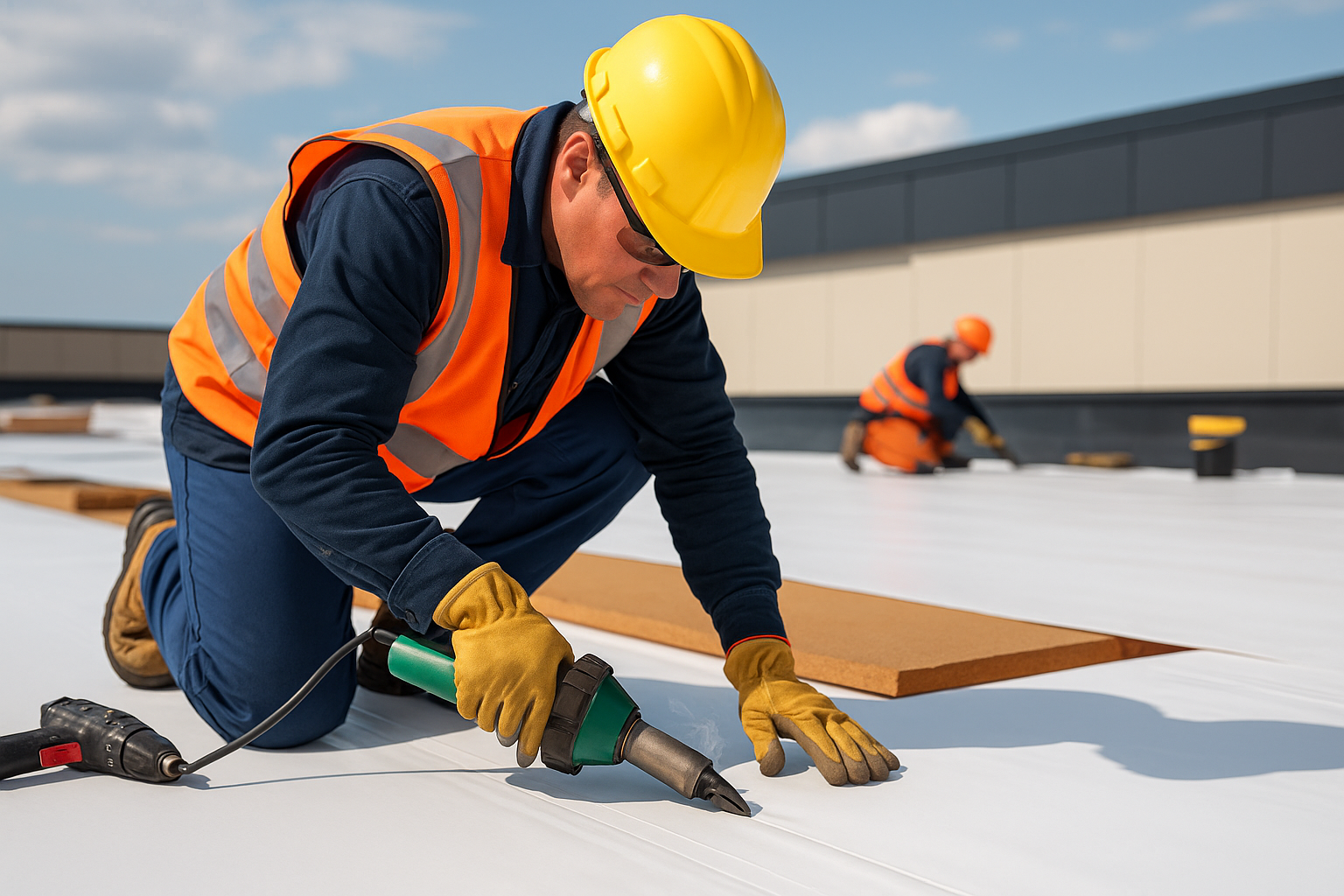
Common methods include mechanically attached, fully adhered, and induction or heat-assisted welding for specialty assemblies. Mechanically attached systems use fasteners through the membrane and are often faster and less material-intensive. Fully adhered systems bond the membrane to insulation or cover boards for continuous support and reduced membrane movement. Induction-welded or factory-seamed approaches eliminate exposed fasteners and can improve wind-uplift resistance for specific assemblies. Selecting a method requires matching attachment strategy to building design, wind-load requirements, and expected roof use.
What Are the Steps in a Professional PVC Roof Installation?
A professional PVC installation follows a clear sequence: inspect and repair the deck and substrate, install insulation and cover boards, lay out and secure the membrane, heat-weld and verify seams, install flashings and terminations, then perform final quality assurance that includes seam integrity testing and drainage checks. Seams are inspected visually and, when appropriate, with non-destructive testing tools to confirm continuous bonds and watertight performance. Final acceptance also includes documentation required for warranty support. Following manufacturer and installer quality protocols preserves warranty coverage and long-term performance.
(TriVAN Roofing operational note, short capabilities mention: TriVAN Roofing’s crews are factory-trained in heat-weld techniques and quality-control testing, and we offer warranty-backed installations and 24/7 emergency response across Texas and Oklahoma. Property owners can request a free estimate to confirm the optimal method and assembly for their facility.)
What Factors Influence the Cost of Commercial PVC Roofing?
Cost drivers for commercial PVC roofing include membrane type and thickness, attachment method, insulation and cover board choices, tear-off complexity, roof geometry, and local labor rates. Each factor affects price in a predictable way: heavier gauges and reinforced membranes raise material costs but extend service life; fully adhered systems add labor and adhesive expense while improving membrane support; rooftop penetrations and equipment drive up flashing labor and time on site. In Texas and Oklahoma, these variables create a per-square-foot range that reflects both installation cost and long-term value from energy savings and lower maintenance.
Key cost factors include:
-
Membrane gauge and reinforcement
-
Attachment method (mechanically attached vs. fully adhered)
-
Insulation thickness and type (affects thermal performance)
-
Tear-off vs. recover scope and substrate repairs
These items push a project toward the lower or higher end of typical regional pricing.
How Do Material Thickness and Installation Methods Affect Pricing?
Membrane gauge is a tradeoff: heavier or KEE-enhanced membranes cost more initially but deliver better puncture resistance and longer life, which can lower lifecycle cost. Installation methods affect labor intensity; fully adhered systems and specialized induction welding require more skilled labor and equipment, raising initial cost but often reducing membrane movement and long-term wear. The right balance depends on roof traffic, chemical exposure, and budget priorities.
What Is the Typical Price Range for PVC Roofing in Texas and Oklahoma?
Regional price ranges for PVC roofing vary with assembly complexity; recent market overviews place typical projects within a multi-dollar-per-square-foot band that reflects materials and labor. Movement within that band is driven by membrane selection, insulation needs, and teardown complexity. For accurate pricing and options like phased work or targeted repairs versus full replacement, request a site-specific estimate rather than relying on general ranges.
TriVAN Roofing provides free estimates for commercial PVC roofing projects across Texas and Oklahoma and outlines warranty options and maintenance packages to help owners evaluate lifecycle value. To discuss a project and review warranty choices, contact us by phone or email for an estimate and proposal.
Lifecycle Cost Analysis of Flat Roofs with PVC Membranes
A lifecycle cost analysis of flat roofs shows material choice and execution costs strongly influence long-term economics. In many cases, thermoplastic membranes such as PVC can offer favorable lifecycle performance when installation and maintenance practices align with expected use and exposure.
How Can You Maintain and Extend the Lifespan of a PVC Roof?
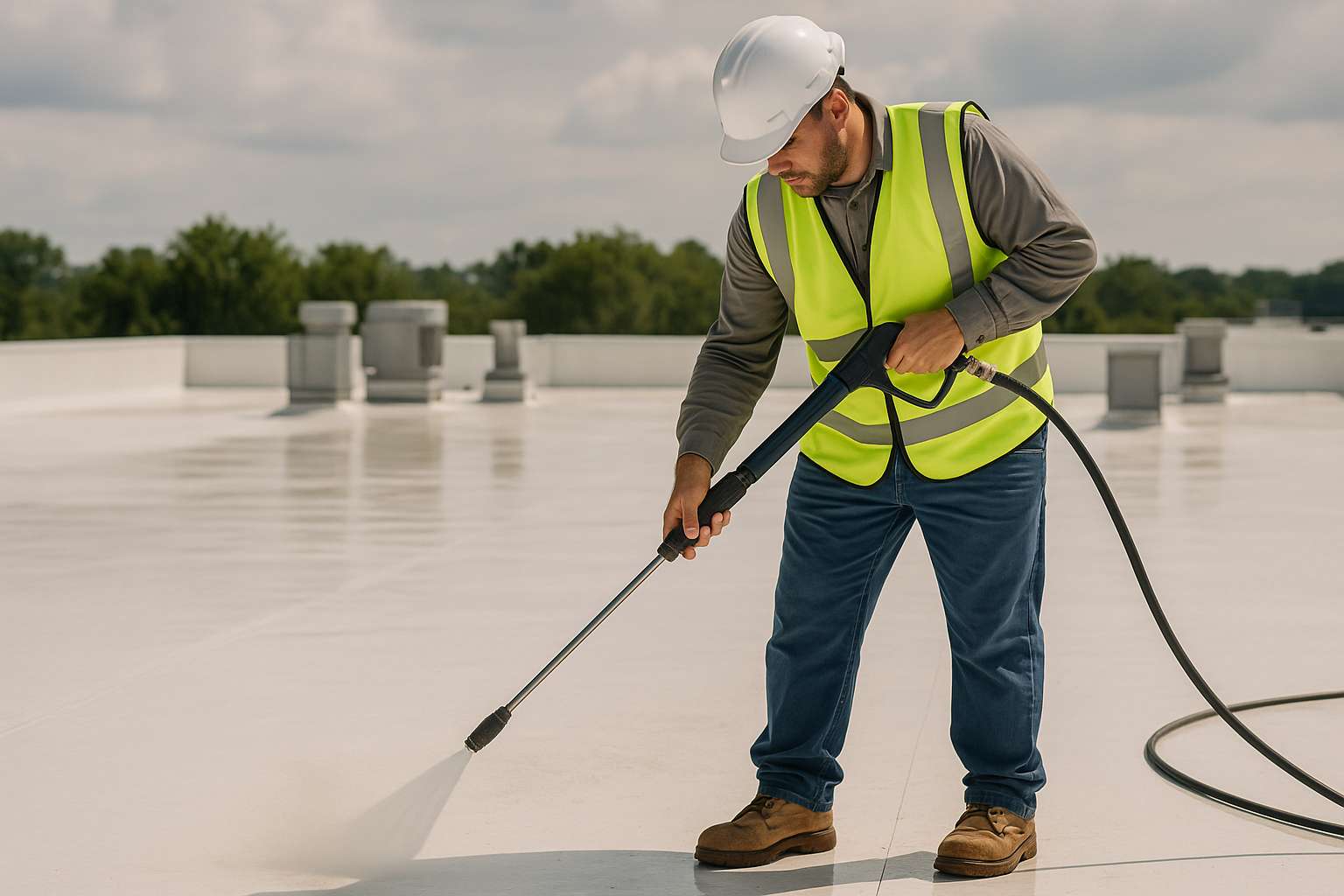
Extending a PVC roof’s life depends on regular inspections, prompt repairs of punctures or seam issues, scheduled cleanings to remove debris and contaminants, and keeping maintenance records to meet warranty requirements. Early detection and quick mitigation, patching small punctures, fixing seam splits, and clearing drains, prevent water intrusion and insulation damage. A proactive maintenance plan reduces emergency repairs and smooths budgeting for eventual replacement. The checklist below gives facility teams a practical starting point and common repair approaches to monitor or delegate.
Routine maintenance best practices include the following checklist to guide facility teams:
-
Remove debris and verify drains and scuppers are clear at least quarterly
-
Inspect seams, flashings, and penetrations after major storms or wind events
-
Clean grease and chemical residues with manufacturer-approved products
-
Keep detailed inspection and repair records to support warranty coverage
What Are Best Practices for PVC Roof Inspection and Repair?
A thorough inspection checks seams, flashings, penetrations, drains, and membrane condition for signs of chalking, softening, or chemical staining. Common repairs include adhesive-backed patches for minor punctures, heat-welded patch seams for seam repairs, and replacement of perimeter flashings and termination bars when corrosion or separation appears. Emergency repairs should focus on stopping water entry and securing loose material until permanent repairs are scheduled. Record every intervention to support warranty claims, and set clear thresholds for escalating to a professional to prevent small issues from becoming system failures.
How Long Does a Commercial PVC Roof Typically Last?
With proper specification, installation, and maintenance, a PVC roof commonly lasts 20–30 years. Achieving the upper range depends on using higher-gauge or KEE-enhanced membranes, maintaining the roof regularly, and avoiding incompatible chemicals or mechanical damage. Local exposure, installation quality, and maintenance discipline all influence lifespan. When you compare options, consider lifecycle cost, not just the initial bid—because energy savings and fewer repairs often show PVC’s long-term value.
How Does PVC Roofing Compare to Other Commercial Roofing Materials?
PVC compares well to other materials in several areas: chemical resistance and seam durability are notable strengths, and reflectivity-driven energy performance is similar to other light-colored single-ply systems. Downsides can include higher upfront material cost compared with the lowest-cost systems and possible sensitivity to some plastics-compatible solvents. The table below helps decision-makers match material attributes to building function, exposure, and budget.
What Are the Advantages of PVC vs. TPO, EPDM, and Metal Roofing?
PVC’s strengths include superior long-term chemical resistance compared with many TPO and EPDM products and very reliable seam integrity from heat welding versus adhesive-joined membranes. Compared with metal, PVC offers a continuous waterproof membrane and simpler penetration details for rooftop equipment commonly found on commercial buildings. TPO can be more cost-competitive in some markets, and metal may offer longer nominal lifespans under certain conditions. Choosing the right material requires balancing exposure to oils and chemicals, reflectivity needs, access patterns, and lifecycle costs.
When Is PVC the Best Choice for Commercial Roofing Applications?
PVC is often the right choice for roofs exposed to grease, oils, or industrial chemicals. Examples include restaurant exhaust zones, light industrial plants, and retail centers with food-service tenants, because its chemistry resists membrane degradation. PVC is also appropriate for low-slope roofs where heat-welded seams and reflective surfaces help manage ponding and cooling loads. When owners prioritize lifecycle savings from reduced maintenance and lower energy use, higher-gauge or KEE-enhanced PVC assemblies are frequently justified. Use a practical checklist, chemical exposure, roof traffic, drainage, and desired warranty terms, to decide if PVC fits your building.
(Trivan Roofing service summary, brief) For owners in Texas and Oklahoma considering PVC, Trivan Roofing provides certified, factory-trained installers, warranty-backed assemblies, and free estimates to match system selection to building exposure and budget. Contact Trivan Roofing by phone or email to request an estimate and review warranty and maintenance options.
Conclusion
Commercial PVC roofing offers businesses reliable durability, strong seam performance, resistance to chemicals and grease, and energy-saving reflectivity, qualities that make it a practical choice for many low-slope commercial applications. Understanding installation options and maintenance needs lets facility managers protect performance and control lifecycle costs. If you’re evaluating roofing upgrades, a professional estimate and warranty-backed installation will help you choose the right assembly. Contact Trivan Roofing today to discuss your roof, get a free estimate, and review warranty and maintenance options tailored to your building.
Ready to see if PVC is right for your facility?
Schedule a Commercial Roof Assessment
Schedule a free site assessment and get a system recommendation tailored to your roof’s conditions, energy goals, and long-term budget.