
How to Verify a Commercial Roofing Contractor's License: Complete Guide for Texas & Oklahoma
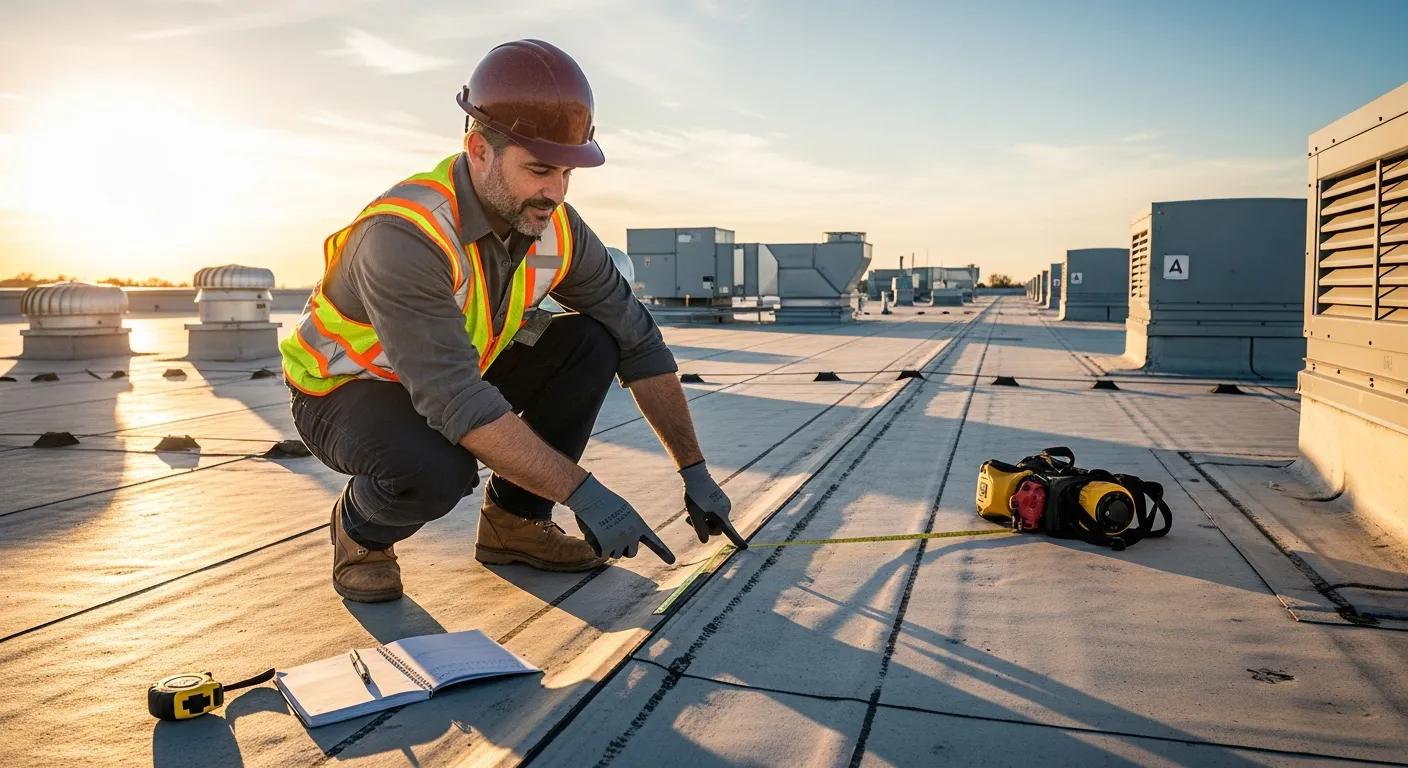
Learn how to verify a commercial roofing contractor's license in Texas and Oklahoma. Step-by-step guide covers state database searches, insurance verification, red flags to avoid, and what protections licensing provides. Protect your property investment with proper contractor due diligence.
Verifying a commercial roofing contractor’s license means confirming the contractor’s legal authority, current status, and any disciplinary history with the proper state board. That verification protects building owners from liability, code violations, and poor workmanship. This guide walks property managers and owners through what license checks are, why they matter for commercial flat and metal roofing, and the practical steps to take before signing a contract. You’ll learn how to look up records in both Texas and Oklahoma, which data points to collect (license number, status, insurance and bond details, and disciplinary actions), and how those items reduce financial and safety risk. After the verification steps, we explain what protections licensing and insurance provide and how trade associations and state regulators fit into due diligence. TriVAN Roofing, commercial roofing experts in Texas & Oklahoma for flat and metal roofs, offers free estimates and direct contact if you prefer professional help; just verify any contractor’s license first, then contact a licensed local provider to move forward.
Why Is Verifying a Commercial Roofing Contractor's License Important?
Checking a contractor’s license confirms they meet baseline legal and professional standards and lowers the chance of code violations, uninsured accidents, and poor installations. Licensing serves as a basic quality-control measure: issuing authorities set experience thresholds, insurance and bonding requirements, and ongoing oversight that together improve outcomes for commercial roofing systems. An active license with no disciplinary history gives owners leverage to enforce warranties and pursue recourse through regulatory channels if workmanship or safety standards aren’t met. Those protections are especially important for flat and metal roof systems, where failures can cause major property damage and business interruption. Understanding the risks of unlicensed work leads directly to the red flags to watch for and the step-by-step verification process that follows.
What Risks Do Unlicensed Commercial Roofers Pose?
Unlicensed commercial roofers increase legal and financial exposure because they may lack required insurance, bond coverage, or the experience needed for complex roof assemblies. Without a verified license you risk voided warranties, makeshift installations, unsuitable materials, and expensive rework that interrupts operations. Unlicensed crews also create liability problems: if a worker is hurt on site and the contractor lacks workers’ compensation, the property owner can face claims. Look for red flags like large upfront cash requests, vague insurance documents, or refusal to provide a license number. These signs often precede bigger issues. Spotting these risks points straight to the verification steps you should take before awarding work.
-
Large upfront cash requests: Substantial advance payments can be a warning sign.
-
Vague or missing insurance details: Inability to produce a valid certificate of insurance is concerning.
-
No verifiable license number: Contractors who won’t share a license or provide inconsistent names should be avoided.
These red flags underline why you should follow a formal verification checklist before signing a contract. The next sections show exactly how.
Red Flags When Hiring Commercial Roofers
When hiring a contractor for a significant commercial project, watch for warning signs that indicate poor qualification or unprofessional conduct. One of the most important checks is whether the contractor is properly licensed. A licensed roofing or general contractor has met state requirements and is accountable to regulatory authorities. Unlicensed contractors pose a clear risk to property owners.
How Does Licensing Ensure Quality and Safety in Commercial Roofing?
Licensing enforces minimum qualifications, verified experience, proof of insurance and bonding, and compliance with building codes, which together improve workmanship and jobsite safety. Licensing authorities keep records of status, restrictions, and disciplinary actions that owners can review to assess a contractor’s reliability. For commercial roofing, licenses often align with specialty endorsements or demonstrated competence in flat and metal roof systems, which helps prevent installation errors that cause leaks and premature failure. Licensing complements trade association standards and manufacturer requirements, making license verification a practical and effective proxy for quality control. With that context, the next step is a clear, replicable verification process you can follow.
How Can You Check a Commercial Roofing Contractor’s License?
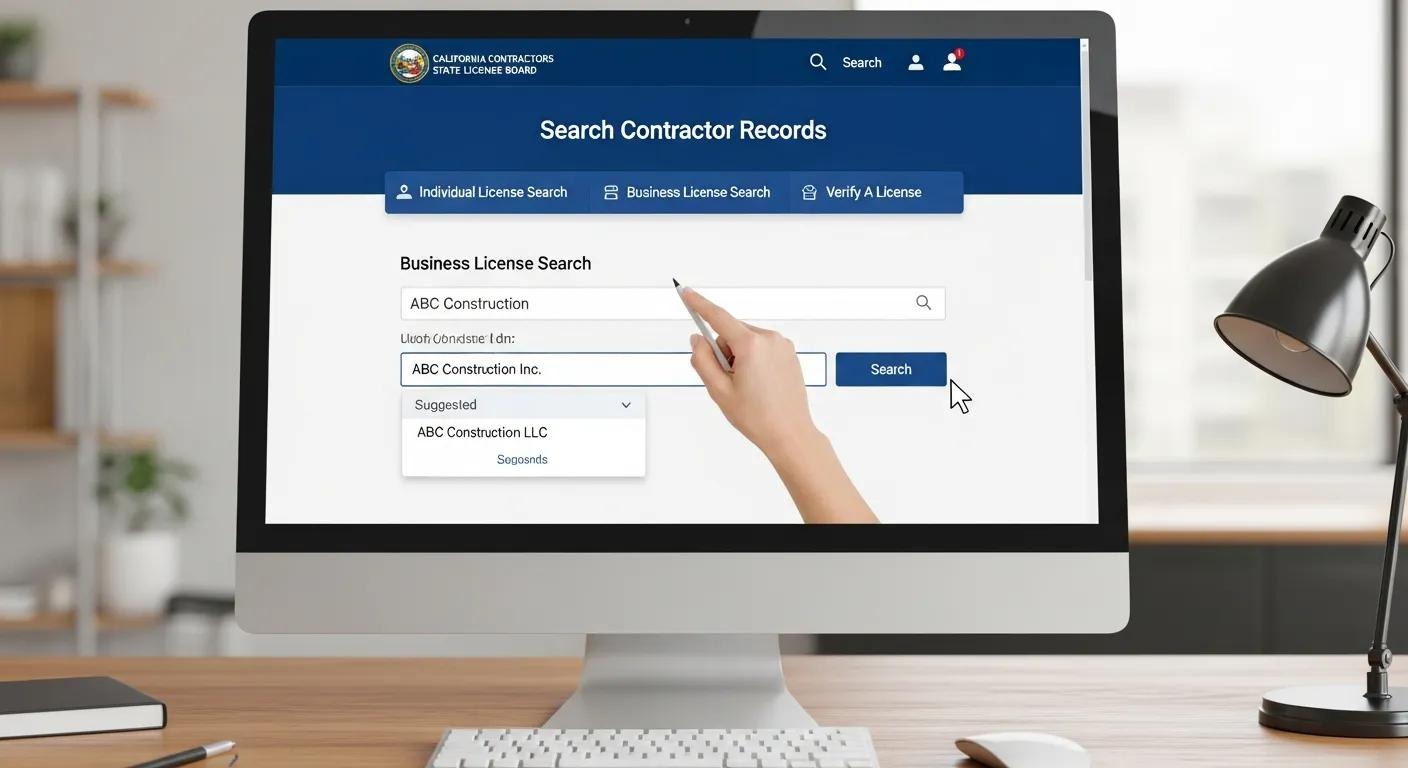
License verification is a straightforward sequence: collect contractor identifiers, search the appropriate state board database, review the record for status and disciplinary actions, and confirm insurance and bonding. Start with the contractor’s legal business name and any provided license number, open the state licensing portal for the contractor’s jurisdiction, search by name or number, and read the record for current status, expiration, restrictions, or complaints. Also request a certificate of insurance (COI) and, if applicable, a performance bond; those documents should align with what the licensing record and insurer list. Doing this reduces risk and creates the documentation you’ll need for contract negotiations and warranty enforcement.
-
Gather contractor details: Ask for the legal business name, license number (if available), and the licensed individual’s name.
-
Search the state licensing board: Use the issuing authority’s public lookup to find the license record by name or number.
-
Review the record: Confirm active status, expiration date, specialty endorsements, and any disciplinary history.
-
Verify insurance and bonds: Request a COI and, when possible, verify carrier and policy numbers directly with the insurer.
-
Document and compare: Save screenshots or printouts and compare them to contract names and COIs.
The checklist above maps to a quick EAV summary showing which attributes to collect and why they matter.
Key verification data points summarize contractor compliance and risk in a compact format.
|
Contractor Data Point |
Attribute |
Typical Value / Action |
|---|---|---|
|
Legal Business Name |
Identifier |
Match to contract and COI |
|
License Number |
Issuing ID |
Verify active/inactive status |
|
License Status |
Compliance |
Active, Suspended, Revoked, or Restricted |
|
Disciplinary History |
Oversight |
Review complaints and resolutions |
|
Insurance / Bond |
Financial protection |
Verify carrier and policy numbers |
This table shows the core attributes owners must collect and cross-check to confirm a contractor’s licensing and insurance match contractual commitments. With those items in hand, you’re ready for the state-specific lookups for Texas and Oklahoma below.
What Are the Step-by-Step Processes for License Verification?
Start by obtaining the contractor’s legal business name and any license number, then use the state licensing portal to search the public record. That ensures you’re checking the authoritative source. When you find the record, note the license type, expiration date, and any flags like pending complaints or enforcement actions, and look for endorsements relevant to flat or metal roofing. Next, request a COI and compare insurer names and policy numbers against the licensing record and the COI; if anything looks unclear, ask the insurer to confirm the COI directly. Finish by saving your findings in the procurement file so the verification trail supports award decisions and future warranty claims.
How to Verify a Commercial Roofing Contractor’s License in Texas
In Texas, a primary resource for contractor verification is the Roofing Contractors Association of Texas (RCAT), which runs a voluntary licensing program for roofing contractors. (rcat.net) The RCAT directory lets owners confirm license status, specialties, and disciplinary history for commercial roofing firms. The Texas process is simply a matter of matching the contractor’s business or license number to the public record and reading the entry for active status, expiration dates, and any administrative orders or complaints. Texas records often list license classifications and status details that indicate whether a contractor is authorized for commercial work, so interpret entries with the project scope in mind. Flat roofing or standing seam metal roofs may require specific endorsements or classifications. After confirming state records, ask the contractor for current COIs and bonds to ensure coverage meets Texas requirements and your project specifications.
|
Texas Resource |
Attribute |
Notes |
|---|---|---|
|
State Licensing Lookup |
Search method |
Search by business name or license number |
|
Record Details |
What to review |
Status, expiration, complaints, classifications |
|
Insurance & Bondinghttps://www.tdlr.texas.gov/ |
Proof required |
Verify COI matches record and contract needs |
This table clarifies what Texas owners should expect to find on state records before awarding a commercial roofing contract. Next, we cover the equivalent steps for Oklahoma.
Texas Contractor License Verification Guide
The Texas Department of Licensing and Regulation (TDLR) provides a public search tool for verifying contractor licenses. Enter a contractor’s license number or business name to see whether the license is active, expired, or has disciplinary actions on file. Use the official record to confirm a contractor’s standing before you move forward.
Where to Find Texas Roofing Contractor License Records Online?
To find Texas license records, use the state issuing authority’s public lookup and search by the contractor’s legal business name or license number. The lookup returns entries showing status, expiration, and any enforcement history. When reviewing results, compare the business name exactly as it appears on the license to the name on the contract and COI to avoid identity mismatches that complicate warranty claims. If the record shows a disciplinary entry, read the details to determine if it affects the contractor’s ability to perform your work. Some sanctions are administrative and others restrict certain activities. Save a dated screenshot of the lookup to create a clear audit trail for contract records or disputes.
How to Verify a Commercial Roofing Contractor’s License in Oklahoma
Oklahoma’s verification steps are similar to Texas: identify the contractor by name or license number, use the state board’s public license lookup to view status and disciplinary records, and request insurance and bond documentation that matches the licensing record. Oklahoma records usually list license classifications and complaint histories that indicate a contractor’s standing; owners should cross-check those items with project requirements for commercial roofing systems. For contractors working across state lines, confirm the license applies to the jurisdiction where the work will be performed and that any required local permits or specialty credentials are documented. After state verification, add your findings to the contract file and insist on copies of permits or certificates before work begins.
|
Oklahoma Resource |
Attribute |
Action |
|---|---|---|
|
State License Lookup |
Search fields |
Business name; license number |
|
Record Elements |
What to verify |
Status, disciplinary actions, classifications |
|
Cross-Jurisdiction Notes |
Applicability |
Confirm license covers the project location |
This table provides a quick reference for Oklahoma license checks and stresses cross-jurisdiction verification when contractors serve multiple states. Knowing how to use these state tools clarifies the benefits of hiring licensed, insured contractors, which we explain next.
Oklahoma Contractor Licensing and Public Confidence
A licensing system builds public confidence and lets consumers evaluate contractors by checking at least their licensing status. In Oklahoma, the Construction Industries Board (CIB) licenses and regulates contractors. Property owners can use the CIB site to confirm whether a contractor holds a valid license and to review any disciplinary actions.
Where to Access Oklahoma Roofing Contractor License Lookup?
Use the Oklahoma licensing database and search by the contractor’s business name or license number to retrieve the official record showing license status and enforcement actions. This search tells you whether the contractor is authorized for commercial work in Oklahoma. Carefully compare the legal name and any DBAs to the contract documents. Differences can hide subcontracting relationships or unlicensed affiliates. If complaints appear, read the narrative to understand severity and resolution; some are administrative and don’t prevent performance, while others show repeated compliance issues. Document every lookup and follow up on unclear entries to protect your project and help you choose a compliant contractor.
What Are the Benefits of Hiring a Licensed and Insured Commercial Roofing Contractor?
Hiring a licensed and insured commercial roofing contractor gives you clear protections: code-compliant installations, financial recourse for defective work, and reduced liability for jobsite accidents. Licensing shows the contractor met state experience and oversight requirements; insurance and bonds provide financial remedies if accidents or failures occur. Licensed contractors are more likely to offer enforceable warranties and to follow manufacturer installation requirements that keep product warranties intact for flat and metal roofing systems. These protections lower long-term repair costs, protect occupants and assets, and simplify regulatory compliance, so license verification is a critical step before awarding a contract.
-
Legal protection: Licensing ties contractors to regulatory oversight and formal complaint processes.
-
Financial safeguards: Insurance and bonds provide compensation paths for damage or incomplete work.
-
Quality and warranty assurance: Licensed installers are more likely to follow manufacturer specs that preserve warranties.
The table below summarizes how different credentials translate into concrete benefits for property owners.
|
Credential |
Attribute |
Benefit |
|---|---|---|
|
License |
Regulatory oversight |
Ensures minimum qualifications and channels for recourse |
|
Insurance |
Liability coverage |
Protects the owner from jobsite claims and damage costs |
|
Bonding |
Financial guarantee |
Compensates for incomplete or non-compliant work |
This comparison shows how license, insurance, and bonding each reduce specific risks and together protect commercial roofing investments. After you understand these benefits, many owners choose recognized local providers. For property owners in Texas and Oklahoma, licensed contractors that offer free estimates and direct contact make the next steps easier.
How Does Licensing Protect Your Commercial Roofing Investment?
Licensing protects investments by setting enforceable standards, allowing owners to file complaints or seek administrative remedies if a contractor fails to meet obligations, and signaling that the contractor is subject to continuing oversight. Insurance and bonding act as financial backstops that cover property damage, incomplete work, or employee injuries that might otherwise fall on the owner. Licensing also encourages adherence to building codes and manufacturer installation guidelines, lowering the risk of warranty invalidation and premature system failure. Verifying these protections before work begins reduces downstream costs and preserves the long-term value of the roofing asset.
Why Choose Licensed Contractors Like TriVAN Roofing?
Licensed firms like TriVAN Roofing focus on commercial flat and metal roofing across Texas and Oklahoma and combine licensing, local experience, and a smooth path to engagement. Working with a licensed contractor reduces procurement friction: owners can confirm standing in state records and request COIs, bonds, and warranty commitments with confidence. TriVAN Roofing positions itself as a regional expert and offers free estimates and direct contact, giving owners a practical option to move from verification to procurement without losing momentum. After you verify any contractor, requesting a free estimate from a licensed local provider is a logical next step for planning commercial roof work.
-
Clear license and classification: The contractor provides license details that match state records.
-
Up-to-date COI: The contractor supplies a certificate of insurance that lists the project and policy specifics.
-
Written warranty and scope: The contractor provides a written scope and warranty tied to manufacturer requirements.
Those trust signals point owners toward contractors who are easiest to verify and most likely to deliver durable, code-compliant work.
How Does TriVAN Roofing Demonstrate Its Licensing and Certification Credentials?
TriVAN Roofing’s credentials are visible through the same verification channels you should use for any contractor: search the company’s legal name in Texas and Oklahoma licensing databases and review the public record for active status, classifications, and disciplinary history. As a commercial roofing firm focused on flat and metal roofs, TriVAN Roofing encourages owners to request its license identifier and COI, then cross-check those documents against state records and insurer confirmations. If you’d like help, TriVAN Roofing offers free estimates and direct contact to move from due diligence to project planning without skipping verification steps.
What Are TriVAN Roofing’s Official License Numbers and Certifications?
TriVAN Roofing holds licenses and certifications relevant to commercial roofing. Owners should verify those credentials in the appropriate state licensing databases rather than relying on verbal claims. Request the company’s license number and search Texas and Oklahoma public records to confirm active status, scope, and any disciplinary history. If needed, ask TriVAN Roofing to provide copies of insurance certificates and manufacturer certifications so you can compare those documents to state and manufacturer records. This approach ensures the contractor’s presented credentials match authoritative registries.
|
Verification Step |
Attribute |
Owner Action |
|---|---|---|
|
Request license number |
Identifier |
Ask the contractor for license number and legal business name |
|
Check state record |
Status |
Search the licensing database to confirm active standing |
|
Request COI & certifications |
Documentation |
Compare COI policy numbers and certifications to state and manufacturer records |
This table gives a clear sequence to validate a contractor’s credentials and shows which documents to request and cross-check before finalizing a contract.
How Does TriVAN Roofing Maintain Compliance with Texas and Oklahoma Regulations?
While specific internal processes are proprietary, typical compliance practices for licensed commercial roofers include keeping current insurance and bonding, following code and manufacturer installation standards, and cooperating with permitting and inspection processes required by state and local authorities. Ask TriVAN Roofing for a COI, proof of any bonds, and copies of permits and inspection records for your project; those documents provide direct evidence of ongoing compliance. Verifying that the contractor submits required permits and allows inspections confirms adherence to regulations and helps protect owners from liability and warranty disputes.
-
License number and classification: Verify state authorization for commercial roofing work.
-
Certificate of insurance (COI): Confirm liability and workers’ compensation coverage.
-
Bonding and permits: Ensure financial guarantees and regulatory compliance.
These requests complete the verification loop from record checks to contractual safeguards and prepare owners for a compliant project start.
Conclusion
Verifying a commercial roofing contractor’s license is a practical, essential step to protect quality, safety, and your investment. Follow the steps in this guide to confidently review a contractor’s credentials and reduce risks from unlicensed work. For property owners in Texas and Oklahoma, working with a licensed provider like TriVAN Roofing streamlines verification and connects you with regional expertise. When you’re ready, request a free estimate from a trusted local contractor and move forward with confidence.
Protect your commercial property with proper contractor verification.
TriVAN Roofing maintains active licenses in Texas and Oklahoma with transparent credentials you can verify in state databases. Request our license numbers, COI, and manufacturer certifications before your free roof assessment.
Contact Us Today