TPO Roof Lifespan in Texas: How to Get 25 Years Instead of 7
| By TriVAN Roofing | 9 min read
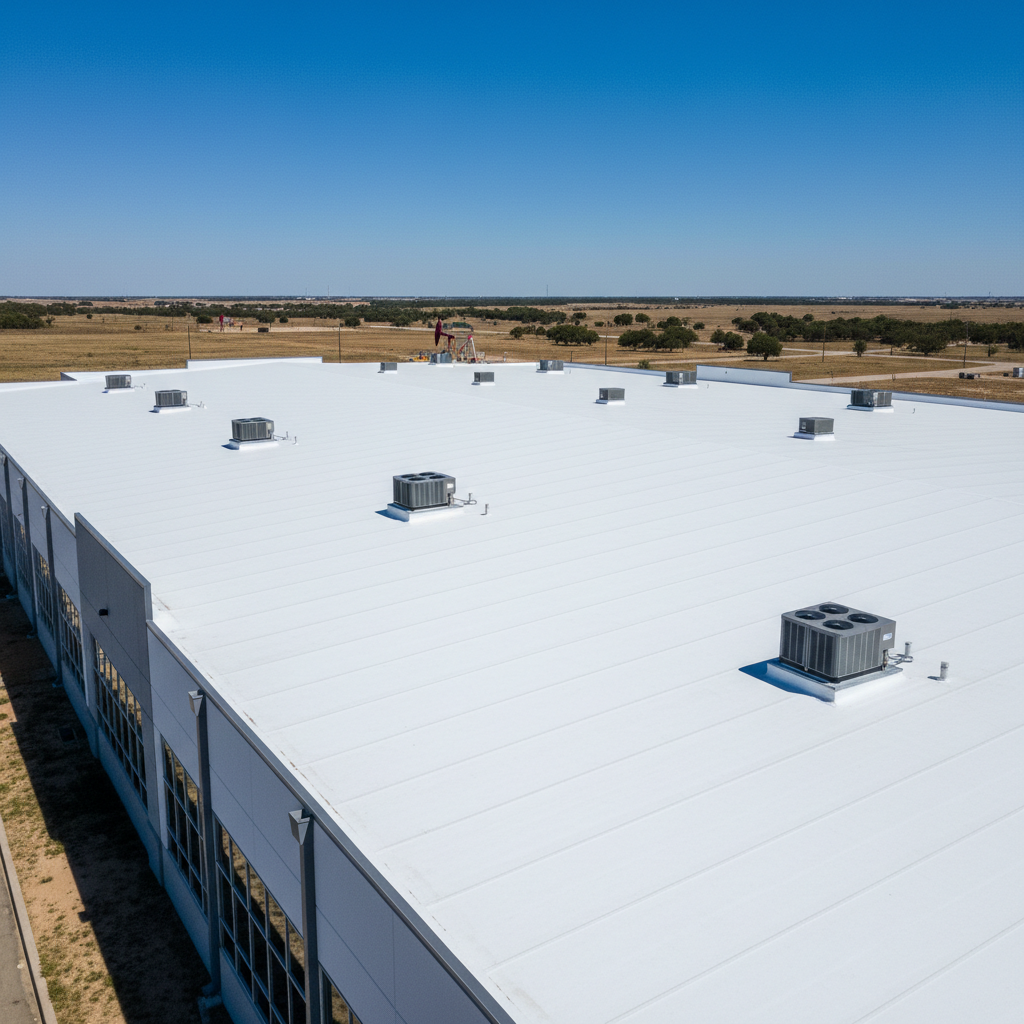
Discover the real-world lifespan of a TPO roof in the Texas heat. Learn why industry data shows early seam failure in our climate and what specific maintenance steps, from seam inspections to coatings, can help you maximize your investment.
Categories: Roofing Materials
TPO Roof Lifespan in Texas: The Real Story
If you’re a Texas facility manager trying to budget for your building’s future, there’s one number that matters above all others: how long will my roof last? When it comes to TPO (Thermoplastic Olefin), the most common answer you’ll find online is 15 to 30 years. But if your building is in Dallas, San Antonio, or anywhere in between, that number can be misleading. A properly specified and maintained 60-mil TPO roof in Texas should last 15 to 20 years, with some exceptionally cared-for systems reaching 25 years. The problem is, most don’t. The ones that fail early share a consistent set of problems driven by one dominant factor: the relentless Texas heat. This isn’t just an opinion. It's a conclusion supported by independent, peer-reviewed industry research. While TPO can be a great system for our region, achieving its maximum lifespan requires understanding why it fails here and what to do about it.
The Official Numbers vs. The Texas Reality
When you look at manufacturer literature or general roofing articles, the lifespan figures for TPO seem straightforward. Data from sources like McElroy Metal places 60-mil TPO in a 15 to 30-year service life category, comparable to more expensive materials like PVC. For thinner membranes, the Western States Roofing Contractors Association (WSRCA) Technical Advisory No. 12 (revised 2025) suggests a nominal service life closer to 10 years for 45-mil TPO.
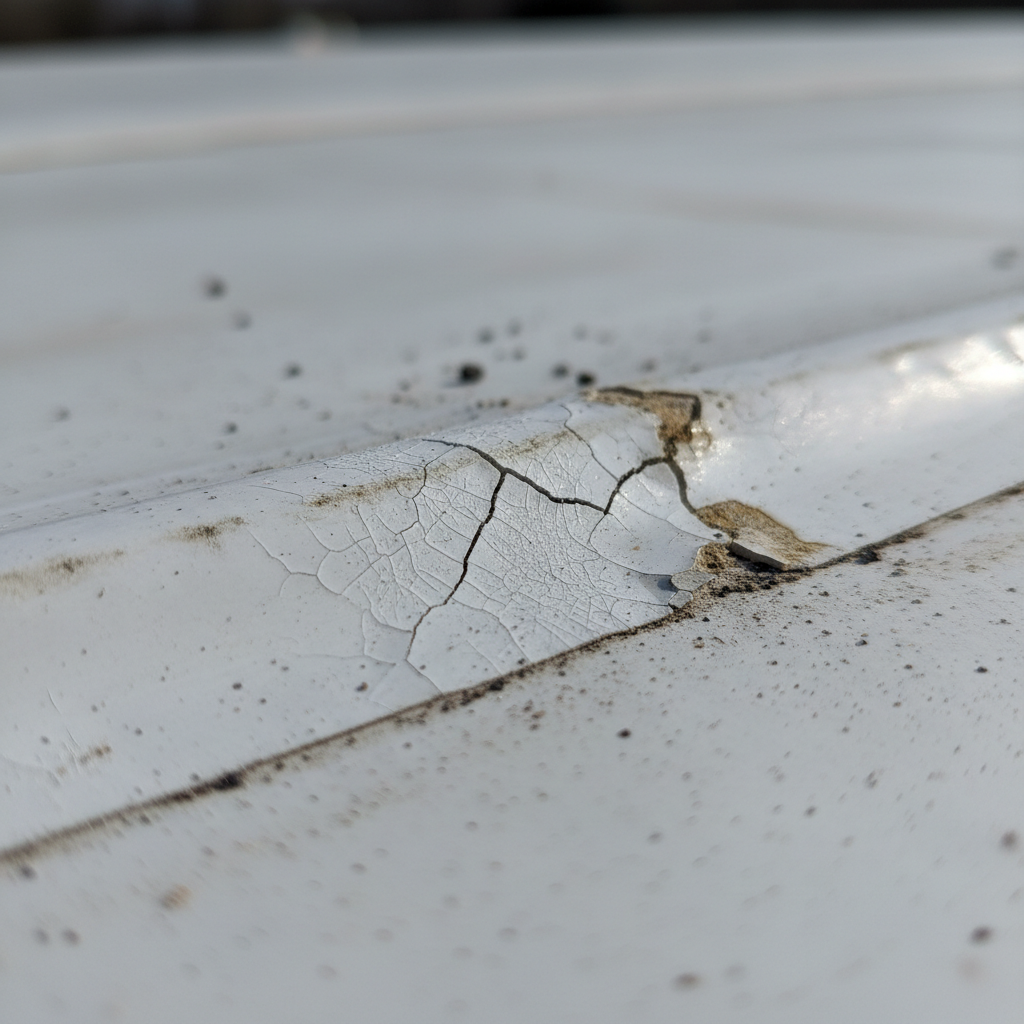
These numbers, however, often don’t account for the unique environmental stresses of the Texas climate. A much more telling piece of data comes from a 2011 WSRCA TPO Weathering Study. In that study, researchers examined a 60-mil TPO roof installation in San Antonio, Texas. After only seven years of exposure, they discovered significant surface cracking located near the field seams. GAF’s own lifecycle data on its GAF EverGuard TPO roofing systems includes long-term Texas installations in Gainesville and Addison, providing more real-world performance records in our climate.
This finding is a game-changer for Texas building owners. It provides objective, third-party proof that a standard 60-mil TPO membrane can fail near its seams in just seven years under real-world San Antonio conditions. The failure was not a general breakdown of the sheet, but a specific weakness at the most critical point of installation: the seam. This single data point drastically reframes the conversation from a general 15 to 30-year lifespan to a more urgent question: why did it fail so early, and is my roof at risk?
The Key Degradation Factors for TPO in Texas
The early failures observed in Texas are not random. They are the direct result of environmental factors that are more extreme here than in the temperate climates where much of the baseline performance data is generated. Understanding these factors is the first step toward preventing them from cutting your roof’s life short.
Factor 1: Intense Heat and Thermal Cycling (Not UV)
Many people assume that UV radiation from the sun is the primary enemy of a roof membrane. While UV does contribute to aging, the WSRCA Technical Advisory explicitly identifies high heat as the primary degradation mechanism for TPO. Their research found that oven-testing TPO samples at 240°F produced failure patterns that were consistent with what they observed in field installations in Texas and Las Vegas. The real enemy is the heat itself.
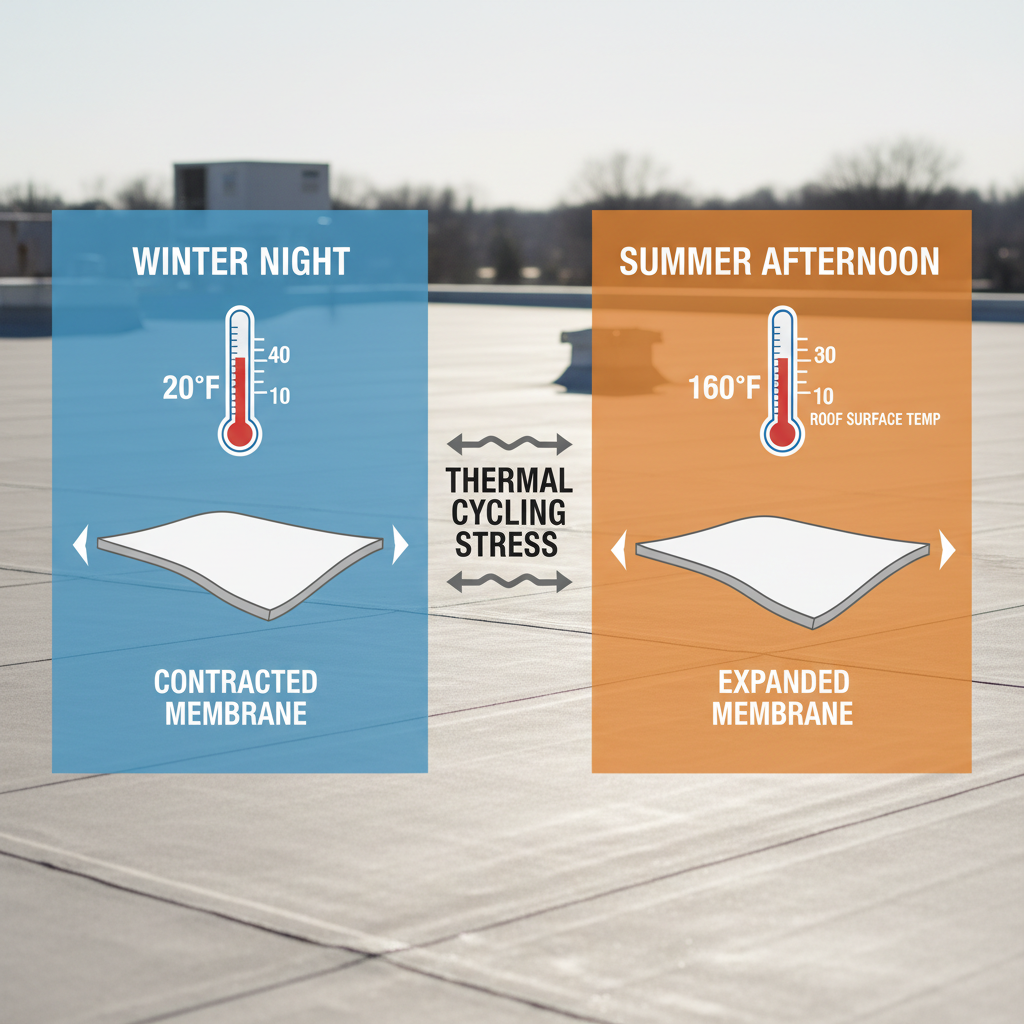
This massive temperature swing, from a cold winter night to the blistering surface temperature of a sun-baked roof in July, creates a constant cycle of expansion and contraction. This phenomenon, known as thermal cycling, puts immense stress on the entire roofing system, but especially on the seams and flashing points where materials are joined.
Factor 2: Field Seam Installation Quality
The WSRCA study’s finding that cracking occurred *near the field seams* is the most critical detail. It tells us that the failure point isn't the TPO material in general, but the way it was put together. A TPO seam is created when a robotic heat welder melts the top and bottom sheets together, forming a single, monolithic piece of membrane. The quality of that weld is everything.
In the extreme heat of Texas, a weld that is even slightly subpar will be exposed. The constant expansion and contraction from thermal cycling will concentrate stress along that seam. If the weld was done too hot, too cold, too fast, or on a surface that wasn't perfectly clean, it creates a weak point that will eventually fail. This directly explains why contractor certification matters so much more in Texas. A GAF Master Elite or Duro-Last Elite certified contractor provides crews with specific training on how to achieve a perfect weld in high-heat, high-humidity conditions. This training isn't just a marketing point; it is a direct countermeasure to the number one failure mode for TPO roofs in our state.
Factor 3: Ponding Water
Ponding water, which is any water that remains on a roof surface for more than 48 hours, acts as a threat multiplier. First, it’s almost always a warranty exclusion. Second, standing water concentrates heat and UV rays, creating a lens effect that accelerates the deterioration of the TPO membrane beneath it. When this constant water presence is located over a seam already stressed by thermal cycling, the rate of degradation increases dramatically. Addressing drainage issues is critical to mitigating the compounding problems caused by ponding water and preserving the membrane.
How to Maximize Your TPO Roof’s Lifespan: Actionable Strategies
While the Texas climate presents significant challenges, it does not mean your TPO roof is destined for a short life. Proactive, targeted strategies can help you reach and even exceed the 20-year mark. These actions are designed to directly counter the degradation factors discussed above.
Lifespan Extension Strategy 1: Proactive Biannual Inspections
The single most cost-effective action any building owner can take is to implement a schedule of twice-yearly professional inspections, ideally in the spring and fall. This allows a trained technician to spot trouble before it starts. For property managers with multiple buildings, this is often managed through a proactive roof asset management program.
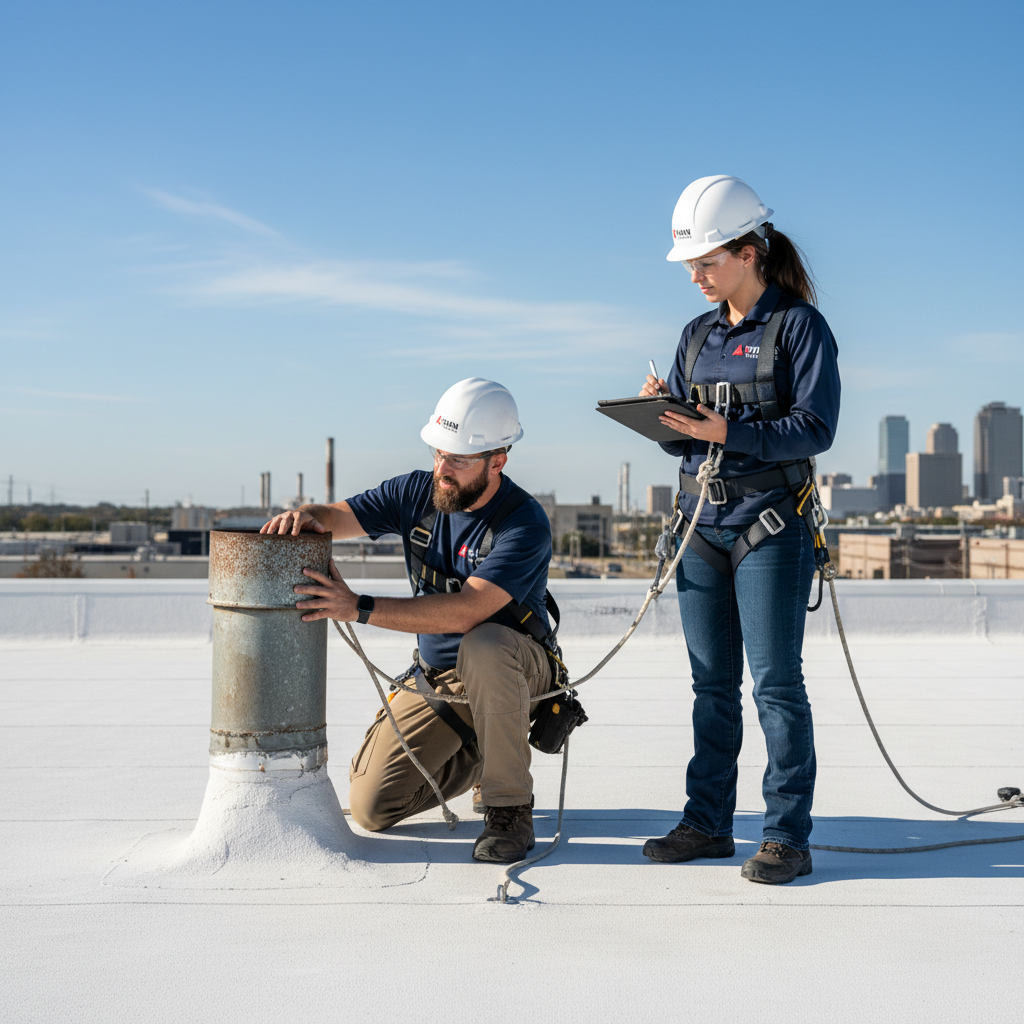
An inspection is not just a quick walk on the roof. It is a detailed condition assessment. For a TPO roof in Texas, this must include a seam-by-seam check for any signs of initial separation, embrittlement, or stress cracking. It also involves documenting the condition of all flashings, curbs, and penetration seals, which are also high-stress areas.
Lifespan Extension Strategy 2: Drainage Management and Cleaning
Since heat is the primary enemy, keeping the roof's surface as cool as possible is a key goal. A clean, white TPO surface is highly reflective, bouncing a significant portion of solar energy back into the atmosphere. A dirty, grimy roof absorbs more heat, increasing the surface temperature and the stress of thermal cycling. Regular surface cleaning to restore reflectivity directly combats the main degradation mechanism.
At the same time, ensuring positive drainage is non-negotiable. This means keeping all drains, scuppers, and gutters clear of debris. If ponding water is observed, the underlying structural or insulation issue must be corrected to eliminate the source of the problem.
Lifespan Extension Strategy 3: Prompt, Professional Repairs
When an inspection identifies a small issue, like a 6-inch section of questionable seam or a minor crack in a pipe flashing, it must be repaired immediately. Delaying minor repairs allows water intrusion, which can saturate the insulation and lead to much larger, more expensive problems. A proper repair on a TPO seam involves cleaning the area and applying a new heat-welded patch, a process that requires the same skill as the initial installation. Making these small, targeted repairs within 30 days of identification can extend the life of the surrounding roof until the entire membrane reaches its natural end of service life.
The Coating Option: A Lifespan Extension Strategy
What if your TPO roof is 10-15 years old, showing signs of aging but not yet failing? In this scenario, a full replacement may not be necessary. Applying a high-solids silicone or acrylic roof coating can be an excellent strategy to add 5 to 8 years to a roof's service life at a fraction of the cost of a new roof.
However, there is a critical requirement: a coating can only be applied over a roof that is clean, sound, and, most importantly, completely dry. Applying a coating over a membrane that has trapped moisture underneath is a recipe for disaster. Before any coating project is considered, it is essential to use thermal imaging to verify the substrate is dry. This step ensures you are protecting a viable asset, not sealing in a future failure.
The Final Verdict: Installation and Maintenance Are Everything
The wide range in TPO lifespan, from 7 years to over 25, comes down to a few key decisions. The data clearly shows that in Texas, a 45-mil membrane is a short-term solution at best. Specifying a 60-mil, or even an 80-mil, membrane is the first step in building a resilient roof.
But membrane thickness alone isn't enough. As the WSRCA study proved, the seams are the weak link. The single most important decision a building owner can make is choosing an installer whose crews are certified and trained to perform perfect heat welds in our demanding climate. This expertise, combined with a disciplined, proactive maintenance plan, is what separates a TPO roof that fails prematurely from one that protects your building for decades. The conversation should not be about how much it costs to install a cheap roof, but what the long-term value is of doing it right the first time. The difference is paying for a roof once, versus paying for it twice, and potentially facing the cost to install a new TPO roof far sooner than you planned.
Tags: life expectancy of tpo roof, extend commercial roof life, average life of a roof on a commercial building, tpo roof lifespan, how long does tpo roofing last, tpo roof life expectancy Texas, commercial tpo roof lifespan, tpo roofing maintenance Texas, 60 mil tpo roof life expectancy, 45 mil tpo life expectancy