Metal Roofs vs. Shingles in Texas: Cost, Hail Performance, & Insurance Facts
| By TriVAN Roofing | 12 min read
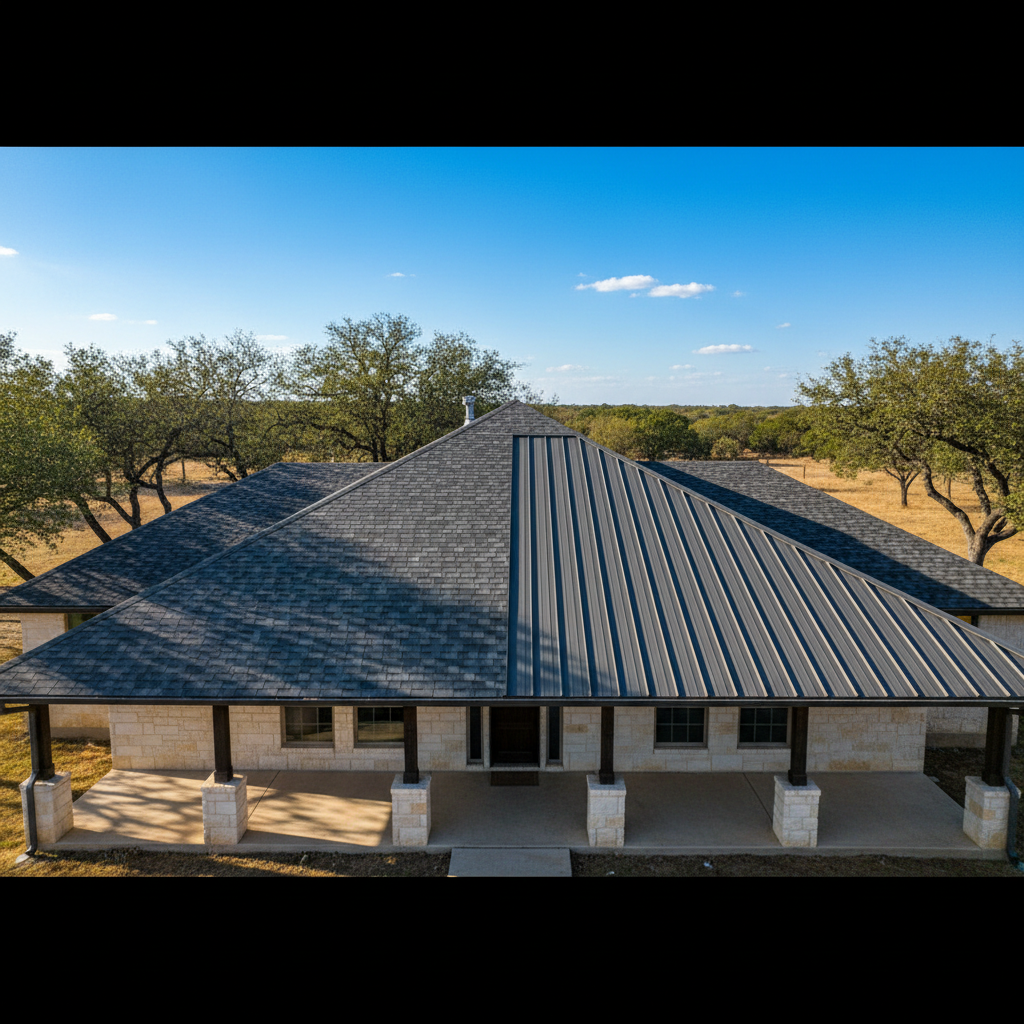
Comparing a metal roof vs. shingles in Texas? This guide breaks down the real costs, hail performance, and insurance implications to help you decide. We cover standing seam metal, Class 4 shingles, and what makes sense for your Texas home.
Categories: Roofing Materials
If you're a Texas homeowner researching a new roof, you've likely found yourself in the middle of a heated debate: metal roofing versus architectural shingles. On one side, metal roofing contractors highlight longevity and potential insurance discounts, often glossing over the steep price tag. On the other, shingle installers emphasize lower costs and wide availability, sometimes without giving metal's real advantages a fair look. The competing sales pitches can be confusing, leaving you to wonder what the truth is.
This article is not a sales pitch. It is an honest, data-driven comparison designed for Texas homeowners who need to make the right choice for their specific house, budget, and future plans. We will examine the facts about cost, performance in Texas heat and hail, insurance implications, and more. Our goal is to give you the clarity needed to make a confident decision about your residential roof replacement, not the decision that best suits a contractor's bottom line. This guide serves the pre-decision research phase, complementing our other resources for homeowners who are navigating claims after one.
The Unavoidable Topic: A Realistic Cost Comparison
Let's start with the factor that drives most decisions: cost. There is no getting around the fact that standing seam metal roofing carries a significant price premium over even the highest quality architectural shingles.
Here’s a realistic breakdown for a typical 2,000 to 2,500 square foot single-story Texas home, including a full tear-off of the old roof, new underlayment, and proper installation.
- Class 4 Impact-Resistant Architectural Shingles: A full replacement will typically cost between $10,000 and $18,000. The final price depends on the specific shingle manufacturer, roof complexity, and local labor rates.
- Standing Seam Metal Roofing: For the same home, a standing seam metal roof will generally cost between $22,000 and $42,000. The price varies based on the metal gauge, panel profile, and the quality of the factory finish.
The math is straightforward. You can expect to pay a premium of 80% to 130% for a standing seam metal roof compared to a high-performance shingle roof. It's important to understand why this gap exists and has recently widened. While all material costs have risen, global trade policies have had a disproportionate effect on metal. Section 232 tariffs, at times reaching 50%, have contributed to a documented 60% increase in standing seam metal prices from pre-tariff levels. During the same period, shingle prices have seen more modest increases of 12% to 18%. This economic reality is a critical part of the equation.
Breaking Down the Cost-Benefit Analysis
A higher upfront cost is only justifiable if it provides a proportional benefit. For the rest of this guide, we will analyze whether the performance and longevity of metal justify its substantial price premium over modern, high-tech architectural shingles.
Performance in the Texas Heat: Reflectivity vs. Reality
In a state where summer temperatures routinely soar, a roof's ability to manage heat is a major concern. Marketing for metal roofing heavily focuses on its energy efficiency, and there is truth to the claims.
Solar Reflectance by the Numbers
A standing seam metal roof with a high-quality factory finish can reflect between 60% and 70% of solar radiation. This prevents a large amount of solar energy from ever being absorbed into the roofing material and transferred into the attic space below. In contrast, a standard, dark-colored asphalt shingle can absorb 80% to 90% of the sun's energy, turning the roof into a massive heat sink.
However, the comparison is no longer that simple. Shingle technology has advanced significantly. Manufacturers like GAF now produce Class 4 impact-resistant architectural shingles with "cool roof" pigment technology. These shingles, particularly in lighter colors like tans, light grays, and whites, can achieve solar reflectance values comparable to some metal finishes. This innovation dramatically narrows the energy performance gap that once existed between the two materials.
The Role of Insulation and Ventilation
It is also crucial to understand that the roof's surface is only one part of your home's thermal system. The practical difference in your monthly energy bill is often smaller than marketing suggests, especially in a properly prepared home. A well-insulated attic and a properly functioning ventilation system (using soffit, ridge, and/or powered vents) are the primary regulators of your home's temperature. These components work to exhaust the hot air that accumulates in the attic, regardless of whether the roof surface is 150°F or 170°F. While a more reflective roof helps, it cannot overcome the deficiencies of poor insulation or blocked ventilation.
The All-Important Hail Performance Factor
For any Texas homeowner, especially in the DFW, North Texas, and Oklahoma City corridors, hail is not a matter of if, but when. A roof's ability to withstand impact is arguably the most important performance metric in our region.
How Each Material Responds to Impact
This is where the physical differences between metal and asphalt become most apparent.
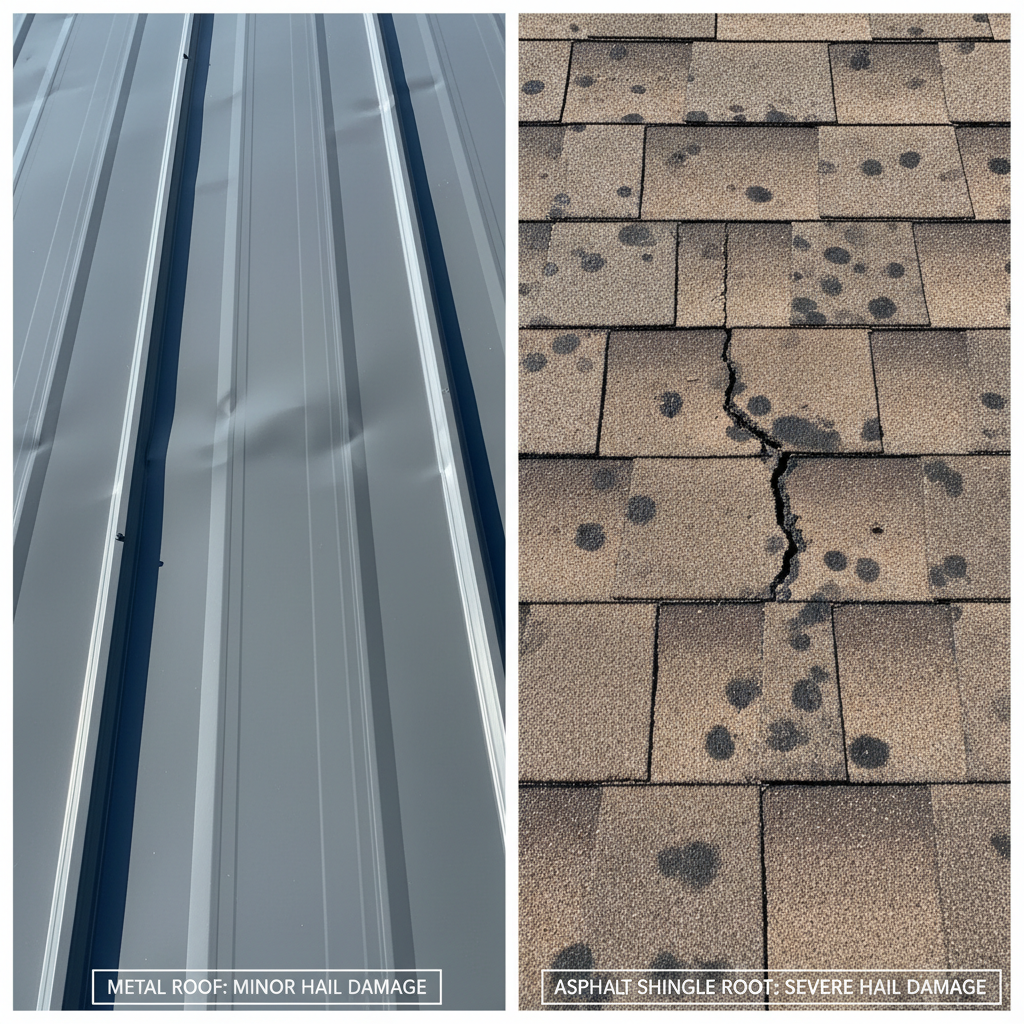
- Standing Seam Metal: When struck by hail, a metal panel absorbs the energy by denting. In most residential hail events (involving hail up to the size of a golf ball), the dents are purely cosmetic. The integrity of the panel is not breached, and the roof remains perfectly watertight. It takes an exceptionally severe and rare hailstorm to create impacts forceful enough to puncture a 24-gauge steel panel.
- Asphalt Shingles: Asphalt shingles react differently. An impact from large hail can cause a range of functional damage. It can knock off the protective ceramic granules, exposing the underlying asphalt to UV degradation. It can cause the fiberglass mat to bruise or fracture. In severe cases, it can puncture the shingle entirely. Any of these outcomes compromises the shingle's ability to shed water and shortens the life of the roof.
The visible denting that results from hail impact on metal panels is cosmetic damage that doesn't compromise function but does create appearance concerns and potential insurance claim considerations that homeowners should understand before choosing metal.
The Great Equalizer: Class 4 Impact-Resistant Shingles
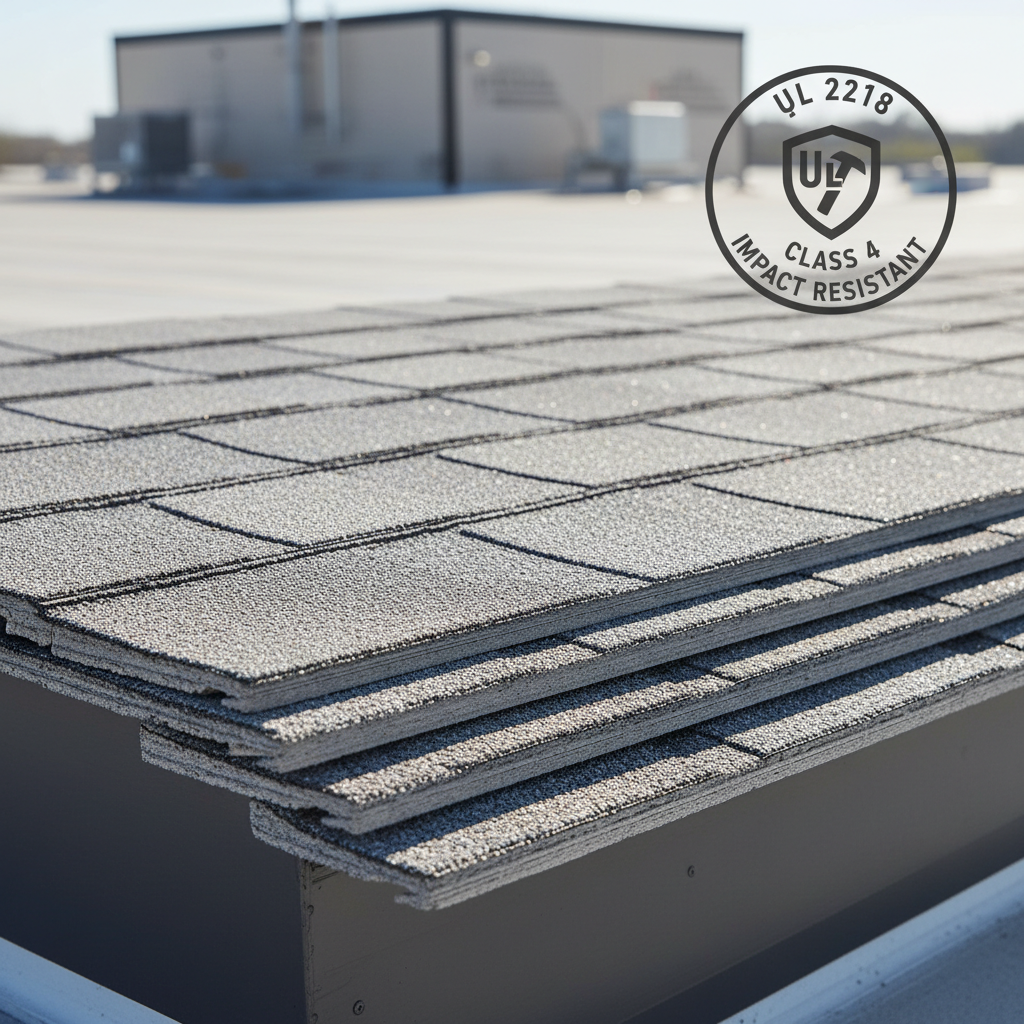
For decades, metal's superior hail resistance was an undisputed fact. That changed with the development and widespread adoption of Class 4 impact-resistant architectural shingles. To earn this rating, a shingle must pass the demanding UL 2218 standard. This test involves dropping a 2-inch solid steel ball from a height of 20 feet (simulating the impact energy of large hail at high velocity) onto the shingle twice in the same spot. The shingle must show no signs of splitting, cracking, or tearing.
This technology effectively bridges a significant portion of the performance gap with metal, but at a fraction of the cost premium. A Class 4 shingle provides documented, lab-verified resistance to the kind of hail damage that would damage or penetrate asphalt shingles of a lower class.
The insurance implication of Class 4 shingles in Texas is significant: many Texas carriers offer premium discounts of 15 to 35% for Class 4 impact-resistant roofing, and some carriers require Class 4 or better for coverage on homes in high-hail-frequency areas of DFW, North Texas, and Oklahoma, making Class 4 specification financially compelling even for homeowners who choose shingles over metal.
Insurance and Insurability: The New Reality in Texas
The conversation around roofing and insurance in Texas has shifted. A few years ago, the main question was "Which roof gets me a bigger discount?" Today, for many homeowners in high-risk areas, the question is becoming "Which roof allows me to maintain affordable coverage?"
Insurance carriers are actively trying to reduce their loss exposure from catastrophic weather events. An aging or low-quality roof is seen as a major liability. Consequently, homeowners with older asphalt shingle roofs are increasingly facing steep premium hikes or even non-renewal notices.
Both metal roofing and Class 4 architectural shingles are viewed favorably by insurance carriers for several reasons:
- Hail Resistance: As discussed, both offer superior, documented resistance to hail damage, the number one cause of roofing claims in Texas.
- Wind Resistance: Both standing seam metal and properly installed architectural shingles carry high wind ratings (typically 110-130 mph), essential for Texas thunderstorms.
- Fire Resistance: Metal roofing carries a Class A fire rating, the highest possible. Most modern architectural shingles from top manufacturers also achieve a Class A rating.
Because both materials reduce a carrier's risk, both often qualify for significant premium discounts. The key financial difference is that Class 4 shingles deliver these insurance benefits at a much lower upfront installation cost, making them the most financially efficient choice for homeowners focused on optimizing their insurance premiums.
Lifespan vs. Your Ownership Timeline: The Most Important Question
On paper, the lifespan argument seems to heavily favor metal. But the reality is more personal and depends entirely on your own plans.
- Architectural Shingles in Texas: A well-installed, high-quality architectural shingle roof can realistically be expected to last 18 to 25 years in Texas. Factors like color (darker colors absorb more heat and degrade faster), attic ventilation, and the frequency of hail events will determine where it falls in that range. Class 4 shingles will be at the higher end.
- Standing Seam Metal in Texas: A properly installed metal roof with a high-end factory finish can last 40 to 60 years or more. Maintenance primarily involves ensuring the finish remains intact and fasteners are secure.
Proponents of metal roofing often present simple lifecycle math: one metal roof lasts as long as two or three shingle roofs, therefore it is cheaper in the long run. While structurally true, this argument ignores three critical real-world factors:
- Opportunity Cost: The additional $15,000 to $25,000 (or more) you spend on a metal roof today is capital that cannot be used for other investments, renovations, or savings.
- Future Technology: The shingle roof you would install in 20 years will likely have performance characteristics and technology that do not exist today, just as today's Class 4 shingles are a world apart from those of the early 2000s.
- Your Actual Ownership Timeline: This is the most important factor. If you plan to sell your home in the next 5 to 10 years, you will receive almost none of the lifecycle value from a 50-year metal roof. The cost premium will not be fully recovered in resale value. If, however, you are in your "forever home" and plan to live there for 30+ years, the lifecycle cost of a metal roof starts to make compelling financial sense.
Your honest answer to the question "How long will I be in this house?" is the single most important factor in the metal versus shingles decision.
Aesthetics, Style, and Neighborhood Rules (HOAs)
A roof is a dominant visual element of your home, and the aesthetic differences between metal and shingles are pronounced.
A standing seam metal roof is a deliberate architectural statement. Its clean lines and distinct profile read as modern and high-end. In neighborhoods with contemporary or transitional architecture, it can be a significant aesthetic upgrade. In a more traditional neighborhood filled with brick homes and shingle roofs, it can look out of place, which may be a consideration for future resale.
Architectural shingles, by contrast, are the established aesthetic standard for most Texas residential communities. With a huge variety of colors and dimensional profiles available, they can complement any home style without standing out. For homeowners in communities governed by a Homeowners Association (HOA), this is a critical point. Many Texas HOAs have strict covenants that specify acceptable roofing materials, profiles, and colors. Some may prohibit metal roofing entirely or restrict it to certain colors. Always verify your HOA's architectural guidelines before you invest time and money specifying a roof that may not be approved.
The Contractor Variable: Why Installation Matters More for Metal
A roofing system is only as good as its installation, and this is exponentially true for metal roofing. Installing architectural shingles is a standardized process familiar to most competent roofing crews. Standing seam metal installation is a different craft altogether.
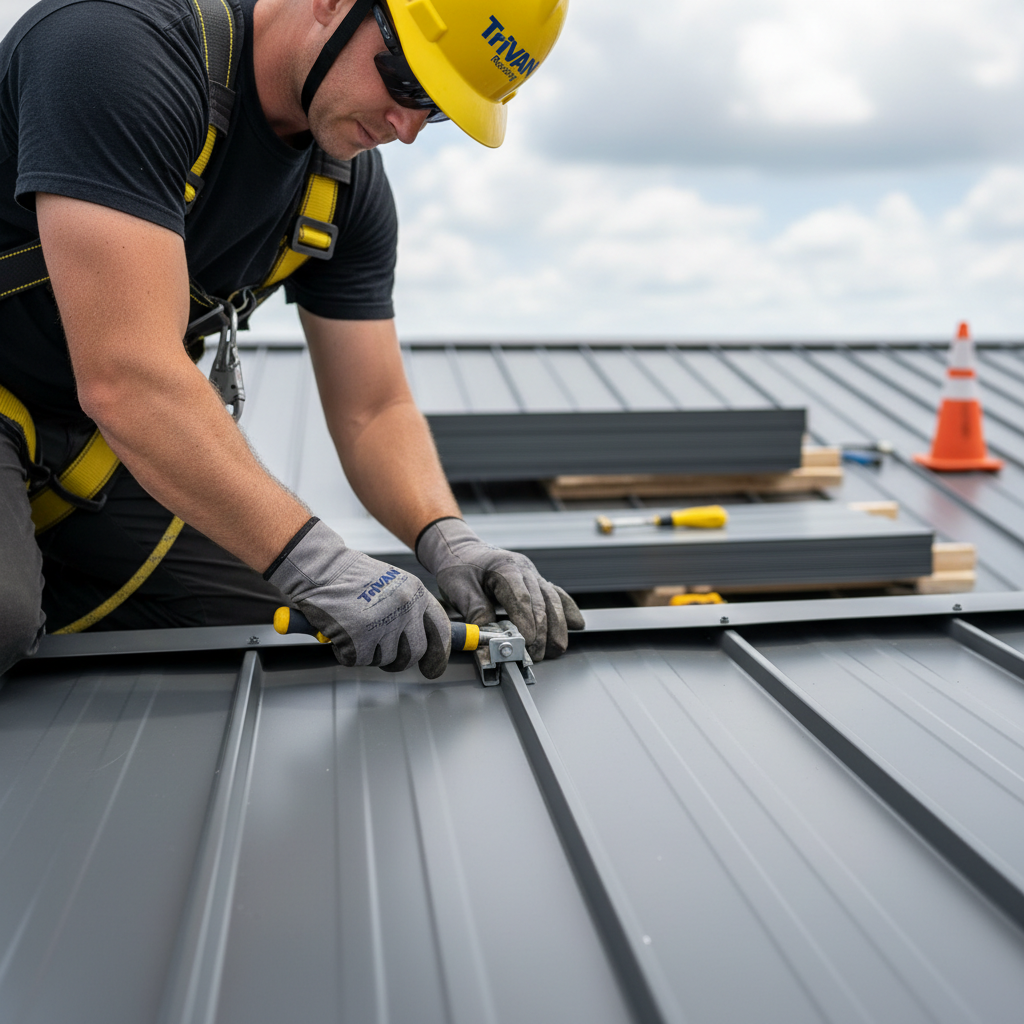
It requires specialized tools for cutting, bending, and seaming the panels. It demands a deep understanding of how metal expands and contracts with temperature changes and how to anchor the system to allow for that movement. An improperly installed metal roof can lead to leaks, oil canning (waviness in the panels), and premature failure.
Not every residential roofing contractor who offers metal roofing has the specialized training and experience to install standing seam systems correctly, and installation errors in metal roofing are more difficult and expensive to correct than shingle installation errors.
When evaluating a contractor for a metal roof proposal, you should ask specific, probing questions:
- How many standing seam residential projects have you completed in the last two years?
- Can you provide photos and addresses of those local projects?
- Do you hold a manufacturer certification for the specific panel system you are proposing?
If a contractor cannot provide confident, verifiable answers, they are not the right partner for your metal roofing project.
The Verdict: Which Roof Is Right for You?
After reviewing the data, a clear picture emerges. There is no single "best" roof for every Texas homeowner. The right choice is a trade-off based on your priorities.
- Choose Standing Seam Metal If: You are in your forever home (planning to stay 20+ years), your budget can comfortably accommodate a cost premium of 100% or more, you love the modern aesthetic, and your HOA approves. For you, the long-term durability and potential lifecycle savings are worth the high upfront investment.
- Choose Class 4 Architectural Shingles If: You want the most financially efficient path to superior hail performance and insurance savings, you plan to move within the next 15-20 years, you prefer a traditional aesthetic that fits any neighborhood, or your budget is a primary consideration. For most Texas homeowners, a Class 4 shingle roof from a top-tier manufacturer like GAF offers the optimal balance of price, performance, and peace of mind.
Ultimately, the decision rests on an honest evaluation of your finances, future plans, and personal taste. As a woman-owned business and a GAF Master Elite Certified contractor with over two decades of experience in Texas, we've helped thousands of homeowners work through this exact decision. If you would like a detailed, transparent assessment for both options on your home, contact TriVAN Roofing. We are here to provide the information you need to make the best choice for your family and your home.
Tags: metal roof vs shingles Texas, metal roofing vs shingles Texas homes, standing seam metal vs architectural shingles Texas, should I get metal roof or shingles Texas, metal roof vs shingles cost Texas, residential metal roofing Texas comparison, metal roof vs shingles hail Texas, Class 4 shingles vs metal roof Texas, metal roofing vs shingles DFW, residential metal roofing cost Texas 2026