Texas K-12 School Roofing: A Business Manager's Guide to Bond Election Planning
| By TriVAN Roofing | 10 min read
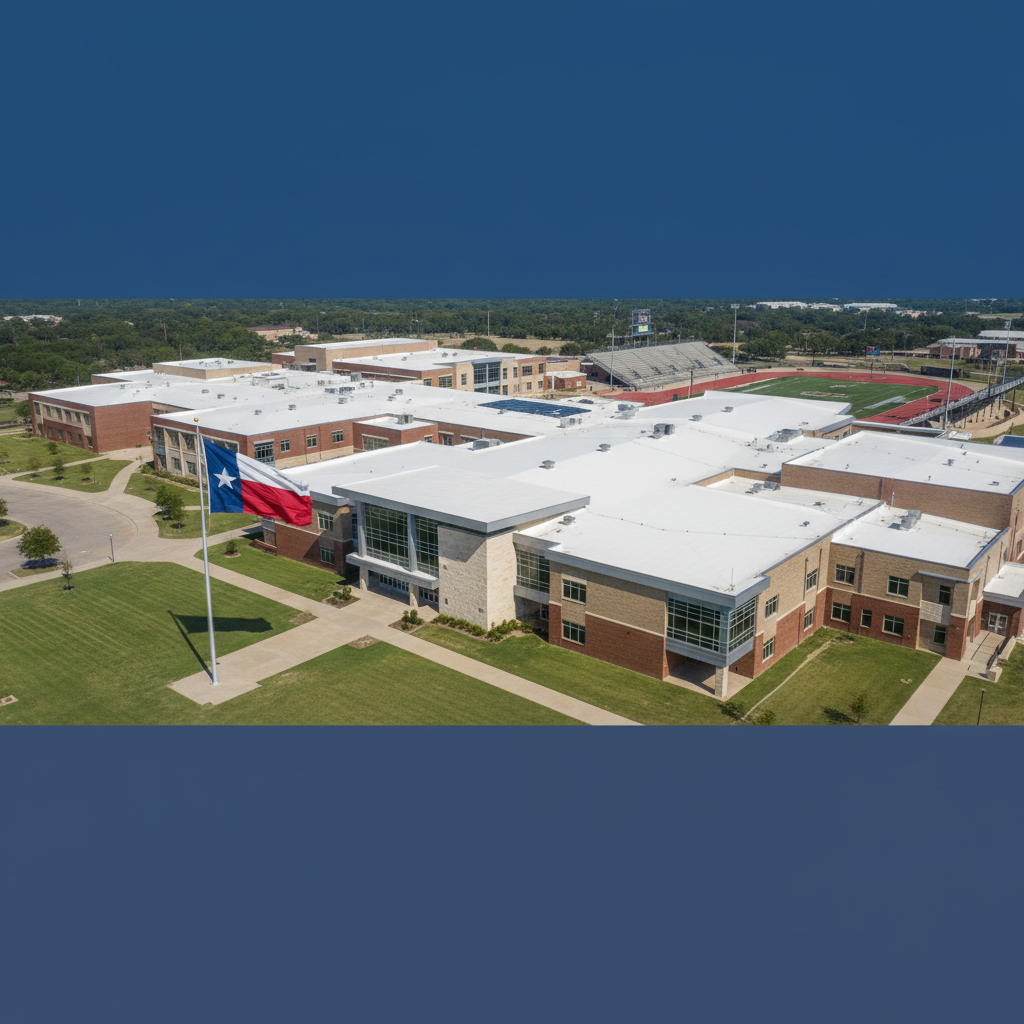
For Texas school business managers, roofing decisions are tied to bond elections. Learn how to manage funding gaps, meet TEA facility standards, use TIPS for procurement, and strategically plan summer projects to protect district assets and budgets.
Categories: Industry Insights
For a Texas school business manager or facility director, the phrase "we have a roof problem" means something entirely different than it does for a private commercial building owner. In the private sector, a failing roof is a straightforward capital expense problem. You get bids, you pick a contractor, you write a check. For a Texas K-12 district, a failing roof is the start of a multi-year financial, political, and logistical puzzle. The roof you identify as critical today might not get funded for two, three, or even four years, long after the next bond election is approved and funds are finally appropriated.
This funding gap is the central reality of public school facility management. It requires a completely different approach to roofing strategy, one built on long-range planning, strategic repairs, and a deep understanding of state procurement rules. Since 2001, TriVAN Roofing, a woman-owned business, has partnered with school districts across Texas and Oklahoma, helping them navigate these unique challenges. This guide is written for you: the school official tasked with protecting millions of square feet of facilities with a budget and timeline dictated by public processes.
The Bond Election Timing Gap: The Central Challenge for School Roofing
The core of the problem is the funding cycle. School districts in Texas rely primarily on voter-approved bonds to fund major capital projects like roof replacements. This process is effective for large-scale planning but creates a dangerous gap for individual facility failures.
Consider a typical scenario:
- Year 1: A routine inspection identifies that the roof on your 25-year-old middle school is at its end of life. It has active leaks after heavy rains and the membrane is showing extensive deterioration.
- Year 2: Your findings are incorporated into the district's long-range facility plan. The administration and school board decide to include its replacement in the next bond package.
- Year 3: The bond election is held in May and, hopefully, passes.
- Year 4: The bonds are sold, and the funds for the middle school roof project are officially appropriated in the next fiscal year's budget. Construction can finally begin in the summer.
In this best-case scenario, you've had to manage a failing roof for three to four years. Three to four years of dispatching maintenance crews after every storm. Three to four years of potential water intrusion damaging ceiling tiles, classroom materials, and sensitive equipment. The question is not just if you can replace the roof, but how you can keep the building dry and functional while you wait for the money. This is where many districts make costly mistakes, either by spending too much on repairs that will be torn off anyway or by not spending enough and incurring significant interior damage. The solution is a strategy of targeted intervention, not premature replacement. It requires a roofing partner who can perform targeted repairs that extend the service life of the existing system just long enough to bridge the gap to your bond funding.
Navigating TEA Facility Standards for Roofing Projects
Adding another layer of complexity, roofing projects for Texas public schools must comply with standards set by the Texas Education Agency (TEA). These aren't just suggestions; they can impact facility funding and accreditation. School business managers must ensure their roofing contractor understands and adheres to these requirements.
Key TEA considerations often include:
- Warranty Requirements: The TEA may have minimum standards for warranty type and duration, especially for new construction or major renovations. A contractor proposing a substandard warranty could put your district in a non-compliant position. TriVAN's 15-year NDL (No Dollar Limit) warranty, which includes consequential damages and ponding water, is designed to meet and exceed these stringent requirements.
- Material Specifications: Certain performance standards, such as wind uplift ratings (critical in the Texas hail corridor) and fire resistance, are mandated. Your contractor must provide materials that meet these specs and provide documentation to prove it.
- Contractor Qualifications: While the TEA may not name specific contractors, they set a high bar for workmanship. Working with a certified installer, like a GAF Master Elite or Duro-Last Elite Contractor, provides documented proof of quality and training, which strengthens your position during any TEA facility review.
A contractor unfamiliar with these K-12 specific rules can unknowingly create significant compliance headaches for your district down the road. It's critical to ask potential partners about their experience with TEA-governed projects.
The TIPS Advantage: Streamlining Procurement for K-12 Districts
State procurement law for school construction is notoriously complex and time-consuming. The traditional process of drafting a request for proposal (RFP), advertising it, holding pre-bid meetings, and navigating board approvals can take months. For a district trying to manage a failing roof, this is time you simply do not have. This is where cooperative purchasing contracts, like those offered by The Interlocal Purchasing System (TIPS), provide a powerful, compliant alternative.
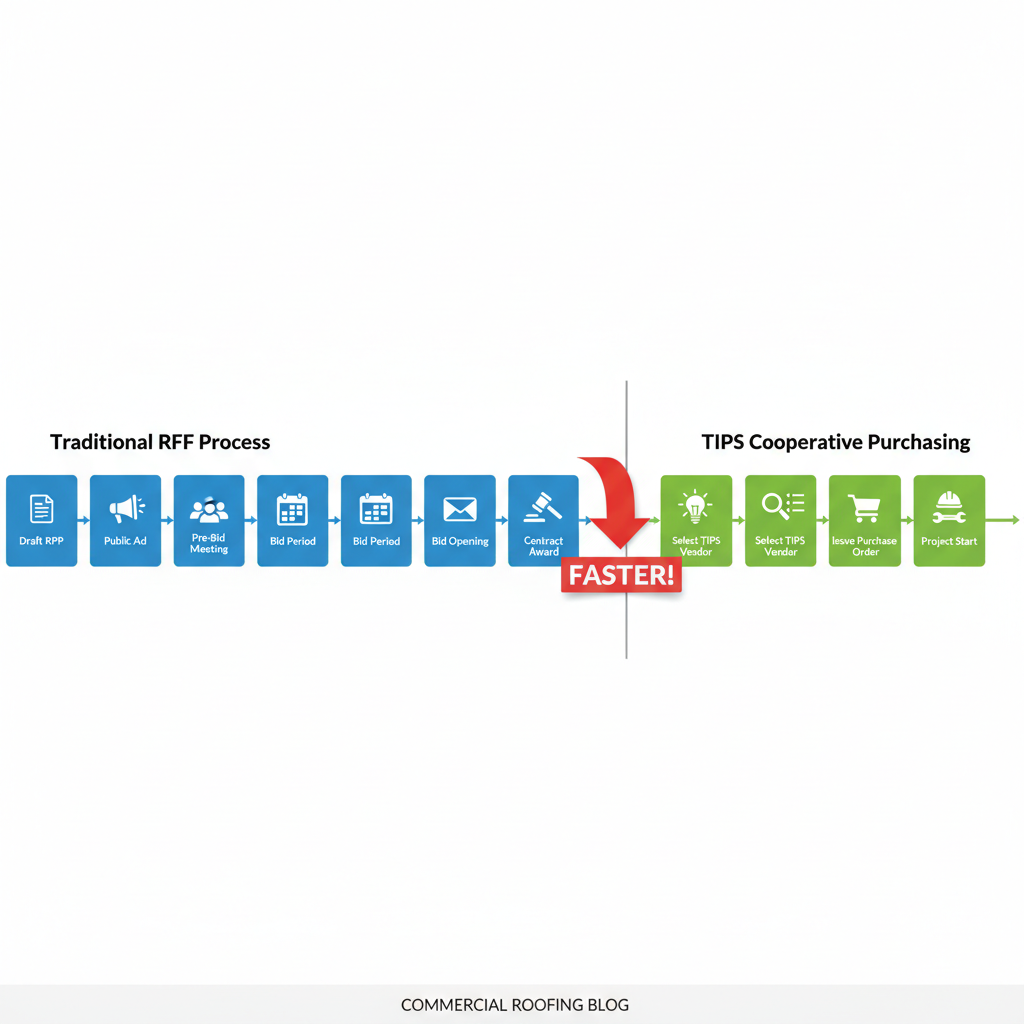
As an approved vendor with three active TIPS cooperative purchasing contracts, TriVAN can help districts bypass the lengthy RFP process entirely. Because TIPS has already completed the competitive bidding process at a national level, your district can select a contractor and issue a purchase order in a fraction of the time, all while satisfying state procurement requirements.
The advantage is even greater for districts managing multi-building replacement programs funded by a bond. Instead of running a separate RFP for each school roof as funds are appropriated over several years, a district can award the entire scope of work to a single TIPS vendor. Then, as the bond funds for each specific campus are released year by year, the district simply issues a task order against the master contract. This eliminates redundant procurement work, ensures consistent quality and pricing across your portfolio, and allows for much more effective long-term planning.
The Summer Scheduling Crunch: Why January is the New May
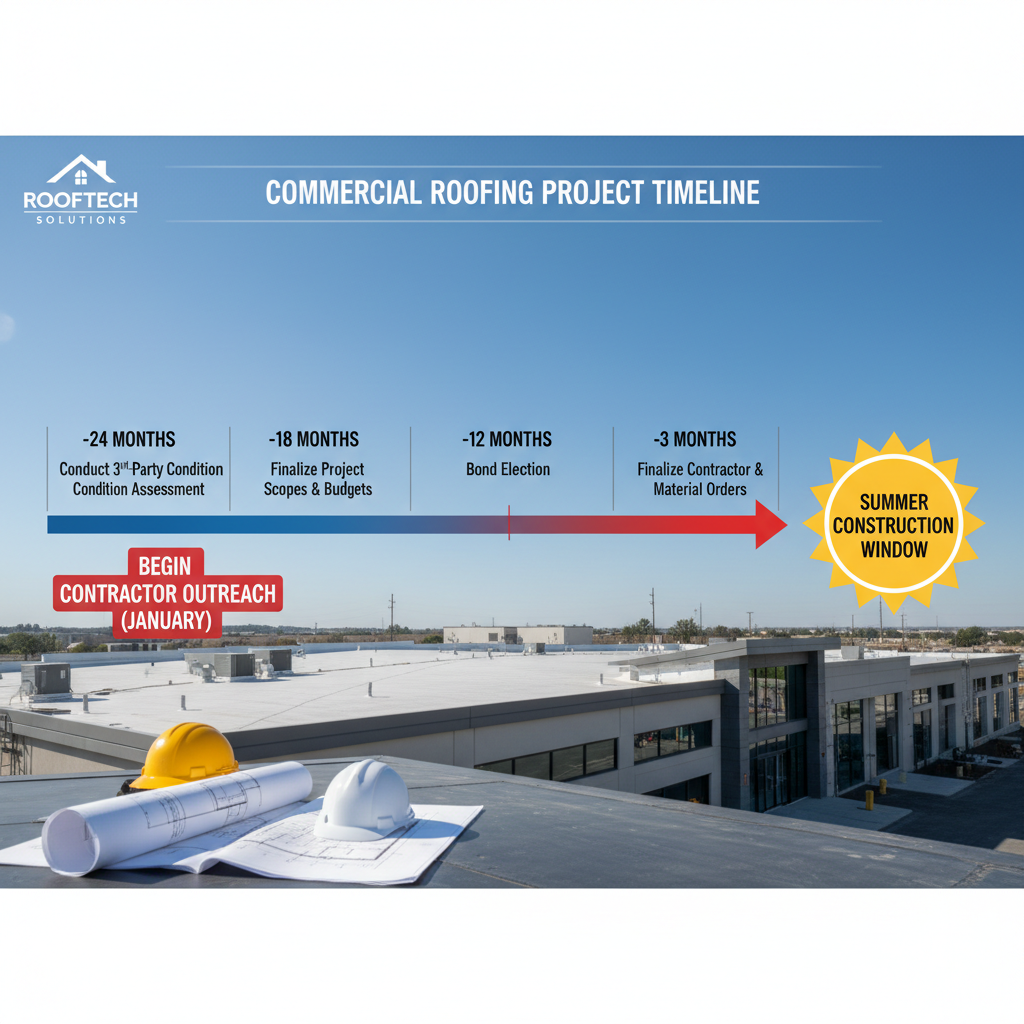
Every school facility director in Texas knows the tyranny of the academic calendar. The summer break provides a roughly 10-week window—from early June to mid-August—where major disruptive work like a roof replacement is feasible. This creates an enormous, simultaneous demand for qualified roofing contractors across the entire state.
Here is the reality of the market: the best commercial roofers are booking their summer schedules earlier and earlier each year. If you begin your outreach in April or May for a June start date, you will not get your first choice of contractor. You may not get your second or third, either. You will be left with less experienced, less qualified companies who have last-minute availability for a reason. Districts that wait until spring to start this process consistently find that the most qualified, reputable contractors are already fully booked.
For summer roofing work, January and February are the new "go time." This is the period when districts must finalize their contractor selection and begin material procurement. High-performance roofing materials can have lead times of several weeks or even months. Ordering in Q1 is essential to ensure materials are on-site and ready for a June 1st start. Planning ahead not only secures a better contractor but also protects you from the price premiums charged for last-minute, emergency-availability projects.
The Art of Bond Program Planning: From Assessment to Ballot
A successful bond election for facilities is built on credible data. Voters are more likely to approve funding when they have confidence that the district has done its homework and is asking for what is truly necessary. For roofing, this process should begin long before the bond language is finalized.
The 18-24 Month Planning Horizon
The ideal time to conduct Comprehensive roof condition assessments is 18 to 24 months before a planned bond election. This timeline allows you to:
- Gather Data: Perform a thorough evaluation of every roof in your portfolio, including core sampling, infrared scans, and visual inspection.
- Develop Scopes: Use the assessment data to create detailed project scopes and accurate cost estimates for each building.
- Build the Narrative: Integrate these data-backed costs into your overall bond package, complete with photos and condition reports that justify the expense to the community.
Assessments older than three years are generally unreliable for bond planning. In the harsh Texas climate, a roof's condition can change dramatically in 36 months. Using outdated information risks underestimating costs or misjudging a roof’s remaining service life, leading to budget shortfalls or unexpected failures after the bond passes.
The Credibility of Third-Party Assessments
While many roofing contractors offer free assessments, for bond planning purposes, an independent, third-party assessment often carries more weight with voters and school boards. An assessment from a firm that will not be bidding on the replacement work is seen as more objective. However, a highly-qualified roofing contractor like TriVAN can provide detailed assessments with the explicit understanding that the data is for planning purposes, helping you build a credible and defensible bond program.
Energy Efficiency: Turning a Capital Expense into an Operational Win
For school districts, utility costs are a significant and recurring operational expense. A roof replacement project presents a prime opportunity to reduce that burden for decades to come. Modern high-reflectivity TPO and PVC roofing systems, often called "cool roofs," can dramatically lower a building's cooling load.
On a hot Texas summer day, a traditional dark roof can reach temperatures of 170°F or more. A white reflective roof, under the same conditions, might only reach 115°F. This massive difference in surface temperature means your HVAC systems don't have to work as hard to maintain a comfortable indoor environment, leading to measurable energy savings. For a school with large, flat roof expanses, the savings can be substantial.
Furthermore, this strategy has two additional benefits:
- Utility Rebates: Major Texas utility providers, including Oncor and CenterPoint Energy, offer commercial energy efficiency rebate programs. These programs often provide cash incentives for installing high-reflectivity roofing, which can help offset the initial project cost.
- Strengthening Future Bond Narratives: When you can document the energy savings realized from a previous bond-funded roofing project, you build a powerful story of fiscal stewardship. You can go to voters in the next election cycle and say, "The investments you approved last time are already saving the district money on utilities, and we plan to continue that responsible approach with these new projects."
Special Consideration: Roofing Texas’s Historic School Buildings
Many Texas districts have campuses with deep community roots, including historic buildings constructed from the 1920s through the 1950s. These facilities are often landmarks, carrying the names of founding community members and holding a special place in the town's identity. Roofing these buildings is not a standard replacement job.
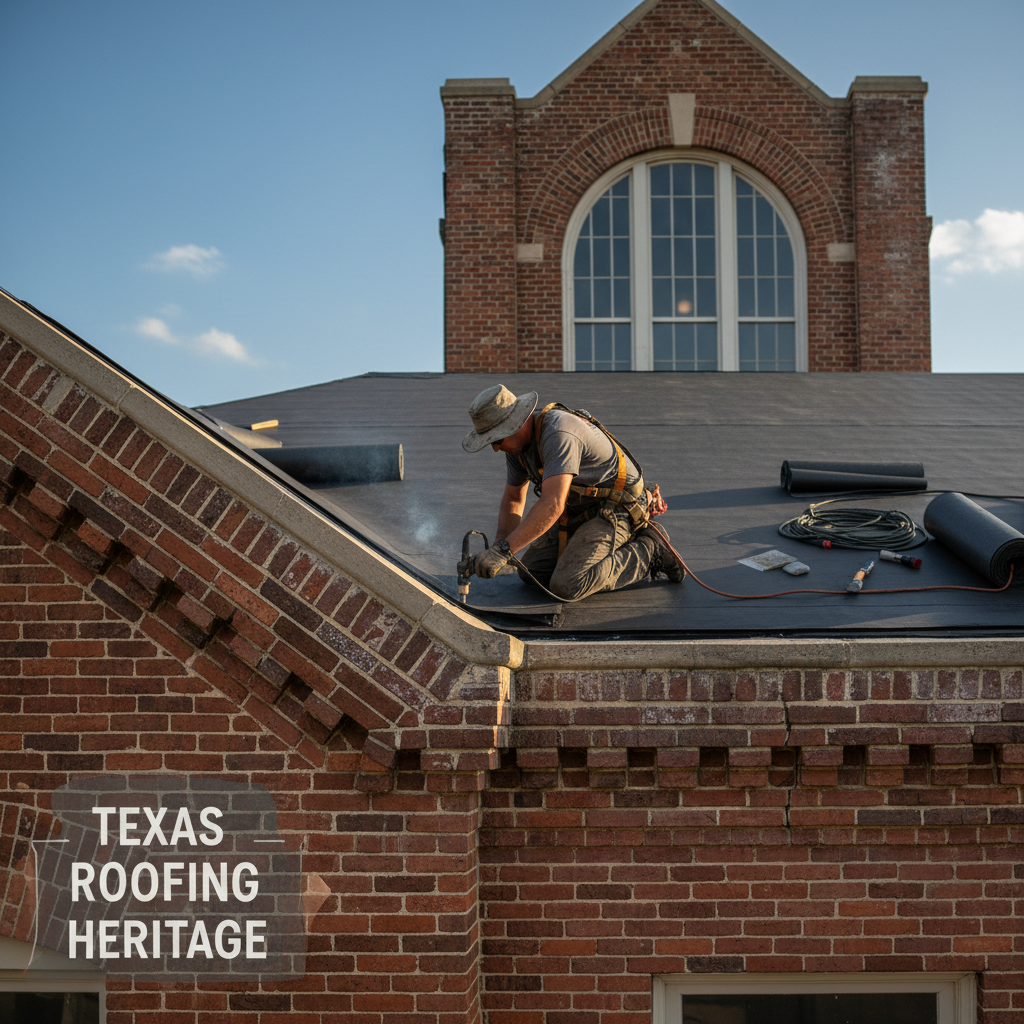
It involves balancing the need for modern, watertight performance with a sensitivity to the building's historic character. Challenges often include navigating around intricate brickwork, custom-crafting flashing for unique architectural features, and selecting materials that complement the original design aesthetic. These projects require a contractor with experience in historic preservation techniques, capable of integrating modern, high-performance roofing materials without compromising the building's architectural character.
Conclusion: A Proactive Strategy for Educational Facilities
Managing a school district's roofing portfolio is a discipline of long-term, proactive planning. By understanding the bond cycle, leveraging compliant procurement tools like TIPS, planning for the summer rush, and using data to drive decisions, you can transform roofing from a reactive crisis into a manageable part of your district's facility asset management plan. The key is to partner with a contractor who understands the world you operate in. If you are developing a long-range plan for your district's facilities, contact our team to see how our experience can help you build a more predictable and sustainable future.
All 14 deliverables complete.Tags: K-12 school roofing Texas, school business manager roofing guide, Texas school bond election planning, TEA facility standards roofing, TIPS cooperative purchasing roofing, summer school roof replacement, historic school building renovation, school roof energy efficiency Texas, Oncor roofing rebate, CenterPoint energy rebate