Are Impact Resistant Shingles Worth It for Texas and Oklahoma Homes?
| By TriVAN Roofing | 13 min read
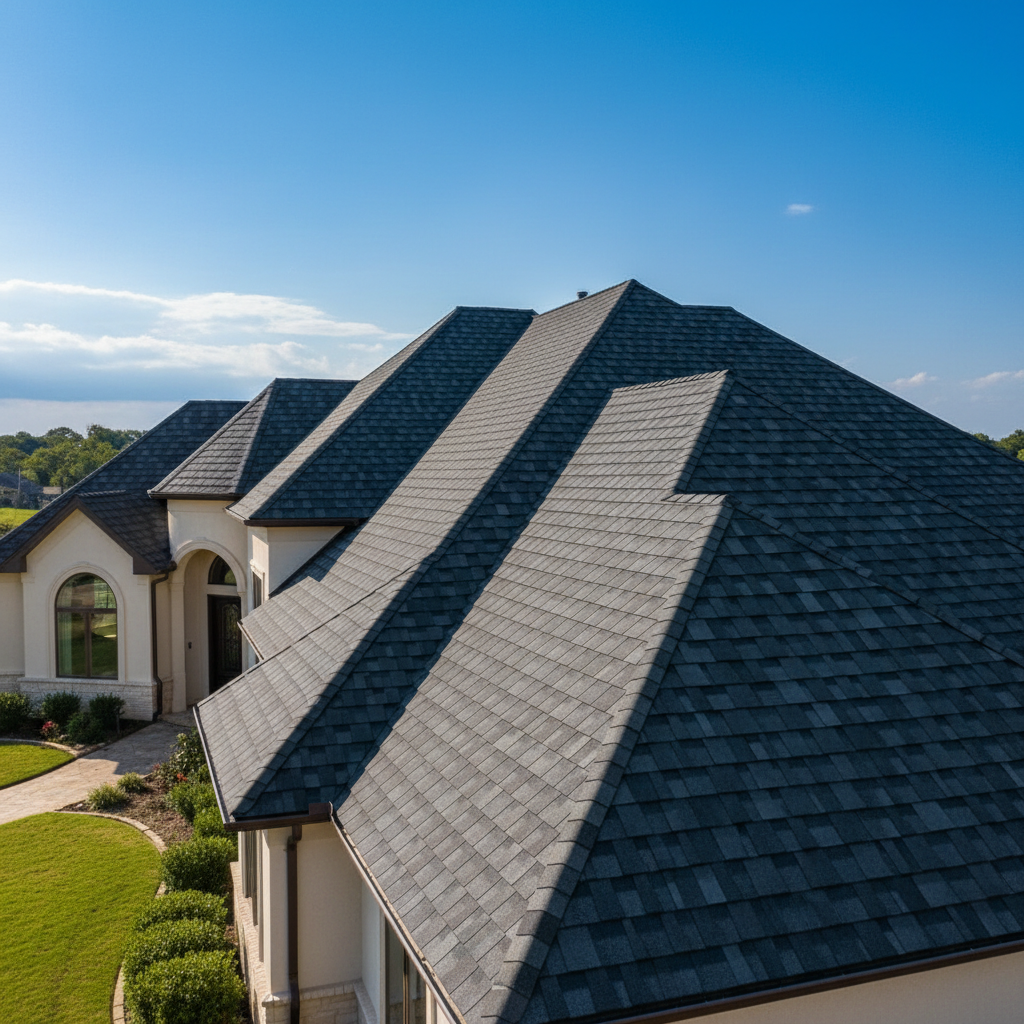
Are Class 4 impact resistant shingles worth the cost in Texas and Oklahoma? Explore real costs, insurance discounts, UL 2218 testing data, and realistic hail protection to decide if the upgrade makes financial sense for your home.
Categories: Roofing Materials
If you are replacing a roof in Texas or Oklahoma, you have likely been asked a direct question by your contractor: do you want to upgrade to Class 4 impact resistant shingles? You know they carry a price premium, and you want to know whether the extra cost is actually justified before signing a contract.
For homeowners in Texas and Oklahoma, the straightforward answer is almost always yes. The financial math, insurance discounts, and storm frequencies in our region make impact resistant shingles one of the few exterior home upgrades that routinely pays for itself.
According to Insurance Information Institute data, Texas averaged 902 major hail events in 2025, leading the entire country by a wide margin. Oklahoma recorded an average of 297 major hail events annually. This geographic reality places both states directly inside America's severe hail corridor. Architectural authorities, building science researchers, and industry estimators like Fixr and composite manufacturer Cedur specifically single out Texas, Oklahoma, Colorado, Kansas, Missouri, and Nebraska as states where impact resistant roofing materials should be treated as essential equipment rather than an optional cosmetic luxury.
However, earning true value from an impact resistant roof requires understanding exactly what you are buying, what the testing ratings mean, how insurance carriers calculate discounts, and what these shingles can and cannot withstand when severe weather hits.
The Financial Math: Upfront Cost vs. Insurance Savings
The central question homeowners ask is simple: how long will it take to recoup the higher installation price? Looking at real-world numbers from the regional market clarifies why this investment works so well in Texas and Oklahoma.
According to national estimating data from Fixr, Class 4 impact resistant shingles cost approximately 10% to 20% more than standard architectural shingles. Across Oklahoma and North Texas roofing supply markets, professional contractors on trade platforms like RoofersCoffeeShop report an average material price premium of approximately $35 more per square (a roofing square equals 100 square feet) above standard architectural asphalt shingles.
For a typical 2,000 to 2,500 square foot single-family home with a 30-square roof, that material and labor premium adds roughly $700 to $1,400 to the total roof replacement cost. On larger residential homes, that upgrade premium might reach $1,500 to $2,200.
Now consider the insurance side of the ledger. Homeowners insurance rates in Texas and Oklahoma are among the highest in the nation due to catastrophic weather claims over the past decade. An average annual homeowner insurance premium in Texas routinely runs between $3,000 and $4,500, with many coastal and hail-prone North Texas suburban policies climbing well past $5,000.
To reduce their catastrophic claim payouts, major insurance carriers offer substantial, ongoing policy discounts for verified Class 4 roofing installations:
- Data from RoofVista tracking North Texas municipal markets like Mesquite indicates that Class 4 shingles produce policy premium discounts ranging from 15% to 28% annually. In certain high-risk submarkets, insurers are increasingly requiring impact resistant shingles simply to renew an active policy.
- In West Texas markets like Lubbock, local insurance data demonstrates premium discounts ranging from 15% to 30%, with carriers aggressively incentivizing impact resistant systems across the panhandle.
- Oklahoma property insurers regularly offer premium deductions between 15% and 25% for documented Class 4 installations.
When you apply those percentages to typical annual premiums, the math becomes compelling:
- Annual Insurance Premium: $3,500
- Class 4 Policy Discount (20% average): $700 saved every year
- Upfront Upgrade Premium Paid: $1,050 (based on a 30-square roof at $35 per square)
- Break-Even Payback Period: 1.5 years
Even under conservative assumptions, an annual policy savings of $450 to $1,000 recoups the entire out-of-pocket upgrade cost within one to three years. Every year after that break-even mark puts cash back into your pocket. If you remain in your home for seven to ten years, a Class 4 roof can generate thousands of dollars in net insurance savings while protecting the physical equity of your property.
Understanding the UL 2218 Testing Standard
Not all shingles marketed as tough or durable qualify for insurance discounts. To earn lower insurance premiums, a product must carry a verified rating under the Underwriters Laboratories (UL) 2218 standard.
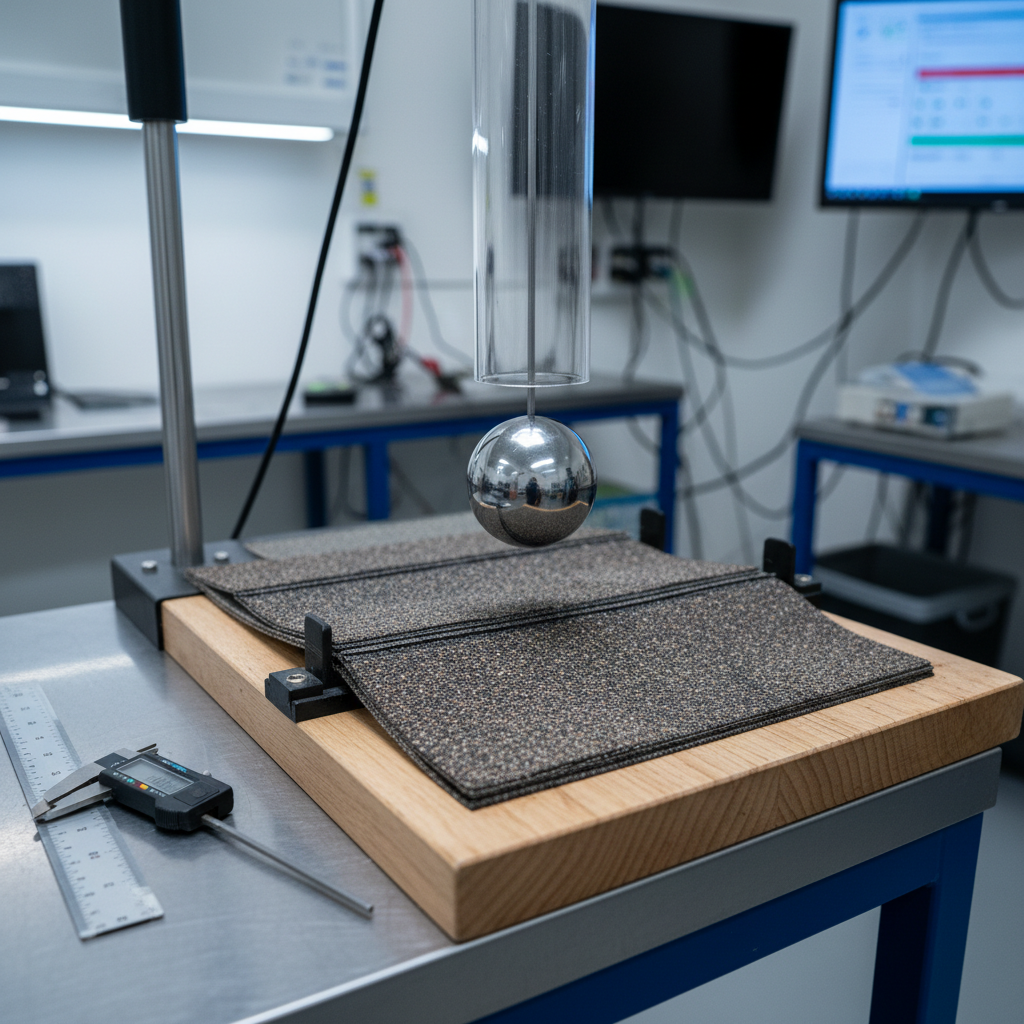
The UL 2218 standard, developed by Underwriters Laboratories in 1996, evaluates how well roofing materials resist kinetic impact. During the laboratory procedure, technicians drop steel balls of varying diameters from precise heights directly onto shingles mounted to a test deck. The test requires two consecutive drops onto the exact same spot.
To pass, the shingle's backing mat, fiberglass core, and surface coating must show no evidence of tearing, fracturing, splitting, or cracking when examined under magnification on both the front and rear faces. The test categorizes materials into four distinct classifications:
- Class 1: Withstands a 1.25-inch steel ball dropped from 12 feet.
- Class 2: Withstands a 1.5-inch steel ball dropped from 15 feet.
- Class 3: Withstands a 1.75-inch steel ball dropped from 17 feet.
- Class 4: Withstands a 2.0-inch steel ball dropped from 20 feet.
A two-inch solid steel ball dropped from 20 feet delivers substantial kinetic energy, closely replicating the impact velocity of large, wind-driven hail. Class 4 represents the highest rating achievable under the standard. It is critical to note that nearly all insurance carriers in Texas and Oklahoma require an authentic UL 2218 Class 4 rating to qualify for premium discounts. A Class 2 or Class 3 shingle will not trigger policy discounts with the vast majority of insurance providers.
Material Differences: What Makes a Shingle Impact Resistant?
How does an impact resistant shingle absorb the kinetic shock of falling ice without rupturing? The difference lies in chemical composition and reinforcing reinforcement mats.
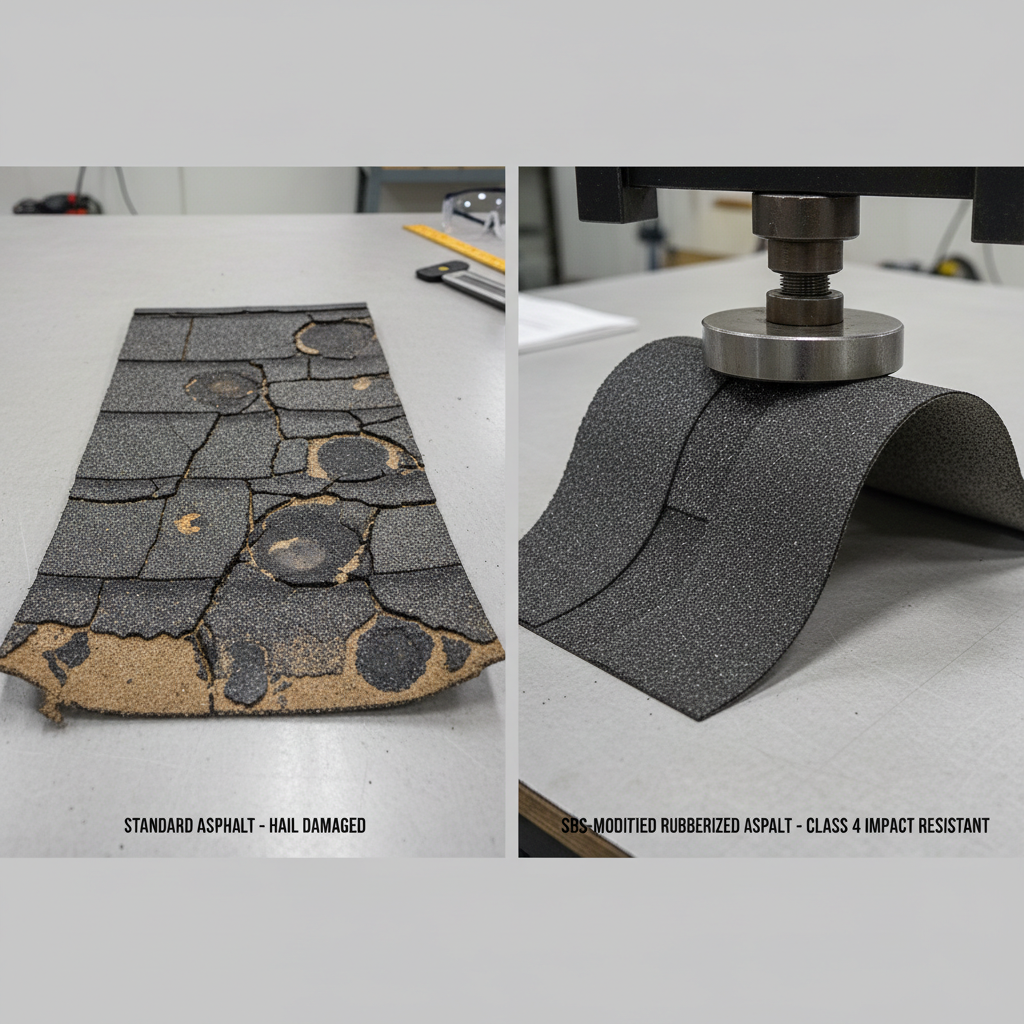
Traditional shingles rely on standard oxidized asphalt applied over a fiberglass mat. When hard hail strikes cold or oxidized asphalt, the material behaves like glass, fracturing beneath the point of impact. Polymer modification transforms the asphalt layer into a rubberized cushion that yields under severe pressure, spreading the kinetic energy across a wider surface and springing back into shape.
Modern Class 4 shingles achieve this durability through two primary manufacturing approaches:
1. Styrene-Butadiene-Styrene (SBS) Polymer Modification
As noted in the June 2026 technical analysis published by the National Roofing Contractors Association (NRCA) through RoofersCoffeeShop, impact resistant shingles engineered with SBS-modified asphalt are gaining broad market share across hail-prone states. Manufacturers blend synthetic rubber polymers directly into the asphalt flux. This process gives the shingle rubber-like elasticity. When struck by hail, the shingle flexes and recovers rather than cracking.
A secondary benefit of SBS modification is cold-weather pliability. Standard asphalt shingles become brittle when ambient temperatures drop, making them highly susceptible to fractures during early spring hail storms. SBS shingles retain flexibility across wide temperature swings, delivering dependable impact resistance whether storms arrive in March or August.
2. Reinforced Backing Fabrics
Other Class 4 options incorporate high-tensile polymeric reinforcing scrims or proprietary fiberglass meshes bonded directly to the back of the shingle mat. While the top asphalt surface and granules absorb the immediate strike, the structural backing prevents the impact from punching through the shingle. This dual-layer defense prevents hidden fractures that allow moisture to penetrate roof decking over time.
Leading manufacturers offer proven Class 4 options designed specifically for high-wind and severe hail markets, including GAF Timberline AS II, CertainTeed NorthGate SBS, and Owens Corning Duration STORM. When evaluating roofing estimates, always check the exact product spec sheet to confirm the proposed line carries full Class 4 certification.
Setting Realistic Expectations: Impact Resistant vs. Impact Proof
While the benefits of Class 4 shingles are proven, homeowners must avoid the misconception that impact resistant means impact proof. The roofing industry intentionally uses the word resistant because no asphalt roofing product can withstand every catastrophic hail event.
As experienced contractors from Oklahoma frequently remind homeowners on trade forums, Class 4 shingles perform exceptionally well against the most common severe hail sizes, specifically hail measuring between one and 1.75 inches (golf-ball size). On a standard roof, one-inch hail frequently tears granule clusters loose, bruises the asphalt layer, and cracks the internal fiberglass mat, necessitating an immediate and costly insurance claim.
Under those same storm conditions, a Class 4 shingle system routinely survives without functional failure. The granules remain bonded, the SBS asphalt flexes, and the waterproof membrane beneath remains completely protected.
However, when atmospheric conditions produce baseball-sized hail (2.75 inches) or softball-sized hail (4.0 inches) driven by 60-mile-per-hour straight-line winds, kinetic impact forces exceed the physical thresholds of any asphalt product. Under extreme bombardment, Class 4 shingles will still bruise, show surface indentations, or suffer structural failure.
Furthermore, your roof system consists of more than just shingles. Even when your Class 4 shingles survive a severe storm intact, adjacent roofing components might sustain damage:
- Aluminum and steel valley metal can show deep dents.
- Roof vents, lead pipe jacks, and attic power fans can be crushed or compromised.
- Gutters, downspouts, and metal drip edge can buckle.
- Flashing around chimneys, skylights, and side walls can separate.
Viewing Class 4 shingles as a tool for substantial risk reduction rather than an invincible barrier establishes realistic expectations. Upgrading ensures that routine spring storms will not automatically result in an inconvenient roof replacement.
The Hidden Catch: Understanding the Cosmetic Damage Endorsement
Before accepting an insurance discount for installing Class 4 shingles, homeowners must understand a common policy provision known as the cosmetic damage waiver or appearance allowance endorsement.
Many insurance carriers operating across Texas and Oklahoma require policyholders to sign a cosmetic damage exclusion in exchange for the annual 15% to 30% premium reduction. This clause states that the insurer will only pay to replace Class 4 shingles if hail breaches the functional integrity of the roof, meaning the impact caused punctures, tears, or active leaks that let water inside your home.
If a severe storm leaves visible circular dents, discoloration, or minor surface dimples across your shingles without causing water infiltration, the insurance carrier may classify the condition as cosmetic damage and deny replacement coverage. For homeowners focused strictly on structural reliability and roof longevity, this trade-off is often acceptable. The ongoing premium savings outweigh the concern over cosmetic blemishes that cannot be seen from street level. However, understanding this policy nuance before installation prevents unpleasant surprises should you ever file a storm claim.
The Insurance Discount Verification Process: 4 Steps to Take
Never assume an insurance discount will apply automatically. Follow this straightforward four-step verification process before committing to a roof replacement contract:
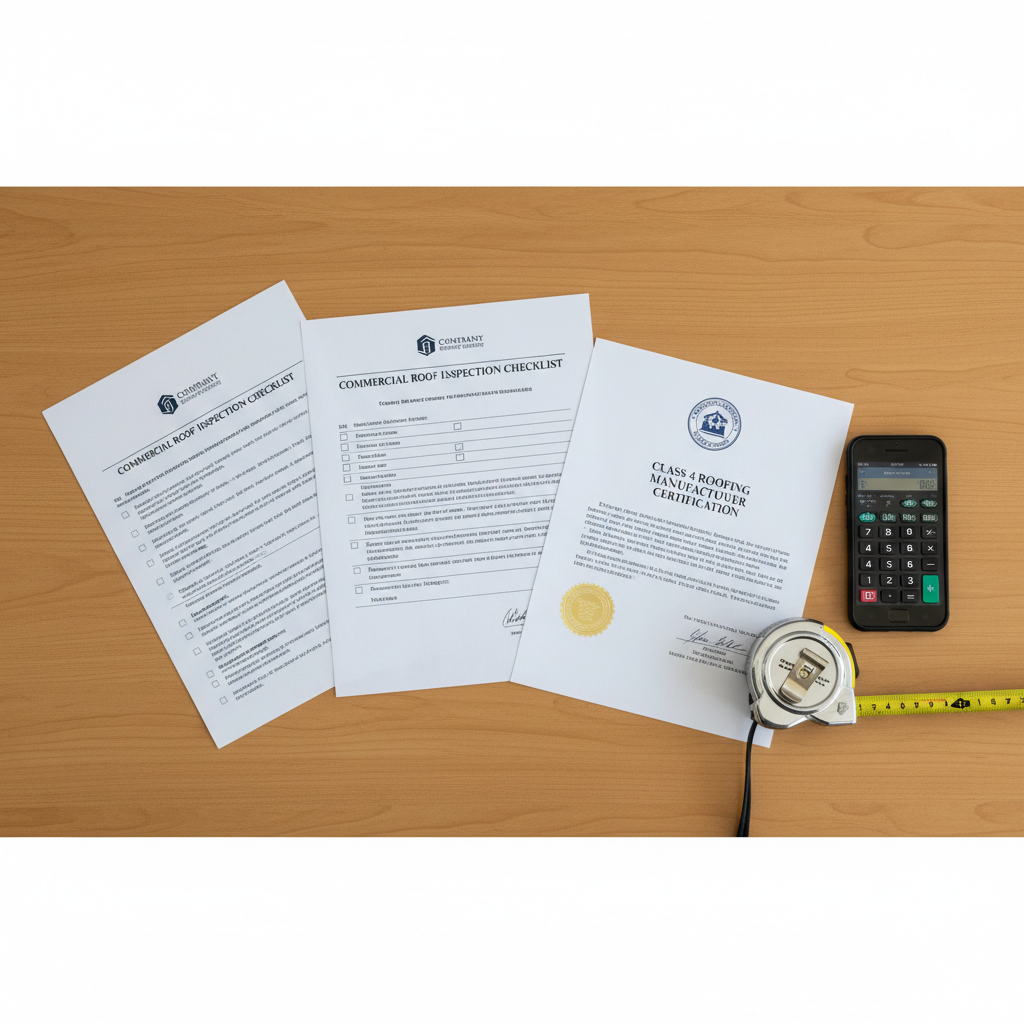
Before you sign any residential roofing contract, make a direct phone call to your homeowner insurance agent or underwriter. Do not rely on assumptions made by a roofing contractor regarding your specific policy terms.
- Confirm Active Class 4 Discounts: Ask your agent directly: "Does my specific policy form provide a rate reduction for installing a UL 2218 Class 4 impact resistant roof?" Ask for the exact percentage discount.
- Request the Approved Product List: Some insurers maintain a proprietary list of pre-approved Class 4 products. Confirm that the exact brand and line you plan to install appears on their eligible list. Installing an unlisted product can disqualify you from receiving rate relief.
- Clarify Cosmetic Waiver Requirements: Inquire whether receiving the discount requires signing a cosmetic damage exclusion endorsement. Make sure you are comfortable with those terms.
- Secure Proof of Installation Documentation: Ask what documentation the claims or underwriting department requires once the job is finished. Most carriers require the contractor to complete an official Texas Department of Insurance (TDI) Certificate of Installation or an Oklahoma equivalent, accompanied by product packaging labels confirming UL 2218 Class 4 verification.
If you are currently managing an open claim from a recent storm, review our guide on navigating the residential insurance claim process to ensure your paperwork and contractor estimates align correctly with carrier requirements.
Class 4 Shingles vs. Alternative Impact Resistant Materials
While asphalt shingles remain the most common residential roofing choice, homeowners considering an impact resistant upgrade often evaluate other material categories. Understanding how Class 4 shingles compare to alternatives helps confirm your selection:
Class 4 Shingles vs. Standing Seam Metal
Standing seam metal roofing offers exceptional wind resistance and longevity, often lasting 40 to 60 years. However, metal systems typically cost two to three times more than a Class 4 asphalt shingle installation. Additionally, hail impacts on metal panels can cause noticeable cosmetic denting that, while structurally sound, alters the appearance of the home. Exploring the structural differences between residential metal roofing versus architectural shingles can help determine whether metal's longer service life justifies the higher upfront investment.
Class 4 Shingles vs. Composite and Synthetic Tiles
Engineered synthetic composite tiles (such as polymer composite shakes and slates) consistently earn Class 4 impact ratings and offer distinctive architectural aesthetics. Manufacturers like Cedur produce composite shakes designed to endure heavy hail corridor storms without cracking. However, synthetic tile systems carry a premium material cost comparable to or higher than standing seam metal. For homeowners seeking the optimal balance between initial affordability, aesthetic versatility, and verified hail resistance, Class 4 modified asphalt shingles remain the practical standard.
Watch Out for Storm Chaser Contractor Tactics
Following severe hail storms across the Dallas-Fort Worth metroplex, San Antonio, Oklahoma City, or Tulsa, neighborhoods are routinely flooded by out-of-state roofing crews looking for quick business. Homeowners must exercise caution when solicited by door-to-door roofers offering free Class 4 upgrades.
Unscrupulous contractors may promise a Class 4 shingle upgrade without billing the difference, only to install standard architectural shingles and pocket the insurance settlement. In other instances, transient contractors install substandard off-brand materials that claim impact resistance on the bundle wrapper but lack certified UL 2218 laboratory testing credentials.
When an unverified product is installed, your insurance carrier will reject your certificate of installation, leaving you without the anticipated policy discounts. Protect yourself by reviewing our practical checklist on identifying storm chaser roofing contractors. Always partner with an established regional contractor maintaining verified physical offices, strong manufacturer certifications, and deep local roots in Texas and Oklahoma.
The Verdict: Are Class 4 Shingles Worth It?
When you weigh the facts, the conclusion is clear. In regions with moderate storm activity, spending extra on impact resistant shingles rarely makes financial sense because the insurance discounts are modest and the threat of severe hail is low.
Texas and Oklahoma are fundamentally different. Our states lead the country in catastrophic hail frequency. With insurance premiums reaching historic highs, the 15% to 30% annual policy discount offered by carriers transforms an impact resistant roof from an added expense into a sound financial decision. With a typical payback period of just one to three years, the upgrade pays for itself rapidly while protecting your home from routine hail storms that ruin standard asphalt shingles.
If you are planning an upcoming roof replacement in Texas or Oklahoma, upgrading to a certified UL 2218 Class 4 shingle system is one of the smartest investments you can make in your property.
Ready to evaluate your home's roof or review impact resistant replacement options? Contact the local specialists at TriVAN Roofing today to schedule a residential roof inspection and discover how our certified installation teams can protect your home for decades to come.
Tags: impact resistant shingles, impact resistant shingles Texas, Class 4 shingles Texas, impact resistant shingles worth it, Class 4 impact resistant shingles insurance discount, UL 2218 Class 4 shingles Texas, impact resistant shingles Oklahoma, hail resistant shingles Texas, Class 4 shingles cost Texas, residential roof replacement hail