
Future of Commercial Roofing: Key Market Insights You Need
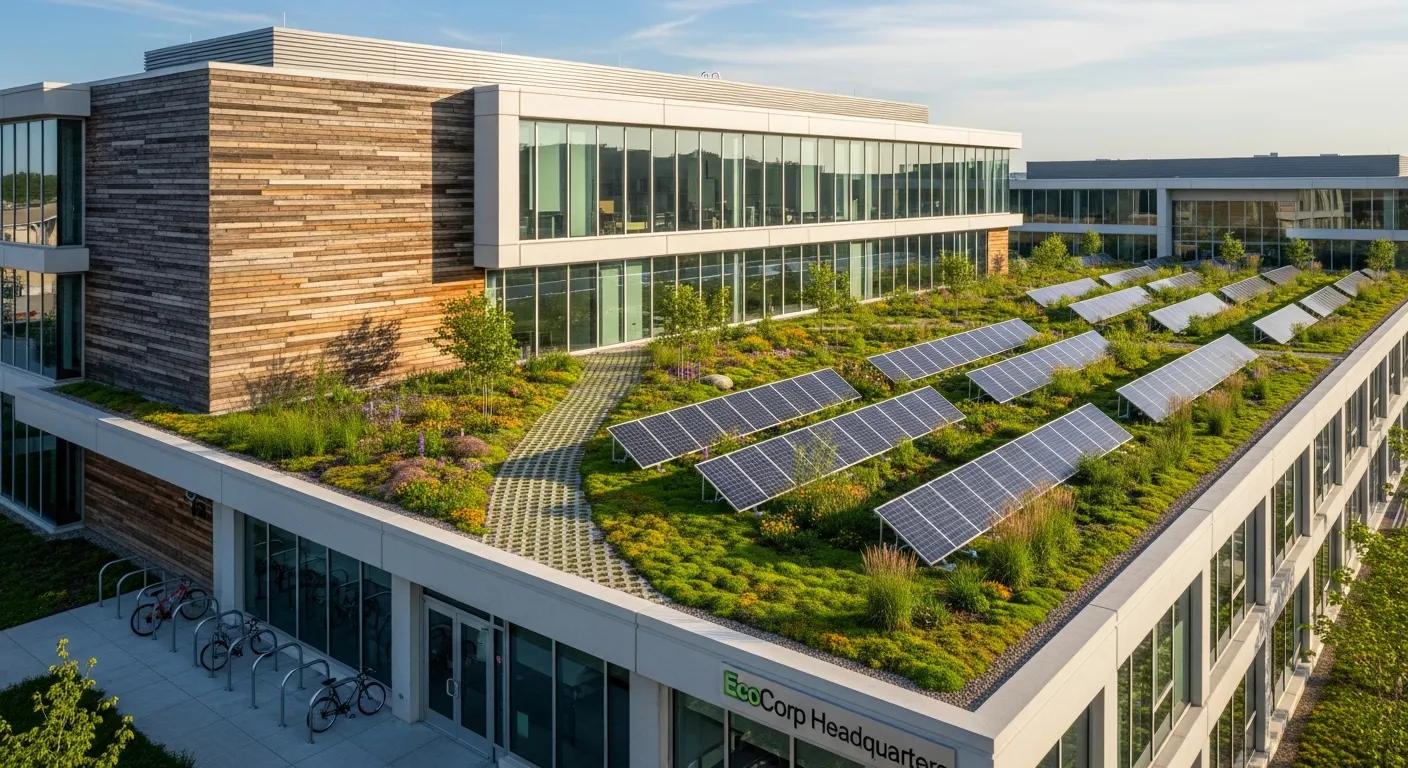
Explore the future of commercial roofing in 2026 with insights on sustainable materials, smart technology, and energy-efficient solutions. Learn how Texas and Oklahoma property owners can reduce costs and future-proof buildings with the right roofing strategies.
Commercial roofing in 2025 sits where sustainability, resilience, and digital tools meet, changing how owners manage costs and extend asset life. This guide lays out the top industry trends, compares sustainable materials, explains practical tech like smart sensors and drone inspections, and turns market projections into specific takeaways for Texas and Oklahoma. Building owners and facility managers face higher energy bills, severe weather, and evolving regulations; the right roofing approach lowers operating costs and future-proofs the envelope. Read on for a decision framework to choose future-ready roofs, a materials comparison with lifecycle metrics, a look at tech-enabled maintenance workflows, and straightforward ROI guidance. Sections cover: the trends shaping 2025; a materials comparison; technology advances including smart roofing and drone/AI inspections; regional market outlooks; energy-efficiency strategies and financial impacts; and a practical owner’s checklist plus how Trivan Roofing supports commercial clients with free assessments. Throughout, relevant phrases like commercial roofing trends 2025, sustainable roofing solutions, and drone roof inspection commercial buildings appear in clear, actionable guidance to help you plan capital and maintenance programs.
What Are the Top Commercial Roofing Trends Shaping 2025?
In 2025 the biggest roofing shifts focus on sustainability, material innovation, and digital-first maintenance, all aimed at lowering lifecycle cost and operational risk. Owners want smaller energy bills, regulators require more resilient and lower-carbon construction, and contractors are using tools that improve inspection accuracy and speed repairs. Knowing these trends helps owners decide whether to retrofit or replace and to evaluate materials based on total cost of ownership, not just initial price. Below we break the trends into practical categories so owners can match strategies to building goals and local climate realities.
High-impact trends to watch in 2025 include:
-
Materials and systems designed with sustainability first, lowering cooling loads and increasing recyclability.
-
Smart roof monitoring and IoT sensors that enable predictive maintenance and minimize downtime.
-
Advanced membranes and coatings that extend service life and boost energy performance.
-
Drone inspections paired with AI analytics to speed defect detection and planning.
-
Regional market shifts that favor resilient systems in climate-exposed areas like Texas and Oklahoma.
Each trend affects choices about materials, maintenance budgets, and procurement. Recognizing them helps owners prioritize investments that deliver measurable ROI, which we explore next in the sustainable materials section.
How Are Sustainable and Eco-Friendly Materials Transforming Commercial Roofing?
Sustainable materials are changing roofing by cutting heat gain, improving durability, and lowering lifecycle environmental impact through recyclability and longer service lives. Examples include reflective coatings that reduce cooling loads, metal systems that are easy to recycle at end-of-life, and vegetative roofs that add thermal mass and manage stormwater. Drivers for adoption include energy cost savings, green building goals, and incentives tied to efficiency and resilience. Today, owners evaluate materials on lifecycle cost, R-value contribution, embodied carbon, and maintenance frequency when comparing options.
Those material choices also change maintenance plans and long-term budgets: longer-lasting systems reduce re-roof cycles and minimize interruptions to building operations. Balancing up-front cost against long-term savings is essential before selecting a commercial roofing system.
Life Cycle Assessment Trends in the Roofing Industry for Sustainable Construction
Roofing materials range from shingles and metal panels to clay, concrete, and green roofs. This review compares different life cycle assessment (LCA) databases and discusses how LCA findings are shaping roofing decisions and sustainable construction practices.
A comprehensive review of life cycle assessment (LCA) studies in roofing industry: current trends and future directions, C Aggarwal, 2024
What Technological Innovations Are Driving Change in Commercial Roofing?
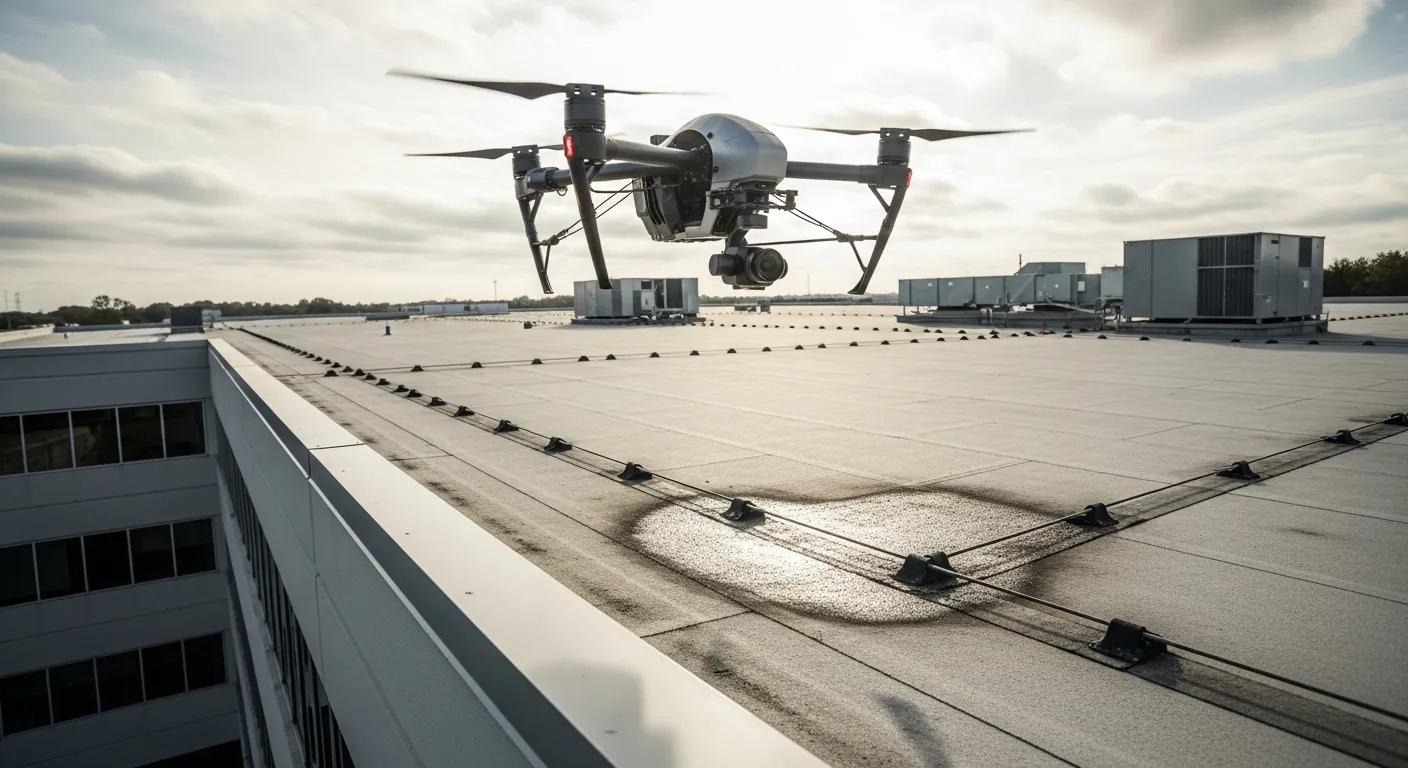
Key technology changes include smart roofing systems that monitor moisture and temperature, drones that capture high-resolution imagery, and AI that turns sensor and image data into prioritized maintenance plans. Continuous condition monitoring gives facility teams the data needed for predictive maintenance, catching problems early and extending roof life. For more information, you can visit our services.
These tools lower inspection costs, improve safety by reducing roof exposure for crews, and help teams shift from reactive to proactive maintenance. The sections that follow dig into material choices and how technology plugs into real-world roof management programs to produce measurable savings.
Which Sustainable Commercial Roofing Materials Offer the Best Benefits?
Sustainable roofing options work in different ways: reflective membranes cut solar gain, metal systems offer longevity and recyclability, and green roofs add insulation and help manage stormwater. Choosing among them means comparing durability, R-value or reflectivity, installation cost, expected lifespan, sustainability score, and maintenance needs. The table below lays out common decision attributes to clarify trade-offs for facility managers and owners.
That table shows standing seam metal and green roofs lead on longevity and sustainability, while single-ply membranes and coatings often deliver the quickest energy payback. The right choice depends on structural capacity, budget horizon, and local climate stressors.
Standing seam metal combines long service life, recyclability, and favorable lifecycle outcomes, making it a strong sustainability choice for many commercial properties. Metal’s low-maintenance profile and recyclable nature support sustainability targets and help lower lifetime costs. Trivan Roofing lists standing seam metal among our commercial specialties and includes honest evaluations and detailed recommendations in our free commercial roof assessments. Owners interested in installations or comparisons can request a free assessment to see how metal stacks up against alternatives.
In short, the best material balances energy performance, lifecycle cost, and maintenance capacity to match owner goals and regional climate. Next we look at the technologies that keep these materials performing over time.
What Are the Advantages of Standing Seam Metal Roofing?
Standing seam metal roofing delivers superior durability, a long service life, and excellent recyclability compared with many single-ply options. Mechanically seamed panels and concealed fasteners lower leak risk, and reflective finishes reduce cooling loads. Metal handles thermal cycling and wind exposure well, making it a good fit where temperatures swing or weather is severe. Routine maintenance is usually limited to inspections and seam checks rather than full membrane replacement, which makes lifecycle budgeting more predictable.
Because standing seam systems pair well with added insulation and solar-ready attachments, many owners find the combined energy and resilience benefits outweigh the higher initial cost over time. These advantages make metal a strong contender when planning long-term roofing strategies.
How Do Green Roofs and Cool Roof Technologies Improve Building Performance?
Green roofs and cool roof technologies improve building performance in complementary ways. Vegetative roofs add thermal mass and use evapotranspiration to cool the building, while cool membranes and coatings reflect solar radiation to reduce heat gain. Green roofs also help manage stormwater, increase biodiversity in urban areas, and lower peak roof temperatures for better occupant comfort. Cool roofs offer immediate cooling benefits and are often a lower-cost retrofit with measurable savings in hot climates.
Implementation considerations include whether the roof structure can support a green roof and the condition of the underlying membrane for coatings. Owners should assess roof deck strength, drainage, and long-term maintenance needs. Comparing these approaches helps select systems that fit sustainability goals, budgets, and operational priorities.
How Is Technology Advancing Commercial Roofing Solutions?
Technology is improving roofing through continuous monitoring, more accurate inspections, and materials science that increases durability and, in some cases, self-healing properties. Smart systems combine sensors, data platforms, and alerts to spot moisture intrusion and thermal anomalies early, preventing interior damage and lowering repair costs. New coatings and membrane formulations resist UV and ponding water better, and emerging materials aim to reduce embodied carbon while extending service life.
As owners adopt these innovations, procurement changes: monitoring and data services increasingly appear in contracts so owners capture long-term savings rather than paying for one-off repairs. The next sections define smart systems and outline drone + AI workflows that are becoming standard for efficient roof asset management.
AI-Powered Recommender System for Smart Commercial Roofing Decisions
AI is being used more widely in construction to support decisions like material selection and roof optimization. This paper describes an AI-based recommender integrated into RoofNav that merges environmental analytics and machine learning to offer context-sensitive recommendations using data such as FM-approved assemblies and local climate.
Smart Roofing Decisions: An AI-Based Recommender System Integrated into RoofNav, 2023
What Are Smart Roofing Systems and Their Benefits?
Smart roofing systems use IoT sensors and cloud platforms to monitor moisture, temperature, and solar exposure across the roof in real time, catching issues early and enabling data-driven maintenance. Common sensors detect moisture intrusion, surface temperature differences, and membrane stress, sending alerts that trigger targeted inspections and repairs. These systems reduce unplanned downtime, extend roof life by addressing small defects before they worsen, and deliver measurable ROI by cutting emergency repair costs and protecting warranty coverage.
Installing a smart system requires a monitoring plan, thoughtful sensor placement, and integration with maintenance workflows so data leads to timely action. Combined with regular inspections and coatings, smart systems become part of a proactive asset-management program that optimizes lifecycle costs and reduces risk.
How Are Drone Inspections and AI Improving Roof Maintenance?
Drone inspections with AI analytics speed up roof assessments by gathering high-resolution visual and thermal imagery without putting people on the roof, then using machine learning to flag defects such as membrane breaches, seam failures, and ponding. A typical workflow starts with a drone flight to collect imagery, followed by AI processing that tags anomalies, scores severity, and maps defect locations for repair crews. This cuts inspection time from days to hours and improves diagnostic precision, enabling focused repairs and more accurate budgeting.
AI outputs – defect heat maps and severity scores – feed prioritized repair plans and create documented baselines for warranties. Together, drones and AI shift roof management from reactive patching to scheduled, prioritized interventions that protect asset value and reduce lifecycle costs.
Owners in Texas and Oklahoma can take advantage of Trivan Roofing’s inspection and maintenance programs that use modern assessment techniques. Schedule an inspection to create a baseline report and a tailored maintenance plan.
What Are the Current Market Growth Projections and Regional Insights?
Market projections for 2025 point to steady growth in commercial roofing, with regional differences driven by construction activity, retrofit demand, and climate impacts that accelerate replacement cycles in some areas. North America continues to invest in retrofits and resilient systems, while Texas and Oklahoma have strong demand for roofs that handle heat, wind, and hail. Drivers include new commercial construction, corporate sustainability goals, energy cost pressure, and incentive programs that reward efficiency upgrades.
The table below summarizes comparative market metrics for North America, Texas, and Oklahoma, focusing on market size indicators and growth drivers.
These regional patterns suggest owners in Texas and Oklahoma should prioritize durable, reflective, and easy-to-maintain systems to lower total cost of ownership. Local contractors and licensed specialists who understand regional weather and regulations can translate national trends into the right local specifications.
How Is the Commercial Roofing Market Growing in Texas and Oklahoma?
Growth in Texas and Oklahoma is shaped by commercial construction, extreme weather events, and growing focus on energy performance. Heat-driven cooling demand in Texas makes reflective membranes and high-R-value assemblies attractive, while Oklahoma’s storm exposure raises interest in wind- and impact-resistant systems. Local labor availability, supply-chain dynamics for membranes and metal, and state or municipal incentives also influence project timing and material choices.
Owners in these states should evaluate roofing strategies that deliver both energy efficiency and resilience, systems that cut cooling loads and resist wind-driven damage. Working with local specialists helps ensure specs match climate realities and procurement timelines.
What Economic and Industry Factors Influence Market Trends?
Material costs, labor availability, supply-chain constraints, energy price volatility, and updates to building codes all shape roofing trends. Inflation can extend payback periods for efficiency upgrades, while incentives and tax credits shorten them and improve project economics. Labor shortages make longer-lasting systems more valuable because they reduce the need for repeat installations.
Understanding these factors helps owners time projects strategically, scheduling replacements when incentives or favorable pricing align with operational needs, to maximize ROI and minimize disruption.
How Can Energy-Efficient Commercial Roofing Solutions Reduce Costs?
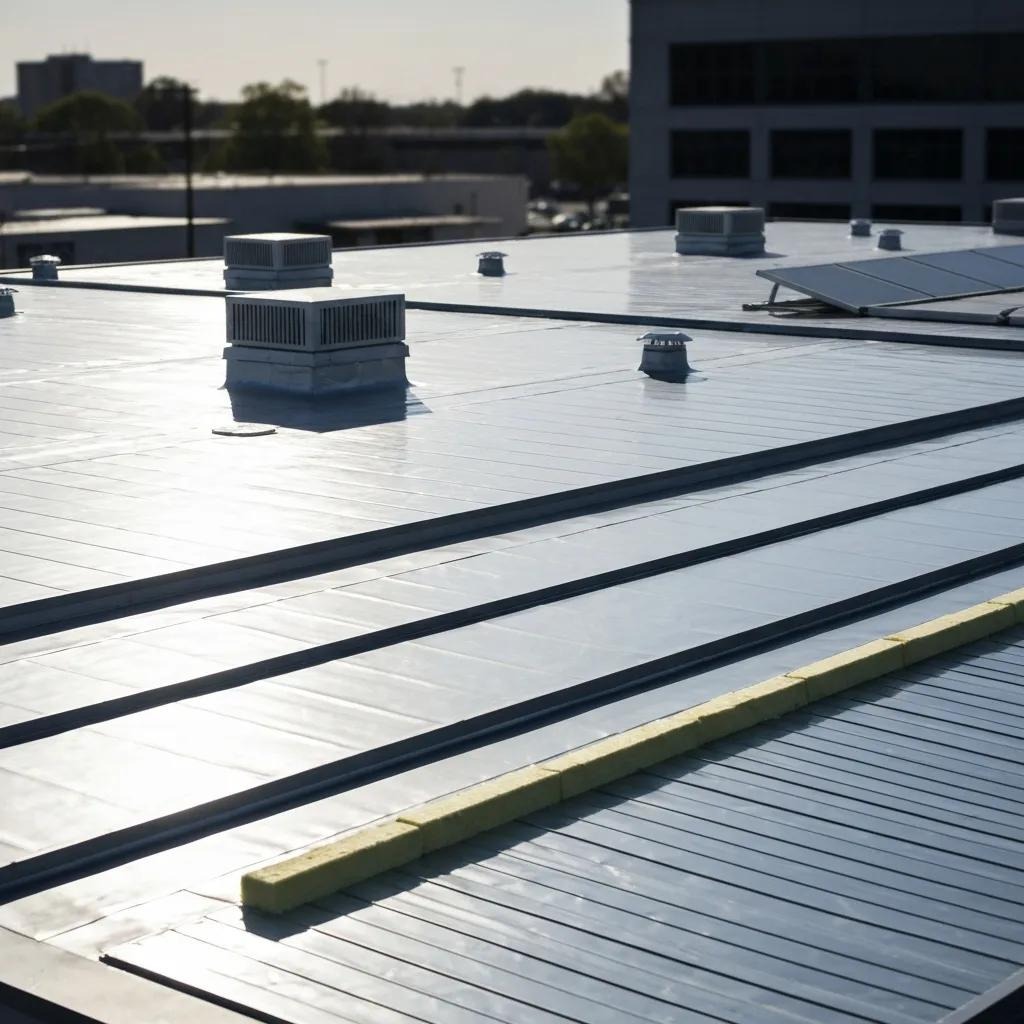
Energy-efficient roofing lowers costs by reducing HVAC loads, extending roof life, and qualifying buildings for incentives that offset upfront investment. Solutions include reflective membranes (cool roofs), better insulation and roof assemblies, and coatings that cut radiant heat absorption. Savings vary with climate, building use, and baseline efficiency, but owners commonly see noticeable drops in peak cooling demand and annual energy bills when they optimize the roof.
Main mechanisms by which efficient roofing saves money:
-
Reflective surfaces reduce solar heat gain and cut cooling energy use.
-
Added insulation or thermal breaks lower conductive heat transfer and stabilize indoor temperatures.
-
Coatings and membranes extend service life and delay full re-roof cycles.
Together, these effects produce direct utility savings and indirect benefits – reduced HVAC strain and longer intervals between major roofing investments – improving lifecycle economics for owners.
This comparison shows how lower-cost measures like coatings can return savings quickly, while deeper upgrades deliver larger lifetime benefits. Owners should model savings against local energy rates and incentives to prioritize investments.
What Are the Financial Benefits of Energy-Efficient Roofs?
Energy-efficient roofs reduce utility bills, lower peak demand charges, and often extend roof life, combining to improve building value and operating margins. In warm climates, cool roofs can cut cooling energy use by measurable amounts, creating annual savings that compound over the roof’s service life. Better insulation reduces year-round HVAC load and improves occupant comfort, which can lower tenant turnover and maintenance claims.
When owners add monitoring and routine maintenance, further savings come from avoiding emergency repairs and shortening downtime. Those cumulative gains make efficiency investments financially attractive, especially when incentives or tax programs offset initial costs.
Which Insulation and Coating Technologies Enhance Energy Performance?
High-performance insulating boards, tapered systems that improve drainage, and reflective single-ply membranes or cool coatings are among the most effective ways to boost energy performance. High-reflectance coatings lower surface temperatures, while insulation increases the assembly’s thermal resistance. Installation complexity varies: coatings are common retrofit options, while insulation and membrane replacements are more invasive but yield larger long-term savings.
Choosing the right mix depends on roof condition, structural capacity, and budget horizon. Owners should weigh short-term payback against longer-term lifecycle gains.
How Can Business Owners Choose a Future-Ready Commercial Roof?
Picking a future-ready roof starts with a clear decision framework: define building goals (energy, resilience, sustainability), evaluate lifecycle cost versus initial price, confirm contractor capability for the selected system, and include monitoring or maintenance plans to protect the investment. Key procurement criteria are proven material performance in the local climate, licensed installers with strong warranty practices, and access to data-driven maintenance programs. A structured checklist helps owners make defensible choices aligned with budgets and long-term asset plans.
Use this checklist before contracting a roofing project:
-
Performance Goals: Set clear energy, durability, and sustainability targets for the roof.
-
Budget Horizon: Choose materials that match your payback tolerance and maintenance capacity.
-
Climate Resilience: Prioritize systems rated for local wind, hail, and thermal stressors.
-
Contractor Capability: Verify licensed installers experienced with the chosen system and local codes.
Following this checklist keeps procurement focused on total cost of ownership and operational outcomes rather than just the lowest installation price. The next subsection explains how Trivan Roofing turns this checklist into action through our assessments and reporting.
What Factors Should Be Considered When Selecting Sustainable Roofing?
Choosing sustainable roofing means weighing durability, ROI, maintenance needs, regulatory compliance, and environmental impact together. Durability drives lifecycle cost and maintenance schedules; ROI depends on local energy prices, incentives, and occupancy patterns. Compliance with codes and sustainability certifications can affect financing and tenant expectations, while metrics like recyclability and embodied carbon feed corporate sustainability reporting.
Prioritization depends on owner goals: a cost-focused owner may prefer coatings or single-ply membranes for quick payback, while a sustainability-driven owner may invest in metal or green roofs for longer-term environmental benefits. Clear goals simplify specification and contractor selection.
How Does Trivan Roofing Support Commercial Clients with Expert Assessments?
Trivan Roofing helps commercial clients with free commercial roof assessments that deliver an honest condition review, a detailed report, and clear recommendations aligned to asset goals. Assessments document current conditions, identify near-term repairs, and outline options for efficiency upgrades or full replacement so owners can prioritize work by risk and payback. Licensed commercial roofing specialists serving Texas and Oklahoma include region-specific insights, and the assessment report helps owners compare viable systems – from standing seam metal to flat options – based on lifecycle outcomes.
If you’re ready to evaluate options, Trivan Roofing’s free assessment gives a clear next step: a thorough inspection, a transparent report with recommended actions, and follow-up estimates for repairs or replacement. That practical support helps owners move from strategy to implementation with confidence.
Conclusion
Preparing for the future of commercial roofing means choosing sustainability, practical technology, and cost-effective solutions that improve building performance. By understanding the trends and selecting the right materials and maintenance strategy, owners can cut operating costs and increase resilience to climate impacts. Working with experts like Trivan Roofing for a comprehensive assessment simplifies decision-making and aligns roofing strategies with long-term goals. Take the first step toward a future-ready roof, schedule your free assessment today.
Ready to future-proof your commercial roof?
Contact TriVAN Roofing for a free commercial roof assessment. Our experts will evaluate your current system, identify opportunities for energy savings and resilience improvements, and recommend the best solutions for your Texas or Oklahoma property. Schedule your complimentary assessment today and discover how the latest roofing innovations can reduce your costs and extend your roof's life.
Contact Us Today