
Enhance Your School’s Longevity with Flat Roof Installation
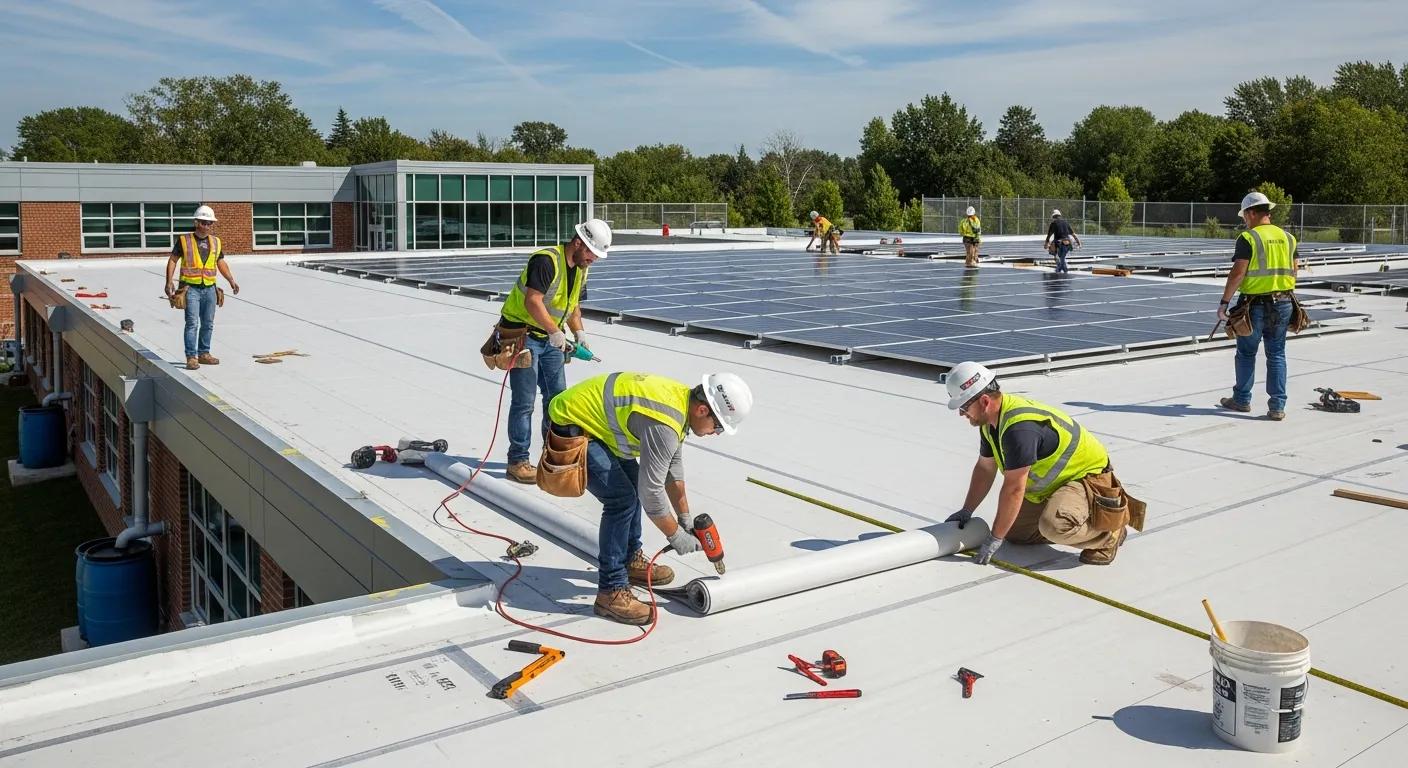
Discover how flat roof systems deliver energy savings, durability, and cost efficiency for Texas and Oklahoma schools. Compare TPO, EPDM, and PVC materials, learn maintenance best practices, and explore sustainable roofing options that support tight educational budgets.
Flat roofs are a common, practical choice for schools because they deliver real operational advantages. This piece breaks down how flat roof systems help educational buildings: from energy savings and long-term durability to cost-effective lifecycle planning. With budgets tight and sustainability goals rising, flat roofs give districts flexible, efficient options. You’ll find guidance on the right system characteristics for schools, material comparisons, and maintenance approaches, plus how TriVAN Roofing supports schools in Texas and Oklahoma with tailored flat-roof solutions.
Research underscores the value of targeted strategies to improve energy performance in school facilities.
Energy-efficiency strategies for sustainable school buildings
This study examines ways to boost energy performance in Italian school buildings, using the Amaldi Sraffa high school complex in Orbassano as a case study. It combines planning and implementation methods and highlights tools like Building Information Modeling (BIM) and energy simulation software (Edilclima) to model improvements while meeting European technical standards.
Enhancing Energy Efficiency in Italian School Buildings: A Comparative Study of Sustainable Strategies with use of BIM and Edilclima, 2023
Why flat roof systems work well for schools
Flat roofs fit school campuses because they maximize usable roof area and simplify equipment placement. That open surface makes it easy to site HVAC units, add solar panels, or create green roof areas. The result: more functional space and design flexibility that supports building performance and campus needs.
What advantages do flat roofs bring to school buildings?
Flat roofs bring practical benefits that matter to facility managers and administrators: industries
-
Energy savings : Properly specified flat systems can use reflective membranes and insulation to lower heating and cooling loads.
-
More usable rooftop space : Equipment, solar arrays, and recreation or green roofs are easier to accommodate on flat surfaces.
-
Lower long-term maintenance costs : With the right materials and a planned maintenance program, flat roofs can be economical over their service life.
Those advantages make flat roofs a sensible choice for schools focused on efficiency and value.
How do flat roofs help with space use and HVAC access?
Flat roofs simplify HVAC placement and service access, which reduces downtime and disruption. They also create a predictable surface for mounting solar panels, mechanical platforms, or landscaped roof features that improve insulation and stormwater management.
Which flat roofing materials are best for schools: TPO, EPDM, PVC
When choosing a membrane, common options include TPO, EPDM, and PVC. Each material has trade-offs in cost, longevity, and suitability for different campus needs.
|
Material |
Benefit |
Cost |
|---|---|---|
|
TPO |
Reflective and energy-efficient |
Moderate |
|
EPDM |
Proven durability and value |
Low to moderate |
|
PVC |
Chemical resistance and long service life |
Higher upfront cost |
How does TPO roofing help schools save energy?
TPO membranes reflect sunlight and reduce heat gain, which lowers cooling demand during hot months. That reflective performance can translate to noticeable savings on energy bills over time, especially in warmer climates.
How does EPDM deliver durability and savings?
EPDM is known for its long service life and weather resistance. With routine maintenance, an EPDM roof can perform for decades, reducing replacement frequency and smoothing capital costs for a district.
Why choose PVC for chemical resistance and longevity?
PVC is often selected where chemical exposure or grease and solvent contact is a concern, such as near shops or lab areas. Its resistance and durability help maintain roof integrity and reduce lifecycle risk.
How energy-efficient roofs lower schools' operating costs
Energy-conscious roof systems directly reduce HVAC loads, freeing funds for classrooms and programs. Over time, lower energy use means meaningful savings that support school budgets. Energy-conscious roof systems directly reduce HVAC loads, freeing funds for classrooms and programs.
What role does cool-roof technology play in saving energy?
Cool-roof materials reflect more solar energy and cut rooftop temperatures. That can reduce cooling system runtime and costs in warm seasons. For year-round performance, designers balance cooling benefits with any potential heating penalties in cooler months.
Studies confirm that cool roofs can improve a school building’s overall energy profile when applied thoughtfully.
Cool-roofs and school energy performance
The research finds cool roofs are an effective energy-saving measure for school buildings, particularly when paired with efficient cooling systems. Designers should weigh seasonal heating impacts to optimize net annual savings.
Experimental and numerical assessment of cool-roof impact on thermal and energy performance of a school building in Greece, GM Stavrakakis, 2016
How do insulation and reflective materials reduce HVAC costs?
Good insulation combined with reflective membranes lowers heat transfer through the roof. That reduces HVAC cycling and can improve indoor comfort, a direct benefit for both energy budgets and occupant experience.
Best practices for flat roof maintenance and campus safety
Regular maintenance is the key to long-term roof performance. Schools should adopt scheduled inspections and preventive repairs to avoid disruptive, expensive failures.
How often should schools schedule inspections and preventive maintenance?
Most facilities schedule at least two roof inspections per year, typically spring and fall. Routine tasks like clearing drains, checking flashings, and repairing small issues keep systems performing and extend service life.
A documented maintenance plan is one of the most effective ways to protect a roof investment and prevent premature deterioration.
Maintenance planning for flat-roof longevity
This study outlines a maintenance program for existing flat roofs, analyzing the main factors that affect roof wear and performance. Regular evaluation of system condition helps tailor maintenance to environmental and structural factors.
Maintenance programmes for flat roofs in existing buildings, I Flores-Colen, 2017
What safety protocols does TriVAN Roofing use on active school campuses?
TriVAN Roofing follows strict safety procedures on occupied campuses: trained crews, clear signage, and coordination with school staff to reduce disturbance. We plan work to keep students and staff safe while projects move forward smoothly.
How TriVAN Roofing helps schools across Texas and Oklahoma
TriVAN Roofing provides commercial flat-roof expertise for schools across Texas and Oklahoma. Our local experience helps districts select systems that balance performance, budget, and long-term value.
What local case studies show TriVAN Roofing’s school experience?
We’ve completed many school projects that demonstrate our ability to deliver durable, efficient roofing systems. Local case studies show our focus on quality, timely delivery, and satisfied customers.
How does TriVAN Roofing minimize disruption during school roof work?
We minimize disruption through careful scheduling, open communication with administrators, and by performing noisy or disruptive tasks during breaks or off-hours whenever possible so classroom activities continue uninterrupted.
Sustainable, budget-friendly options for school flat roofs
Schools can pursue sustainable roof upgrades without breaking the budget. Thoughtful design and funding strategies make green and energy-saving options achievable.
How do green roofs and solar fit into school sustainability plans?
Green roofs improve insulation and help manage stormwater, while rooftop solar offsets electricity use. Combined, these strategies lower operating costs and support sustainability goals that benefit students and the community.
What financing or grant options help schools manage roof costs?
Many districts tap into grants, energy-efficiency incentives, and financing programs to fund roof upgrades. These programs help schools invest in higher-performing materials and systems without overstretching capital budgets.
Conclusion
Flat roofs offer schools measurable benefits: improved energy performance, more usable rooftop space, and predictable lifecycle costs when paired with proper maintenance. Choosing the right materials and a local, experienced contractor helps protect your investment. Contact TriVAN Roofing to discuss flat-roof options that meet your district’s performance and budget goals.
Is your school district planning a flat roof replacement or dealing with energy efficiency challenges?
Contact TriVAN Roofing for a comprehensive assessment tailored to educational facilities. Our Texas and Oklahoma teams specialize in flat roofing systems for schools—TPO, EPDM, and PVC installations designed to maximize energy savings while minimizing campus disruption. We understand tight budgets, complex schedules, and the unique needs of active campuses. Schedule your free school roof evaluation today and discover how proper flat roof selection and maintenance can reduce operating costs for decades while supporting your district's sustainability goals.
Contact Us Today