Drone Roof Inspections: Separating High-Tech Hype from On-the-Deck Reality for Commercial Buildings
| By TriVAN Roofing | 10 min read
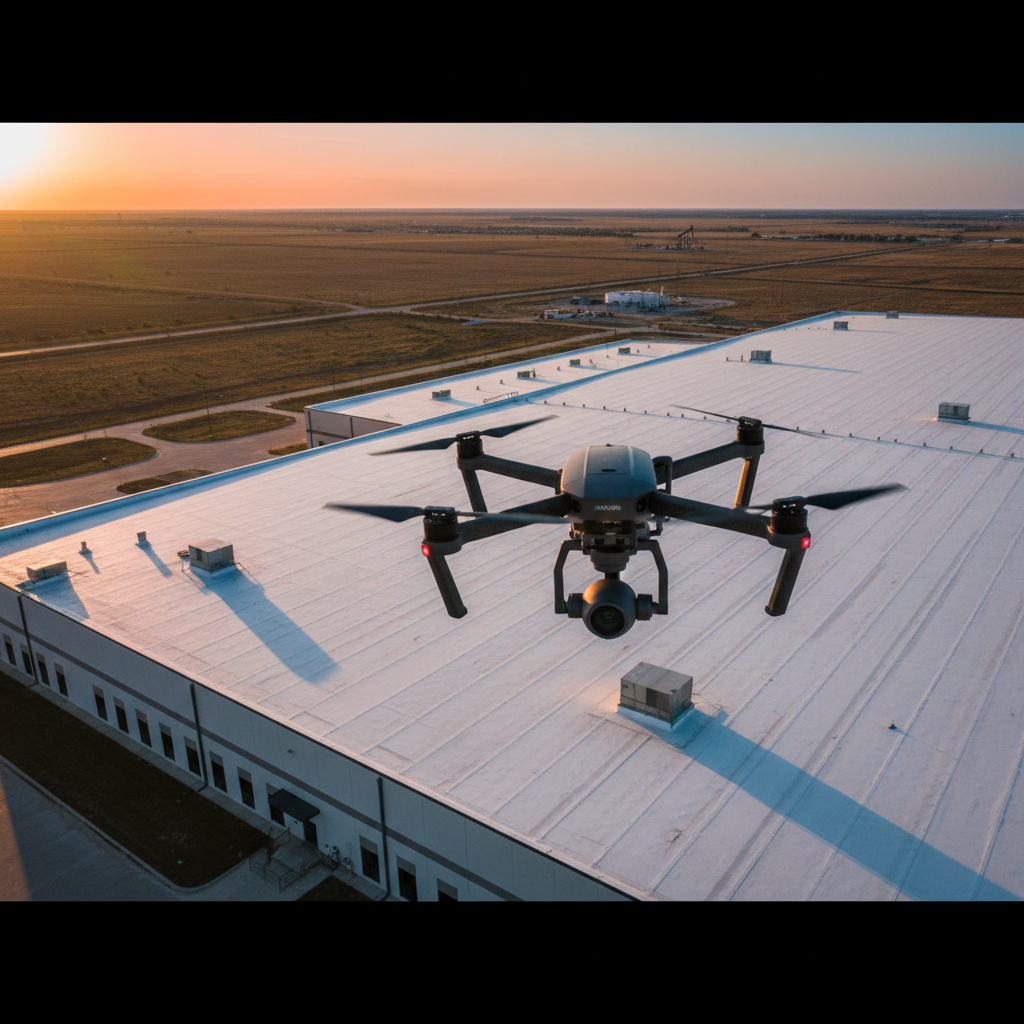
Drone inspections offer speed and safety, but they can't replace a hands-on assessment. Learn what drones can and can't do for your commercial roof, from thermal imaging requirements to the need for physical seam and flashing evaluation for Texas pro
Categories: Industry Insights
The Rise of the Drone: A New Tool for an Old Trade
Over the last decade, unmanned aerial vehicles, or drones, have moved from a niche hobby to a mainstream business tool. The commercial roofing industry is no exception. You have likely seen the marketing: slick videos of drones gliding over vast rooftops, promising faster, safer, and more thorough inspections than ever before. Some of these claims hold up. Others, however, present a picture that is more marketing sizzle than diagnostic steak.
For facility managers and building owners in Texas and Oklahoma, it is crucial to understand what this technology actually delivers. A drone is a powerful tool, but it is just that: a tool. It is not a replacement for the experience and hands-on knowledge of a seasoned roofing professional. Believing a drone flight alone constitutes a comprehensive commercial roof inspection is a misunderstanding that can lead to missed issues and costly future repairs. This article provides a realistic look at where drones excel, where they fall short, and how a blended approach offers the most accurate assessment of your commercial roof's condition.
What Drones Genuinely Do Well: Speed, Scale, and Safety
Let's start with the clear advantages. In specific applications, drone surveys are not just helpful; they are superior to traditional methods.
Unmatched Documentation and Speed on Large Roofs
Consider a 250,000-square-foot distribution center in the Dallas-Fort Worth area. Walking every square foot of that roof is a time-consuming, labor-intensive task. An inspector might walk the perimeter, check key transition areas, and inspect a representative section of the field. It is often impractical to document the entire surface.
A drone changes this equation completely. In a fraction of the time it takes to perform a walking inspection, a drone can fly a pre-programmed grid pattern, capturing thousands of high-resolution photographs. These images are then stitched together to create a single, zoomable orthomosaic map of the entire roof. This provides several key benefits:
- Complete Coverage: You get a visual record of 100% of the roof surface, not just a sample. This can reveal widespread issues like hail damage patterns or debris accumulation that might be missed in a walking survey.
- Historical Baseline: The orthomosaic map becomes a permanent digital record. After the next major hailstorm, a new flight can be compared directly against the baseline, making it easy to identify new damage versus pre-existing conditions. This is invaluable for insurance claims.
- Efficiency: For portfolio managers overseeing dozens of properties, drone surveys allow for rapid, cost-effective condition assessments across multiple locations.
Inspecting the Inaccessible and Unsafe
Some roofs, or sections of roofs, are simply not safe for a technician to walk on. This is another area where drones provide a clear and undeniable advantage. Key scenarios include:
- Steep-Slope Sections: Many commercial buildings have architectural features with steep metal or tile roofs that require complex safety rigging to access. A drone can inspect these areas safely from a distance.
- Structural Concerns: If a roof is suspected of having structural damage, sending a person onto it is an unacceptable risk. A drone can provide an initial visual assessment without putting anyone in harm's way.
- Post-Storm Damage Assessment: After a severe hurricane or tornado, roofs can be littered with dangerous debris or have compromised structural integrity. A drone provides the critical first look for a post-storm damage assessment, allowing teams to evaluate the situation and plan for safe entry.
The Critical Truth About Thermal Drone Inspections
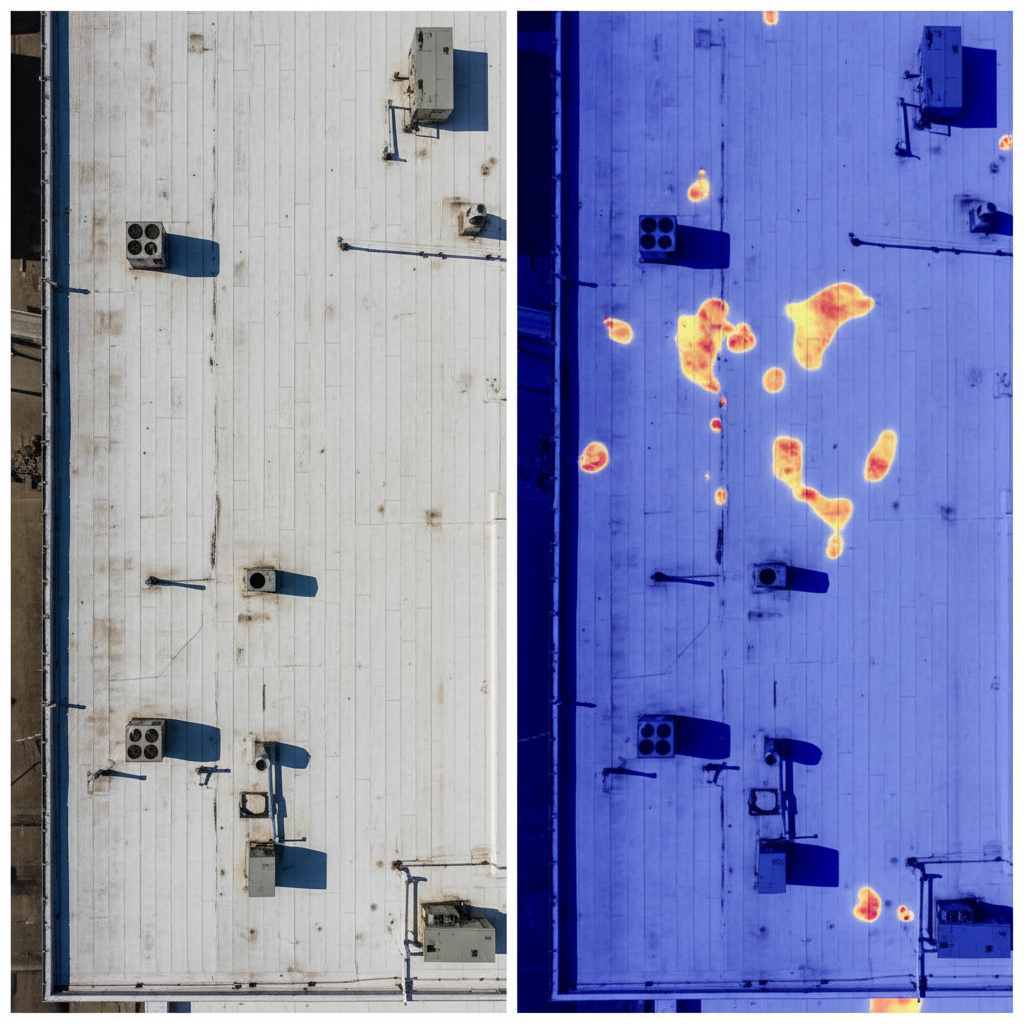
One of the most powerful applications for drones is carrying a thermal camera. Thermal imaging, also known as infrared or IR inspection, is designed to detect subsurface moisture trapped in roofing insulation. During the day, the sun heats the entire roof. After sunset, dry areas of the roof cool down quickly. However, areas where insulation is saturated with water retain heat for much longer. A thermal camera sees this temperature difference, revealing the location and extent of moisture intrusion as "hot spots."
This technology is incredibly effective, but only when used correctly. Unfortunately, this is where much of the marketing hype misleads building owners. For a thermal scan to produce diagnostically valid results, three conditions are non-negotiable, whether the camera is on a drone or in a technician's hand:
- Correct Timing: The inspection MUST be conducted at least 3 to 4 hours after sunset. This allows the dry roof surface to cool sufficiently, creating the necessary temperature contrast against the warm, wet areas.
- Sufficient Temperature Differential: There needs to be a temperature swing of at least 10 to 15 degrees Fahrenheit between the daytime high and the nighttime temperature for a clear reading.
- Dry Conditions: The roof surface must be dry, and there should have been no rain for at least 24 hours prior to the scan. A wet surface will obscure the thermal signatures from below.
This is not a suggestion; it is a requirement of physics. A thermal scan performed at 1:00 PM on a sunny July day is not an inspection. it is a solar heat map, providing zero valid diagnostic data about subsurface moisture.
Many companies produce impressive-looking, colorful daytime thermal images that show which parts of the roof are hottest from direct sun exposure. This is theater, not science. A legitimate thermal inspection happens in the dark and reveals the hidden moisture that leads to energy loss, deck corrosion, and eventual system failure.
What Drones Can’t See: The Need for Hands-On Assessment
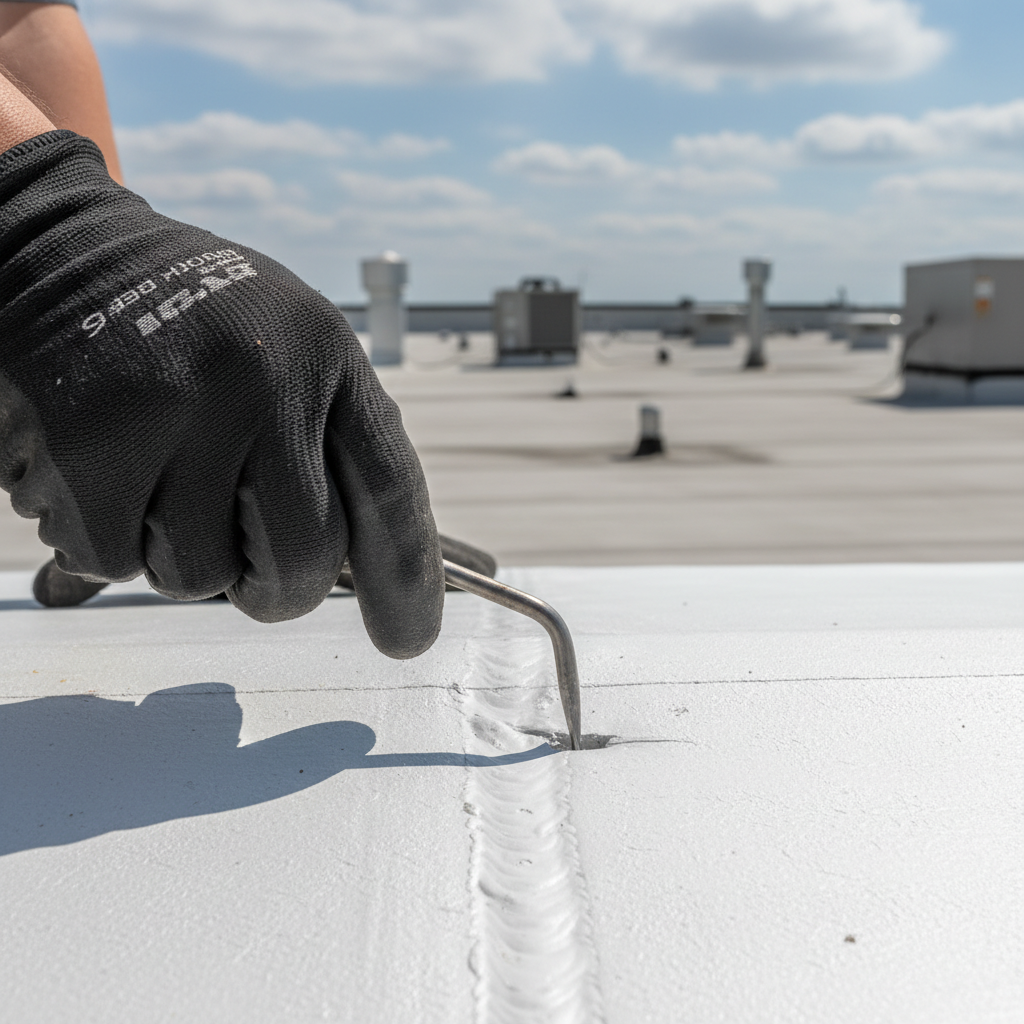
For all their benefits, drones are limited by one simple fact: they cannot touch the roof. An experienced inspector uses more than just their eyes. A comprehensive assessment involves tactile evaluation that an aerial camera, no matter how high its resolution, can never replicate. Here is what a drone-only inspection will always miss.
Physical Probing of Seams and Flashings
On single-ply roofs like TPO and PVC membrane systems, the most vulnerable points are the seams where sheets are welded together and the flashings around penetrations like pipes, vents, and HVAC curbs. A photograph might show a seam that looks perfectly fine from 50 feet in the air. However, an aging weld can become "cold" or brittle, losing its bond from the inside out.
A drone can show you where a seam is. It cannot tell you if that seam is about to fail. An experienced technician must physically probe seams, flashings, and termination points, feeling for subtle signs of delamination, adhesive failure, or brittleness that are invisible from the air. Catching a single failed seam weld early can prevent a major leak. This is a task that requires hands and a specialized tool, not propellers.
Detailed Penetration and Flashing Conditions
While a drone can spot a cracked pipe boot from the air, it cannot provide the detailed analysis needed for repair planning. An inspector on the roof will examine the flashing from all angles, check the integrity of the sealant in the termination bar, look for signs of membrane pulling away from the curb, and check for hidden deterioration on the underside of a drain flange. These are micro-details that determine the roof’s long-term performance, and they require a close-up, hands-on view.
Substrate Conditions Without a Thermal Signature
A thermal camera is great for finding water, but many other issues do not produce a heat signature. A walking inspection allows a technician to feel for other problems underfoot:
- Insulation Compression: Over time, insulation boards can become compressed in high-traffic areas, creating low spots that can lead to ponding water.
- Fastener Back-Out: In mechanically attached systems, fasteners can slowly work their way up, pushing against the underside of the membrane. This condition, known as "fastener back-out," is a precursor to a puncture but is often invisible from the air until it is too late.
- Deck Corrosion: A technician can sometimes spot early signs of deck corrosion from below or feel a "sponginess" in the roof assembly that indicates a problem with the underlying structural deck.
Tactile Membrane Assessment
The surface of a roofing membrane tells a story to an experienced hand. Is the TPO membrane still flexible, or is it becoming brittle? Is the granule loss on a modified bitumen roof accelerating, exposing the asphalt below to damaging UV rays? How much "life" is left in the material? These are questions answered by touch, feel, and experience gained over thousands of hours on commercial rooftops. A photograph captures a moment in time; a tactile assessment helps predict the future.
The Fine Print: FAA Certification and Data Analysis
Beyond the technical capabilities, there are two critical business considerations every facility manager must understand before hiring a drone inspection service.
FAA Part 107 Certification Is a Non-Negotiable
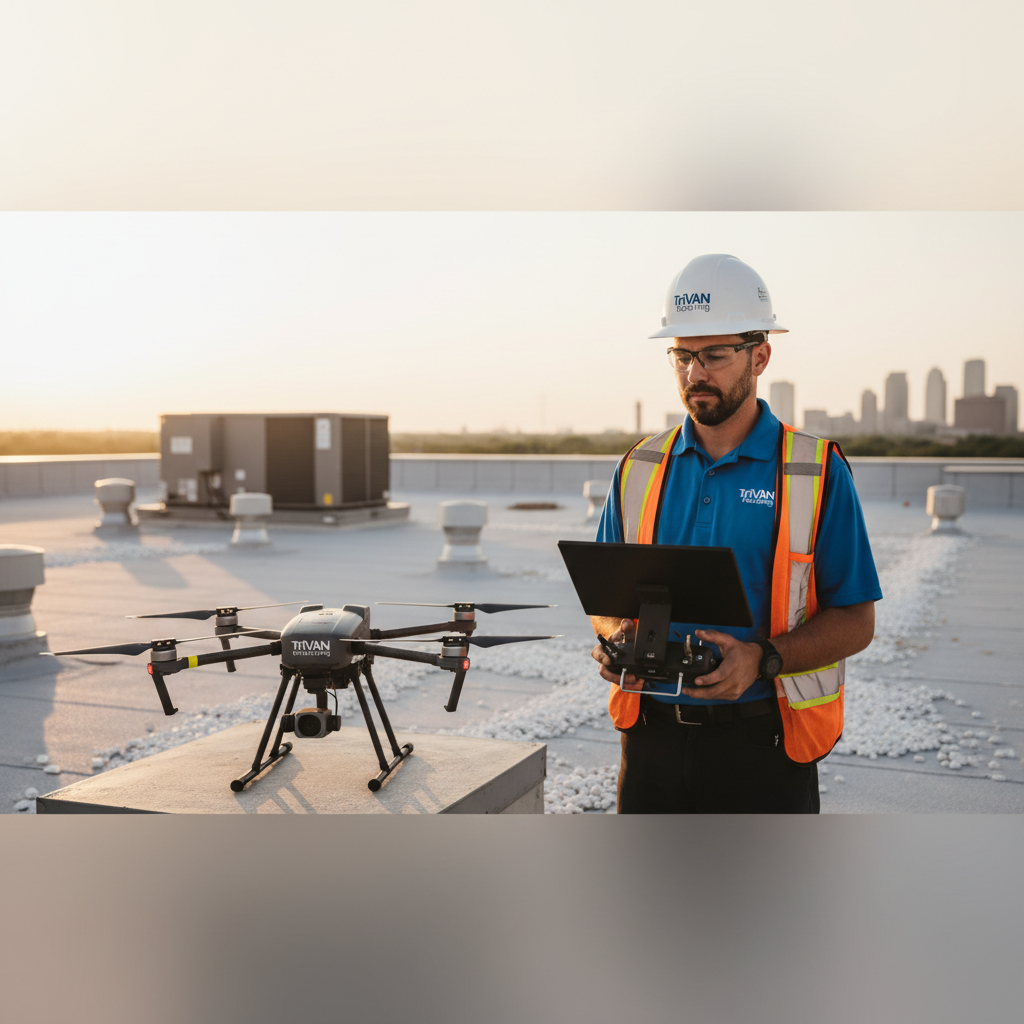
Any person or company operating a drone for commercial purposes MUST have a pilot who is certified under the FAA's Part 107 regulations. This involves passing a written exam on airspace rules, weather, aircraft loading, and emergency procedures. Reputable roofing contractors will not only hold this FAA Part 107 certification but also carry specific aviation liability insurance for their drone operations.
This is not just about avoiding fines. it is about liability. If an unlicensed, uninsured operator crashes a drone into building equipment, a vehicle, or a person, the property owner can be held liable. Always verify your contractor holds a current Part 107 certificate and carries specific aviation insurance.
Data Collection vs. Data Analysis
This is perhaps the most important distinction. A drone flight that results in a USB drive with 2,000 JPEG images is not an inspection. It is data collection. The raw data is useless without professional interpretation.
A true inspection report analyzes the findings, assigns condition ratings to different roof sections, identifies the root cause of deficiencies, and provides specific, actionable recommendations for repairs or maintenance. The value is in the brain of the expert analyzing the photos, not in the drone that took them. Ask any potential provider to see a sample report. If it looks more like a photo album than an engineering assessment, you are not getting a real inspection.
The TriVAN Approach: Integrated Inspection for a Complete Picture
At TriVAN Roofing, we were early adopters of drone technology because we recognized its power as a supplemental tool. We do not offer "drone-only" inspections because we know they are incomplete. Our approach integrates technology with traditional, time-tested methods to give you a complete and accurate understanding of your asset.
For a large industrial facility in Oklahoma City, our process might look like this:
- Initial Drone Survey: We conduct a high-resolution aerial survey to create a complete orthomosaic map, documenting the entire roof surface and identifying obvious areas of concern like ponding water, significant debris, or visible damage.
- Targeted On-Deck Inspection: Using the drone data as a map, our experienced technicians go directly to the identified problem areas for a hands-on investigation. They probe seams, inspect flashings, and assess the membrane condition in these critical zones.
- Nighttime Thermal Scan: If moisture is suspected, we return after sunset to perform a diagnostically valid thermal scan under the proper conditions.
- Comprehensive Reporting: All data points: the aerial map, the on-deck findings, and the thermal imagery: are combined into a single, comprehensive report. This report does not just show you problems. it explains their cause, details their severity, and provides clear recommendations for budgeting and repair, forming the foundation of a proactive roof maintenance plan.
This integrated method combines the speed and scale of drone technology with the diagnostic precision of hands-on expertise. It is the only way to be certain you have the full story. If you are ready for a roofing partner who uses technology wisely without forgetting the fundamentals, contact our team to discuss how our integrated inspection process can protect your building investment.
All 14 deliverables complete.Tags: drone roof inspection, commercial roof inspection, thermal roof scan, commercial roofing texas, infrared roof inspection, FAA part 107 roof inspection, what can a drone roof inspection detect, drone vs manual roof inspection, commercial roof inspection cost, hail damage assessment oklahoma