San Antonio Commercial Roofing: A Guide to the Alamo City's Unique Roofing Environment
| By TriVAN Roofing
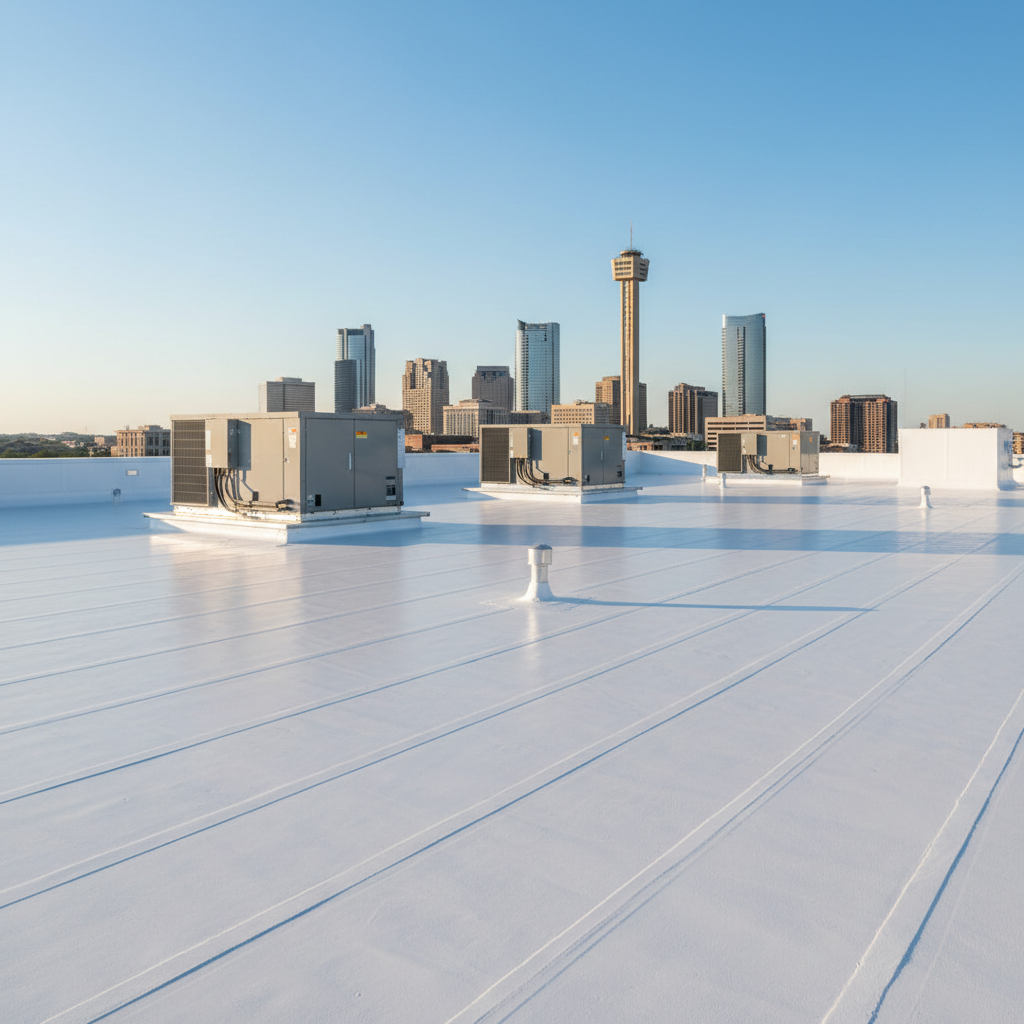
San Antonio's unique climate, historic buildings, and major industries like federal/military and healthcare demand specialized commercial roofing. This guide covers key considerations for building owners, from Climate Zone 2 compliance to local hail
San Antonio is more than a historic Texas landmark; it's one of the fastest-growing commercial real estate markets in the nation. Its strategic location, burgeoning industrial sector, and massive institutional presence create a complex and demanding environment for building owners and facility managers. Unlike North Texas, roofing in the Alamo City isn't a one-size-fits-all proposition. Generic advice often misses the specific climate data, building codes, and industry requirements that define a successful commercial roofing project in Bexar County.
From the sprawling logistics centers near the NAFTA corridor to the sensitive environments of the South Texas Medical Center and the secure perimeters of Joint Base San Antonio, each property presents unique challenges. This guide is designed for the San Antonio facility manager and commercial property owner. It moves beyond generalities to address the specific factors you must consider, including climate zone implications, local hail risk, historic preservation rules, and the stringent demands of the city’s key economic drivers.
Understanding San Antonio’s Climate: More Than Just Texas Heat
While all of Texas is hot, the way San Antonio experiences heat is fundamentally different from markets like Dallas-Fort Worth, and this difference has major implications for your roof’s performance and your building’s operating budget. The key distinction lies in the International Energy Conservation Code (IECC) climate zones and the nature of the summer heat.
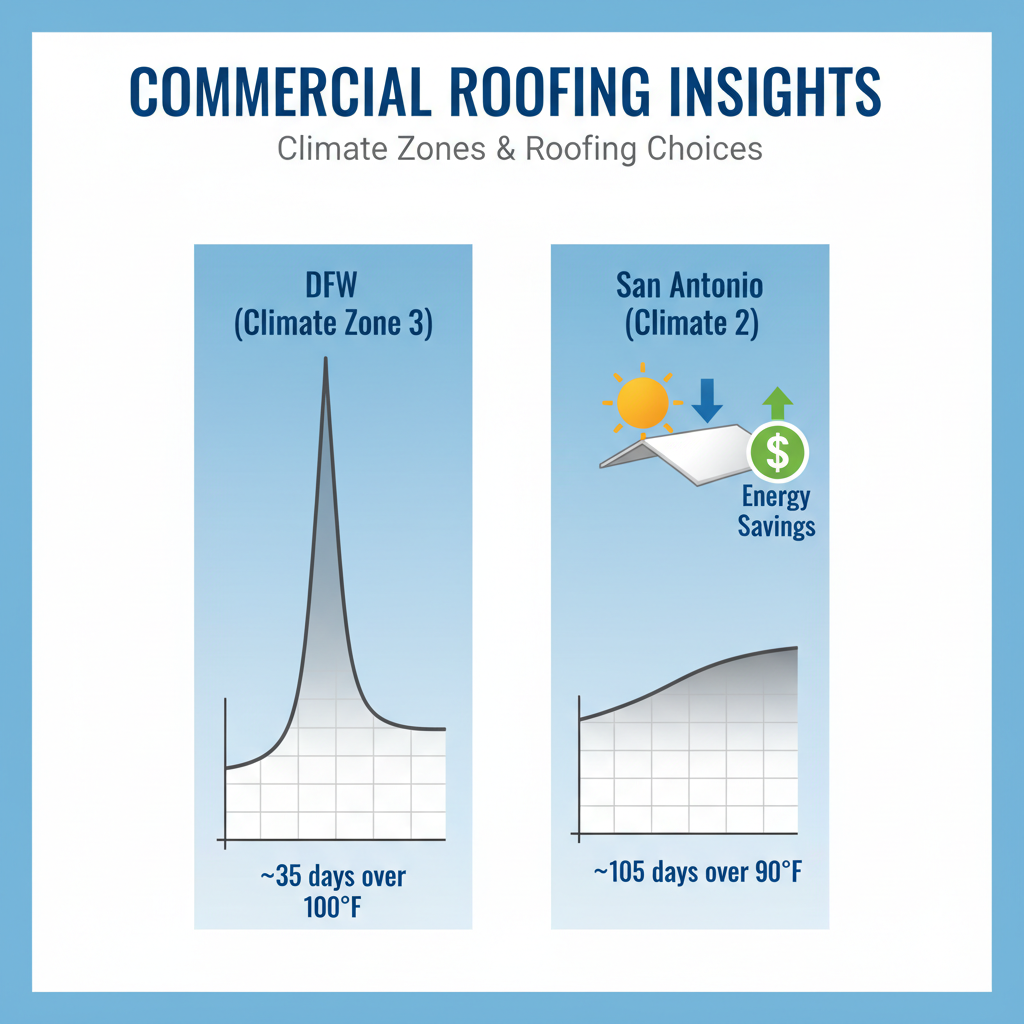
San Antonio and Bexar County are in IECC Climate Zone 2, while the DFW Metroplex is in Climate Zone 3. This has a direct impact on building code requirements. For most commercial roof assemblies, Zone 3 requires a minimum insulation R-value of R-30. In Zone 2, the minimum is R-25. While this may seem like a minor difference, it can affect project costs and energy compliance calculations, especially on large-scale roof replacements. An experienced contractor working in San Antonio will understand this distinction and design a code-compliant system that meets your budget and performance goals without over-specifying based on North Texas standards.
Sustained Heat vs. Peak Heat: Why Reflectivity Matters More Here
The more significant factor is the heat profile. DFW is known for its intense peak summer heat, averaging 30 to 40 days per year with temperatures exceeding 100°F. San Antonio’s heat is different. It is more prolonged and sustained. The city averages 100 to 110 days annually with temperatures above 90°F. This extended cooling season means your building's HVAC systems work harder for a larger portion of the year.
This is where roof specification becomes a critical financial decision. For commercial buildings with significant cooling loads, a dark-colored EPDM or modified bitumen roof absorbs and transfers enormous amounts of solar heat into the building. In contrast, white reflective single-ply membranes like TPO and PVC can reflect up to 85% of the sun’s rays. This dramatically lowers the roof surface temperature, reducing heat transfer into the building and easing the load on your HVAC systems.
The practical implication for your roof is significant. The return on investment for a reflective "cool roof" is exceptionally strong in San Antonio, where documented cooling cost reductions can range from 15% to 30% compared to a traditional dark-colored roof. This sustained performance over a longer cooling season means the energy savings accumulate faster, making the choice of a white membrane a powerful strategic decision for any San Antonio building owner.
Hail Risk in Bexar County: A Different Calculation
For anyone managing property in Texas, hail is a constant concern. However, the risk profile in San Antonio is different from the heart of the "Hail Corridor" in North Texas, requiring a more nuanced approach to roof specification. While DFW may see 8 to 12 significant hail events (1-inch diameter or larger) each year, the San Antonio metro area experiences them less frequently, typically in the range of 3 to 6 times annually.
This does not mean the risk is gone; it simply changes the cost-benefit analysis. In DFW, specifying an enhanced, impact-resistant roofing assembly is almost always a prudent decision. This often includes upgrading from a standard 60-mil membrane to a thicker 80-mil membrane, adding a high-density, fiberglass-reinforced cover board, and ensuring the system meets stringent Factory Mutual (FM Global) standards for Very Severe Hail (VSH).
In San Antonio, the decision is more of a different risk calculation. The premium cost for a full VSH-rated assembly may not be justified for every building. A facility manager might reasonably weigh the lower frequency of severe hail against the upfront capital cost. For a critical facility like a data center or hospital, the added protection is likely worth it. For a speculative warehouse, a standard, well-installed system might be deemed sufficient. An honest roofing partner will have this conversation with you, analyzing your specific building’s function and risk tolerance rather than pushing the most expensive option as a default.
The Military City USA Factor: Roofing for Federal and Military Facilities
San Antonio is home to Joint Base San Antonio (JBSA), the largest joint military installation in the Department of Defense, encompassing Fort Sam Houston, Lackland Air Force Base, and Randolph Air Force Base. This represents millions of square feet of institutional and commercial-style roofing that operates under an entirely different set of rules.
Roofing projects on federal and military properties do not follow standard commercial bidding processes. They are governed by the Defense Federal Acquisition Regulation Supplement (DFARS). Contractors wishing to perform this work must navigate a complex system of requirements, including:
- Security Clearances: All crew members and project managers working on base must undergo background checks and be approved for site access, a time-consuming process that must be managed proactively.
- Davis-Bacon Act: Federal projects require contractors to pay prevailing wages, which are set by the Department of Labor and are often higher than standard market rates. This must be factored into project bidding.
- Specialized Insurance and Bonding: Federal contracts demand higher bonding capacities and specific insurance riders that not all commercial roofing contractors carry.
- UFGS Specifications: The military uses its own set of construction specifications, known as the Unified Facilities Guide Specifications (UFGS). These provide detailed requirements for everything from material types to installation methods and often differ from commercial best practices or manufacturer guidelines.
It is also important for public facility managers to understand the procurement differences. While TriVAN is an approved vendor through several TIPS purchasing cooperative contracts, which streamline procurement for many Texas schools, universities, and municipalities, these contracts do not apply to federal military installations. A contractor claiming otherwise misunderstands the federal procurement process. Honesty and experience in the federal space are critical, as mistakes can lead to project delays and significant compliance issues.
Preserving the Past: Roofing San Antonio’s Historic Buildings
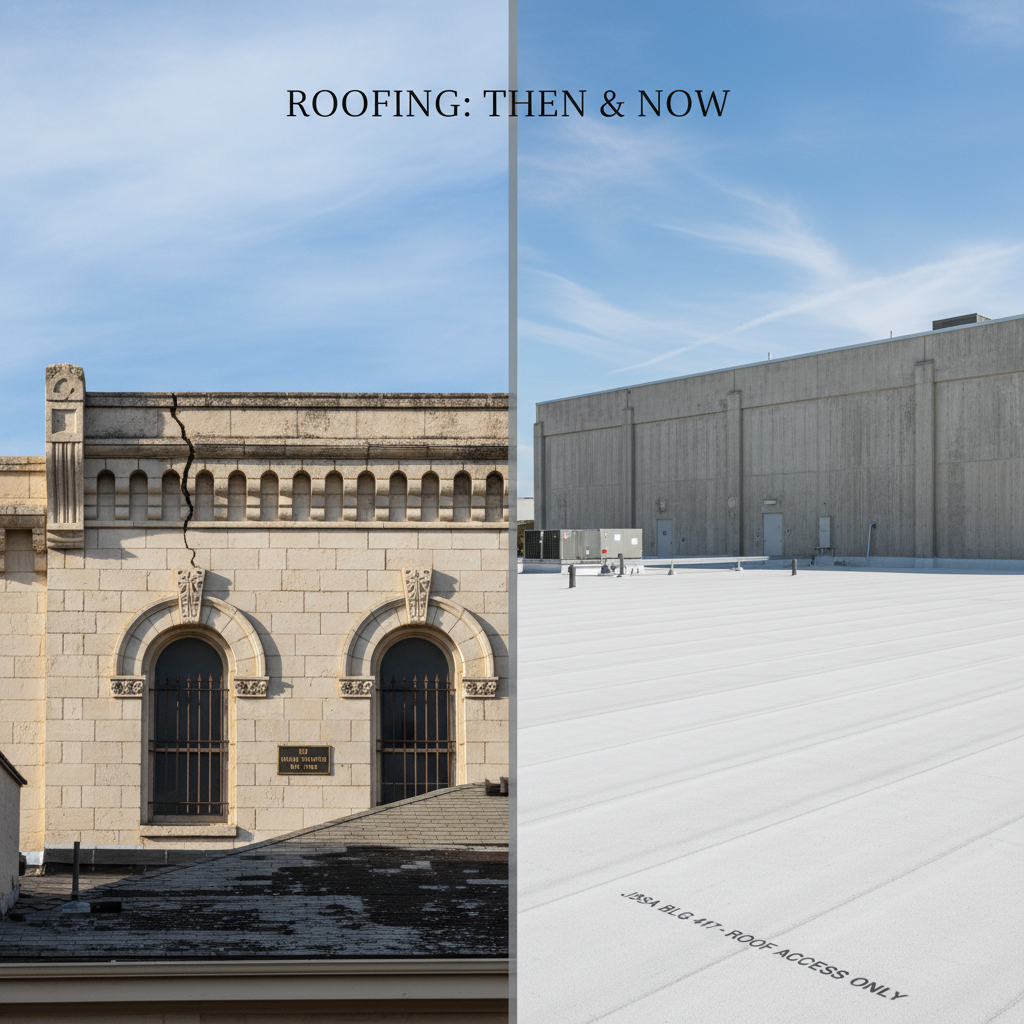
Beyond the modern industrial parks and military bases, San Antonio boasts a rich architectural heritage. Downtown, the King William district, and other historic commercial areas feature a significant number of buildings with unique construction that requires a preservation-minded approach. Roofing a historic commercial building is not the same as roofing a modern tilt-wall warehouse.
Key considerations include:
- Historic Materials: Many older buildings feature distinctive limestone or brick masonry. Parapet walls made from these materials behave differently than modern concrete or metal. They are more porous and susceptible to moisture damage if not flashed correctly. Tying a modern roofing membrane into a 100-year-old masonry wall requires specialized techniques.
- Structural and Architectural Features: Unique rooflines, integrated gutter systems, and other architectural details must be respected and properly waterproofed. A standard-specification roof may look out of place and, worse, could fail by not accommodating the building's original design.
- Regulatory Oversight: For buildings located in designated historic districts or listed as official landmarks, roofing work may require review and approval from the Texas Historical Commission or the San Antonio Office of Historic Preservation. These bodies ensure that work respects the building's character.
Experience is paramount. A contractor unfamiliar with these nuances can cause irreparable damage or specify a system that fails to integrate with the building’s historic character and construction. Verifying a contractor’s portfolio of successful historic restoration projects is a critical step for any owner of a legacy property in San Antonio.
Roofing for San Antonio’s Emerging Sectors: Bioscience and Technology
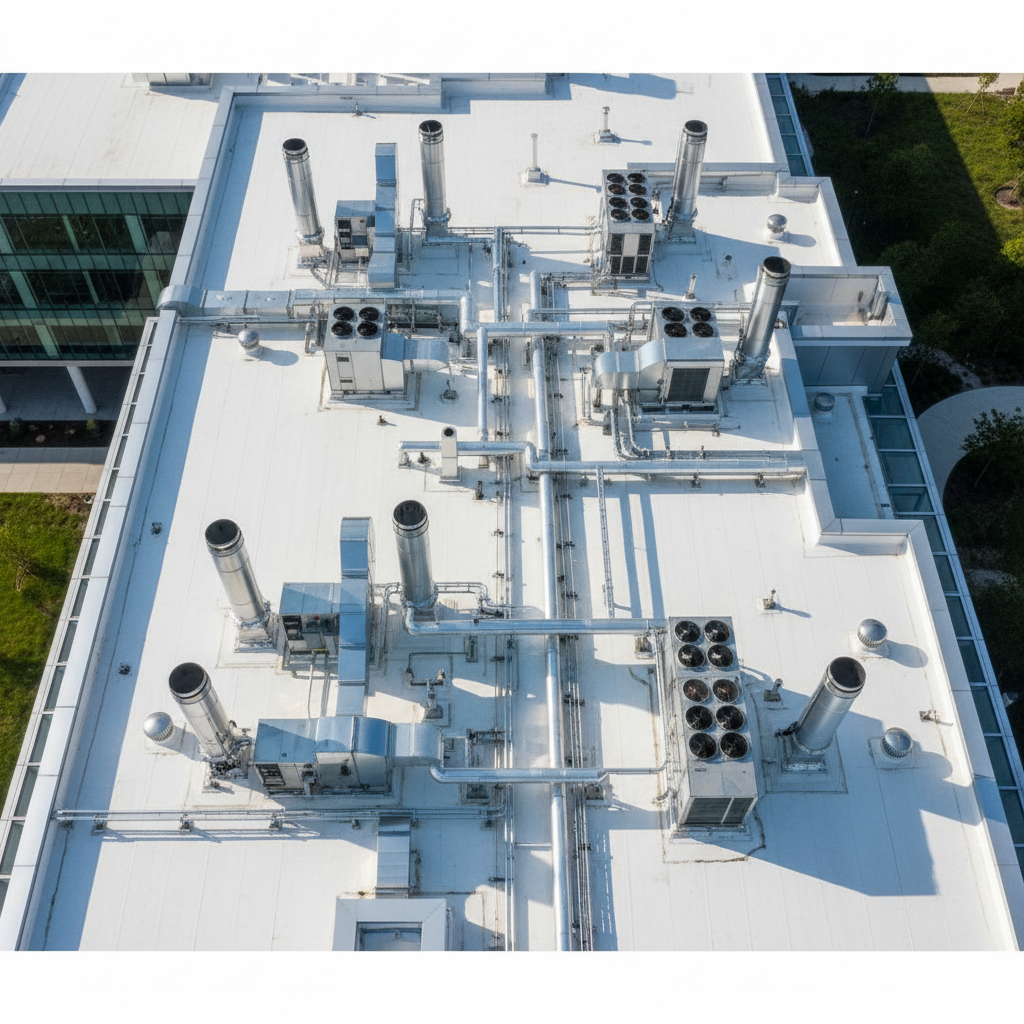
San Antonio’s economy is rapidly diversifying, with significant growth in the bioscience, healthcare technology, and research sectors. These high-tech facilities create unique roofing challenges that standard commercial contractors may not be equipped to handle. The roof over a laboratory or medical device manufacturing plant is a highly technical system protecting sensitive, high-value operations.
Specialized considerations include:
- Chemical Resistance: Research labs often have exhaust vents that release chemical fumes. These substances can degrade certain roofing materials over time. In these cases, a PVC (polyvinyl chloride) membrane, known for its superior chemical resistance compared to TPO, is often the required specification.
- Vibration and Fatigue: Heavy equipment inside the building can create subtle but constant vibrations that transfer to the roof deck. Over time, this can cause fatigue and failure at flashing points and seams if not properly detailed and reinforced.
- Rooftop Equipment Density: These facilities often have a much higher density of rooftop mechanical equipment, creating a complex web of penetrations that must be expertly waterproofed to prevent leaks. Every pipe, curb, and vent is a potential point of failure if not flashed with meticulous attention to detail.
A Hub of Healing: Roofing for the South Texas Medical Center
The South Texas Medical Center (STMC) is one of the largest healthcare and research complexes in the country. This concentration of hospitals, clinics, research institutions, and medical office buildings represents a massive commercial roofing market with its own non-negotiable set of rules. Roofing in an active healthcare environment is a specialty that goes far beyond simply keeping the building dry.
Facility managers at the STMC know that any roofing project must require a specialized approach to patient safety and operational continuity. Contractors must be proficient in:
- Infection Control Risk Assessment (ICRA): Contractors must follow strict protocols to contain dust, debris, and fumes, preventing contaminants from entering the hospital’s air intake systems and compromising patient health.
- Occupied Building Logistics: Work must be planned and executed to minimize disruption to patients, staff, and emergency services. This involves careful scheduling, noise mitigation, and clear communication with hospital administration.
- Complex Rooftop Systems: Hospital roofs are home to a vast array of critical equipment, including medical gas lines, backup generators, and sensitive ventilation systems. A roofing contractor must have the expertise to work around this equipment without compromising its function.
Choosing the Right Commercial Roofing Partner for San Antonio
San Antonio's commercial roofing needs are as diverse as its economy. The right roofing partner is not just a company that can install a membrane; it's a consultant who understands the financial implications of Climate Zone 2, the specific risk profile of Bexar County weather, and the unique requirements of the city’s historic, federal, and high-tech facilities.
As a GAF Master Elite and Duro-Last Elite Contractor with over two decades of experience across Texas, TriVAN Roofing has the technical expertise and regional knowledge to address these challenges. We understand that a roof in San Antonio must perform under a unique set of conditions, and we are equipped to provide durable, energy-efficient, and code-compliant solutions tailored to your specific asset. Whether you manage a warehouse, a historic downtown property, or a facility within the STMC, it's crucial to partner with a contractor who can deliver proven performance and protect your investment with comprehensive NDL warranties. Schedule a consultation to discuss your property's specific needs.
---Tags: commercial roofing San Antonio, commercial roofing contractor San Antonio TX, commercial roof replacement San Antonio, flat roof replacement San Antonio TX, commercial roofer San Antonio, TPO roofing San Antonio commercial, commercial roof repair San Antonio TX, commercial roofing company San Antonio, San Antonio commercial roofing contractor, flat roof repair San Antonio TX