
Best Commercial Roofing Materials for Extreme Weather: How to Pick Durable, Energy‑Efficient Systems
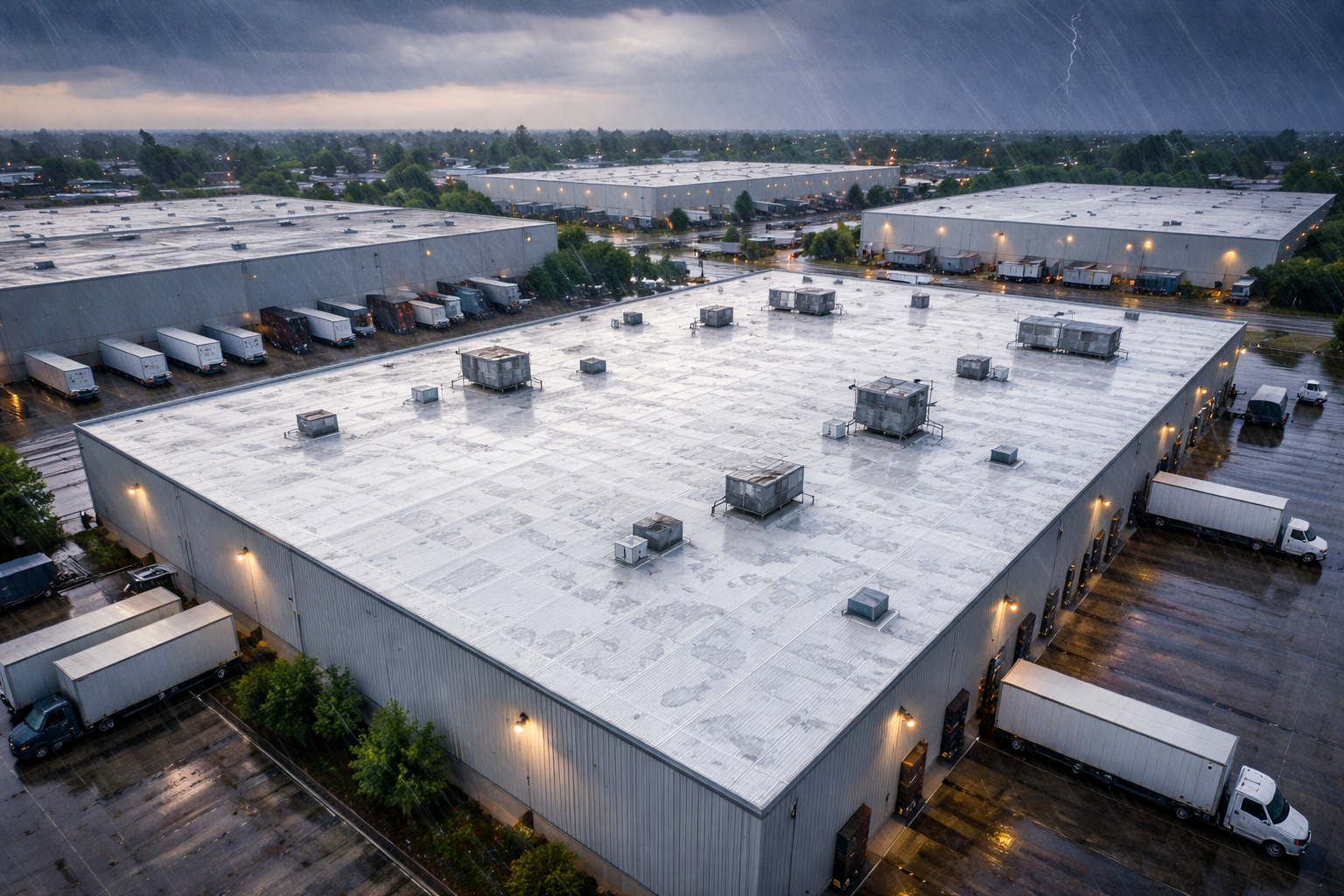
Compare commercial roofing materials for extreme Texas and Oklahoma weather. Learn how standing seam metal, TPO, PVC, EPDM, and modified bitumen perform against hail, wind, heat, and snow. Make informed decisions with expert insights on durability, impact ratings, and energy efficiency.
When we talk about extreme‑weather resistance, we mean commercial roofs that stand up to wind uplift, impact, thermal stress and moisture while keeping ownership costs and energy use low. This guide looks at how common commercial roofing systems perform against the hazards we see across Texas and Oklahoma: hail, intense heat, windstorms and occasional freezes, and shows building owners how to weigh durability, impact ratings and energy performance. You’ll find practical comparisons of standing seam metal, TPO, PVC, EPDM, and modified bitumen, plus how ratings (for example, wind‑mph limits) should influence your choice. We also cover risk reduction through design, ventilation and coatings, with quick lists and localized failure modes so property managers can prioritize the right solutions. Finally, we explain how Trivan Roofing supports these projects with free estimates and professional service to protect your facility and budget.
What Are the Key Challenges of Extreme Weather for Commercial Roofing in Texas and Oklahoma?
Commercial roofs in Texas and Oklahoma face a mix of mechanical and thermal stresses that speed up wear and can cause sudden failures. High winds and storms create uplift that tests fasteners and flashings, while hail and debris cause punctures and surface damage on membranes or dents on metal panels. Long stretches of heat and strong UV exposure drive thermal expansion, accelerate material oxidation and erode reflective coatings, which worsens energy performance. Cold snaps, snow or ice bring ice‑dam risk, extra load and repeated freeze‑thaw cycles that stress seams and underlayment. Understanding how these forces act on materials helps facility managers specify systems and details that resist the region’s most common failure modes. According to NOAA data, Texas and Oklahoma frequently experience some of the highest numbers of severe weather events annually, including significant hail and windstorms, underscoring the critical need for robust roofing solutions.
How Do Hurricanes, Hail, and High Winds Impact Roof Durability?
Wind uplift creates negative pressure at eaves, ridges and around penetrations, concentrating forces on fasteners and seams and sometimes leading to blow‑off. Hail delivers concentrated impact energy that dents metal panels or punctures membranes; hailstones roughly 1 inch and larger raise the chance of meaningful damage and typically increase insurance claims. Wind often exposes weaknesses at flashing and edge systems first, while debris can punch holes that allow water in during follow‑up storms. Designing for uplift (using concealed fasteners, interlocking panels and reinforced perimeter details) closes those failure paths and reduces repair frequency. Industry standards such as UL 580 (for uplift resistance) and FM Global 4470/4471 (for hail and wind resistance) provide critical benchmarks for evaluating a roof system's resilience against these forces.
What Are the Effects of Extreme Heat and Heavy Snow on Commercial Roofing Materials?
Extreme heat promotes thermal expansion, speeds oxidation of polymers and asphalt, and degrades reflective coatings, all of which raise interior temperatures and increase cooling loads. Materials with higher reflectivity and emissivity reduce absorbed heat and slow thermal aging; ventilation and insulation together smooth temperature swings. Heavy snow adds dead load and can form ice dams at perimeters when warm building air melts snow that refreezes, stressing seams and saturating underlayment. Snow‑shedding materials such as metal shorten the duration of standing snow, but structural capacity and slope are the deciding factors for safe long‑term performance.
Which Commercial Roofing Materials Offer the Best Protection Against Hurricanes and High Winds?
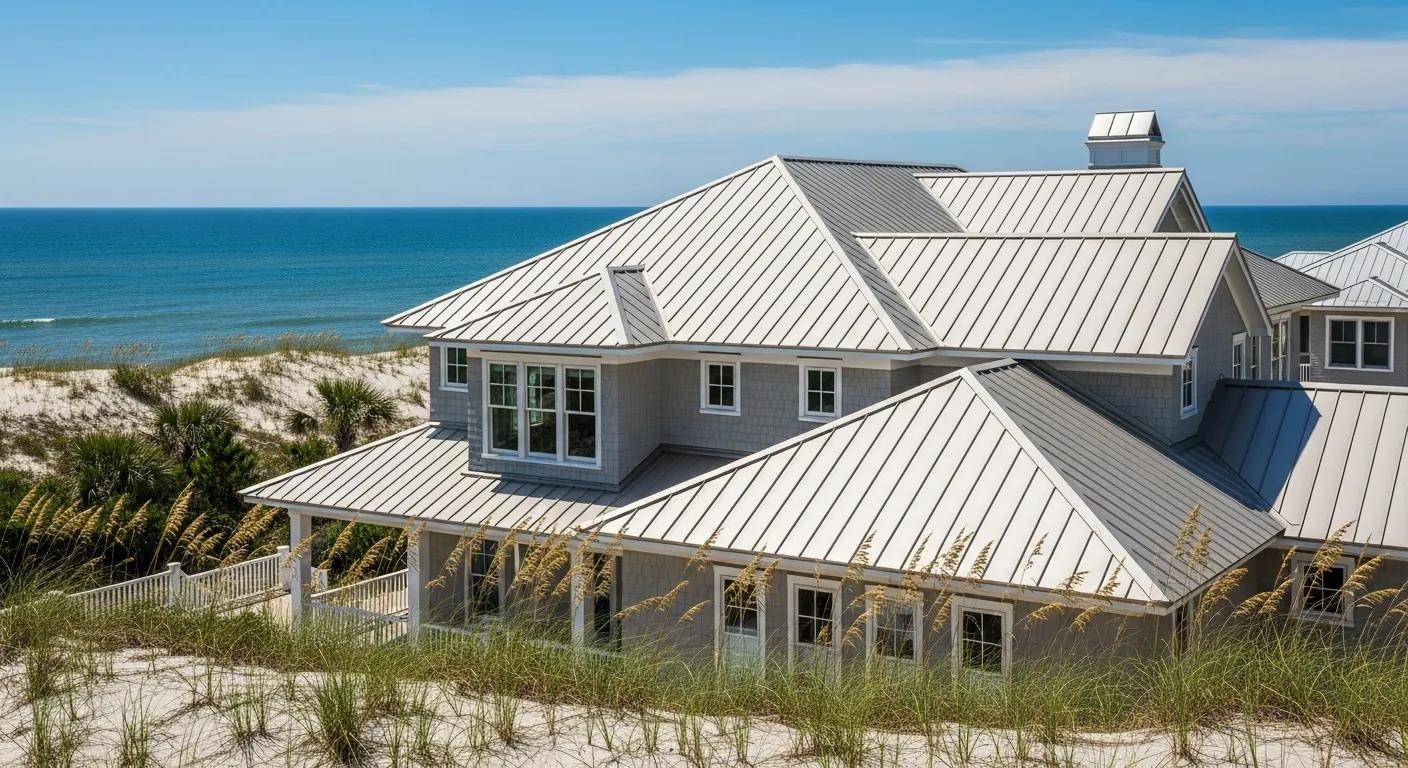
If wind and hurricane resistance are priorities, choose systems with high uplift ratings, continuous interlocks or concealed fasteners, and solid perimeter anchorage. Standing seam metal and some mechanically fastened metal panels are top performers for uplift. Flat roofs need reinforced edge terminations and properly adhered membranes to resist peel forces. The table below gives a quick, practical comparison of wind and impact characteristics to help narrow choices for high‑wind conditions.
Different commercial roof types perform differently under wind and impact; this table summarizes typical ranges to guide selection.
|
Material |
Wind Resistance / Uplift Characteristic |
Typical Impact Rating / Notes |
|---|---|---|
|
Standing seam metal |
Interlocking panels with concealed clips resist uplift; systems rated up to ~140–160 mph (e.g., UL 580, FM Global 1-90/1-120) depending on profile and installation |
Excellent resistance to wind‑driven debris; denting depends on gauge |
|
TPO / PVC / EPDM |
Fully adhered, mechanically fastened, or ballasted systems resist uplift when properly installed and seamed; good wind resistance with reinforced perimeters, often meeting FM Global 1-90/1-120 ratings |
Impact resistance varies; puncture protection available via coverboard or thicker membranes |
|
Modified Bitumen |
Fully adhered or mechanically fastened systems resist uplift; robust base sheets and cap sheets, often meeting FM Global 1-60/1-90 ratings |
Good puncture resistance; can be reinforced with aggregate surfacing |
These contrasts help explain why standing seam metal frequently tops hurricane‑resistant lists: concealed fasteners and continuous interlocks reduce uplift exposure, and durable finishes extend service life. The best choice still depends on roof shape, attachment method and quality of installation.
Why Is Standing Seam Metal Roofing Ideal for Hurricane and Wind Resistance?
Standing seam metal stands up to uplift because panels lock with raised seams and attach with concealed clips that transfer loads into the structure instead of relying on exposed fasteners. The interlock geometry limits wind infiltration and edge pry, and long continuous panels reduce seam failure across wide commercial fields. Metal also handles thermal cycling better than many polymer membranes; when you specify the right gauge and coatings, you get high tensile strength and corrosion protection for a long service life. For large, low‑slope commercial roofs, properly specified standing seam systems deliver predictable wind performance and low maintenance when clip spacing and perimeter anchorage are engineered correctly.
What Are the Most Energy-Efficient Commercial Roofing Options for Hot Climates Like Texas and Oklahoma?
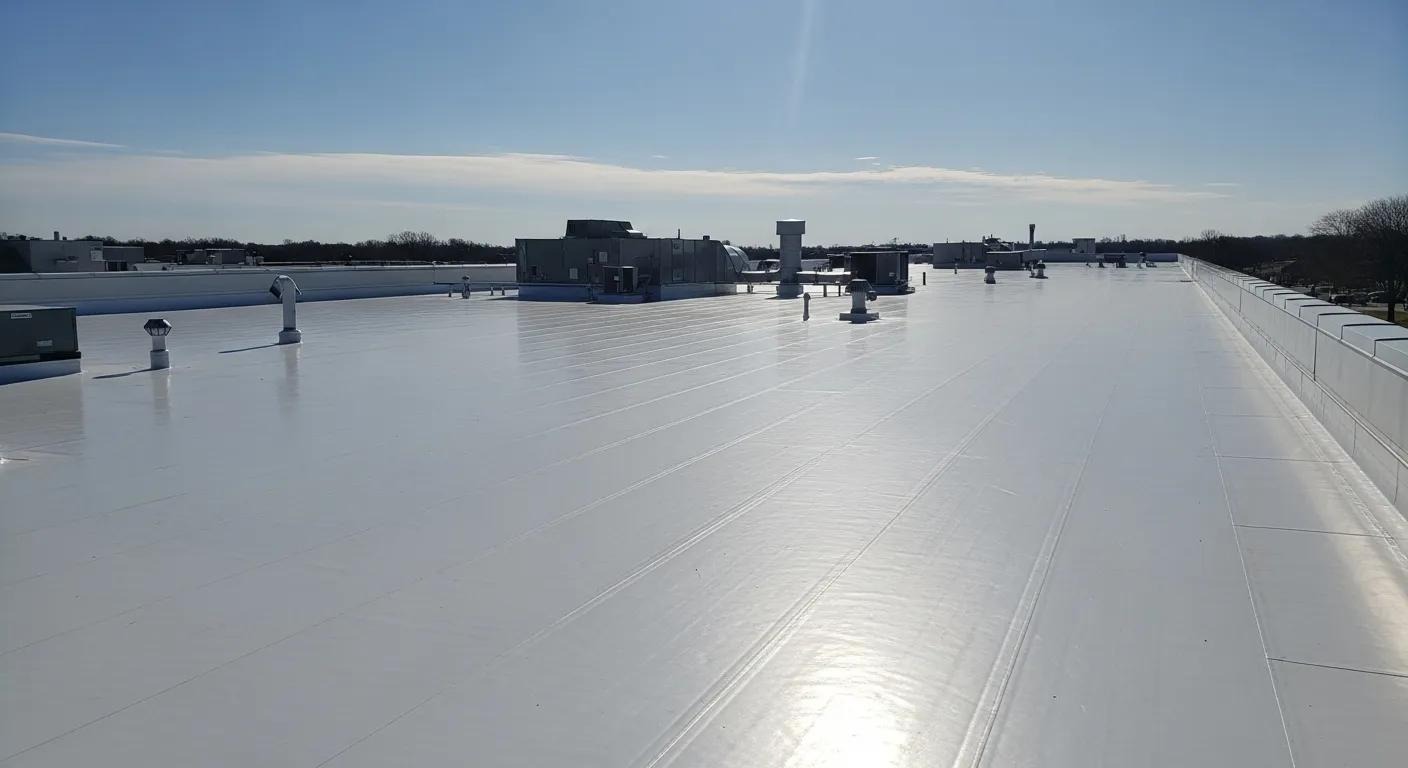
Energy‑efficient commercial roofing trims heat gain, cuts cooling bills and slows material aging through high solar reflectivity, strong emissivity and combined thermal strategies. Reflective metal with specialty coatings, light‑colored membranes (TPO, PVC, white EPDM), and cool roof coatings deliver meaningful reflectivity; high‑SRI products are especially effective for retrofits. Many of these products achieve ENERGY STAR certification and meet Cool Roof Rating Council (CRRC) standards, providing verifiable performance data. Ventilation and insulation amplify surface reflectivity by keeping deck and interior temperatures lower, improving occupant comfort and reducing HVAC runtime. Studies show that cool roofs can reduce peak cooling demand by 10-15% and lower interior temperatures by several degrees, leading to significant operational savings. The table below compares typical reflectivity ranges and expected cooling benefits to help owners weigh upfront cost against operational savings.
This comparison helps building owners balance first‑cost against measurable cooling savings and long‑term durability.
|
Material / Coating |
Solar Reflectivity / SRI |
Expected Cooling Benefit |
|---|---|---|
|
Reflective metal with coating |
30–70% reflectivity; high SRI when coated, often ENERGY STAR certified |
Lowest roof surface temperatures; reduces cooling load significantly |
|
Cool roof coatings (elastomeric) |
60–90% reflectivity for white coatings, often ENERGY STAR certified and CRRC rated |
Cost‑effective retrofit that lowers interior temps and UV degradation |
|
Light-colored TPO / PVC membrane |
50–80% reflectivity (white/light colors), often ENERGY STAR certified and CRRC rated |
Good choice for flat roofs with measurable HVAC savings; slows material aging |
|
White EPDM membrane |
70-85% reflectivity (white), often ENERGY STAR certified and CRRC rated |
Excellent reflectivity for low-slope systems, significant cooling load reduction |
Overall, coated metal and cool coatings give the fastest, clearest cooling benefit. Pair reflective surfaces with proper insulation and ventilation for the most consistent, long‑term savings.
How Do Metal Roofs and Cool Roof Coatings Reduce Heat Absorption?
Metal roofs reduce absorbed solar energy when finished with high‑reflectivity paints or coatings, keeping surface temperatures lower and reducing heat transfer into the building. Cool roof elastomeric coatings raise reflectivity and emissivity on low‑slope membranes, extending membrane life and improving interior comfort. Combined with adequate insulation and continuous ventilation, reflective systems cut radiant heat gain in buildings and shorten HVAC run times. For commercial buildings, these measures produce measurable reductions in cooling energy and slow thermal degradation of roofing materials.
Which Commercial Roofing Materials Are Best Suited for Heavy Snow and Ice Conditions?
Snow and ice performance depends on material weight, slope, shedding ability and the underlying structure. Metal roofs shed snow quickly and reduce standing load; low‑slope membranes can accumulate snow and thus demand higher structural margins. Ice‑dam risk is more about building heat loss and perimeter detailing than material alone, but materials that maintain waterproofing under intermittent standing water and that use robust underlayment reduce leak risk. The table below summarizes snow load and shedding behavior to help compare options. standing seam metal
This table highlights typical tendencies for snow performance and ice‑dam exposure so owners can pair material choice with structural and thermal mitigation.
|
Material |
Snow Load Capacity / Shedding Behavior |
Ice Dam Risk / Notes |
|---|---|---|
|
Standing seam metal |
Low snow adhesion; rapid shedding on pitched slopes |
Low ice‑dam risk when combined with good insulation and ventilation |
|
TPO / PVC / EPDM |
Accumulates snow; requires structural design for load. Good resistance to ponding water. |
Ice‑dam management depends on building thermal control and edge detailing; robust membranes tolerate standing water. |
|
Modified Bitumen |
Accumulates snow; requires structural design for load. Good resistance to ponding water. |
Ice‑dam management depends on building thermal control and edge detailing; multi-ply systems offer good waterproofing. |
These differences show metal’s advantage for shedding and low ice‑dam exposure, while flat roofs need deliberate structural planning and melt management to remain watertight through freeze‑thaw cycles.
How Does Snow Load Capacity Vary Among Metal and Low-Slope Commercial Roofs?
Metal roofs often shed snow more readily, since smooth panels and steeper slopes encourage sliding and reduce sustained loads. Low-slope membrane roofs (TPO, PVC, EPDM, modified bitumen) accumulate snow and require structural design to accommodate the full snow load. While lighter than some traditional systems, these membranes must be robust enough to withstand prolonged saturation and freeze-thaw cycles. In the end, slope, geometry and structural design determine safe snow capacity more than material alone; consult a structural engineer in heavy‑snow regions.
What Are Effective Strategies to Prevent Ice Dams with Weather-Resistant Commercial Roofs?
Preventing ice dams focuses on keeping the roof deck cold and managing meltwater: continuous insulation to reduce building heat loss, balanced ventilation to remove warm air, sealing penetrations to stop warm‑air leakage, and proper perimeter flashing and edge details. In chronic problem areas, targeted fixes such as electric heat tracing along perimeters or durable waterproof underlayment can prevent leaks when dams form. Choose materials and underlayment that tolerate intermittent standing water and specify robust flashing to complement thermal controls.
How Do Impact Resistance Ratings Influence Commercial Roofing Material Selection?
Impact ratings measure a product’s resistance to simulated hail strikes and offer a standardized way to compare options. These ratings, such as FM Global 4470/4471 (Class 1-4) or UL 2218, measure a product’s resistance to simulated hail strikes. Class 4 represents the highest level of impact resistance, signifying a roof's ability to withstand impacts from 2-inch steel balls without penetration. Higher‑impact materials typically reduce repair frequency after hailstorms and can affect insurance premiums or eligibility in some areas. Going to higher impact ratings usually means thicker membranes, coverboards, or heavier gauge metal panels, with higher upfront cost and sometimes specialized installation, but those choices lower lifecycle risk in hail-prone territories. Match testing basics and rating selection to local hail frequency and your budget to make a sensible choice.
How Does Metal Roofing Provide Superior Impact and Hail Protection?
Metal roofing spreads impact energy over a larger area and resists puncture, especially when you specify heavier gauge panels or reinforced substrates. Panel gauge, substrate and finish layers influence denting and puncture resistance; heavier gauges and rigid substrates reduce cosmetic and performance damage from hail. Proper underlayment and coatings make metal systems a durable option that minimizes downtime after storms for owners who need reliable post‑storm performance.
How Do Low-Slope Membranes Provide Impact and Hail Protection?
Low-slope membranes like TPO, PVC, EPDM, and modified bitumen can be specified with enhanced impact resistance, often through the use of coverboards or thicker membrane gauges. Coverboards, such as gypsum fiber or high-density polyisocyanurate, are installed directly beneath the membrane to absorb and distribute impact energy, protecting the waterproofing layer from punctures and tears caused by hail or debris. Thicker membranes inherently offer greater resistance. Proper adhesion or mechanical fastening ensures the system remains intact during high-wind events that might accompany hail. For commercial properties in hail-prone regions, combining a robust membrane system with an appropriate coverboard is a critical strategy to minimize damage and maintain watertight integrity.
Why Partner with Trivan Roofing for Extreme Weather Solutions?
Choosing a roofing partner with proven expertise in extreme weather conditions is paramount for long-term asset protection. Trivan Roofing stands out through its commitment to industry best practices, certified professionals, and a deep understanding of the unique challenges faced by commercial properties in Texas and Oklahoma.
-
Certified Expertise: Our crews are trained and certified in the latest installation techniques for all major commercial roofing systems, ensuring adherence to manufacturer specifications and industry standards (e.g., NRCA guidelines, FM Global requirements).
-
Local Market Authority: With extensive experience across Texas and Oklahoma, we possess unparalleled insight into regional weather patterns, common failure modes, and the most effective material applications for local conditions.
-
Comprehensive Service & Support: From initial, no-pressure assessments to detailed reports, precise specifications, and ongoing maintenance, our process is designed for transparency and client empowerment. We prioritize solutions that not only meet immediate needs but also contribute to long-term durability and energy efficiency.
-
Quality Assurance: We utilize only high-grade, tested materials that meet or exceed industry impact, wind uplift, and thermal performance ratings, ensuring your investment is protected by proven products and expert installation.
Get Your Free Commercial Roof Assessment
Ready to Enhance Your Roof's Resilience?
Leverage Trivan Roofing's expertise to secure a durable, energy-efficient commercial roofing system built for extreme weather.
How Can Commercial Properties Benefit from Weather-Resistant Roofing Solutions?
Commercial properties see clear operational and financial advantages from weather‑resistant roofs: longer service life, fewer emergency repairs, improved energy performance and less tenant disruption. Large roof areas amplify the importance of uplift control and ponding prevention; combining standing seam metal on pitched areas with TPO, PVC, EPDM, or modified bitumen on flat zones addresses these needs. Regular preventive maintenance, fast emergency repairs and professional assessments lower lifecycle cost and downtime by catching issues early and prioritizing cost‑effective fixes. A free, thorough assessment with tailored recommendations is a practical first step toward aligning budget and performance targets.
-
Reduced downtime: Weather‑resistant systems cut leak frequency and emergency repair needs for commercial operations.
-
Lower lifecycle cost: Durable materials and correct detailing reduce total ownership expense despite higher initial investment.
-
Energy savings: Reflective coatings and insulation strategies lower cooling loads and operating costs.
These benefits pair naturally with professional services that assess, specify and maintain commercial roofs to protect building performance and preserve property value. services
What Makes Standing Seam Metal Roofing the Top Choice for Commercial Storm Protection?
Standing seam metal is often the preferred commercial choice because concealed fasteners and continuous panel runs reduce leak paths and the number of exposed fasteners prone to uplift. The system integrates well around rooftop equipment, so flashing and curb transitions can be detailed without compromising wind resistance. Long panels mean fewer seams and fewer ingress points, which simplifies maintenance and inspection. With reflective finishes, standing seam systems also support energy goals on large roofs while offering low upkeep and predictable replacement cycles.
How Does Trivan Roofing Ensure Long-Term Durability and Energy Efficiency?
We focus on commercial roofing across Texas and Oklahoma, specializing in metal and low‑slope systems, including standing seam metal, TPO, PVC, EPDM, and modified bitumen. Trivan Roofing provides free commercial roof assessments, straightforward, no‑pressure evaluations that come with detailed reports and practical recommendations tailored to each building’s needs and budget. Our services include emergency repairs, durable installations with an emphasis on energy performance, and licensed, bonded, and insured crews. Our process is simple and transparent: assessment → detailed report → recommendation → specification and installation → scheduled maintenance and follow‑up. That approach helps property owners manage risk and total lifecycle cost.
Conclusion
Picking the right commercial roof for extreme weather improves durability, reduces energy use, and lowers long‑term expense. By matching material properties to local climate risks and detailing for uplift, impact, and thermal control, building owners can limit repairs and protect assets. Explore our weather‑resistant commercial roofing options tailored to your property, and contact Trivan Roofing for a free assessment and expert recommendations.
Protect your commercial property from extreme weather with the right roofing system. Contact TriVAN Roofing for a free commercial roof assessment and discover which materials best protect your Texas or Oklahoma facility.
Our certified experts will evaluate your building's exposure to hail, wind, and thermal stress, then recommend durable, energy-efficient solutions tailored to your budget and performance requirements. From standing seam metal to advanced membrane systems, we specialize in commercial roofing built to withstand the toughest regional conditions. Schedule your complimentary assessment today and invest in long-term protection.
Contact Us Today