
Key Factors Affecting Commercial Roofing Installation and Maintenance Costs
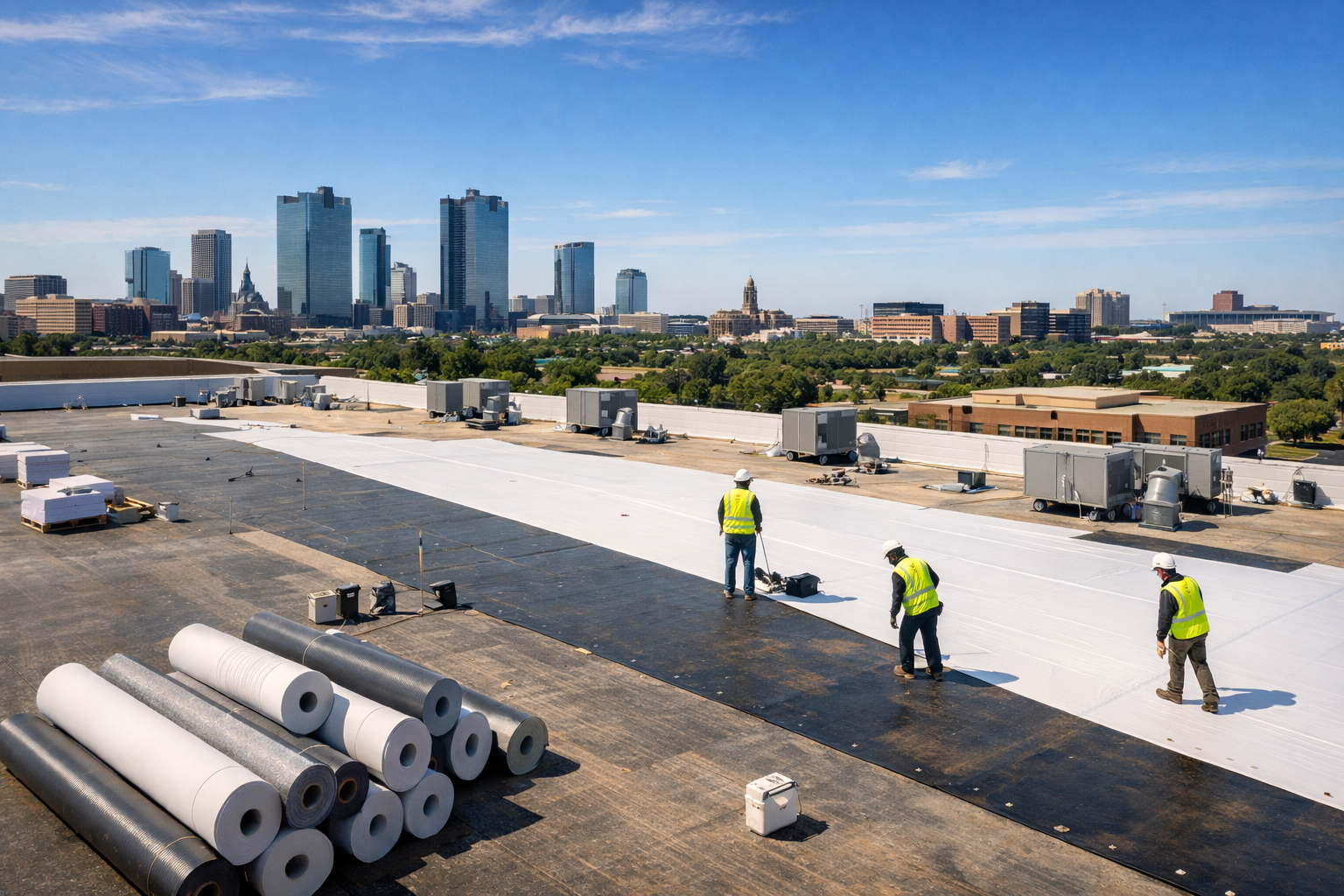
Commercial roofing costs depend on materials, installation complexity, and maintenance approach. Compare TPO, EPDM, and metal systems, understand installation variables, and learn how proactive maintenance reduces lifecycle expenses for Texas and Oklahoma properties.
Roofing decisions drive long-term costs for commercial properties. Materials, installation complexity, and maintenance interact to shape both the upfront price and lifecycle expenses. This guide helps business owners break down those cost drivers, compare common membrane and metal systems, anticipate installation variables, and build a replacement or maintenance budget that avoids surprises. Too often, choices like membrane type, rooftop penetrations, or local code upgrades translate into large cost swings. Here we translate technical factors into clear budgeting steps. You’ll get typical cost ranges by material, the installation items that most affect price, how proactive maintenance reduces lifetime cost, and practical tips on warranties and budgeting. Sections include a concise per-square-foot material comparison, an installation-factor checklist, proactive-versus-reactive maintenance numbers, a budget-building how-to list, and regional notes for Texas and Oklahoma. Throughout, we point you to practical next steps — including how to schedule a Free Commercial Roof Assessment — so you can build a defensible budget.
What Are the Main Commercial Roofing Material Costs and How Do They Compare?
Material choice is the single biggest driver of initial installation cost. Membrane type, insulation needs, and system complexity determine both material and labor line items. Lower-cost membranes often mean more maintenance or earlier replacement; premium systems raise the upfront spend but can cut replacement frequency and repair risk over time. Compare cost per square foot alongside expected lifespan and your building’s operational priorities: inexpensive membranes can be appropriate for short-term holdings, while standing seam metal or properly installed multi-layer systems frequently deliver better lifecycle value. The table below gives typical ranges, durability expectations, and best-use scenarios to help you match system choice with budget and performance goals.
|
Material |
Typical Cost per sq ft (Range) |
Lifespan / Best Use Case |
|---|---|---|
|
TPO (Thermoplastic) |
$4.00–$8.00 |
20–30 years; reflective single-ply for flat roofs and energy-efficiency retrofits |
|
EPDM (Rubber) |
$3.50–$7.00 |
20–30 years; robust option for simple flat roofs and budget-focused projects |
|
Standing Seam Metal |
$7.00–$15.00 |
30–50+ years; premium choice for long life, low maintenance, and high wind resistance |
|
Modified Bitumen (Mod-Bit) |
$4.00–$8.00 |
20–30 years; layered system good for traffic areas and heavy equipment zones |
|
Built-Up Roofing (BUR) |
$4.00–$10.00 |
20–35 years; traditional multi-ply waterproofing for heavy-use roofs |
This table highlights the trade-offs: lowest per-square-foot options often need more maintenance and earlier replacement, while premium systems increase initial capital but can reduce total cost of ownership over time. Use lifecycle comparisons, not just sticker price, when evaluating proposals.
How Do TPO and EPDM Roofing Costs Differ for Commercial Buildings?
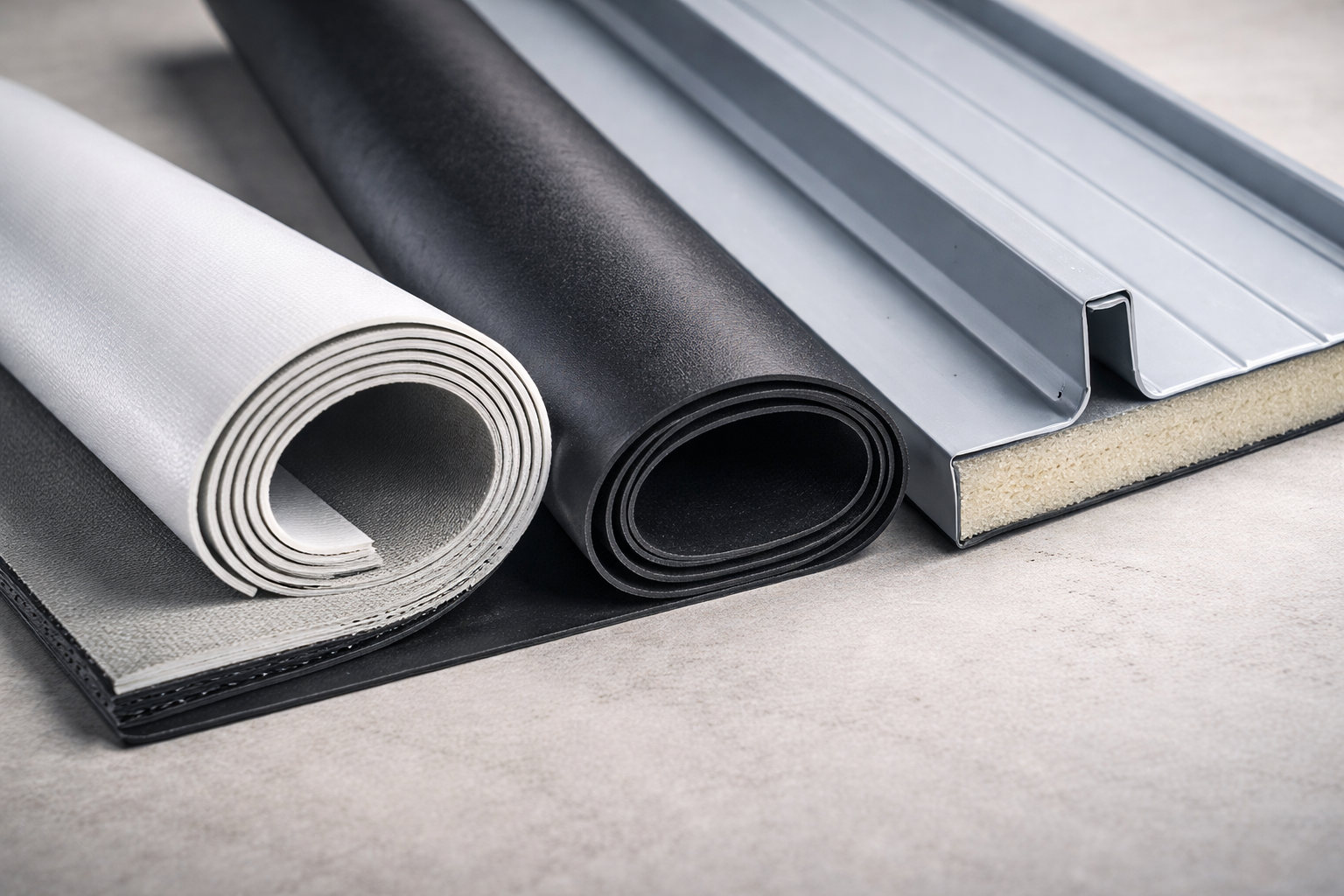
TPO and EPDM are common single-ply membranes with different cost and performance profiles. TPO usually costs a bit more than EPDM because of its reflective finish, heat-welded seams, and potential energy savings. EPDM typically has lower material cost and uses adhesives or seam tape, which can simplify some installations. Choose TPO when cooling load reduction and solar reflectance matter; choose EPDM when straightforward durability and lower upfront material cost fit your plan. Consider local climate and rooftop access: TPO’s welded seams and EPDM’s seam methods affect repairability and maintenance budgets. A site-specific assessment will show which membrane best balances lifecycle cost for your building.
TPO and TPV: Thermoplastic Elastomers for Roofing Applications
A brief summary: thermoplastic elastomers (TPE) combine a rubber phase with a thermoplastic phase, producing materials with useful processing and performance traits. Variants include thermoplastic vulcanizates (TPV) when the rubber phase is crosslinked, and thermoplastic olefin (TPO) when it is not. While TPE technology appears across industrial products, its use in roofing is concentrated in single-ply membranes and plastic roofing sheets. This study examines material blends such as natural rubber with HDPE to identify promising compositions for roofing applications.
What Are the Cost Ranges and Benefits of Metal Roofing Systems Including Standing Seam?
Standing seam systems sit at the higher end of upfront cost because of material grade, panel profile, and specialized installation labor. Price per square foot reflects metal type (steel vs. aluminum), substructure work, fastener methods, and finish longevity. The payoff is a longer service life and fewer repairs versus flexible membranes. Benefits include reduced reroof cycles, strong wind and impact resistance, and potential energy gains with reflective finishes or thermal breaks. For owners with long horizons or who value low-maintenance roofs and curb appeal, standing seam can be the more economical choice over time. Proper attachment, flashings, and allowance for thermal movement are essential to realize expected durability and warranties.
How Do Modified Bitumen and Built-Up Roofing Compare in Price and Durability?
Modified bitumen (mod-bit) and built-up roofing (BUR) are multi-layer systems whose installation method and materials influence both initial and ongoing costs. Mod-bit uses polymer-modified sheets that can be torch-applied or cold-adhered and performs well around equipment zones and traffic areas. BUR relies on alternating asphalt and felt layers to create a heavy-duty waterproofing membrane. Their cost ranges overlap, though BUR can require more labor and heavier handling, raising installation cost while offering strong protection.
Both systems need routine inspection and surface maintenance. On roofs with frequent rooftop work or heavy mechanical loads, the redundancy in mod-bit or BUR can justify the extra expense by reducing leak risk and making localized repairs easier.
After comparing materials, most owners benefit from expert guidance to match system choice with building use and budget. Trivan Roofing offers material-selection expertise for flat and standing seam metal systems and can turn these comparisons into a site-specific recommendation. Consider scheduling a Free Commercial Roof Assessment (details under "Why Choose Trivan Roofing for Cost-Effective Commercial Roofing Solutions?") to get tailored material-cost estimates and confirm the system aligns with your long-term cost goals.
Which Installation Factors Most Influence Commercial Roof Costs?
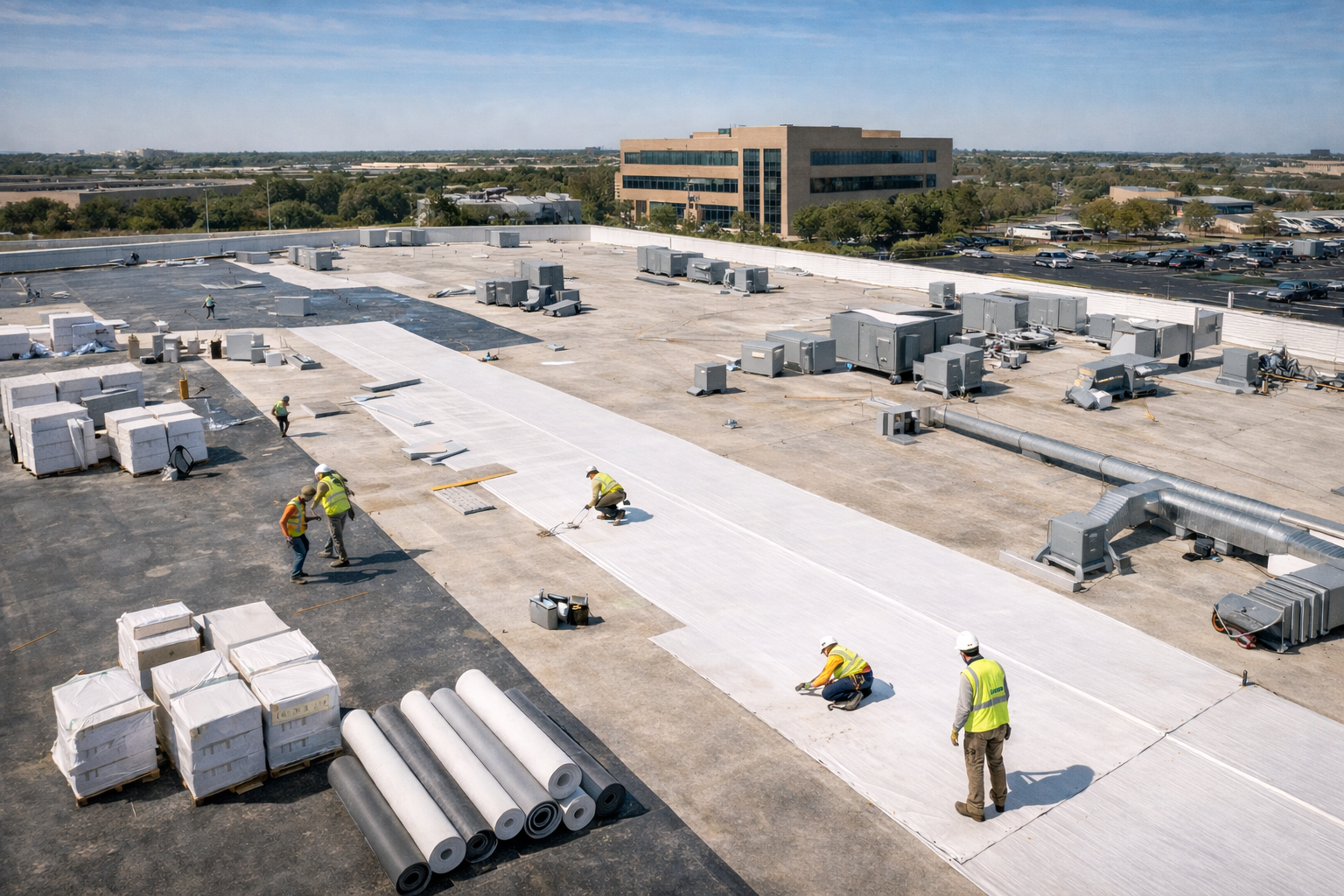
Beyond materials, installation factors such as roof size, penetrations, tear-off requirements, labor rates, and permitting often create the biggest bid variance. Access, the number of rooftop penetrations (curbs, drains, HVAC), and whether a full tear-off to the deck is required versus an overlay all change material and labor multipliers. Knowing the top drivers helps facility managers include allowances for unknowns and negotiate clearer scopes that minimize change orders.
-
Roof size and geometry — larger or irregular roofs increase material needs and labor hours.
-
Roof complexity and penetrations — more flashing and detail work raises inspection and labor effort.
-
Tear-off vs overlay — full removal adds disposal, deck repair, and time costs.
-
Labor rates and crew specialization — these vary by region and system type.
-
Permitting and code-driven upgrades — may require changes to insulation or fastening methods.
These factors interact: added complexity increases labor and equipment needs, which can trigger more permit scrutiny and specialty inspections. Planning around those links reduces surprises in the final invoice.
|
Installation Factor |
How It Affects Cost |
Typical Impact / Example |
|---|---|---|
|
Roof Size & Geometry |
More area and irregular shapes increase materials and staging time |
A 10,000 sq ft simple roof vs. same area with multiple levels can differ by 10–30% in labor cost |
|
Penetrations & Equipment |
Each penetration requires flashing and watertight detailing |
Rooftop units or many drains add specialized labor and materials, increasing per-sq-ft price |
|
Tear-Off Requirements |
Full removal raises disposal, deck repair, and time |
Tear-off can add significant disposal fees and reveal deck repairs that increase scope |
|
Accessibility & Hoisting |
Need for cranes, lifts, or traffic control increases mobilization costs |
Hard-to-access sites may require off-hour work or specialized lifts that add line items |
Use this table to question proposals and request line-item detail so you can compare bids on an apples-to-apples basis.
How Do Roof Size and Complexity Impact Installation Pricing?
Square footage sets basic material quantities, but complexity multiplies labor: cutting, flashing, and safety setups scale non-linearly with irregular shapes and penetrations. A simple 10,000 sq ft roof installs faster and with fewer seams than one broken into levels or full of curb and ductwork, which needs time-consuming detailing and inspections. Complexity also increases staging, fall protection, and sequencing needs that raise crew hours and supervision cost. When reviewing bids, ask for labor-hour estimates and how the contractor prices complexity so quoted rates are transparent and scalable.
What Role Do Labor Costs and Accessibility Play in Commercial Roofing Projects?
Labor rates vary by location and by the skill needed for specific systems, so crew selection directly influences cost and productivity. Accessibility affects labor too: tight sites, city-center logistics, rooftop obstructions, or required crane lifts increase mobilization and scheduling expenses. Systems like standing seam metal need crews with particular skills and may take longer to install, which should show in labor line items. Early site surveys and access planning reduce last-minute equipment rentals and schedule surcharges that inflate costs.
How Do Local Building Codes and Permitting Affect Commercial Roof Installation Costs?
Local codes set performance criteria—wind uplift resistance, insulation R-values, flashing standards—that affect material choice and fastening schedules. Meeting code upgrades can require thicker insulation or different attachment methods. Permitting fees and inspection cycles add direct costs and schedule risk, and can sometimes require rework if initial assumptions don’t meet authority standards. Budget contingencies should include likely permit costs and a margin for code-driven design changes to avoid overruns and delays.
How Can Proactive Maintenance Reduce Commercial Roof Costs Over Time?
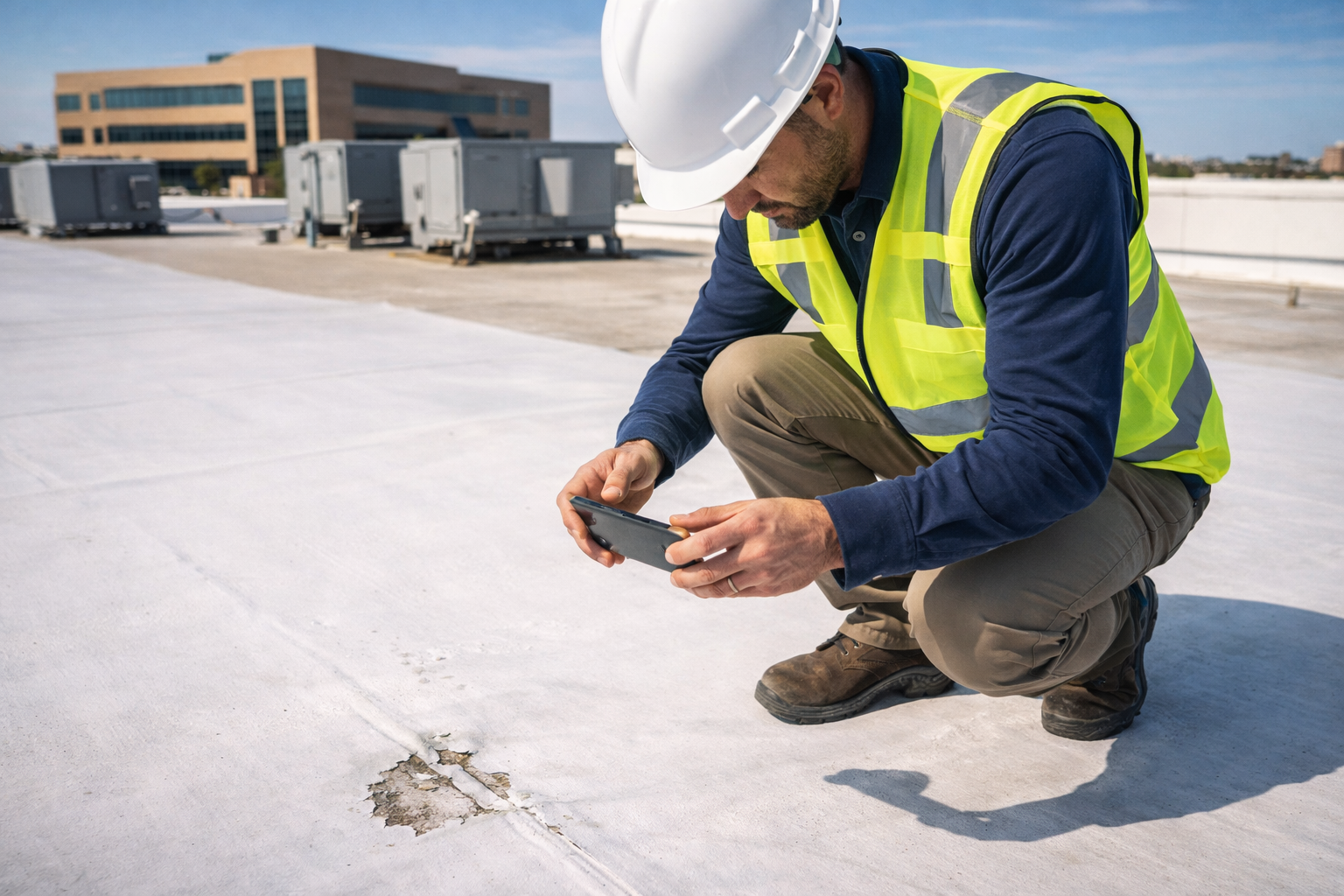
Proactive maintenance lowers lifetime roofing costs by catching small issues before they become leaks, structural problems, or premature replacements. Regular inspections and minor repairs preserve membrane integrity and extend service life. Budgeting for routine tasks — cleaning drains, resealing flashings, and addressing localized wear — reduces emergency repairs and avoids costly partial replacements. Industry data shows proactive programs can produce meaningful savings over decades by stretching replacement intervals and cutting reactive repair bills. The table below quantifies typical annual costs for maintenance types and shows how modest recurring investments compare with episodic reactive expenses.
|
Maintenance Type |
Annual Cost per sq ft (Estimate) |
Lifespan Impact / Savings Example |
|---|---|---|
|
Visual Inspections & Minor Repairs |
$0.10–$0.20 |
Detects early issues and can add 3–7 years of life through timely repairs |
|
Preventative Cleaning & Drainage |
$0.05–$0.10 |
Prevents ponding and membrane degradation; reduces leak frequency |
|
Coatings & Surface Treatments |
$0.10–$0.30 |
Restores waterproofing and UV protection; can delay replacement by 5–10 years |
The numbers show proactive maintenance is modest per square foot and that combined interventions frequently produce lifecycle savings that justify a scheduled program.
What Is the Cost Difference Between Proactive and Reactive Commercial Roof Maintenance?
Proactive programs typically cost $0.15–$0.30 per sq ft per year for inspections, minor repairs, and cleaning. Reactive repairs from leaks or storm damage can be several dollars per sq ft and may accelerate replacement cycles. For example, a $0.25/sq ft annual program on a 20,000 sq ft roof costs $5,000 per year, while a single major reactive repair or partial replacement can top $50,000 and trigger interior damage claims. Over 20–30 years, proactive maintenance can save roughly 30–50% of lifecycle costs by preventing large failures and deferring full replacement.
How Should Business Owners Budget for Annual Commercial Roof Maintenance?
Owners should budget based on roof type and age, commonly setting aside $0.15–$0.30 per sq ft annually plus a 10–20% contingency for unexpected repairs. This covers inspections, routine cleaning, drain maintenance, and minor flashing work. Establish a scheduled inspection cadence — biannual or quarterly depending on exposure — to keep tasks on track. Maintain a small capital reserve for coatings or localized replacements so medium-sized work is budgeted, not an emergency. A clear maintenance contract with defined response times and scope control reduces administrative overhead and makes budgeting predictable.
How Does Regular Maintenance Extend Roof Lifespan and Save Money?
Maintenance stops the common failure mechanisms: clogged drains cause ponding and membrane stress, loose flashings let water in, and small cracks grow quickly if ignored. Fixing these issues early can add 5–15 years of service life depending on system and climate, and it reduces the likelihood of capital-intensive replacements. The savings extend beyond the roof to avoided interior repairs, less downtime, and reduced equipment damage. Maintenance investments compound into meaningful long-term savings.
If you want a formal maintenance plan and a budget estimate, schedule a Free Commercial Roof Assessment to get a prioritized maintenance roadmap and cost projections. Trivan Roofing can scope a tailored program from that assessment to target lifecycle savings and localized risk.
What Are the Key Budgeting and Financial Planning Considerations for Commercial Roof Replacement?
Start replacement budgeting with a thorough assessment to define scope, then itemize material selection, labor, permit allowances, and a contingency for unknown deck conditions and code triggers.
Convert quotes into comparable metrics — cost per square foot including insulation and removal, expected service life, and warranty coverage — so lifecycle-based decisions are possible.
The checklist below gives a step-by-step sequence owners can use to assemble a defensible replacement budget.
-
Assess condition and determine required scope and timeline for replacement.
-
Obtain at least two detailed proposals with line-item breakdowns and warranty terms.
-
Include permit, testing, and removal/disposal costs plus a 10–20% contingency.
-
Compare lifecycle costs, not just initial price, when selecting material and warranty options.
This checklist gives a structured way to turn building condition into budget commitments and reduces the chance of surprise costs during execution.
How Do You Create an Effective Commercial Roof Replacement Budget?
Document the assessment: square footage, areas needing deck repair, and required thermal performance. Request line-item proposals that separate material, labor, tear-off, disposal, and permit costs. Allocate a 10–20% contingency for unknown deck repairs or code requirements revealed during tear-off. Run a lifecycle analysis — compare upfront cost plus expected replacement frequency over a planning horizon (20–30 years) — to determine overall value. Keep budget documentation and scope clarifications ready to limit change orders during construction.
What Commercial Roofing Warranties and Guarantees Should You Understand?
Warranties fall into three categories: manufacturer material warranties, contractor workmanship warranties, and system warranties that combine both. Each varies in duration, transferability, and exclusions. Manufacturer warranties cover material defects; workmanship warranties cover installation errors and come from the installing contractor. System warranties often require approved installers and specific components; review what voids coverage (unauthorized repairs, ponding, lack of maintenance) so you know the obligations. Negotiate clear warranty documents and confirm maintenance requirements to preserve long-term protection and predictable costs.
What Financing Options Are Available for Commercial Roofing Projects?
Common financing options include commercial equipment loans, installment plans, vendor financing, and sometimes energy-efficiency incentives that offset costs for reflective or insulated systems. Loans spread capital expense and preserve operating cash; vendor financing can simplify procurement with milestone-based payments. When weighing financing, compare interest cost against avoided downtime and energy savings. For some projects, longer-life, warranty-backed systems justify financing. A structured vendor process — assessment → inspection → proposal — creates finance-ready proposals and clarifies warranty obligations before work begins.
Trivan Roofing recommends the three-step approach — assessment → inspection → proposal — to produce accurate, finance-ready proposals and to lay out warranty and financing options up front. This helps owners compare financing scenarios against lifecycle cost outcomes.
How Do Location and Accessibility Affect Commercial Roofing Costs in Texas and Oklahoma?
Regional conditions in Texas and Oklahoma — extreme heat swings, storm exposure, and local labor markets — influence material choice, fastening methods, and maintenance frequency, affecting both upfront and ongoing costs. High heat and UV exposure make reflective membranes and coatings more important. Storm-prone areas may require higher wind-uplift ratings and stronger attachments. Local labor availability and permitting practices in San Antonio, Oklahoma City, and Dallas/Fort Worth affect scheduling and mobilization costs; travel and staging can add logistics fees. Accounting for these regional dynamics during material selection and budgeting reduces the risk of underestimating required performance or installation complexity.
What Local Building Codes Impact Roofing Costs in Texas and Oklahoma?
Code elements that typically add cost include wind-uplift standards, hail resistance ratings, fire classification, and required insulation R-values — all of which influence material and labor needs. Authorities may require specific fastener patterns or tested assemblies, and changes in enforcement can surface during permitting or inspection, requiring design adjustments. Budget for potential code-driven upgrades and confirm local authority expectations during the early assessment; a Free Commercial Roof Assessment can flag likely code impacts for your project area and reduce redesign risk.
How Does Roof Accessibility Influence Labor and Project Pricing?
Accessibility challenges — tight urban lots, limited crane staging, or complex rooftop equipment layouts — require specialized lifts, traffic control, and sometimes off-hours work that raise mobilization costs. Easy perimeter access allows more efficient staging and faster crew cycles; constrained sites increase time on roof and safety setup costs. Early site evaluation and logistics planning identify access routes, staging zones, and lift needs before bidding to avoid unexpected surcharges.
Why Choose Trivan Roofing for Cost-Effective Commercial Roofing Solutions?
Trivan Roofing helps business owners reduce roofing-cost uncertainty through a Free Commercial Roof Assessment, hands-on material expertise for flat and standing seam metal systems, and a transparent three-step client process that clarifies scope and warranty terms. As a licensed commercial roofing specialist serving Texas and Oklahoma from offices in Grapevine, TX and Pauls Valley, OK, we focus on installation, repair, and maintenance with attention to regional codes and warranty support. Our goal is to help owners choose systems that minimize lifecycle cost through the right materials, quality installation, and planned maintenance. For businesses that want cost transparency and a documented plan, our assessment-to-proposal workflow produces actionable estimates and maintenance or replacement roadmaps.
How Does Trivan Roofing’s Free Commercial Roof Assessment Help Manage Costs?
Our Free Commercial Roof Assessment is a scheduled site visit that documents membrane condition, penetrations, drainage, and likely code impacts, and delivers a clear report with prioritized recommendations and cost ranges. That report reduces uncertainty by identifying near-term needs and quantifying likely repair or replacement items so owners can set accurate budgets and contingencies. The assessment feeds directly into a formal proposal during the inspection and proposal stages, ensuring scope matches observed conditions. Scheduling a Free Commercial Roof Assessment gives you the baseline data needed to avoid surprise costs and to build a maintenance or replacement plan that aligns with capital planning.
What Expertise Does Trivan Roofing Offer in Material Selection and Cost Management?
Trivan Roofing’s regional experience helps balance climate exposure, building use, and lifecycle cost expectations when selecting materials. We specialize in flat roofing systems and standing seam metal where appropriate, and we help clients navigate warranties and transparent proposals. Decision criteria include expected service life, maintenance needs, energy goals, and code compliance; our process — assessment → inspection → proposal — turns those criteria into a costed plan with financing and warranty options discussed up front. This approach delivers predictable budgeting and helps control project costs through clear scope, experienced installation, and planned post-installation maintenance.
-
Transparent Estimates: Proposals that separate materials, labor, permits, and contingencies so owners can compare bids accurately.
-
System Expertise: Guidance on selecting membranes and metal systems that align with long-term cost and performance goals.
-
Maintenance Planning: Creation of proactive maintenance programs to extend roof life and reduce total lifecycle costs.
These elements combine to give business owners clearer financial expectations and a path to cost-effective roof asset management, starting with a Free Commercial Roof Assessment to establish the project baseline.
Conclusion
Knowing what drives commercial roofing installation and maintenance costs lets business owners make choices that match budget and long-term goals. By weighing material options, installation complexity, and proactive maintenance, you can reduce unexpected expenses and extend roof life. Ready to protect that investment? Schedule a Free Commercial Roof Assessment with Trivan Roofing to get tailored insights and an actionable plan for your roofing strategy.
Get Accurate Cost Estimates with a Free Roof Assessment
Stop guessing at roofing costs. TriVAN Roofing provides free commercial roof assessments that document current conditions, identify code requirements, and deliver prioritized cost estimates for repairs or replacement. Our site visits produce clear reports with material recommendations, lifecycle cost comparisons, and maintenance budgets so you can plan confidently. We serve Texas and Oklahoma with expertise in flat and metal roofing systems, transparent proposals that separate materials and labor, and warranty guidance.
Schedule Your Assessment