How to Evaluate Commercial Roofing Contractors in DFW: A Bid Comparison Guide
| By TriVAN Roofing | 13 min read
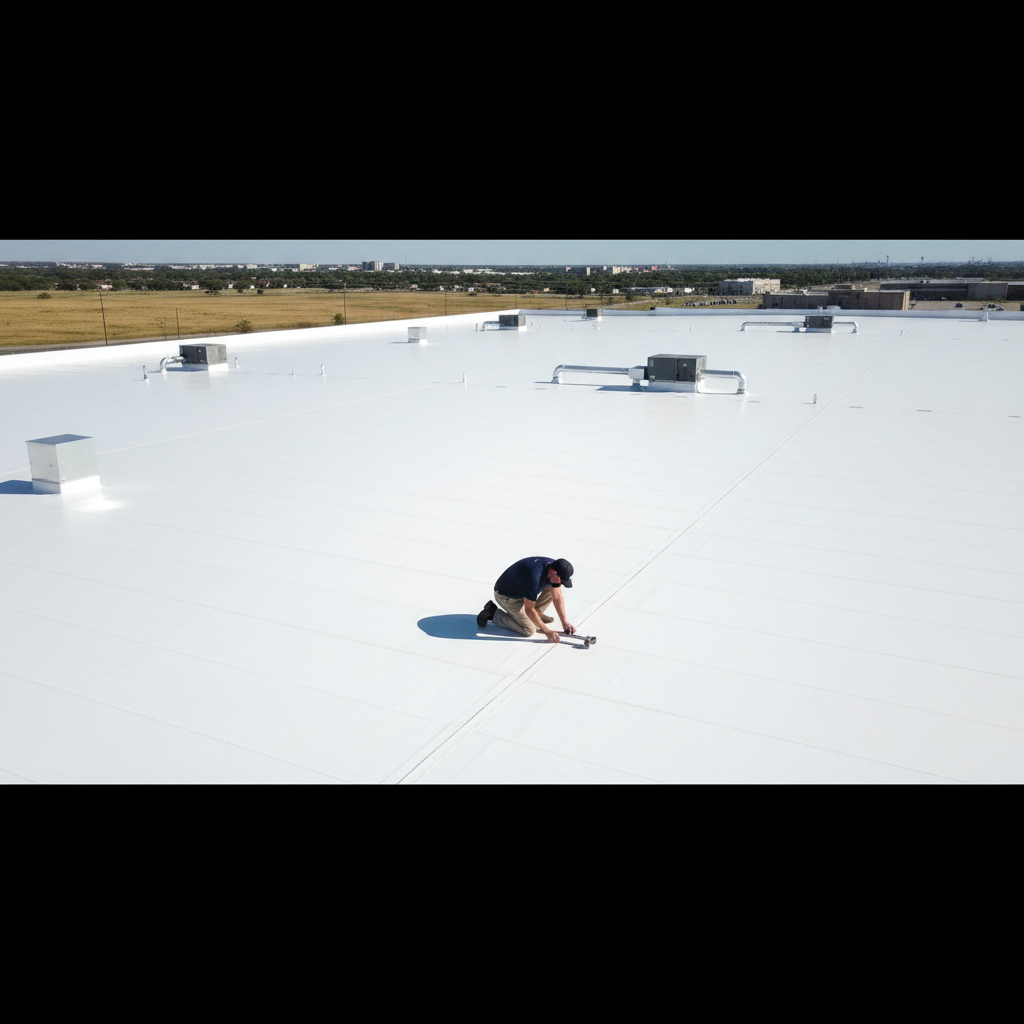
Comparing commercial roofing bids in DFW? Our guide helps facility managers look beyond price. Learn to evaluate scope, contractor qualifications, warranties, and safety to make a defensible, value-based decision for your building.
Categories: Industry Insights
As a facility manager, you have a stack of three commercial roofing bids on your desk. They are all for the same building, yet the prices vary by 30% or more. Contractor A is the low bidder, Contractor B is in the middle, and Contractor C is the highest. Each contractor insists their price is fair and their solution is the right one. This scenario is frustratingly common, and it makes choosing the right partner for your roofing project incredibly difficult. The reality is, you are likely not comparing three identical proposals. The price differences often hide significant variations in material specifications, installation methods, and warranty terms.
A lower bid is not always better value, and a higher bid does not guarantee higher quality. The key to making a sound, defensible investment for your building is to move beyond a simple price comparison. You need a framework to evaluate what is actually being offered. This guide provides that framework. We will walk through how to dissect each proposal, verify contractor qualifications, and make a true apples-to-apples comparison. This process will help you select a contractor based on long-term value, not just the number at the bottom of the page, which is critical in a region prone to severe weather like hail.
Start with Scope: The Only True Apples-to-Apples Foundation
Before you even look at the prices, you must confirm that each bid is for the exact same scope of work. Two bids are only comparable if they propose the same system, materials, and services. Most proposals are not detailed enough to make this easy, so you will need to ask clarifying questions. Insist on getting everything in writing. Here are the critical scope items to verify across every bid.
Membrane Type and Thickness
The roofing membrane is the primary waterproofing layer. A proposal should state the exact type and thickness. For example, a bid for a 45-mil TPO membrane is not the same as a bid for a 60-mil TPO membrane. The 60-mil product is thicker, more durable, and more puncture-resistant. While both are TPO, they are different products with different costs and performance characteristics. Make sure every bid specifies:
- Membrane Type: TPO, PVC, EPDM, Modified Bitumen, etc.
- Manufacturer: Duro-Last, GAF, Carlisle, etc.
- Thickness: 45-mil, 60-mil, 80-mil, etc.
Attachment Method
How the membrane and insulation are secured to the roof deck dramatically affects performance and cost. A proposal must clearly state the attachment method. The three most common methods for single-ply systems are:
- Mechanically Attached: The membrane is fastened to the deck with plates and screws. This is often a cost-effective method.
- Fully Adhered: The membrane is glued to the insulation or substrate below. This creates a smoother finish and can offer superior wind uplift resistance.
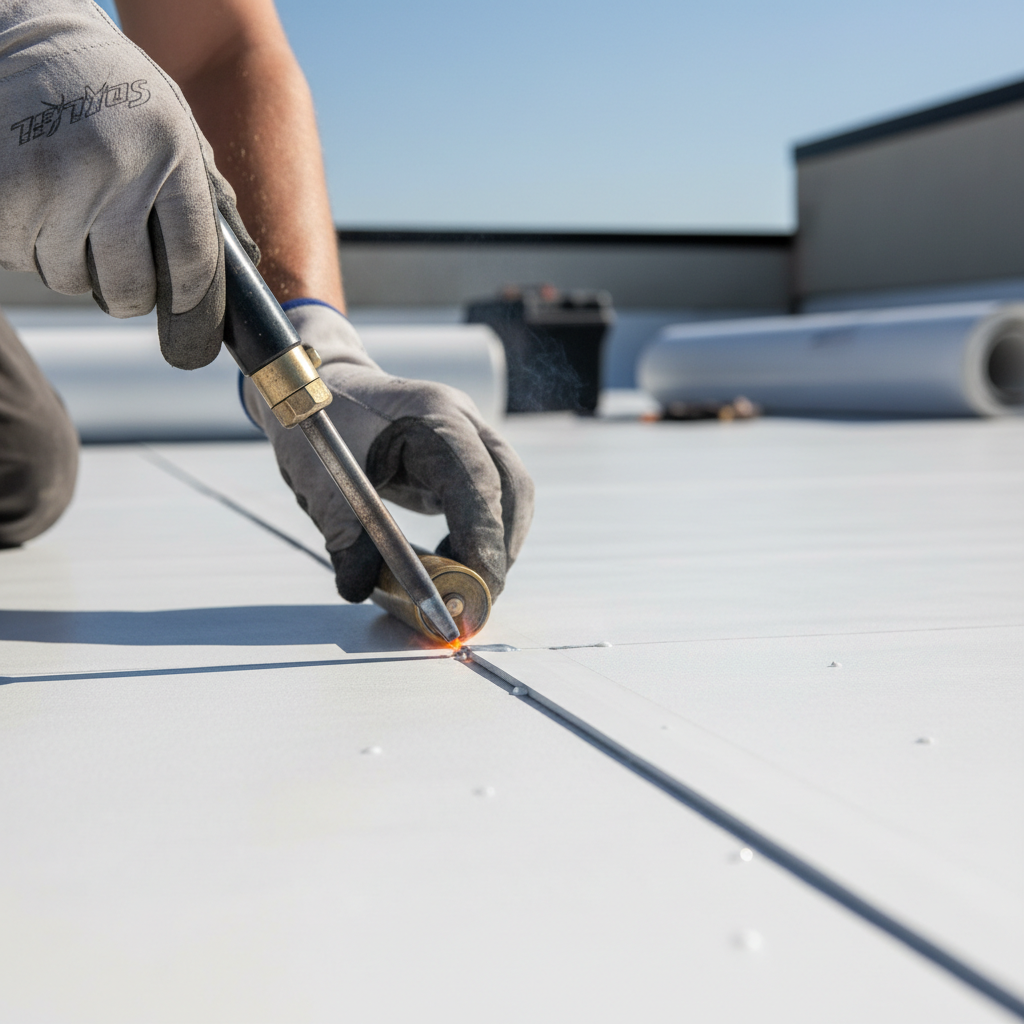
- Induction Welded: This modern method uses a special tool to weld the membrane to plates below without penetrating the membrane itself, combining benefits of both systems.
If one contractor bids a mechanically attached system and another bids a fully adhered system, you are not comparing equivalent proposals.
Insulation Specification
The insulation provides thermal resistance (R-value) and a suitable substrate for the membrane. Bids can differ significantly in the type, thickness, and R-value of the insulation proposed. Verify:
- Insulation Type: Polyisocyanurate (Polyiso), Expanded Polystyrene (EPS), Extruded Polystyrene (XPS).
- Thickness and R-Value: The bid should specify the total R-value being achieved and the thickness of the insulation boards needed to get there. A higher R-value means better energy efficiency but also higher upfront cost.
- Tapered Insulation: If your roof requires a tapered system to improve drainage, ensure this is included and specified in the proposal.
Tear-Off and Disposal
Does the bid include the complete tear-off of the old roofing system down to the structural deck? Some low bids cut corners by proposing a "roof-over" or may price tear-off and disposal as a separate line item. A complete tear-off is almost always the best practice, as it allows for a thorough inspection and repair of the underlying deck. Confirm that the cost of labor, equipment, and landfill fees for disposal are included in the base price.
Deck Repairs
No one knows the true condition of the structural deck until the old roof is removed. Water intrusion can lead to rusted metal decking or rotted wood sheathing. Most roofing contracts exclude extensive deck repair from the base price. However, a professional proposal should clearly state what happens when bad decking is discovered. It should include a unit price for deck repair, such as a per-square-foot cost for replacing metal or wood. This prevents a surprise change order with an inflated price mid-project. Ask any contractor whose bid omits this to provide a unit price for deck replacement.
Edge Metal and Flashings
A roof's edges, curbs, and penetrations are where most leaks occur. The quality of the flashing work is critical. The proposal should specify the type and gauge of the new edge metal and whether it is a pre-fabricated or custom-bent system. Vague terms like "install new flashings" are a red flag. The scope should be explicit about flashing details for rooftop units, pipes, drains, and wall transitions.
Verify, Don't Trust: The Contractor Qualification Gauntlet
Once you have a comparable scope of work, the next step is to verify that each contractor is qualified to perform it. Do not take their claims at face value. A professional contractor will have no problem providing documentation and allowing you to verify their credentials independently.
Manufacturer Certifications
Top-tier manufacturers like GAF and Duro-Last offer elite certification levels to only their best and most reliable contractors. These certifications are not easy to earn and require a proven track record of quality installations, financial stability, and proper insurance. Crucially, they are the key to accessing the best manufacturer warranties.
- Verify Directly: Call the manufacturer or use their online contractor locator tool. Confirm the contractor's status. For example, is the contractor a GAF Master Elite installer (top 2% nationwide) or a Duro-Last Elite Contractor (top 3%)?
- Check if Current: Certifications can lapse. Confirm that their status is active, not expired.
Insurance and Bonding
A certificate of insurance is not enough. Policies can be canceled for non-payment the day after a certificate is issued. You must verify coverage directly with the insurance carrier listed on the certificate. Call them and confirm that the General Liability and Workers' Compensation policies are active and that the coverage amounts meet your project's requirements. A contractor operating with lapsed insurance exposes your company to enormous liability. Also, ask if the contractor is bondable, as this indicates financial stability.
State Licensing and Registration
Licensing requirements vary by state. In Texas, the Texas Department of Licensing and Regulation (TDLR) requires contractors performing work over certain values to be registered. While Texas does not have a specific "roofing license," this registration is a baseline requirement. For projects in Oklahoma, verify the contractor's registration with the Oklahoma Construction Industries Board (CIB). A lack of proper registration is a major red flag.
Workers' Compensation
This is non-negotiable. A contractor who lets their workers' compensation coverage lapse is not only breaking the law in most cases but is also creating a massive liability risk for the building owner. If a worker is injured on your property and the contractor has no coverage, you could be held liable. Verify active coverage with the carrier.
Experience and References
Ask for at least three references for projects that are similar to yours in size, scope, and system type. Specify that the projects should have been completed within the last two years. Then, call every single reference. Ask about the quality of the work, communication, professionalism of the crew, and whether they would hire the contractor again. A contractor who cannot provide recent, relevant references may lack the specific experience you need.
This verification process is your due diligence. It protects your organization from liability and ensures the contractor you hire has the stability and expertise to stand behind their work for the next 15 to 20 years. Taking their marketing materials at face value is a risk you cannot afford to take.

Deconstructing the Warranty: What "NDL" Really Means
Many contractors will promote a "No Dollar Limit" (NDL) warranty, but not all NDL warranties are created equal. This warranty, which comes from the manufacturer, is supposed to cover repairs without a cap on cost. However, the details hidden in the fine print can make a huge difference in the actual protection you receive. Always ask for a specimen of the actual warranty document, not a marketing summary, and compare these key provisions.
Coverage Period
This is the most obvious point of comparison: 15, 20, or even 30 years. While longer is generally better, the period alone means little without understanding the other terms. Do not be swayed by a 30-year warranty that has major exclusions compared to a comprehensive 15-year warranty.
Labor Inclusion
This is a critical, often overlooked detail. Does the warranty cover the cost of labor for repairs for the entire duration? Some warranties cover both materials and labor for the full 20-year term. Others, however, may only cover labor for the first two, three, or five years. After that, the manufacturer might provide the material, but you are responsible for paying a contractor to perform the repair. A warranty that excludes labor after year five is significantly less valuable.
Ponding Water Exclusions
Read the section on exclusions carefully. Most standard roofing warranties explicitly exclude coverage for damage in areas of the roof where water ponds for more than 48 hours. If your roof has known drainage issues, a significant portion of your roof surface might not actually be covered. Some premium warranties, like TriVAN’s 15-year NDL warranty, can include coverage for ponding water, which is a major advantage for flat or low-slope roofs.
Maintenance Requirements
Most manufacturer warranties, even the best ones, require the building owner to conduct and document regular inspections to keep the coverage valid. Ask each bidder to provide the specific maintenance schedule and documentation standards required by their proposed warranty. A contractor who glosses over this is setting you up for a denied claim in the future. Reputable contractors will offer documented annual or semi-annual inspections as part of a maintenance program to ensure your warranty stays in force.

Transferability
If you plan to sell the building within the warranty period, transferability is a valuable asset. A warranty that can be transferred to the new building owner preserves property value. Many warranties are not transferable or require a fee and inspection to transfer. Clarify the terms before you sign.
The Hidden Risk: Evaluating a Contractor's Safety Record
Safety is not just the contractor's concern; it is also a risk management issue for you as the building owner. Accidents on your property can lead to project delays, legal complications, and potential liability. Professional contractors take safety seriously and can provide data to prove it.
Experience Modification Rate (EMR)
The EMR is an insurance industry metric that indicates a company's safety performance relative to the industry average. An EMR of 1.0 is average. An EMR below 1.0 is better than average and means the contractor has had fewer and less severe accidents than their peers. A contractor with an EMR significantly above 1.0 has a poor safety record. Ask every bidder to provide their current EMR rating. A refusal or inability to do so is a major red flag.
OSHA Logs
For a deeper look, you can request a contractor's OSHA 300 logs for the past three years. These forms document all reportable workplace injuries and illnesses. Reviewing these logs can give you a clear picture of their on-the-job safety culture and history.
The Final Step: How to Compare Price The Right Way
Only after you have normalized the scope and verified the qualifications of each contractor can you begin to compare prices intelligently. If you have successfully managed to get three bids for the exact same scope, materials, and warranty from three equally qualified contractors, then choosing the lowest price is reasonable. However, this is rarely the case.
More often, you will have bids with slight differences. To compare them, you need to normalize the cost. For instance, imagine:
- Contractor A bids $80,000 for a 45-mil, mechanically attached system.
- Contractor B bids $100,000 for a 60-mil, fully adhered system from a higher-tier manufacturer.
Contractor A is not necessarily "cheaper" by $20,000. They are bidding a lower-specification project. The correct approach is to ask Contractor A for a price to upgrade their bid to match Contractor B's specifications. If they come back with a revised price of $95,000 for the same 60-mil fully adhered system, you now have a true apples-to-apples comparison. The real price difference is $5,000, not $20,000.
A Simpler Path for Public Entities: The TIPS Advantage
For facility managers at public entities like school districts, cities, counties, and universities, the traditional RFP process can be burdensome. An alternative procurement method is using a cooperative purchasing network like The Interlocal Purchasing System (TIPS). Using TIPS cooperative purchasing contracts streamlines the entire evaluation process.
TIPS vendors have already been through a rigorous competitive vetting process. Their qualifications, insurance, financial stability, and pricing have been evaluated and approved. This means a significant portion of the due diligence is already done for you. Instead of starting from scratch, you can work directly with a pre-approved contractor to define the scope and get a quote that is compliant with public procurement laws. This saves immense time and administrative costs while ensuring you are working with a qualified, vetted professional.

Your Bid Evaluation Scorecard
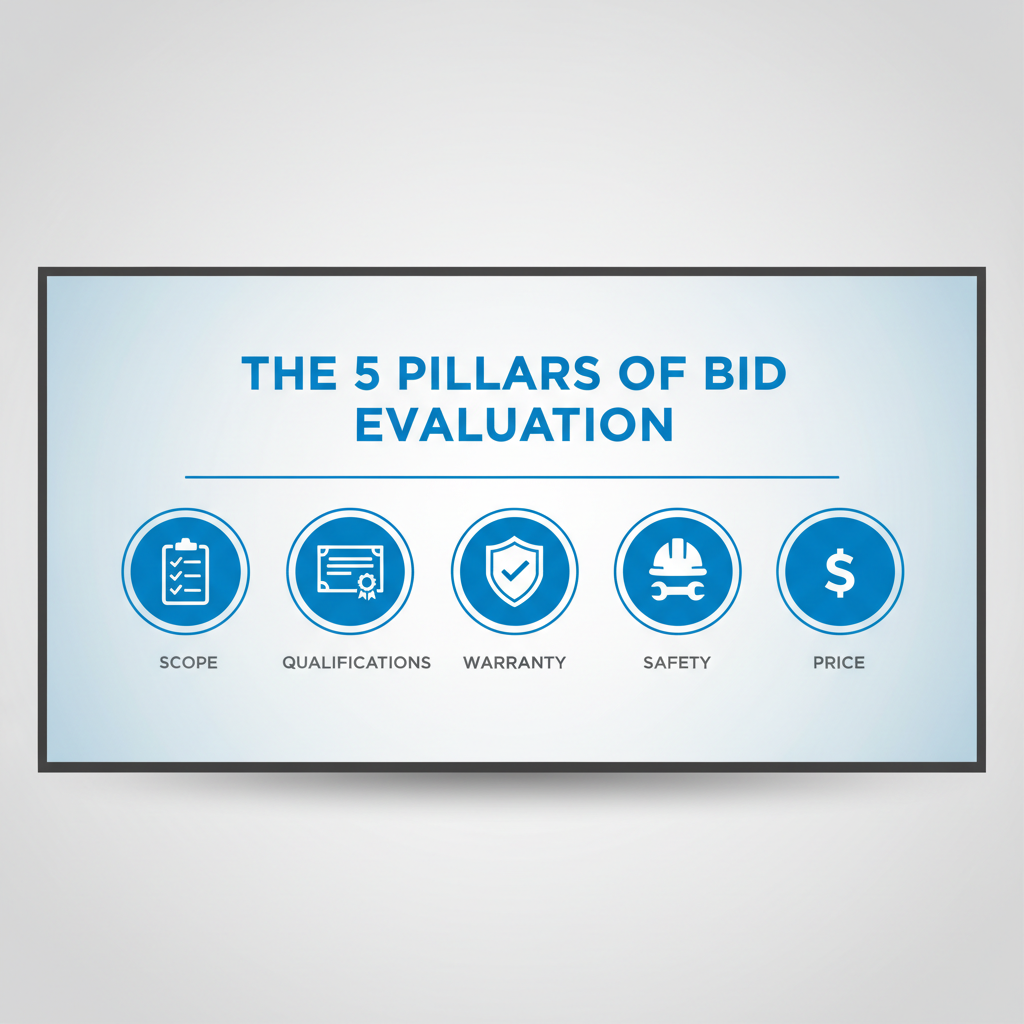
To formalize your process, create a simple bid evaluation scorecard. This matrix allows you to score each contractor across the key categories you have investigated. You can weigh the categories based on what is most important for your organization. For example, warranty terms and contractor qualifications might be weighted more heavily than price.
A sample scorecard might include:
- Scope Completeness (25%): Did the proposal clearly define all materials, methods, and inclusions?
- Contractor Qualifications (25%): Were all certifications, insurance, and licenses verified and active?
- Warranty Terms (20%): How comprehensive is the warranty? Does it cover labor and have minimal exclusions?
- Safety Record (15%): Does the contractor have a strong safety record with an EMR below 1.0?
- Normalized Price (15%): How does the price compare once adjusted for an identical scope?
This structured approach transforms a subjective choice into an objective, data-driven decision. It creates a defensible paper trail that satisfies procurement policies and gives leadership confidence in the investment. A good contractor will welcome this level of scrutiny because it allows their quality and professionalism to shine.

Ultimately, selecting a commercial roofing contractor is one of the most important decisions a facility manager can make. The roof is a critical asset, and a failed installation can lead to operational disruptions and expensive interior damage. By moving beyond price and using a disciplined evaluation framework, you can protect your investment and build a partnership with a contractor who will deliver long-term value for years to come. If you have questions or need help defining the scope for your next project, contact a qualified contractor to guide you through the process.
All 14 deliverables complete.Tags: how to choose commercial roofing contractor Texas, commercial roofing bid comparison DFW, commercial roofing contractor evaluation guide, compare commercial roofing bids Texas, best commercial roofing contractor Dallas Fort Worth, commercial roofing contractor qualifications Texas, how to evaluate roofing contractor commercial, commercial roofing RFP Texas, commercial roofer bid evaluation, commercial roofing contractor red flags Texas