How Long Does Commercial Roof Replacement Take? A Complete Timeline From Decision to Completion
| By TriVAN Roofing | 12 min read
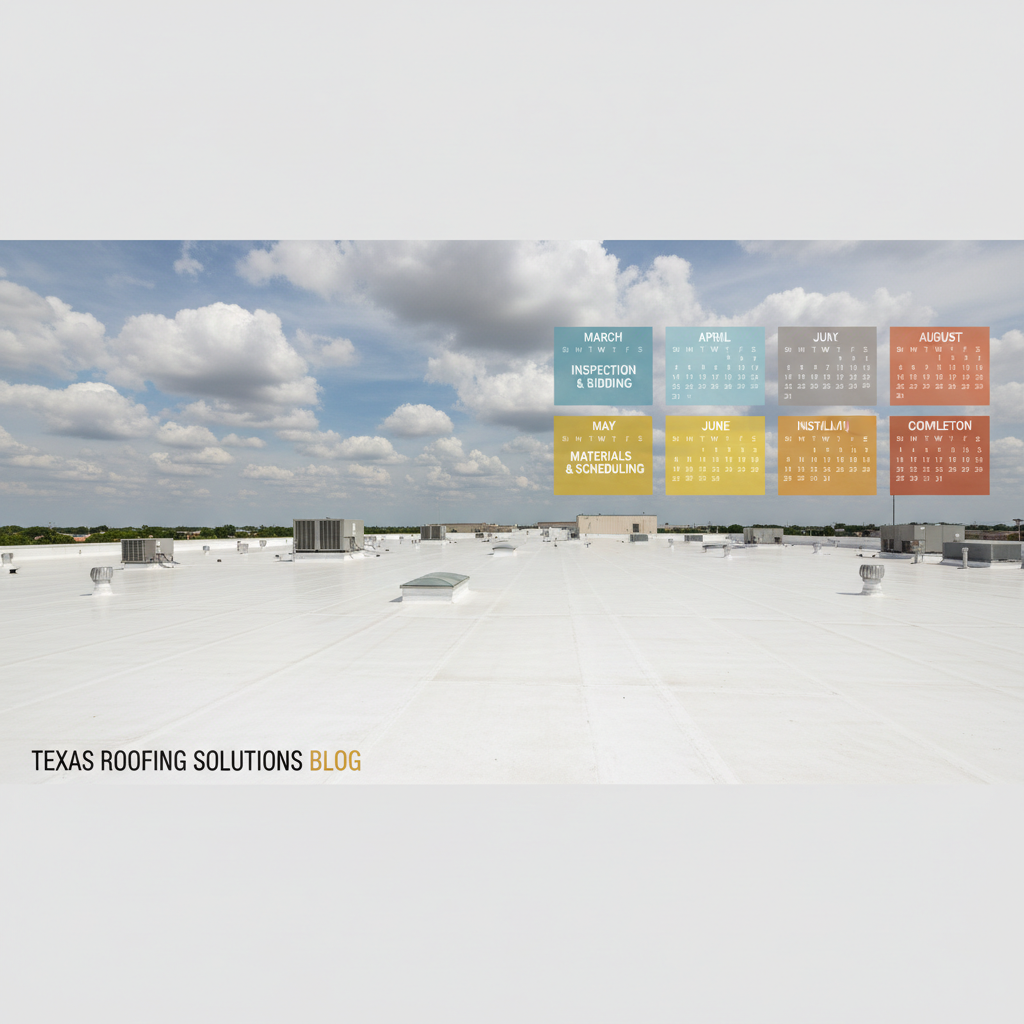
Think a commercial roof replacement takes 4-6 weeks? The reality is 12-28 weeks. Our complete timeline guide breaks down each phase, from assessment to closeout, so you can plan accurately and avoid costly scheduling errors. Plan your project like a
Categories: Roof Repairs & Restoration
When a facility manager or building owner first considers a commercial roof replacement, the most common question is: "How long will this take?" The most common assumption is a 4 to 6-week timeline from the first call to a completed roof. This assumption is also the single biggest source of project failure, missed deadlines, and immense frustration.
The reality is that a properly planned and executed commercial roof replacement takes 12 to 24 weeks. For projects involving custom-made systems or complex permitting, that timeline can easily extend to 28 weeks. This gap between expectation and reality causes major problems. Board presentations miss key dates, tenant notifications go out too early, and school districts that start planning in April discover they’ve already missed the window for a summer installation.
This guide provides a transparent, phase-by-phase breakdown of a realistic commercial roofing project timeline. Use it to plan accurately, manage expectations within your organization, and ensure your project stays on track from the very beginning.
The Five Phases of a Commercial Roof Replacement
A successful project isn’t just about the time crews are on your roof. The majority of the timeline is consumed by critical planning, procurement, and administrative steps that happen long before a single tool is unpacked. We've broken the entire process into five distinct phases.
Phase 1: Assessment, Decision, and Budgeting (4-13 Weeks)
This initial phase is about discovery and internal alignment. It involves confirming the need for a replacement, understanding the scope, and securing the funds. The timeline here is almost entirely dependent on how quickly your organization can make decisions.
Professional Roof Condition Assessment (1-2 Weeks)
The process begins with a thorough evaluation by a qualified commercial roofing contractor. This isn't just a quick look. It involves a core sample analysis, infrared moisture scans, and a detailed inspection of seams, flashings, and penetrations. After the on-site inspection, it typically takes 1 to 2 weeks for the contractor to compile the findings, write a detailed report with photographic evidence, and present recommendations. This professional roof condition assessment is the foundational document for your entire project.
Internal Review and Decision (1-3 Weeks)
With the assessment report in hand, your internal team must make the critical decision between replacement versus repair. This involves reviewing the findings with stakeholders, facility teams, and leadership. Depending on the complexity of your organization's decision-making structure, this review can take anywhere from one week for a decisive owner to three or more weeks for a committee-based process.
Budget Confirmation and Funding (2-8 Weeks)
This is often the longest part of Phase 1. For a private company using capital reserves, this might be a relatively quick process. For public entities like school districts or municipalities, it’s much more complex. Securing funds may require waiting for the next board or council meeting, which could be a month or two away. If the project relies on bond funds or special capital appropriations, the formal authorization process can take up to 8 weeks or longer.
Phase 2: Contractor Selection and Contracting (3-9 Weeks)
Once you have the green light to proceed, you need to select a partner to perform the work. This phase varies significantly depending on your procurement process. Public entities often face longer timelines due to mandatory competitive bidding requirements.
Soliciting Bids or Accessing Cooperative Contracts (1-4 Weeks)
The traditional route is a competitive bidding process, which involves preparing a bid package, advertising it, and giving contractors 2 to 4 weeks to respond. A faster alternative for public entities is using a purchasing cooperative. By accessing TIPS contracts, for example, you can bypass the lengthy bidding process and move directly to developing a task order with a pre-vetted contractor. This alone can save 4 to 6 weeks.
Bid Evaluation and Contractor Selection (1-2 Weeks)
Simply picking the lowest bid is a recipe for disaster. A thorough evaluation involves checking references, verifying insurance and bonding, confirming manufacturer certifications (like TriVAN’s Duro-Last Elite and GAF Master Elite status), and interviewing the top candidates. This due diligence takes 1 to 2 weeks but is essential for vetting a true partner.
Contract Negotiation and Execution (1-2 Weeks)
Finalizing the scope of work, payment schedule, and terms and conditions takes time. Both parties' legal teams may need to review the documents, leading to a 1 to 2-week period of negotiation and signature gathering.
Project Kickoff and Field Measurements (1 Week)
Once the contract is signed, a kickoff meeting establishes communication protocols and confirms the project schedule. If you've chosen a factory-fabricated system, this is when precise field measurements are taken to send to the manufacturer for production. This step is critical and locks in the material order.
Phase 3: Pre-Construction and Procurement (4-14 Weeks)
This phase is the single largest source of timeline extensions that surprise building owners. It’s where the difference between a 4-week assumption and a 20-week reality truly emerges, driven by factors entirely outside the physical installation process.
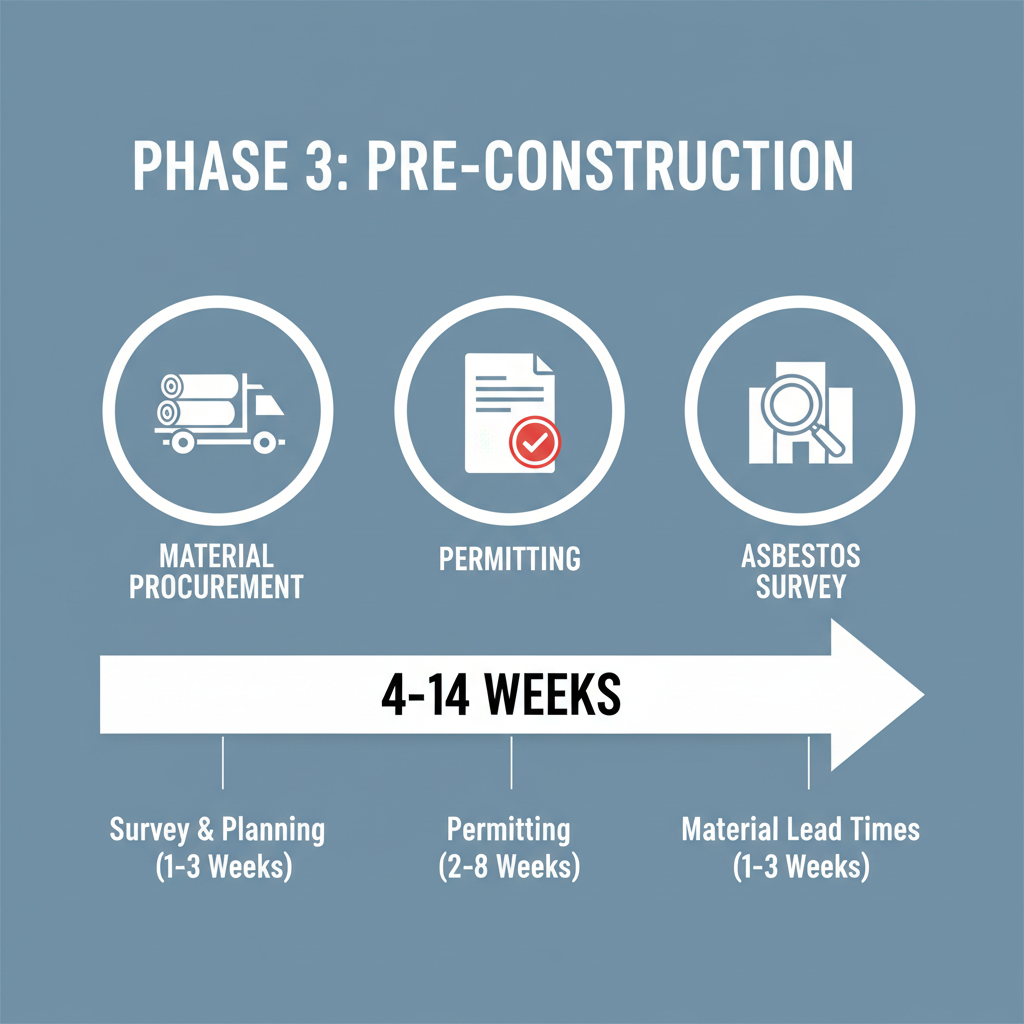
Material Procurement Lead Times (2-8 Weeks)
Not all roofing materials are sitting in a local warehouse.
- Field-Fabricated Systems: Standard standard TPO or EPDM rolls and associated materials typically have a lead time of 2 to 4 weeks from order to site delivery.
- Factory-Fabricated Systems: Custom factory-fabricated systems like Duro-Last have a longer lead time of 4 to 8 weeks. This is because each roof panel and flashing detail is custom-built to your building’s exact dimensions at the factory. This reduces field labor and potential for error, but it requires a longer upfront wait for materials.
Permitting (2-8 Weeks)
Every municipality has a different process. In some smaller Texas or Oklahoma jurisdictions, a roofing permit can be secured in 2 weeks. In major metro areas like DFW or Oklahoma City, or in jurisdictions with stringent energy code compliance reviews, the permit application and approval process can take 4 to 8 weeks. Work cannot begin until the permit is in hand.
Asbestos Survey and Abatement (3-6 Weeks, If Required)
For any building constructed before 1990, an asbestos survey is often required by law before demolition of the existing roof can begin. The survey itself takes about a week to schedule and get results. If regulated asbestos-containing materials (ACMs) are found, a licensed abatement contractor must be brought in to safely remove them. This abatement process can add 2 to 4 weeks or more to the pre-construction timeline.
Pre-Construction Coordination (1-2 Weeks)
For occupied buildings, this final step is crucial. It involves coordinating HVAC shutdowns, notifying tenants of the work schedule and potential noise, and planning site logistics like crane placement, material staging areas, and daily access routes. This coordination ensures minimal disruption to your daily operations.
Phase 4: Active Construction (2-8 Weeks)
This is the phase everyone visualizes when they think of roof replacement: the physical removal of the old system and installation of the new one. While it's the most visible part of the project, it often represents the shortest portion of the overall timeline.
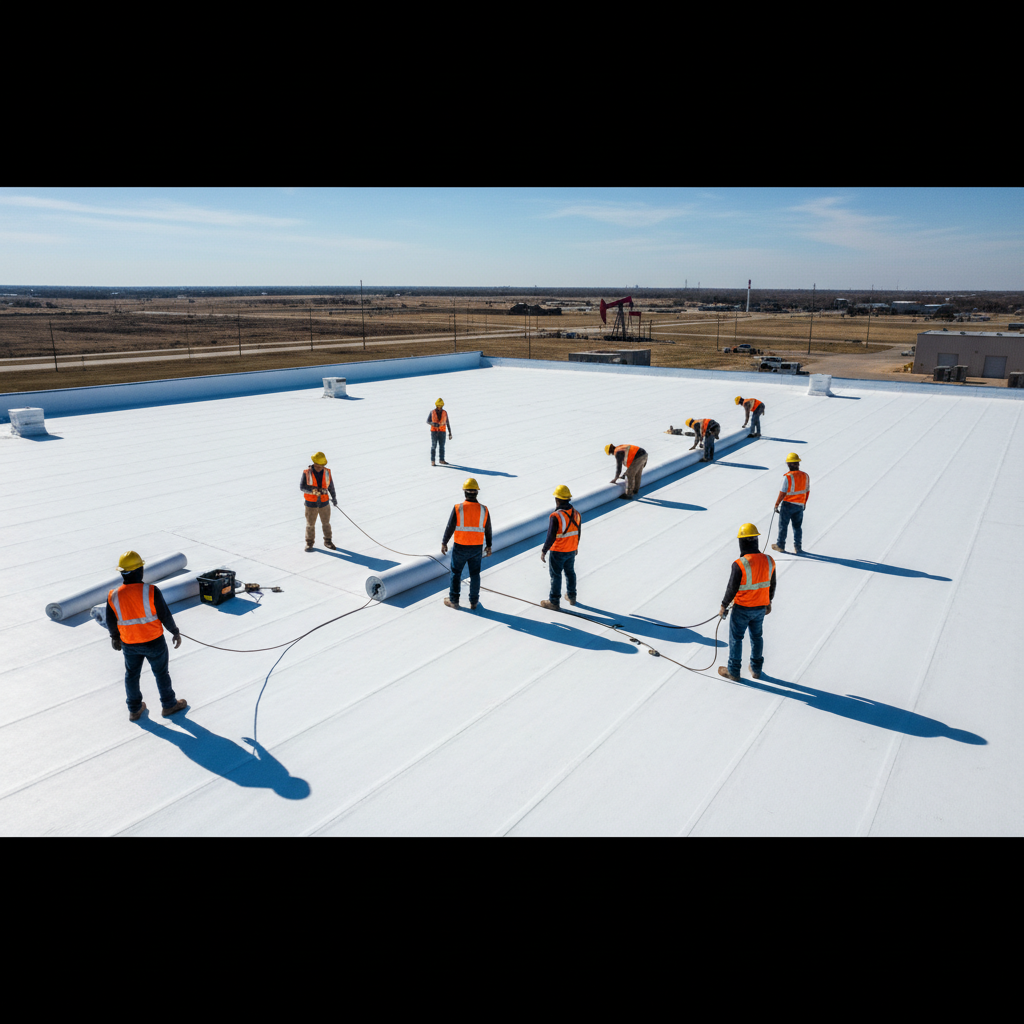
On-Site Installation (Varies by Size and Complexity)
A typical professional crew can install between 3,000 and 5,000 square feet of a standard single-ply system per day under good conditions.
- A 30,000 sq. ft. roof might take 6 to 10 working days, or roughly 2 weeks.
- A 100,000 sq. ft. roof could take 20 to 33 working days, or 4 to 7 weeks.
Timeline Extenders in Construction
Several factors can extend the active construction phase:
- Weather: Texas and Oklahoma are known for unpredictable weather. Rain, high winds, and extreme heat or humidity can halt work. Adhesives for fully adhered systems have strict temperature and humidity windows for application. We typically budget an extra 20-35% in the schedule for weather delays during spring and summer.
- Phasing: If the building must remain operational, work may need to be done in smaller sections. This inefficiency can increase the total installation time by 30-50% compared to an unoccupied building.
- Unforeseen Deck Repairs: Once the old roof is torn off, we may discover rotted wood, rusted metal decking, or deteriorated concrete that must be repaired before the new roof can be installed. Depending on the extent, this can add anywhere from 3 to 10 working days to the project.
Phase 5: Project Closeout and Warranty (3-6 Weeks)
The job isn’t finished when the last roll of membrane is laid. The project closeout phase is a critical quality assurance process that ensures the long-term performance of your investment and finalizes all contractual and warranty obligations. Rushing this phase is a mistake that can have long-term consequences.

Inspections and Punchlist (2-4 Weeks)
First, our own project manager conducts a final walkthrough. Then, for a manufacturer's No Dollar Limit (NDL) warranty, an independent inspector from the manufacturer (e.g., Duro-Last or GAF) must visit the site. Scheduling this inspection can take 1 to 2 weeks. They generate a "punchlist" of any minor corrections needed to meet their stringent standards. Completing these items can take another 1 to 2 weeks.
Final Documentation and Warranty Registration (1-2 Weeks)
Once the punchlist is cleared, we submit all final paperwork. This includes closing out the city permit, registering your warranty with the manufacturer, and delivering a final closeout package to you. This package contains all as-built drawings, maintenance guidelines, and your official warranty documents. This final administrative step takes 1 to 2 weeks.
Your Practical Planning Calendar: Working Backward From Your Deadline
Let's put this all together in a real-world scenario. Imagine you are a facility manager who needs a new roof installed and completed during the summer, with a hard deadline of August 31st. Here’s how you must plan backward:
- August: Project Closeout (4-6 weeks). To be done by Aug 31, closeout must begin by mid-July.
- June-July: Active Construction (4-8 weeks). To start closeout by mid-July, construction must begin by late May or early June.
- March-May: Pre-Construction (8-14 weeks average). To start construction in late May, pre-construction (permits, material orders) must begin no later than March.
- January-February: Contractor Selection (5-9 weeks). To start pre-construction in March, your contractor selection process must begin in January.
- October-December (Previous Year): Assessment & Budgeting (4-13 weeks). To select a contractor in January, your initial assessment and internal budgeting must be completed by December of the prior year.
The conclusion is clear: To guarantee a summer roof replacement is completed by August, the planning process must begin in October or November of the year before. Starting in April puts you 4 to 6 months behind schedule before you even make the first call.
Key Variables That Compress or Extend Your Timeline
Not every project takes 28 weeks. Several factors can shorten or lengthen your specific timeline.
Factors That Shorten the Timeline
- Cooperative Purchasing: Using a TIPS contract eliminates the 4-6 week competitive bid process.
- Pre-Existing Assessment: If you already have a recent, comprehensive condition assessment, you can skip part of Phase 1.
- Field-Fabricated Materials: Choosing standard TPO or EPDM can shorten material lead time by 2-4 weeks compared to custom systems. *Simple Permitting: Working in a jurisdiction with a fast, straightforward permitting process saves weeks.
- Flexible Scheduling: Performing work in the shoulder seasons (fall or early spring) avoids the backlog and weather delays common in peak summer.
Factors That Lengthen the Timeline
- Competitive Bidding: Mandated public bidding processes add significant time to contractor selection.
- Factory-Fabricated Systems: The custom nature of systems like Duro-Last adds 4-8 weeks of production time.
- Complex Permitting: Major cities with historical reviews or stringent energy code compliance can double permit wait times.
- Asbestos Abatement: This necessary safety step can add 3-6 weeks before roofing can even begin.
- Occupied Building Constraints: Phasing and logistical coordination for an active facility will always extend the on-site construction duration.
The Exception: The Emergency Commercial Roof Replacement Timeline
What happens when a roof fails suddenly from a storm or collapse and you don't have 12 weeks to wait? This is where the emergency replacement timeline comes into play. In these cases, the process is dramatically compressed:
- Timeline: An emergency replacement can often be completed in 2 to 4 weeks from engagement to completion.
- Process: Permitting is expedited, materials are sourced from immediately available local stock (field-fabricated systems only), and crews are often diverted from other projects.
- Cost: This speed comes at a premium. Expect emergency pricing to be 25% to 40% higher than a planned project due to overtime labor, material expediting fees, and logistical disruption.
- Limitations: Factory-fabricated systems are not an option for emergency replacements, as their 4-8 week production lead time cannot be shortened.
Understanding this distinction is key. Often, it is more cost-effective to perform robust temporary repairs that allow you to bridge the gap to a properly planned replacement, avoiding the significant emergency premium.
Ultimately, a successful commercial roof replacement is a marathon, not a sprint. By understanding the true timeline and planning proactively, you can avoid the stress and budget issues that plague poorly scheduled projects. Start the conversation early, build a realistic calendar, and partner with a contractor who respects the process. Contact TriVAN Roofing today to begin planning your next project with the foresight it deserves.
All 14 deliverables complete.Tags: how long does commercial roof replacement take, commercial roof replacement timeline, commercial roofing project timeline, how long to replace commercial roof Texas, commercial roof replacement planning timeline, commercial roof project schedule, commercial roofing timeline DFW, commercial roof replacement process timeline, when to start planning commercial roof replacement, commercial roofing planning guide Texas