
Commercial Roof Maintenance Plans: Key Benefits for Property Owners

Preventative commercial roof maintenance plans turn “surprise emergencies” into predictable, budgeted line items by combining regular inspections, cleaning, and minor repairs with clear documentation.
A dependable commercial roof maintenance plan schedules regular inspections, cleaning, minor repairs, and clear documentation so small problems don’t become costly emergencies. Property owners who adopt preventative commercial roof maintenance plans cut emergency repair frequency, protect manufacturer warranties, and make long-term capital budgeting for roof asset management far more predictable. This guide describes what these plans cover, why they matter for flat roof maintenance commercial and metal roof maintenance commercial, and how Texas and Oklahoma’s regional risks change inspection cadence and tactics. You’ll find the typical maintenance workflow, measurable financial benefits, example cost ranges including commercial roof maintenance cost per square foot, and practical steps to maximize ROI through lifecycle planning and energy-efficiency measures. Early in the guide we note TriVAN Roofing as a local commercial roofing expert offering free quotes for tailored maintenance and asset-management support; the remainder focuses on evidence-based benefits, cost drivers, and actionable checklists you can use to protect roofing assets and avoid surprise capital expenditures.
What Are Commercial Roof Maintenance Plans and Why Are They Essential?
A commercial roof maintenance plan is a formal service agreement that schedules routine inspections, cleaning, minor repairs, and reporting to preserve the roof system and lower lifecycle costs. The idea is straightforward: regular inspections catch small defects early, and prompt, targeted repairs prevent those defects from becoming major failures — reducing the total cost of ownership for the roof. These plans matter because they align maintenance with warranty requirements, reduce the risk of water intrusion, and create a documented history that supports insurance claims and resale due diligence. For flat roof maintenance commercial and metal roof maintenance commercial, plans focus on drainage, flashing, coating condition, and fast response after hail or severe storms. The sections that follow list typical services and show how maintenance fits into broader roof asset management for multi-year planning.
What Services Are Included in a Commercial Roof Maintenance Plan?
Standard maintenance plans combine inspections, cleaning, minor repairs, seasonal checks, and documentation into recurring visits that lower risk and improve budget predictability. Inspections include routine walkthroughs and post-storm assessments that identify flashing problems, seam failures, punctures, and ponding water before they turn into leaks and structural damage. Cleaning clears debris, drains, and scuppers to prevent standing water. Minor repairs address small membrane tears, loose fasteners, and damaged coatings to preserve thermal performance. Each visit typically delivers a prioritized inspection report, photographic documentation, and a recommended repair estimate that feeds into a roof asset management schedule. Those deliverables help preserve warranties and form the basis for lifecycle budgeting.
-
The main services in typical plans are inspections, cleaning, minor repairs, and reporting.
-
Every service visit usually produces an inspection report documenting condition and recommendations.
-
Post-storm or seasonal checks are treated as supplemental inspections and prioritized for rapid response.
Bundling these services sets clear expectations and creates a repeatable record that helps owners make informed capital-planning decisions and maintain warranty compliance.
Research shows that how often interventions occur and how maintenance operations are carried out are critical to successful flat roof maintenance programs on existing buildings.
Flat Roof Maintenance Programs: Essential Operations and Intervention Frequency
The definition of the frequency of the intervention, and the execution of the required maintenance operations are essential for the maintenance programme for flat roofs in current buildings, based on the inspection of 26 Maintenance programmes for flat roofs in existing buildings, I Flores-Colen, 2017
How Do Maintenance Plans Fit Into Roof Asset Management Programs?

Maintenance plans are the operational layer of a Roof Asset Management program: inspection data becomes lifecycle strategies, budgets, and renewal timelines. Asset management uses recurring inspection findings to forecast remaining service life, schedule preventive treatments such as recoating, and set aside capital reserves for replacement when condition indexes show end-of-life. Maintenance records also verify warranty-required service and create auditable histories for insurance and resale. For portfolio owners, coordinated plans across properties enable standardized inspection intervals, consolidated vendor relationships, and better purchasing power for parts and labor. This link from routine maintenance to strategic asset planning reduces unexpected capital outlays and supports predictable total cost of ownership.
When routine tasks like fixing small leaks are deferred, the long-term financial difference between an active roof asset management program and no maintenance plan becomes clear.
Roof Asset Management vs. No Maintenance Plan: Life Cycle Cost Comparison
When jobs such as fixing small leaks are deferred, the life cycle costs for two approaches to roof management demonstrate the difference between a roof asset management program that is employed versus no maintenance plan. Developing a roof asset management program., 2001
What Are the Top Benefits of Preventive Commercial Roof Maintenance?
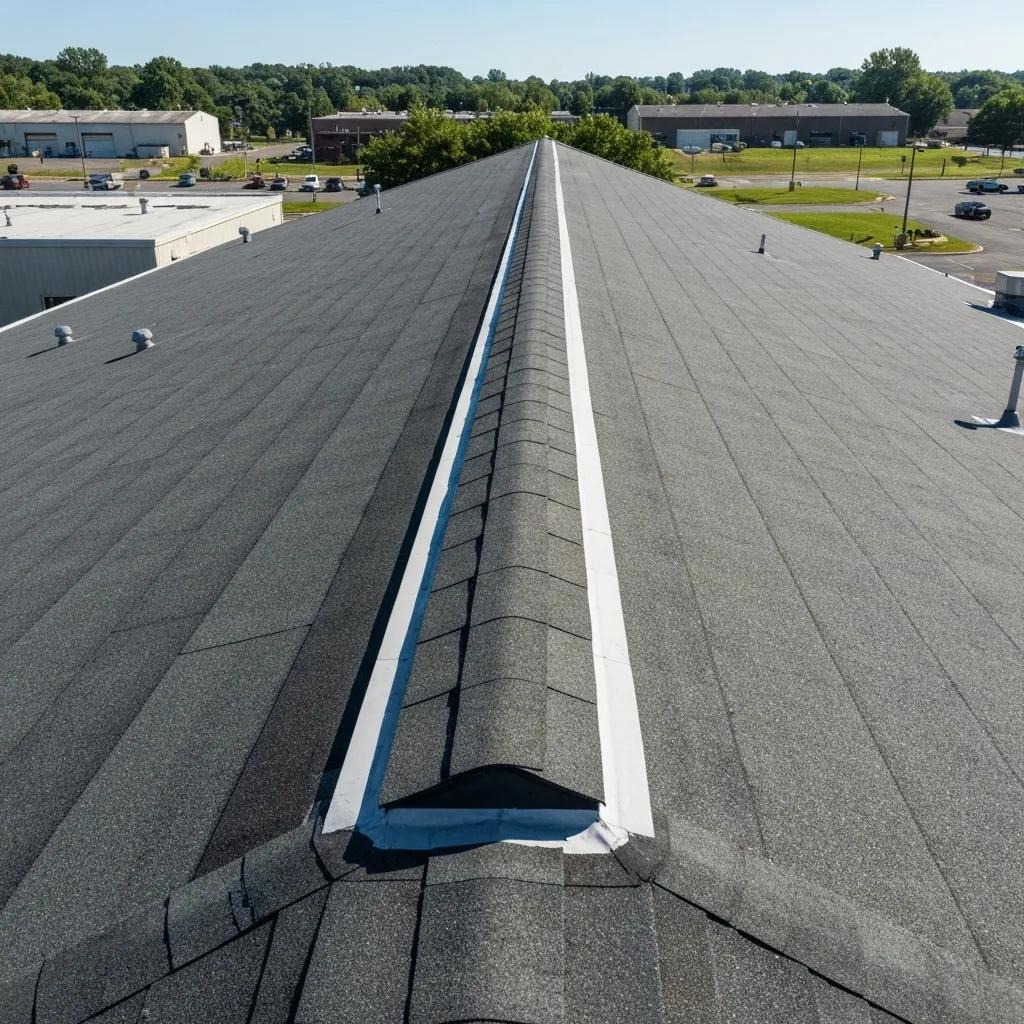
Preventative commercial roof maintenance delivers clear financial, operational, and safety benefits: fewer emergency repairs, longer service life, and preserved warranty coverage. The process is early detection and remediation — small interventions (resealed seams, cleared drains, tightened flashings) stop common failure modes and prevent the water intrusion that leads to costly structural repairs and tenant disruption. Secondary gains include energy efficiency from preserved reflective coatings and insulation interfaces, plus improved safety and code compliance through routine hazard mitigation. The table below maps core benefits to attributes and typical impact ranges so owners can quantify the value of a formal maintenance plan.
-
Core financial benefit: lower lifecycle cost through fewer large repairs.
-
Operational benefit: reduced downtime and improved continuity for tenants.
-
Compliance benefit: documented maintenance supports insurance and resale.
These outcomes show why preventative commercial roof maintenance is an investment in asset longevity and operational resilience, not just a recurring expense.
How Does Maintenance Extend the Lifespan of Flat and Metal Roofs?
Flat roofs commonly fail from ponding water, membrane seam degradation, and clogged drains; maintenance mitigates those risks by keeping drains clear, resealing seams, and protecting coatings. Regular cleaning and small repairs prevent water retention that accelerates membrane breakdown and substrate damage, which directly extends service life. Metal roofs face issues like fastener corrosion, loose seams, and thermal movement; focused maintenance tightens or replaces fasteners, inspects flashings, and re-applies protective coatings to slow corrosion. Both roof types benefit from scheduled coating rejuvenation and early patching — measures that add serviceable years and delay replacement. In short, modest preventive spending today avoids much larger capital costs later.
In What Ways Does Maintenance Reduce Repair Costs and Protect Warranties?
Planned, documented maintenance shifts work from expensive emergency repairs to lower-cost, scheduled interventions that are easier to budget and execute. Small fixes like seam resealing or localized patching are substantially cheaper than full-system replacements caused by prolonged leaks and structural damage. Manufacturers often require documented maintenance to keep warranties in force; consistent inspection logs, repair receipts, and condition reports show compliance and can be decisive when pursuing warranty remedies. Timely maintenance also creates an audit trail for insurance claims, reducing disputes and denials. That combination — physical upkeep plus disciplined record-keeping — is what protects warranties and lowers overall risk.
Reviewing maintenance records reveals recurring patterns and helps avoid common warranty misinterpretations that proactive plans are designed to prevent.
Proactive Roof Maintenance Plans: Record Analysis and Warranty Considerations
This paper presents a methodology for roof maintenance record analysis toward proactive maintenance policies. Two main methodologies are presented to establish a proactive roof maintenance plan. Misjudgment of warranty are some of the reasons for these problems. Roof maintenance record analysis toward proactive maintenance policies, N Khuncumchoo, 2007
How Does TriVAN Roofing Deliver Expert Commercial Roof Maintenance in Texas and Oklahoma?
TriVAN Roofing serves commercial clients across Texas and Oklahoma with a focus on flat and metal roofs and a proactive approach to roof care. Our local experience means maintenance schedules explicitly account for regional hazards — hail, extreme heat, and seasonal storms — that accelerate wear in this climate. We fold maintenance visits into broader Roof Asset Management programs to provide consistent documentation, prioritized repair plans, and recommendations tied to long-term lifecycle budgets. As a way to help owners get started, TriVAN Roofing offers free quotes for commercial roof maintenance plans so you can compare local cost estimates and choose the right inspection frequency without upfront expense. That weather-aware, local perspective helps owners prioritize the interventions that matter most for Texas and Oklahoma properties.
What Makes TriVAN’s Approach to Flat and Metal Roof Maintenance Unique?
TriVAN’s approach pairs proactive, weather-aware scheduling with asset-focused documentation tailored for flat roof maintenance commercial and metal roof maintenance commercial in Texas and Oklahoma. Our protocol centers on twice-yearly baseline inspections plus targeted post-storm assessments to spot hail damage, thermal-cycling effects, and ponding water common in the region. Procedural strengths include structured inspection reports that feed into multi-year asset plans and prioritized repair lists aligned with capital budgets. While many providers react to failures, TriVAN’s cadence intercepts common failure paths early — maintaining coatings, clearing drains, and repairing flashings to protect warranties and extend roof life. Technical focus and local readiness are what set our service apart.
Can Client Success Stories Demonstrate the Value of TriVAN’s Maintenance Plans?
Short, permissioned case summaries are the clearest evidence that maintenance plans deliver measurable savings and lifespan gains. When clients allow it, we present concise case snippets showing the initial condition, the interventions performed, measurable outcomes (fewer emergency repairs, added service years), and percentage cost savings over a defined period. That format helps prospective clients evaluate ROI. Anonymized metrics — such as emergency repairs avoided or years added to a roof — let owners compare reactive and preventative strategies while protecting confidentiality. We also provide a case-study template owners can use when requesting comparable metrics from providers.
What Is the Typical Commercial Roof Maintenance Process Property Owners Should Expect?
A typical commercial roof maintenance process follows a repeatable sequence: inspect, document, estimate, approve, perform minor repairs, and verify results — with each step producing clear deliverables that feed roof asset management schedules. Inspections combine visual walkthroughs, photos, and condition scoring; documentation includes prioritized repair lists and cost estimates to inform owner approvals and budgets. After owner authorization, trained crews perform scheduled maintenance or minor repairs, followed by verification inspections and updated maintenance logs that feed lifecycle planning. This transparent flow reduces surprises, creates verifiable warranty records, and shortens response times after weather events.
-
Inspect: Perform baseline and post-event inspections to identify defects.
-
Report: Deliver a documented condition report with photos and priorities.
-
Estimate: Provide transparent repair estimates and scheduling options.
-
Repair & Verify: Execute approved minor repairs and confirm resolution.
This table shows how each process phase produces specific outputs that support warranty documentation and lifecycle decision-making.
How Often Should Commercial Roofs Be Inspected in Texas and Oklahoma?
Inspection frequency depends on roof type, building use, and local risk profile. Baseline guidance for Texas and Oklahoma recommends semi-annual inspections plus post-storm assessments after hail, high winds, or heavy rain. Semi-annual visits typically catch seasonal deterioration from winter-to-summer thermal cycling and summer heat-related expansion that affect membranes and metal seams. Higher-risk properties — roofs with heavy rooftop equipment, flat roofs with drainage problems, or buildings in hail-prone zones — should increase visits to quarterly or add targeted post-event checks. These intervals balance cost and risk and create a predictable cadence that supports both short-term repairs and long-term capital planning.
What Are the Key Steps from Inspection to Repair Execution?
After inspection, the provider compiles prioritized findings, issues a transparent repair estimate, schedules approved work, executes repairs, and performs verification to confirm closure and update records. Typical timelines for minor repairs range from days to a few weeks depending on scope; larger corrective projects follow capital planning cycles. Deliverables include the inspection report, repair estimate, signed work authorization, completion photos, and an updated maintenance log that feeds into roof asset management. Clear SLAs and documented handoffs reduce ambiguity, speed decisions, and ensure owners keep a verifiable record for warranty and insurance purposes.
How Much Does Commercial Roof Maintenance Cost and What Factors Influence Pricing?
Commercial roof maintenance cost varies by roof type, size, condition, access complexity, and desired visit frequency. Framing costs as per-square-foot ranges helps owners set expectations and compare budgets. A short answer for many properties: annual maintenance typically ranges roughly between $0.03 and $0.30 per square foot depending on service intensity and local labor rates, with lower-cost plans covering inspections and cleaning and higher tiers including recurring minor repairs and coatings. Key cost drivers include roof system (flat membrane vs. metal), degree of existing damage, rooftop access and safety setup, and storm-response needs. Property owners should request a free, site-specific quote to get an accurate estimate that accounts for these variables.
What Is the Average Cost Per Square Foot for Commercial Roof Maintenance?
An illustrative range for average annual maintenance is $0.03–$0.30 per square foot, with most plans for low-risk, well-maintained roofs clustering in the lower third of that range. Lower-priced plans generally include basic inspections and cleaning, while higher tiers add scheduled minor repairs, coating maintenance, and priority storm response. Interpret the per-square-foot metric in the context of deliverables: a cheaper per-square-foot plan that omits minor repairs or documentation can produce higher downstream costs. Requesting site-specific proposals ensures owners compare equivalent scopes and understand what each price tier includes.
How Does Roof Type, Size, and Condition Affect Maintenance Costs?
Roof type influences both frequency and labor intensity: flat membrane systems often need more drainage and seam work, while metal roofs require attention to fasteners and coatings; each has distinct lifecycle risks that affect costs. Larger roofs benefit from scale but can reveal localized problem areas that increase repair scope; conversely, small roofs with difficult access can have disproportionately higher mobilization costs. Pre-existing damage raises near-term costs as repairs are prioritized, but addressing problems early through a maintenance plan reduces the risk of premature replacement. Understanding these dynamics helps owners weigh annual maintenance spending against avoided capital expenditures.
How Can Property Owners Maximize ROI with Commercial Roof Maintenance Plans?
Owners maximize ROI by matching maintenance frequency to roof risk, using maintenance records to time replacements, and adding energy-efficiency measures that lower operating costs. Preventative actions — sealing seams, preserving coating reflectivity, and keeping drains clear — reduce HVAC loads and prevent costly downtime, creating combined savings from avoided repairs and lower energy bills. Documented maintenance histories also improve property value at sale and support insurance claims, further enhancing returns. Simple checklists, scheduled coating programs, and integrating maintenance into Roof Asset Management frameworks capture the strongest ROI over a roof’s lifecycle.
-
Schedule baseline semi-annual inspections and post-storm checks to catch defects early.
-
Prioritize drainage and coating preservation to avoid water-related deterioration and reduce HVAC load.
-
Keep detailed maintenance logs to support warranty claims and resale due diligence.
How Does Preventive Maintenance Support Energy Efficiency and Business Continuity?
Maintaining roof reflectivity, sealing leaks, and preserving insulation interfaces reduce heat transfer and HVAC demand, lowering energy consumption and operating costs. For cool-roof systems, cleaning and recoating prevent albedo loss that would otherwise force HVAC systems to work harder in hot months. Fewer emergency repairs also mean less business interruption and tenant displacement, preserving revenue and continuity. Combined, these energy and continuity benefits create a compound ROI: lower utility bills plus reduced downtime leads to faster payback on maintenance spend.
What Role Does Maintenance Play in Enhancing Property Value and Safety Compliance?
Regular maintenance and documented inspections demonstrate due diligence, supporting property valuation during sale and underwriter reviews, and showing compliance with local safety codes and insurance requirements. A detailed maintenance log with photos and repair invoices reduces buyer uncertainty and can speed transactions while clarifying liability and minimizing claim disputes after events. Consistent maintenance also reduces rooftop safety hazards related to access points and equipment, supporting regulatory compliance and occupant safety. In short, maintenance improves marketability, lowers risk, and supports long-term stewardship.
When you’re ready to evaluate a commercial roof maintenance plan, TriVAN Roofing — commercial roofing experts in Texas and Oklahoma — offers free quotes and localized guidance to align maintenance scope with regional weather risks and your asset-management goals. Contact TriVAN Roofing to request a free quote and compare plan tiers tailored to your roof type and priorities.
Conclusion
Putting a commercial roof maintenance plan in place is one of the most effective steps property owners can take to extend roof life and avoid unexpected repair costs. Regular inspections and proactive upkeep protect your investment and help preserve warranty coverage. TriVAN Roofing provides tailored maintenance solutions that account for regional risks and long-term budgets, giving property owners greater predictability and peace of mind. Contact us today for a free quote and start protecting your roofing assets.
Ready to turn your roof from a reactive expense into a planned, high-performing asset?
Schedule a commercial roof inspection with TriVAN Roofing and get a free, site-specific maintenance plan that accounts for your roof type, regional storm and hail risk, and long-term budget. Contact TriVAN Roofing today to request your free quote and start maximizing the lifespan and reliability of your commercial roof system.
Contact Us Today