
Understanding Lifespan: Essential Guide to Roofing Systems
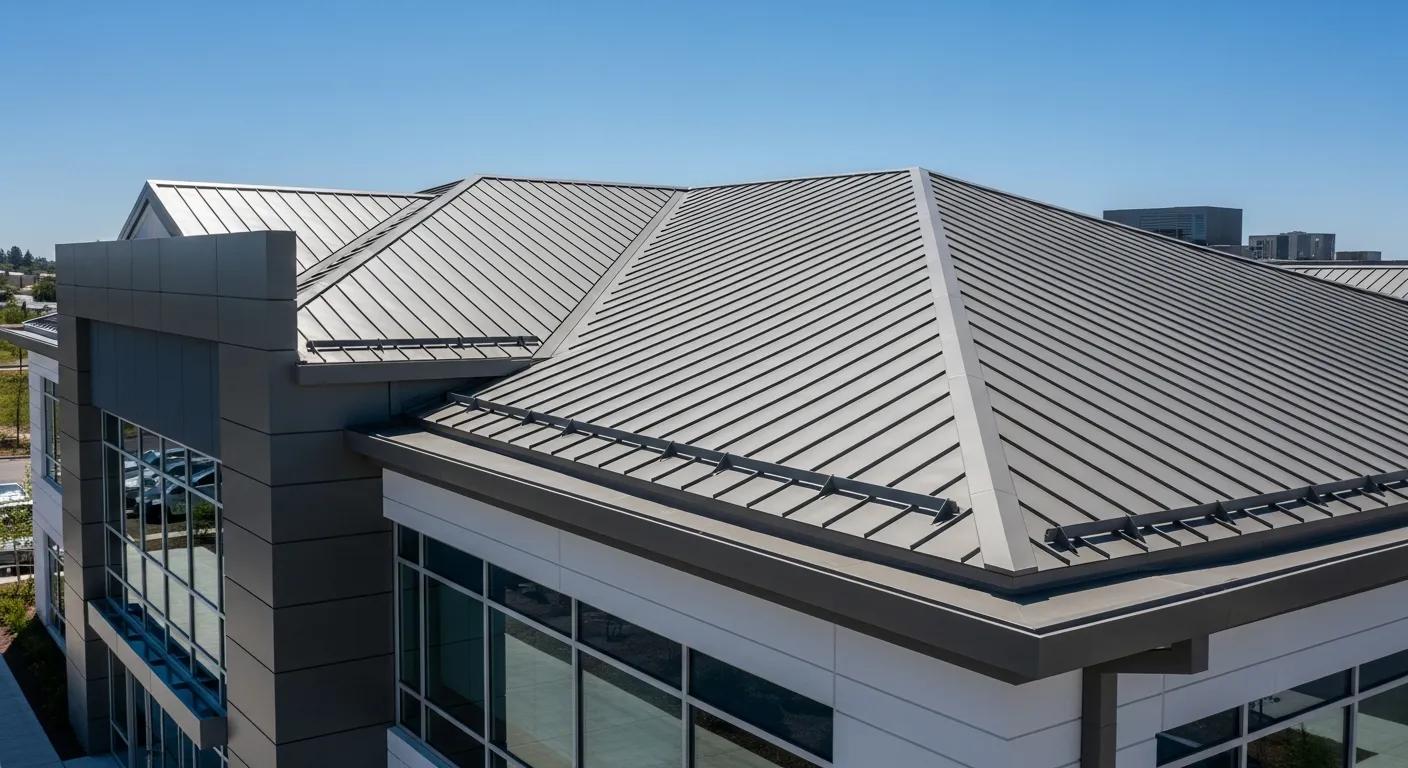
Learn how long commercial roofs last and what factors affect their lifespan. This guide covers TPO, EPDM, PVC, metal, and built-up systems, plus maintenance strategies that add years to your roof and reduce lifecycle costs in Texas and Oklahoma climates.
“Roof lifespan” refers to the number of years a commercial roof will reliably perform before major repairs or a full replacement are needed. Knowing expected lifespans helps property owners budget, reduce downtime, and protect occupants. This guide outlines typical service lives for common commercial systems, explains how material choices and installation quality shift those expectations, and lists maintenance steps that measurably extend usable life. You’ll find lifespan ranges for standing seam metal, single‑ply membranes (TPO, PVC, EPDM), modified bitumen, and built‑up roofing, plus notes on how Texas and Oklahoma climates accelerate wear. We also cover practical maintenance schedules, coating options, repair vs. replacement decision points, and lifecycle cost considerations, with clear notes on how Trivan Roofing’s local services and free commercial roof assessments can help turn these recommendations into action.
With deep regional experience across Texas and Oklahoma, Trivan Roofing understands the local stressors, intense UV, frequent hail, wide temperature swings, and wind uplift, that shorten roof life if left unaddressed. We provide commercial roof replacement, repairs, maintenance, inspections, coatings, and specialty systems (TPO, PVC, modified bitumen, standing seam metal), plus roof asset management, restoration, and free commercial roof assessments to help owners prioritize spending. Bringing local expertise in early lets you match materials and maintenance to site conditions and budget. The rest of this article focuses on technical guidance first, with brief, clear mentions of how Trivan Roofing can support each step.
Average Lifespans for Common Commercial Roofing Materials
Lifespans vary by system type, material quality, installation, and climate. Typical ranges give a planning baseline and shape maintenance rhythms. A roof’s usable life depends on membrane or metal performance, seam durability, substrate condition, and exposure to UV, wind, and impact. Understanding these mechanisms helps owners forecast replacement windows. Below we compare common systems and list concise pros and cons to support procurement and maintenance decisions. A compact reference table follows for quick comparison.
How Long Do Standing Seam Metal Roofs Typically Last?
Standing seam metal roofs commonly last 40–70 years, depending on metal grade, coating system, and how clips/fasteners accommodate thermal movement and prevent corrosion. Their longevity stems from robust panels, minimal exposed seams when detailed correctly, and protective finishes that resist UV and environmental corrosion. Typical failure modes include coating breakdown, galvanic corrosion where dissimilar metals contact, and clip or seam fatigue under repeated movement. Regular inspections of seams and terminations catch early signs before they escalate.
Advances in prefabrication and installation techniques have improved modern standing seam systems, especially around thermal movement and factory-fabricated details.
Investigation of Modern Standing Seam Metal Roofing Systems
Metal roofing has a long service history, but older on‑site seaming methods have mostly been replaced by factory‑prefabricated panels assembled with modern techniques. Existing guide specifications lag these developments. Any system used in construction must account for thermal expansion and contraction and meet current design criteria. This report compares several contemporary metal roofing products and their design considerations.
Trivan Roofing’s experience with factory‑fabricated standing seam systems focuses on certified installation and correct substrate attachment to protect warranties and maximize service life.
What Is the Expected Lifespan of Single-Ply Membranes Like TPO, PVC, and EPDM?
Single‑ply membranes (TPO, PVC, EPDM) typically last 20–30 years when properly specified and maintained. Lifespan varies with membrane formulation, seam quality, and UV exposure. TPO and PVC are often reflective and energy efficient, with good chemical resistance; EPDM is cost‑effective and elastic but can be seam‑sensitive if terminations aren’t robust. Common degradation includes seam failure, punctures from traffic or hail, and UV‑related embrittlement in lower‑grade products. Regular seam inspections and timely repairs reduce premature replacement risk. Specifying heavier gauges and factory‑prefabricated seams improves long‑term performance and lowers lifecycle cost per year.
Key Factors That Influence Commercial Roof Longevity
A handful of factors determine how long a commercial roof will last. Addressing them deliberately produces predictable lifecycle improvements and better cost control. Material selection, installation quality, climate exposure, roof design and drainage, and maintenance cadence each shift failure timelines and repair frequency. Understanding how each factor operates helps prioritize mitigations.
Below are the most influential drivers property owners should monitor and manage through specifications and asset programs. projects
-
Material quality and specification: Higher‑grade membranes, thicker gauges, and manufacturer‑backed systems resist degradation and often carry stronger warranties.
-
Professional installation and workmanship: Correct substrate prep, flashings, terminations, and seam welding preserve membrane integrity and warranty coverage.
-
Climate and environmental exposure: UV, hail, wind uplift, and thermal cycling accelerate wear and inform coating and material choices.
-
Roof design and drainage: Proper slope, scuppers, and drainage prevent ponding that causes premature membrane failure.
-
Inspection and maintenance cadence: Regular checks catch small problems early and reduce emergency repairs, extending useful life.
These factors interact, poor installation amplifies material weaknesses under climate stress, so a holistic asset management approach yields the best results. Prioritizing certified installers and factory‑fabricated assemblies mitigates several risks at once.
How Climate and Environment Affect Roof Lifespan in Texas and Oklahoma
Regional climate drives many degradation mechanisms. In Texas and Oklahoma, roofs face intense solar radiation, wide temperature swings, frequent hail, and episodic high winds, all of which accelerate wear. UV exposure causes polymer embrittlement and coating chalking; thermal cycling fatigues seams and flashings; hail produces impact damage that can become leaks; and wind uplift stresses fasteners and terminations. Knowing these local stress patterns helps you choose resilient materials and design redundancies that lower lifecycle risk. The next section outlines specific vulnerabilities and common damage patterns to watch for during inspections.
What Effects Do UV Radiation, Hail, and Wind Have on Roofing Materials?
UV breaks down organic components in membranes and coatings, causing embrittlement, surface chalking, and reduced tensile strength that show up as cracking and higher permeability.
Hail causes localized impact damage, punctures or seam tears, that may be hard to spot from the ground but can develop into leaks during weather cycles. preventive maintenance.
Wind uplift strains fasteners, edge metal, and seam integrity; repeated uplift cycles fatigue attachments and lead to progressive failure.
Recognizing symptom patterns, surface crazing from UV, round impact marks from hail, or loose flashings after strong winds, helps you target repairs and choose protections like hail‑resistant overlays, reinforced edge systems, and reflective coatings to reduce solar loading.
How Design and Drainage Reduce Climate-Related Damage
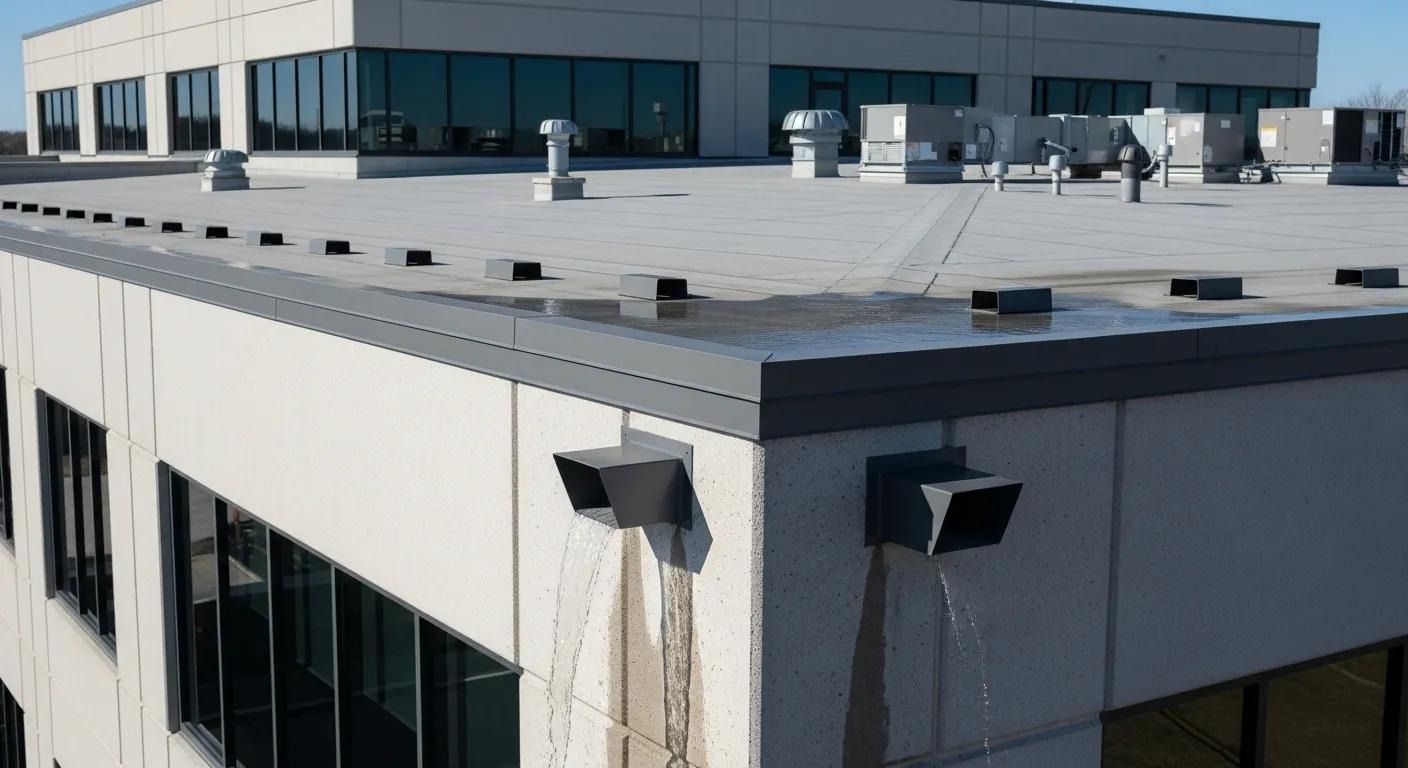
Smart roof design minimizes ponding, limits uplift exposure, and allows thermal movement without stressing seams, decisions that materially improve expected lifespan.
Providing adequate slope, correctly sized scuppers and downspouts, and well‑placed overflow drains prevents water buildup that accelerates membrane breakdown through saturation and biological growth.
Specifying edge metal and terminations sized for local wind speeds and securing rooftop equipment with proper curb flashings reduce uplift and localized stress.
Routine inspections and proactive drain clearing ensure drainage systems keep working as designed. Combining good design with consistent maintenance lowers repair frequency and total lifecycle cost.
How Regular Maintenance and Roof Coatings Add Years to a Roof
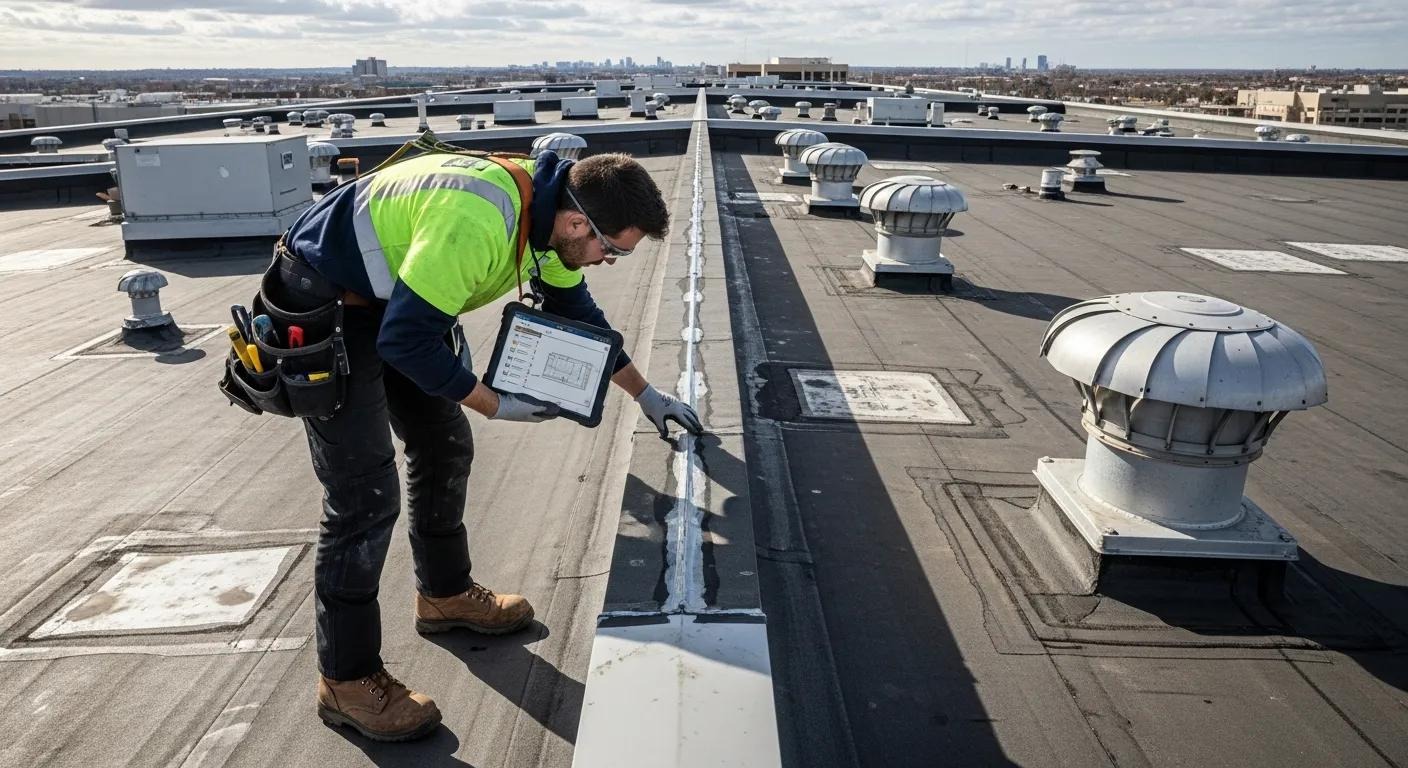
Regular maintenance and the right roof coatings are cost‑effective ways to extend service life, cut emergency repairs, and gain energy benefits through improved reflectivity. Maintenance fixes small defects before they grow; coatings add a seamless protective layer that shields membranes from UV, reduces permeability, and can restore reflectivity for HVAC savings. Structured programs with set inspection cadences, routine cleaning, and scheduled minor repairs yield measurable life extension and more predictable budgets. The sections below explain typical maintenance components and how coating types translate to years added and energy benefits.
Benefits of Proactive Commercial Roof Maintenance Programs
Proactive programs usually include biannual inspections, debris and drain clearing, minor seam and flashing repairs, and record keeping to support asset planning; this structured approach reduces emergency failures and extends roof life.
Regular checks find small leaks, loose fasteners, or punctures long before they impact interiors, and documented repairs help owners forecast replacement cycles and budget appropriately.
A practical cadence, twice‑yearly inspections plus checks after major storms, reduces repair escalation and has been shown to lower lifecycle costs by cutting emergency interventions.
Formal maintenance programs also support warranty compliance and provide data for roof asset management decisions.
Trivan Roofing provides proactive maintenance plans and coating solutions designed for commercial assets, plus free commercial roof assessments to identify the highest‑value interventions for each property. Our programs prioritize certified installers, factory‑fabricated components, and coatings selected for local UV and hail exposure to maximize long‑term performance.
When to Choose Repair Versus Replacement for a Commercial Roof
Choosing repair or replacement depends on age, damage extent, recurring leaks, and lifecycle cost. Repairs make sense for isolated problems on otherwise sound assemblies. Replacement is the right choice when damage is widespread, recurring, or when the system nears the end of its expected life. The checklist below lists clear, observable signs that replacement is likely the most cost‑effective option. The following section explains how timely repairs affect overall roof longevity.
Use this checklist to capture the key decision signals during an assessment.
-
Persistent, recurring leaks: Repeated repairs in the same area or ongoing interior damage despite patching point to systemic failure.
-
Widespread membrane breakdown: Large areas of cracking, seam failure, or delamination exceed practical repair thresholds.
-
Extensive patch history: Many individual repairs across the roof often mean replacement is more cost‑effective.
-
Structural or substrate damage: Soft, rotted, or compromised decking requires replacement to restore system integrity.
-
Energy performance decline: Rising HVAC costs tied to roof condition can justify upgrading to a reflective or higher‑performance system.
Isolated issues generally favor repair; multiple checklist items indicate replacement will likely be the better medium‑term investment. Regular professional assessments formalize the process and reduce costly reactive choices.
Common Signs That Replacement Is Needed
Clear replacement indicators include persistent interior water damage after repeated repairs, deterioration across 30–50% (or more) of the membrane area, multiple seam or flashing failures, and documented structural deck problems that compromise the system.
Photographs and measurements of affected areas help decide whether patching is a temporary fix or merely postpones inevitable replacement.
Replacement is usually the right move when repair frequency and cost approach the lifecycle cost of a new system, or when warranties are no longer in force. Schedule a full assessment when these signs appear to quantify remaining life and budget impact.
How Timely Repairs Improve Roof Longevity
Prompt repairs halt damage progression, prevent substrate decline, and reduce the odds of a full replacement triggered by neglect. A single well‑timed repair can prevent escalation that would otherwise shorten useful life.
Fixing seam openings, addressing flashing issues, and clearing blocked drains quickly prevents water infiltration that leads to rot, saturated insulation, and structural deterioration.
Industry experience shows consistent maintenance and timely repairs can add 10–20 years to a roof’s usable life versus unmanaged assets, improving lifecycle ROI.
When urgent response is needed, Trivan Roofing offers 24/7 emergency service for leak containment and inspection‑based repair plans designed to preserve long‑term asset value.
Cost Considerations and ROI for Commercial Roofing Systems
Lifecycle cost analysis balances initial capital outlay against maintenance, energy, and replacement cycles to calculate true ROI and cost per service year. High‑upfront systems like standing seam metal often yield lower annualized costs thanks to long lifespans and minimal upkeep, while lower‑cost membranes can require more frequent repairs and earlier replacement. Warranties, energy performance (cool roofs), and maintenance needs all influence the calculation. The table below offers an illustrative comparison of initial cost ranges and lifecycle framing to help owners weigh trade‑offs.
Comparing Initial Costs to Lifecycle Costs
Initial price gaps often narrow once maintenance, repairs, and periodic replacement are included. Systems with longer lifespans typically show lower annualized costs even with higher upfront prices. For example, a metal roof amortized over 50 years can cost less per year than a single‑ply system replaced every 25 years, despite higher initial spend. A sound lifecycle calculation includes initial capital, annual maintenance, periodic recoating or repairs, and discounted replacement costs at expected intervals. Use conservative maintenance assumptions and adjust for local climate to produce realistic ROI numbers.
Why Warranties Matter
Warranties, material, labor, and system, shift risk by covering defects or workmanship for defined terms and directly affect lifecycle cost and owner exposure. Warranties are only reliable when installation quality and maintenance requirements are met; many warranties require certified installers and documented maintenance to remain valid. Key questions include coverage duration, transferability, exclusions, and required maintenance records to keep claims eligible. Warranties.
Confirming warranty terms and selecting certified installers and factory‑backed components lowers owner risk and often correlates with longer realized service life.
If you’re ready to act, Trivan Roofing’s roof asset management and inspection services help quantify lifecycle costs, validate warranty conditions, and prioritize interventions by ROI and risk. We offer free commercial roof assessments and HAAG‑certified inspections to support data‑driven repair and replacement decisions.
Working with a regional commercial roofing partner who understands local climate drivers, uses certified installers and factory‑fabricated systems, and provides free commercial roof assessments helps translate the guidance above into plans that reduce lifecycle cost and protect building uptime. Trivan Roofing focuses on long‑term performance, cost control, and 24/7 emergency response, practical advantages for property owners in Texas and Oklahoma who want to extend roof life with smarter materials, design, and maintenance choices.
Conclusion
Knowing the expected lifespans of commercial roofing systems helps owners make smarter choices that improve durability and lower long‑term costs. By selecting quality materials, insisting on certified installation, and following a proactive maintenance plan, you can significantly extend roof life and reduce unexpected repairs. Trivan Roofing provides tailored assessments and services to help you implement these strategies. Contact us today to learn how we can protect your roof investment and keep your building dry and efficient.
Ready to extend your commercial roof's lifespan?
Contact TriVAN Roofing today for a free commercial roof assessment. Our experts will evaluate your roof's condition, provide a detailed lifespan analysis, and recommend maintenance strategies tailored to Texas and Oklahoma climates. Call us or schedule your free inspection online.
Contact Us Today