
Commercial Roof Insurance Explained: What Your Policy Covers for Repairs
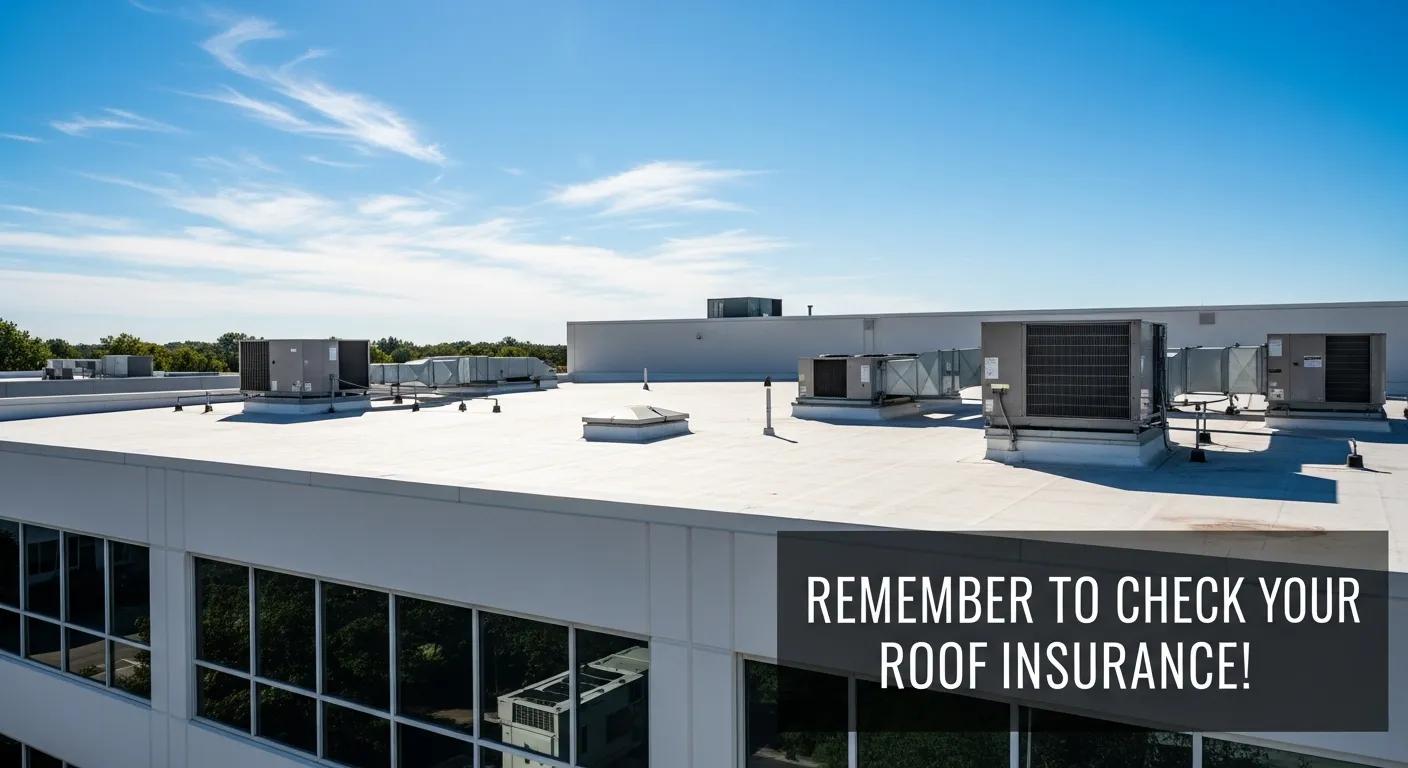
Learn what commercial roof insurance covers for repairs, how to file claims, and maximize payouts. Guide covers policy types, documentation requirements, exclusions, deductibles, and appeal strategies. Includes Texas and Oklahoma regional considerations for hail and wind damage claims.
Commercial roof insurance spells out which roof losses your policy will pay for, how claims are adjusted, and what costs a property owner may need to cover. That matters because roofs protect people, assets and business operations - and gaps in coverage or weak documentation can leave you footing large repair or replacement bills. This guide walks through the key policy types, the claim process, common exclusions and deductibles, tactics to maximize payouts, how maintenance affects coverage, and regional considerations for Texas and Oklahoma. You’ll learn which policies typically respond to roof repairs, how to document damage for an adjuster, the practical effect of ACV vs. RCV and depreciation, and steps to appeal a denial. We also explain when to bring in a contractor and include storm-season checklists tailored to hail and wind-prone regions.
Which Commercial Roof Insurance Policies Should You Know?
Several commercial property-related policies form the backbone of roof coverage and determine who pays for roof repairs or resulting interior damage. They differ in scope: Commercial Property Insurance covers sudden physical damage to the building; General Liability handles third-party injury or damage tied to construction or falling debris; Business Interruption reimburses lost income when a covered peril shuts down operations; and Builder’s Risk protects work during construction or renovation. Knowing what triggers each policy - and which one to notify first after an event - shortens adjuster response times and reduces misfiled claims. It’s also important to understand endorsements and how adjusters apply replacement cost (RCV) versus actual cash value (ACV) when calculating settlements.
The table below summarizes the main commercial policies that matter for roofs.
|
Policy Type |
Primary Covers |
Typical Exclusions |
Who Usually Files |
Common Deductible Structure |
|---|---|---|---|---|
|
Commercial Property Insurance |
Sudden roof damage from perils such as wind, hail or fire; related interior damage |
Wear & tear, lack of maintenance, floods, earthquakes unless specifically added |
Property owner / facility management |
Flat dollar or percentage, depending on the policy |
|
General Liability |
Third-party bodily injury or property damage caused by contracting work or falling debris |
Damage to the insured’s own property and routine maintenance problems |
Injured third party or their insurer |
Separate from property deductibles |
|
Business Interruption |
Lost income and extra expenses while the property is repaired after a covered peril |
Gradual damage and maintenance-related failures |
Property owner, supported by financial documentation |
N/A (affects indemnity period rather than a deductible) |
|
Builder's Risk |
Damage to the roof during construction, installation, or renovation |
Contractor negligence unless covered by the contractor’s policy |
Owner or project general contractor |
Project-specific; often a flat deductible |
Keeping these roles straight helps you decide which carrier to notify first and what to expect during adjustment and settlement - which speeds recovery and avoids unnecessary delays.
What Does Commercial Property Insurance Cover for Roof Repairs?
Commercial property insurance usually covers sudden, accidental perils that physically damage roof membranes, decking or roof components, and it typically covers interior damage caused by that roof failure. In practice: a covered event (like hail or wind) causes a physical loss, you file a property claim, and the adjuster determines whether the policy applies and whether ACV or RCV governs the payout. ACV reduces the payout for depreciation and can lower the immediate check, while RCV covers full replacement when the policy language or endorsements allow. For example, if hail punctures a single-ply membrane and water damages the interior, property insurance commonly responds for both the roof and the interior repairs - provided the peril is covered and documentation supports the claim. Knowing how depreciation and endorsements affect settlement lets you anticipate possible out-of-pocket costs and plan negotiation points.
How Do General Liability and Business Interruption Policies Play a Role?
General Liability and Business Interruption cover different consequences of a roof event. General Liability protects against third-party injury or property damage (for example, a customer hurt by falling debris), while Business Interruption compensates for income losses when a covered peril prevents normal use of the property. A single roofing incident can trigger multiple coverages: property for the physical damage, GL for third-party claims, and BI for lost revenue while repairs are underway. For example, contractor negligence that leads to interior damage and tenant inventory loss may involve the contractor’s liability policy, the owner’s property policy and a BI claim. Coordinating filings across carriers and compiling clear proof - operating statements, timelines, and contractor reports - smooths recovery and reduces disputes.
How Do You Navigate a Commercial Roofing Insurance Claim?
Handling a roofing insurance claim starts by prioritizing safety, mitigation and documentation, then communicating clearly with insurers and adjusters. The goal is to preserve evidence, limit additional loss, and present a professional, well-organized damage package so adjusters can verify cause and scope. Fast, methodical action increases the chance of a fair settlement and speeds resolution. Below is a concise checklist designed for field use and quick reference.
Immediate steps to manage a commercial roof claim:
-
Ensure Safety and Stabilize: Secure the site, keep people away from dangerous areas, and take temporary steps to stop ongoing damage while preserving evidence.
-
Notify Your Insurer Promptly: Report the incident within your policy timelines and request a claim number and adjuster assignment.
-
Mitigate Further Damage: Make reasonable temporary repairs (tarping, water diversion) and document the work; mitigation costs are usually allowed.
-
Call a Professional Roofer for Assessment: Schedule a commercial roofing inspection to document damage, determine likely causes, and recommend repair vs. replacement.
-
Assemble a Documentation Package: Compile photos, drone footage, inspection reports, maintenance logs and cost estimates to share with the adjuster.
Following these steps limits additional harm, preserves your entitlement, and builds the evidence adjusters need to assess scope and causation. These priorities - safety, mitigation and insurer notification - set the foundation for a successful claim.
What Are the First Steps After Discovering Roof Damage?
When you find roof damage, safety is the first concern: keep people away from unstable sections and secure electrical or mechanical systems as needed. Next, act to limit further loss. Stabilization both protects occupants and preserves the condition of the building so the event can be properly evaluated. Notify your insurer quickly and arrange a professional inspection, while only performing essential temporary repairs allowed under mitigation clauses. Document every action with timestamps, photos and notes to prove you took reasonable steps. Clear, early steps build credibility with adjusters and reduce disputes over causation and responsibility.
How Should You Document Roof Damage for a Claim?
Strong documentation turns observed damage into verifiable evidence that supports claim acceptance and a full payout. Build a layered evidence package tying cause, scope and cost together: high-resolution photos and video from multiple angles; drone imagery for large or hard-to-reach areas; moisture meter readings and infrared scans; detailed inspection reports; and maintenance records showing the roof’s prior condition. Keep original files and metadata to prove timing, and label images with location and context. A best practice is a concise index or binder that presents photos, repair estimates and temporary repair receipts in sequence so adjusters and underwriters can quickly review the claim.
What Exclusions and Deductibles Commonly Affect Commercial Roofing Claims?
Exclusions and deductible structure have a major impact on claim outcomes because exclusions remove certain causes from coverage and deductibles determine immediate owner responsibility. Insurers commonly exclude progressive damage (wear and tear, poor maintenance) and perils like flood or earthquake unless you add endorsements. Deductibles may be a flat dollar amount or a percentage of the insured value; percentage deductibles are often used for named storms or wind/hail and can greatly increase owner exposure on high-value buildings. Understanding these mechanics helps owners evaluate the real value of a policy, decide on endorsements, and budget for likely out-of-pocket costs.
|
Deductible/Exclusion Type |
Description |
Example Impact on Claims |
|---|---|---|
|
Flat Dollar Deductible |
A fixed amount subtracted from each claim settlement |
$10,000 deductible can make small claims impractical and affect decisions to repair versus replace |
|
Percentage Deductible |
Deductible calculated as a percentage of the insured value or policy limit |
2% deductible on a $2M building equals $40,000 out-of-pocket for a covered hurricane claim |
|
Maintenance & Wear Exclusion |
Excludes damage caused by lack of maintenance or normal aging |
Long-term leaks may be denied if no maintenance records exist; routine replacement costs often excluded |
|
Flood / Earthquake Exclusion |
These perils are typically excluded unless you add specific coverage |
Flood damage to roof and interior won’t be covered unless a separate flood or EQ policy exists |
This comparison shows why reviewing deductible language and policy exclusions is critical for large commercial roofs - run the numbers for both flat and percentage deductibles to pick the structure you can manage.
Which Causes of Roof Damage Are Typically Excluded?
Insurers commonly exclude damage from progressive deterioration, inadequate maintenance or pre-existing conditions because those represent ongoing risk rather than a sudden insured peril. The purpose of these exclusions is to cover fortuitous events, not deferred maintenance, so claims for gradual leaks, corrosion or adhesive failures are often denied. Floods and earthquakes are usually excluded unless endorsed, and cosmetic or latent defects may fall outside coverage. You can reduce exclusion risk by keeping thorough maintenance logs, performing scheduled upkeep, and considering endorsements for regionally common perils. The key is distinguishing sudden events (usually covered) from progressive failures (typically not covered).
How Do Deductibles Work - Flat Rate vs. Percentage?
Deductibles shift part of the claim cost to the insured and come as flat-rate or percentage types, each with different financial impacts. A flat dollar deductible subtracts a predictable amount from every claim; it’s easier to budget for but can make small claims uneconomical. A percentage deductible is calculated against the insured value or limit and can create large liabilities on high-value properties - especially for named storms or wind/hail. For example, a 1% deductible on a $5 million limit equals $50,000 per claim, which may leave repair decisions to the owner. Compare sample scenarios under both deductible types to choose the structure that fits your finances and risk tolerance.
How Can You Maximize Your Commercial Roof Insurance Payout?
Maximizing a claim payout depends on quick, professional inspection and documentation, clear communication with adjusters, and readiness to supplement or dispute low estimates with additional evidence. What moves settlements is credible, contractor-backed documentation: detailed inspection reports, moisture scans and itemized scopes of work, combined with coordinated adjuster meetings and straightforward negotiation. Capture pre-repair conditions, and request contractor estimates that separate materials, labor and code-upgrade costs to reduce ambiguity. The table below highlights the evidence that most influences adjuster decisions and shows how a reputable contractor typically documents it.
|
Evidence Type |
Why It Matters |
How TriVAN Documents It (Example) |
|---|---|---|
|
High-resolution Photography |
Visual proof of damage and its extent |
Complete photo index with location labels and timestamps |
|
Drone/Aerial Imagery |
Shows large-area damage and hard-to-reach spots |
Geotagged drone flights producing orthophotos and annotated maps |
|
Moisture Detection / Infrared Scans |
Reveals concealed water intrusion and saturated insulation |
Moisture maps and scan reports tied to specific roof zones |
|
Detailed Repair Estimates |
Translates damage into a costed scope for adjusters |
Line-item proposals with manufacturer materials, labor and RCV/ACV options |
When assembled into a clear claim packet, these elements reduce adjuster uncertainty and raise the chance of a full, appropriate settlement. Visual evidence plus moisture data and contractor cost scopes form a persuasive package that adjusters rely on.
If you want an expert assessment and an insurer-ready evidence package, TriVAN Roofing offers free commercial roof assessments and detailed reports designed to support claims. TriVAN operates across Texas and Oklahoma and provides tailored recommendations, licensed and bonded crews, and industry-leading warranties. A regional specialist’s inspection not only documents visible damage but often uncovers concealed conditions that change settlement outcomes. Bringing a contractor in early gives you an accurate scope and a technical partner for adjuster meetings or appeals.
Why Are Professional Roof Inspections Important for Claims?
Professional inspections matter because they find concealed damage, establish causation tied to a covered peril, and create a reproducible evidence package adjusters can evaluate confidently. Trained inspectors use tools like infrared scans, moisture meters and systematic photo protocols to expose issues an untrained eye will miss, turning a cursory loss estimate into a comprehensive scope. For example, moisture under a single-ply membrane often signals insulation saturation across several squares; detecting that increases replacement estimates and supports RCV claims. Deliverables that influence settlements include annotated photo logs, infrared moisture maps and contract-grade repair estimates tied to materials and labor standards. A thorough inspection can change a low ACV estimate into a full RCV settlement.
What Works When Appealing Denied or Underpaid Claims?
Successful appeals require assembling clarifying evidence, challenging adjuster assumptions with contractor data, and escalating through the insurer’s appeal process - and regulators if necessary. The practical approach is to document where the insurer’s assessment missed concealed damage or improperly reduced the scope, then present supplemental reports, revised estimates and peer-reviewed diagnostics. Steps include getting a second professional inspection, preparing a side-by-side comparison of insurer vs. contractor findings with supporting photos and moisture data, writing a focused appeal letter citing policy language, and filing a complaint with the state insurance department if needed. If gaps persist, consider mediation or an independent appraisal under your policy. Timely, organized appeals that clearly justify costs are most likely to succeed.
TriVAN Roofing’s inspection and documentation packages can support contractor-assisted appeals by providing validated moisture scans, annotated photo inventories and estimates formatted to insurer expectations. TriVAN acts as a technical advocate during adjuster reviews - not as legal counsel - and we prepare the documentation appeals typically require.
How Does Regular Roof Maintenance Affect Coverage and Premiums?
Routine roof maintenance improves insurance outcomes by lowering the chance of preventable claims, strengthening your defense against exclusion arguments, and preserving warranty eligibility. Maintenance is preventive: regular inspections and timely small repairs slow deterioration that can lead to larger failures insurers will deny. Maintenance records create an evidentiary trail showing you met reasonable care obligations, which reduces denials for “lack of maintenance.” Insurers also tend to favor consistently maintained properties at renewal, which can help underwriting conversations. Practical maintenance schedules and good record keeping translate into stronger claim positions and longer roof life.
Keep organized maintenance records to support claims. The most valuable documents to retain and present are:
-
Inspection Logs: Dates, inspector name, findings and recommended actions.
-
Repair Invoices: Itemized receipts for maintenance and corrective work.
-
Photographic Archive: Time-stamped images showing pre-event condition and routine work.
-
Warranty Documents: Manufacturer and contractor warranty terms and maintenance requirements.
How Do Maintenance Records Support Insurance Claims?
Maintenance records support claims by proving ongoing care and narrowing disputes about pre-existing conditions versus a covered event. A documented timeline linking maintenance activity to discovered damage shows you exercised reasonable care. Insurers review whether an owner acted responsibly, and comprehensive inspection logs, invoices and photos demonstrate that. For example, a seasonal inspection showing the roof was in good condition before a storm reduces insurer arguments that damage resulted from neglect. Presenting records with inspection reports and moisture scans creates a strong evidentiary chain that improves claim acceptance and speeds negotiation. In short, well-kept maintenance files turn routine stewardship into a defensive asset during claims and appeals.
TriVAN Roofing offers maintenance plans and maintenance-record collection as value-added services meant to reduce claim friction and preserve warranty compliance. Scheduled inspections with documented findings give you a maintenance history built for insurance use and help you schedule corrective work before small issues grow.
How Does Preventative Maintenance Extend Roof Life and Insurance Value?
Preventative maintenance extends roof life by catching and repairing small defects before they become structural problems, which reduces claim frequency and severity and protects warranty coverage. Routine actions - clearing debris, inspecting flashings and seals, fixing ponding water and repairing membrane breaches - prevent moisture intrusion that accelerates insulation and deck deterioration. A scheduled maintenance program delivers measurable benefits: fewer emergency repairs, lower life-cycle costs and a documented record that underwriters respect. Insurance value increases because carriers view maintained assets as lower risk, which can affect underwriting and renewal terms while keeping capital planning for replacement more predictable.
Tie maintenance to seasonal risks - pre- and post-storm inspections in Texas and Oklahoma, for example - to cut exposure to hail and wind events and maintain warranty compliance. Owners who follow manufacturer maintenance cycles and keep proof of completed work strengthen their position during claims and often get longer service lives from their roofing systems.
What Should Texas and Oklahoma Owners Know About Local Insurance Nuances?
Texas and Oklahoma have regional insurance nuances driven by frequent hail, high winds and severe storms. Higher claim volumes in these states influence how carriers write policies, the use of percentage deductibles for named storms, and adjuster response patterns after major events. Owners should be ready for seasonal claim surges, understand how local underwriters apply storm deductibles, and document storm damage quickly so inspections happen while evidence is fresh. Knowing state insurance department guidance and common policy language for your jurisdiction helps when you need to escalate disputes.
How Do Weather Risks in Texas and Oklahoma Affect Roof Coverage?
Hail and high-velocity winds in Texas and Oklahoma both increase the frequency of roof claims and prompt insurers to apply specific endorsements or percentage deductibles for named storms, which changes owner exposure. Weather affects coverage in two ways: the perils cause damage that triggers claims, and carriers adapt policy terms and underwriting to manage regional loss patterns. After a storm, act fast: photograph damage, perform drone surveys and run moisture diagnostics while evidence is fresh. Timely documentation strengthens the causal link to the storm and reduces insurer claims of pre-existing damage. A storm-response plan that includes rapid inspection and mitigation is essential in these states.
Research into hurricane damage and insured losses in Texas highlights how building vulnerabilities and hazard indicators help predict financial impacts and inform mitigation strategies.
Estimating Commercial Building Hurricane Damage and Insured Losses in Texas
This study examines how building vulnerabilities and hazard indicators relate to insured losses from hurricanes in Texas. Using GIS to collect and manage exposure data, the research combines vulnerability and hazard factors to model financial losses paid by insurers. A multiple regression method helps predict insured loss payments by using exposures, built-environment vulnerabilities and hazard indicators as inputs. The findings aim to inform emergency planners, government agencies and insurers on strategies to mitigate hurricane damage and estimate likely insured losses.
Estimating the Texas Windstorm Insurance Association claim payout of commercial buildings from Hurricane Ike, JM Kim, 2016
Are There State Rules That Affect Commercial Roofing Claims?
Yes. The Texas and Oklahoma insurance departments set consumer protections, complaint procedures and timelines that can affect claim strategy and appeals. Regulatory oversight defines insurer obligations and consumer recourse, so owners should consult state guidance for filing complaints, note statutory deadlines and follow recommended documentation practices when disputes continue. Practical steps include tracking regulatory timelines for adjuster actions and appeals, date-stamping appeal correspondence, and filing according to state procedures. Knowing these channels gives you an administrative path to escalate unresolved disputes before pursuing legal remedies.
For local help and fast, regionally informed inspections, TriVAN Roofing maintains offices across Texas and Oklahoma and offers free commercial roof assessments tailored to state-specific risks. Property owners may contact TriVAN Roofing at 877-487-4826 to schedule an assessment; TriVAN can deliver documented inspection reports and maintenance histories prepared to support claims and regulatory interactions.
Conclusion
Understanding commercial roof insurance is essential to protecting your property and avoiding surprise costs. By learning how different policies respond, what exclusions and deductibles mean, and how the claims process works, you can maximize benefits and minimize out-of-pocket expense. Proactive steps - keeping organized records, scheduling professional inspections and having a storm plan - materially improve claim outcomes. For tailored support and regional expertise, contact TriVAN Roofing to protect your investment and simplify the insurance process.
Don't Navigate Insurance Claims Alone
Get a professional roof inspection and insurer-ready documentation before filing your claim. TriVAN Roofing provides free commercial roof assessments with detailed damage reports, moisture scans, and itemized repair estimates designed to maximize insurance settlements. We create high-resolution photo indexes with timestamps, drone imagery and orthophotos for large-area damage, infrared moisture detection and saturation maps, and line-item repair estimates with both RCV and ACV options—all formatted to meet adjuster expectations and support the strongest possible settlement. As Texas and Oklahoma storm specialists, we provide fast response after hail and wind events. TriVAN is licensed, bonded, and insured across both states. Call 877-487-4826 for your free assessment and let us help you document your claim properly from the start.
Contact Us Today