Commercial Roof Asset Management: Why Texas Facility Managers Are Switching to Proactive Capital Planning
| By TriVAN Roofing | 9 min read
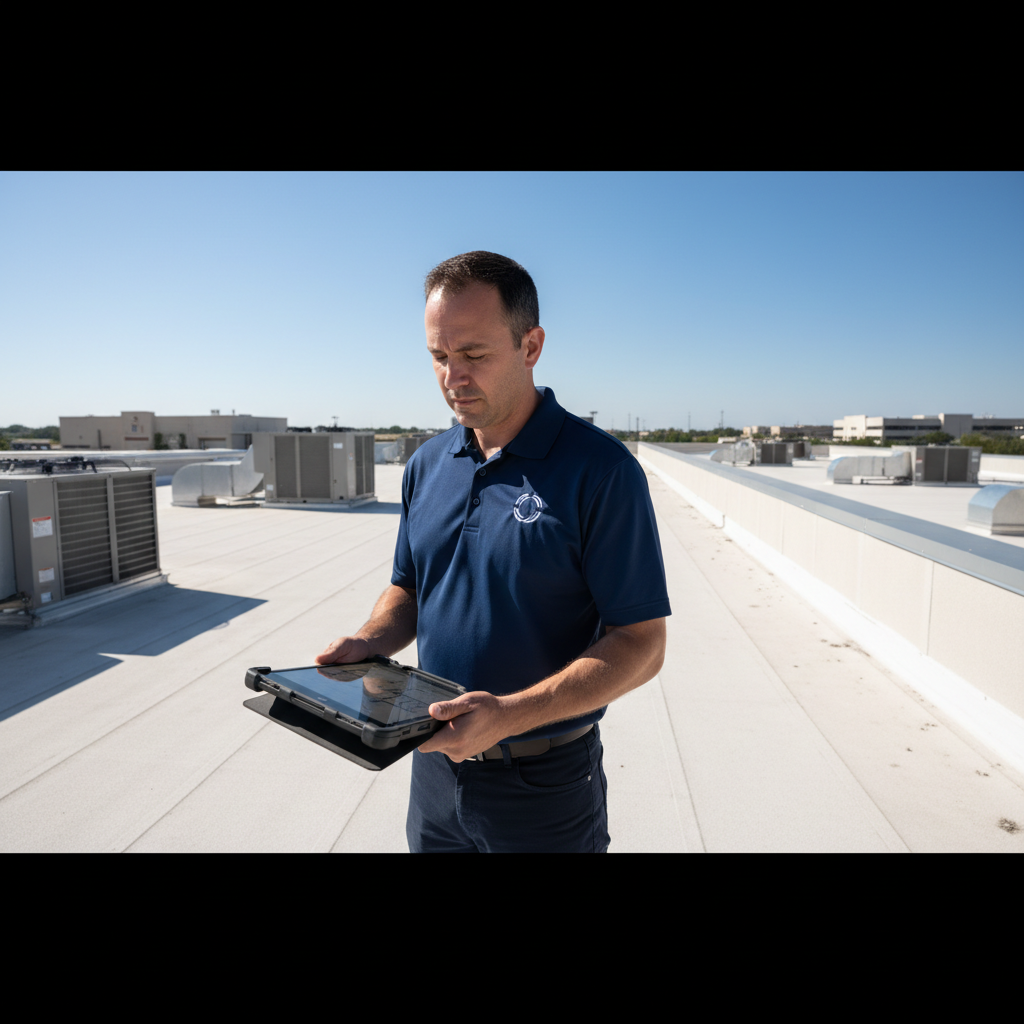
Tired of reactive roof repairs and surprise capital expenses? A commercial roof asset management (RAM) program provides a data-driven alternative for Texas facility managers, turning roofing into a managed asset. Learn how it works and its powerful R
Categories: Industry Insights
For the average commercial facility manager in Texas, the building’s roof operates on a simple principle: it gets attention when it leaks. This isn’t a sign of negligence. It’s simply how commercial properties have historically managed their largest, most exposed asset. Building systems worth tens of millions of dollars sit under a commercial roofing system that often receives less consistent, documented management than the HVAC units, elevators, and fire systems it protects. Roofs get emergency funding when failure forces the issue. They get replaced on a crisis timeline at premium prices when deferred maintenance becomes catastrophic. Roof Asset Management (RAM) is the systematic alternative that forward-thinking facility managers are adopting to treat roofing as the critical capital asset it is.
What Is Commercial Roof Asset Management?
Many facility managers hear "asset management" and think of financial portfolios, not TPO membranes. In a roofing context, Roof Asset Management is a structured, data-driven program for overseeing a portfolio of roofs to maximize their service life and minimize total cost of ownership. It is a significant evolution from standard roof maintenance.
A RAM program is not just fixing leaks. It is a comprehensive strategy that includes:
- Documented Baseline Condition Assessment: A thorough evaluation of every roof system in your portfolio to establish a starting point.
- Scheduled Inspection and Maintenance: Proactive, planned inspections at defined intervals (typically biannual) to track changes and perform preventative tasks.
- Condition Tracking: A historical record of how each roof section ages and performs over time, supported by photographic evidence.
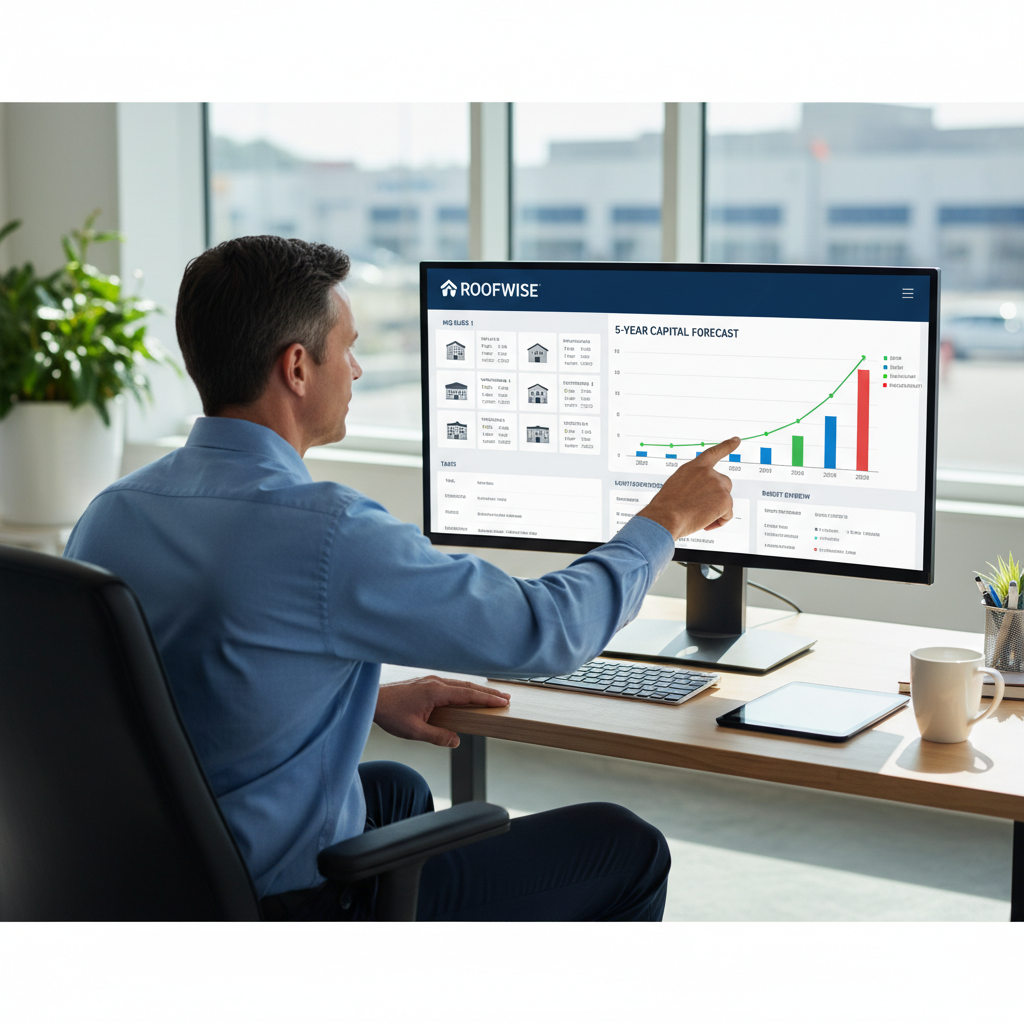
- Capital Planning and Forecasting: Data-driven projections of replacement needs and costs on a 1, 3, and 5-year horizon.
- Centralized Documentation: A single source of truth for maintenance records, warranty compliance, and insurance claims.
The key distinction from a simple maintenance plan is the systematic, portfolio-level approach. RAM turns isolated decisions about individual buildings into a cohesive, data-driven capital planning strategy, moving your organization from reactive spending to proactive investment.
The Four Stages of a Practical RAM Program
Implementing a RAM program is a methodical process. Each stage builds on the last, creating a powerful loop of data collection, analysis, and action that gives facility managers unprecedented control over their building envelopes.
Stage 1: The Baseline Portfolio Assessment
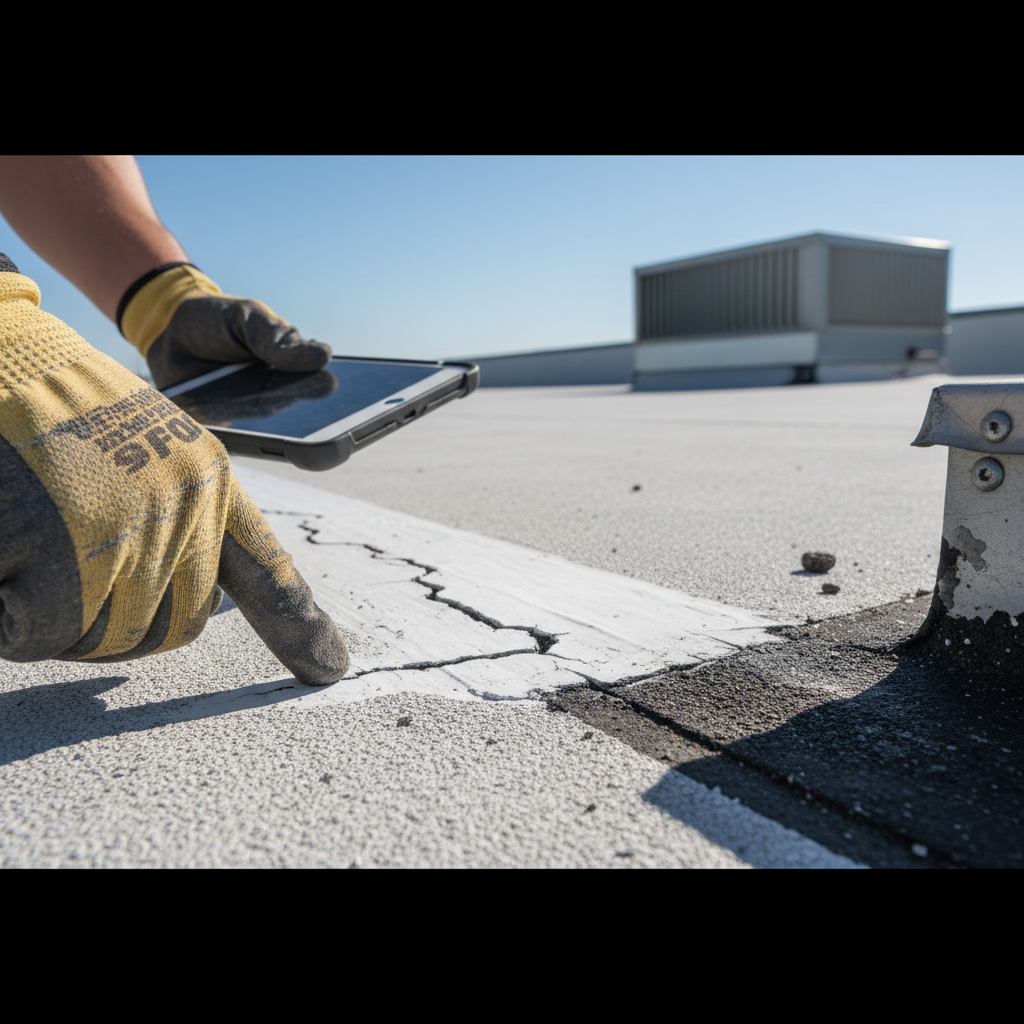
You cannot manage what you do not measure. The first step in any credible RAM program is a comprehensive inspection of every roof in the portfolio. A certified contractor, like the teams at TriVAN Roofing, conducts an exhaustive review to document critical information. This includes the roof system type, manufacturer, installation date, known repair history, and an estimate of its remaining useful life. The inspection identifies all current deficiencies, from open seams and failing flashing to clogged drains and membrane damage. Each issue is photographed, categorized by severity, and given a repair priority ranking.
This assessment produces a written report with photographic documentation for each building and a portfolio summary showing total replacement cost exposure, prioritized by urgency, across the full inventory. For a facility manager overseeing 8 to 15 buildings, this assessment typically costs $1,500 to $3,000 per building and produces a capital planning document that replaces guesswork with documented evidence.
Stage 2: Ongoing Inspection and Condition Tracking
The baseline assessment is a snapshot in time. Ongoing inspections turn that snapshot into a time-lapse video of your roof's health. Biannual inspections, usually in the spring after the threat of winter weather has passed and in the fall to prepare for it, are essential. During these visits, inspectors update the baseline report with current conditions. They document any changes, identify new areas of concern before they become active leaks, perform minor preventative maintenance like clearing debris from drains, and confirm that manufacturer warranty requirements are being met.
This last point is critical. Most robust NDL warranties require documented annual or biannual inspections to remain in force. A RAM program automatically generates the dated photographic records needed to prove compliance, protecting your investment.
Stage 3: Data-Driven Capital Planning
This is where a RAM program delivers immense strategic value. The condition data from assessments and inspections feeds directly into multi-year capital budget requests. Instead of telling the CFO or school board, "I think we need to replace the roof on Building C next year," a facility manager can present a defensible case. You can show photographic evidence of deterioration, a documented condition rating, and a certified estimate of its remaining useful life. This documented evidence transforms budget conversations from subjective arguments into objective, data-based decisions.
Stage 4: Strategic Maintenance Execution
With clear data, repair decisions become strategic, not chaotic. Issues identified during inspections are executed at the appropriate priority level. The system allows you to distinguish between different tiers of action:
- Emergency Items: Active leaks or conditions that pose an immediate threat to the building interior. These are addressed immediately.
- Priority Items: Deficiencies that are not yet leaking but are likely to fail soon, such as an open seam over a critical area. These are scheduled for repair in the near term.
- Preventative Items: Minor issues that can be deferred without accelerating deterioration but should be monitored.
This triage approach ensures that maintenance dollars are spent where they have the most impact, preventing small problems from becoming expensive emergencies.
The Financial Case: Quantifying the ROI of Roof Asset Management
For any facility manager, proposing a new program requires a solid business case. The ROI for RAM is clear, compelling, and quantifiable. The largest return comes from eliminating the need for emergency replacements. A planned roof replacement project allows for competitive bidding, efficient scheduling, and optimal material procurement. An emergency replacement, performed under pressure after a catastrophic failure, carries a significant premium. This premium for expedited contractor scheduling, emergency material sourcing, and working around an occupied, water-damaged building typically adds 30% to 40% to the total project cost.
Consider a portfolio that averages one emergency replacement per year on a 10-building campus. If that replacement costs $350,000, the "emergency premium" is between $105,000 and $140,000 in unnecessary spending. A RAM program that eliminates emergency scenarios through proactive planning costs roughly $15,000 to $30,000 annually in inspection and maintenance documentation for the same portfolio, producing a 3 to 5x return on the program investment from avoided emergency premiums alone.
Then, add the warranty compliance value. A denied warranty claim on a $400,000 roof due to lack of maintenance documentation represents a complete loss of that asset. A RAM program provides the undeniable paper trail that makes warranty claims approvable, not deniable.
Preserving Institutional Knowledge for Long-Term Stability
What happens when a facility manager with 15 years of experience at a school district or commercial campus retires or takes a new job? All too often, decades of knowledge about roof conditions, repair histories, and capital planning assumptions walk out the door with them. Their replacement is left to start from scratch, digging through disorganized files and relying on anecdotal information.
A Roof Asset Management program solves this problem by creating a permanent, living record of the building. The condition history, repair logs, inspection findings, and capital projections are preserved in a centralized system, independent of personnel. A new facility manager inherits a complete data set, not a blank slate. This preservation of institutional knowledge ensures continuity and prevents the costly relearning curve that plagues so many organizations.
The TIPS Advantage: Streamlining RAM for Texas Public Entities
For public entities in Texas and Oklahoma, there is an additional, powerful advantage to working with TriVAN Roofing for RAM. As an approved vendor with multiple active contracts through The Interlocal Purchasing System (TIPS), we offer a path that eliminates significant procurement hurdles.
For public school districts, cities, counties, and other government entities, TriVAN's active TIPS contracts provide a powerful procurement vehicle. They allow you to structure an ongoing RAM program as a multi-year task order under an existing, competitively bid contract. This eliminates the massive overhead of bidding out inspection and maintenance services every single year. More importantly, it provides the consistency needed to build real value. A 10-year inspection history from a single, trusted contractor using a consistent methodology provides trend data that is far more valuable for long-range planning than a series of disconnected assessments from different contractors with different standards.
Managing Multi-Building Portfolios with Confidence
The "loudest leak wins" is a common, if inefficient, method of capital allocation in large portfolios. When budgets are tight, the building manager who complains the most often gets the funding, regardless of whether their roof is truly the highest-priority project. This political approach to capital spending is a recipe for waste and unexpected failures.
RAM replaces politics with data. With a condition rating and remaining useful life estimate for every roof in the portfolio, capital can be allocated based on objective criteria. You can direct funds to the roof with the lowest condition score, the highest consequence of failure, or the one that best fits into a long-term, sequential replacement plan. This empowers facility managers to make rational, defensible decisions that protect the entire portfolio.
The Insurance Advantage in a Hardening Texas Market
In the Texas commercial property insurance market, carriers are tightening underwriting standards. Many now use aerial imagery and sophisticated data analytics to assess roof age and condition. Buildings with older, unmaintained roofs face higher premiums, higher deductibles, or even non-renewal.
A documented RAM program puts you in a position of strength. Presenting an underwriter with current inspection reports, a history of proactive maintenance, and a clear capital plan for future replacements demonstrates responsible stewardship. It proves your roof is a well-managed asset, not an unmanaged liability. As wind and hail deductibles increasingly shift to a percentage basis, building owners are absorbing a larger portion of storm-related losses. Having documented proof of your roof's pre-storm condition is invaluable during the claims process and can be the difference between a smooth settlement and a contentious dispute.
Ultimately, a Roof Asset Management program is about shifting from a reactive posture to a proactive strategy. It provides the tools, data, and documentation to extend the life of your current assets, budget accurately for the future, and protect your organization from the financial and operational disruption of roof failure. For any facility manager in Texas or Oklahoma looking to improve performance and gain control, getting a comprehensive plan is the first and most important step.
Tags: roof asset management Texas, commercial roof asset management program, RAM roofing program Texas, commercial roof maintenance program Texas, commercial roof capital planning Texas, facility manager roof program, commercial roofing inspection program Texas, roof condition assessment Texas, commercial roof preventive maintenance ROI, roof maintenance documentation warranty