
Why Gutter Cleaning Matters for Roofing Maintenance Success
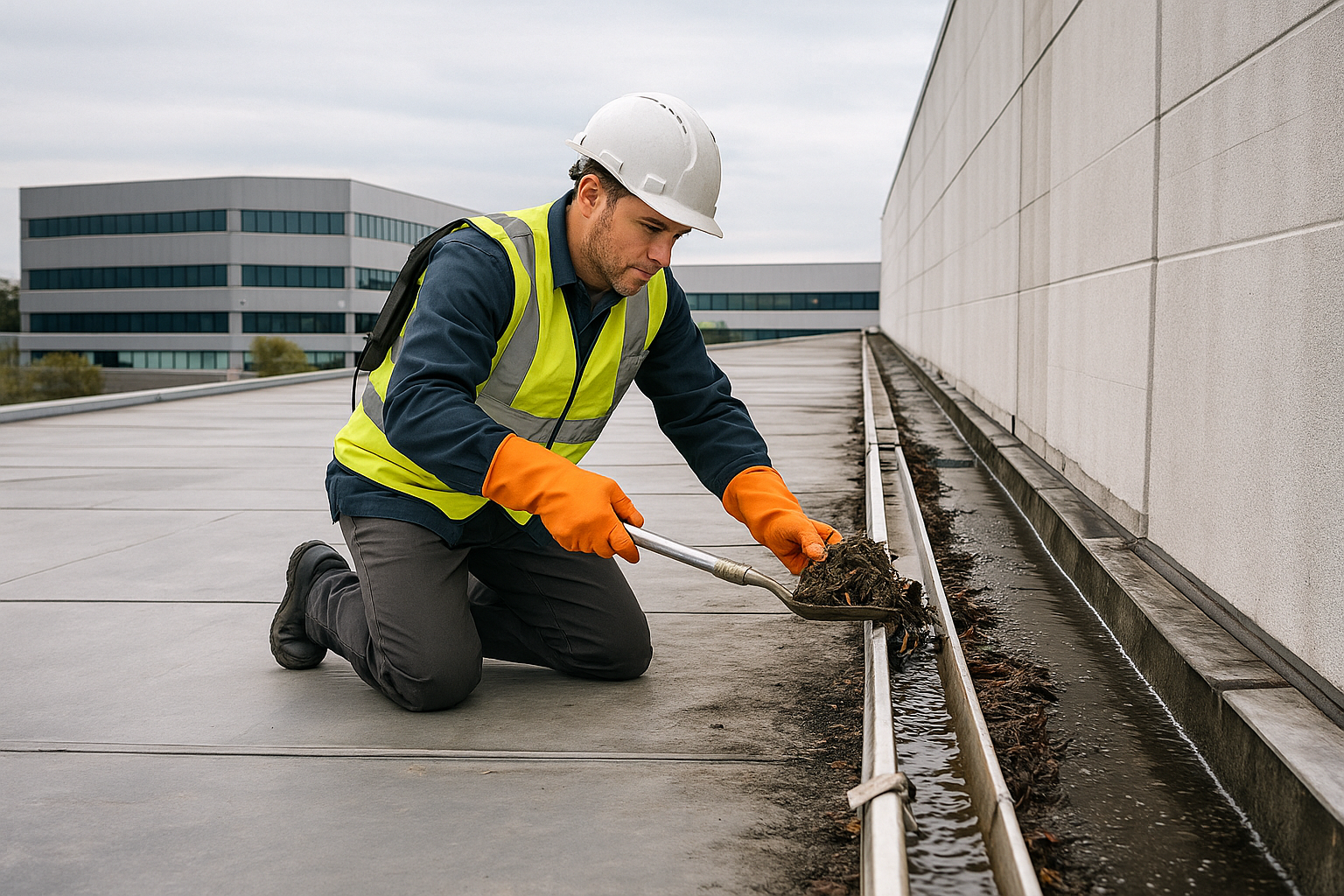
Clogged gutters can destroy a commercial roof. Learn how routine cleaning protects your investment, prevents costly water damage, and extends the lifespan of your roofing system.
Commercial gutter cleaning is the targeted removal of leaves, sediment, and other obstructions from gutters, downspouts, scuppers, and internal drains so water follows its intended path and building systems stay protected. When drains clog, water diverts from safe outlets, creating ponding that accelerates membrane wear and leads to leaks through roof decks and interior finishes. Below, we explain how clogged commercial gutters create structural and financial risk, the clear benefits of professional cleaning, how common drainage systems operate, and practical maintenance plans to prevent damage. Property managers and building owners will find inspection triggers, regional considerations for Texas and Oklahoma, cost-versus-repair trade-offs, and guidance on when to call a professional. For a quick assessment, request a free estimate from TriVAN Roofing to evaluate your roof drainage and set up preventive maintenance. The sections that follow cover hidden dangers, measurable benefits, system mechanics, TriVAN’s commercial gutter cleaning process, and frequently asked questions from building owners.
What Are the Hidden Dangers of Neglected Commercial Gutters?
Untended commercial gutters create multiple failure modes that weaken roofs, facades, and foundations by concentrating water where structures are most vulnerable. Debris and organic buildup block flow, force water back into seams and penetrations, and add loads that roofing systems weren’t designed to carry. The result is faster membrane deterioration, compromised insulation, interior leaks, and rising remediation costs, and in some cases, insurance complications. The list below highlights the primary hazards owners should watch for so maintenance stays preventive, not emergency.
-
Water intrusion into roof assemblies and interiors that causes rot, delamination, and ruined finishes.
-
Ponding water that increases structural load and accelerates membrane breakdown on flat and low-slope roofs.
-
Organic buildup that encourages mold, mildew, and pests, raising health, remediation, and liability costs.
These hidden problems cascade from the roof down into tenant spaces. Knowing the specifics makes clear why scheduled cleaning is a cost-effective preventive step, not an optional expense.
How Does Water Damage Affect Commercial Roofs and Building Structures?
Water damage starts where flow is blocked and then follows the path of least resistance into roof decks, insulation, and interior finishes. Blocked gutters or internal drains let water work under flashings, enter at seams or penetrations, and saturate insulation, reducing thermal performance and increasing energy use. Repeated wet/dry cycles eventually pull membranes apart, rot substrates, and cause fasteners and adhesives to fail, leading to localized repairs or full-system replacement. Visible signs like ceiling stains, softened roof edges, or new interior leaks point to active water intrusion that usually began with a drainage failure and requires prompt inspection.
How Do Clogged Gutters Shorten Commercial Roof Lifespan?
Clogged gutters and restricted drains allow standing water to expose roofing materials to prolonged moisture, chemical changes, and faster UV breakdown. On flat systems and metal roofs common across Texas and Oklahoma, ponding leads to membrane stretching, seam failures, and corrosion of metal components, all of which shorten service life. Many warranties require documented maintenance; failing to keep drains clear can void coverage and shift replacement costs to the owner. Regular cleaning reduces cyclic stress and prevents small issues from compounding into major capital expenses.
What Are the Risks of Mold, Mildew, and Pest Infestations from Dirty Gutters?
Leaves, twigs, and sediment trapped in gutters create a damp environment ideal for mold, mildew, and insects that can migrate into building envelopes. Mold damages porous materials and can create indoor air-quality problems that need costly remediation and may affect occupant health. Standing water also attracts mosquitoes, birds, and rodents that worsen sanitation issues and accelerate blockages. Early removal of organic loads and routine drain checks limit biological growth and reduce the scale and cost of any required remediation.
How Does Neglected Gutter Maintenance Decrease Property Value and Curb Appeal?
Staining, overflowing gutters, and sagging roof edges signal deferred maintenance to tenants and appraisers, lowering perceived value and making leasing or sale harder. Water streaks on facades, damaged soffits, and landscape erosion suggest other systems may be neglected, often reducing offers and increasing time on market. Keeping gutters clean preserves appearance, prevents downstream damage that hurts appraisal values, and supports tenant retention by showing competent property stewardship.
What Are the Key Benefits of Professional Commercial Gutter Cleaning?
Professional commercial gutter cleaning restores drainage, lowers emergency repair risk, and produces measurable returns through longer roof life, preserved warranties, and improved occupant safety. Trained technicians clear obstructions, open downspouts and internal drains, inspect for early failure signs, and document findings, a combined service that reduces risk and supports long-term asset management. Below are the main benefits owners see when they choose professional, scheduled service over reactive fixes.
-
Cost avoidance: Regular cleaning stops small problems from becoming expensive water-damage repairs.
-
Prolonged roof life: Removing debris and ponding reduces material stress and delays replacement cycles.
-
Warranty protection: Documented maintenance helps maintain manufacturer warranty compliance.
-
Safety and liability reduction: Clearing gutters prevents overflow-related slip hazards and electrical exposure.
-
Improved curb appeal: Clean exteriors reflect professional management and help retain tenants.
Those benefits convert directly into lower lifecycle costs: routine maintenance is typically a small fraction of the cost of localized repairs or full roof replacement caused by unmanaged water damage.
Cost-benefit comparison (overview):
This comparison shows how focused maintenance lowers lifecycle costs and operational risk for commercial properties.
How Does Gutter Cleaning Protect Your Investment and Save Costs Long-Term?
Cleaning gutters protects capital by preventing small issues from becoming structural failures that need costly remediation or premature replacement. A routine service is inexpensive compared with repair or replacement because it preserves membranes, prevents interior water migration, and avoids finish repairs in tenant spaces. Insurance and warranty claims often depend on documented maintenance; professional cleaning creates a paper trail that strengthens coverage positions. In short, scheduled gutter cleaning stabilizes capital expenditure and supports predictable asset management.
How Does Regular Cleaning Extend Your Commercial Roof’s Life and Warranty?
Frequent cleaning limits exposure to standing water and organic acids that speed membrane and metal corrosion, extending material performance. Addressing both external gutters and internal drains helps keep manufacturer-recommended conditions, preserving warranty eligibility. Photographic inspection reports and documented visits provide evidence for claims and identify small repairs before they void warranty terms. Consistent maintenance effectively increases useful life and preserves protections that reduce owner risk.
How Does Gutter Maintenance Maintain Structural Integrity and Safety?
Routine cleaning prevents unexpected structural loads from heavy debris and trapped water, lowering the risk of sagging gutters, failed roof edges, and compromised flashings. Stopping overflow reduces slip hazards at entrances and keeps water away from electrical systems, cutting accident potential and regulatory exposure. Certified technicians also inspect fasteners, supports, and connection points to address safety-related issues. Together, these actions protect both the building and the people who use it.
How Can Clean Gutters Enhance Your Business Image and Curb Appeal?
A tidy roofline and gutters improve first impressions for tenants and customers and show attention to safety and operations. Clean gutters prevent staining and erosion that damage landscaping and facades, supporting tenant retention and occupancy. Before-and-after photos demonstrate immediate visual improvement, and ongoing care preserves marketability. Exterior maintenance is therefore an investment in reputation and revenue protection for commercial landlords.
How Do Commercial Gutter Systems Work and Why Is Their Maintenance Essential?
Commercial drainage systems move rainwater from the roof plane into controlled discharge paths using parts that each serve a specific role; when any component fails, the system loses capacity and water finds unintended routes into the building. Components include box gutters, internal drains, scuppers, downspouts, and strain screens, each has common failure modes that create specific problems when neglected. Understanding these elements helps prioritize inspections and choose the right maintenance to keep the system draining properly and prevent ponding or infiltration.
This component-level view clarifies how targeted cleaning and inspection prevent the failure modes that cause water damage and operational downtime.
What Are the Common Types of Commercial Roof Drainage Systems?
Commercial properties use several approaches: external gutters with downspouts, internal roof drains tied to leaders, box gutters built into parapets, and scuppers for overflow discharge. External systems are easier to access but face more weather exposure; internal drains need confined-space-aware maintenance and are critical for flat roofs. Regional weather in Texas and Oklahoma, including heavy storms and seasonal debris, influences system choice and cleaning frequency, making tailored maintenance plans essential to keep each system functioning.
How Does Proper Gutter Cleaning Prevent Ponding Water and Roof Damage?
Proper cleaning restores clear flow paths so water reaches drains before it accumulates into damaging ponds. Clearing debris and strain screens recovers design flow capacity, and removing sediment from sumps and leader lines prevents slow drains that cause progressive ponding. On flat roofs, even small increases in ponding depth multiply load and accelerate material breakdown; prompt maintenance that restores flow prevents both immediate stress and long-term deterioration. Regular cleaning combined with inspection reduces the chance that minor clogs become major standing-water events.
How Does TriVAN Roofing Deliver Expert Commercial Gutter Cleaning Services?
TriVAN Roofing combines commercial-roof-specific procedures with clear communication to protect assets and generate actionable recommendations. Serving flat and metal roofs across Texas and Oklahoma, we pair debris removal with drain testing and inspections to identify early failure modes. Our preventive approach protects warranties and extends roof life while documenting findings for owner records. We offer tailored maintenance plans and encourage property owners to request a free estimate so we can evaluate system condition and recommend an appropriate schedule.
-
Pre-service site review and safety setup to protect occupants and roof systems.
-
Debris removal from gutters, downspouts, scuppers, and internal drains using commercial-grade equipment.
-
Drain flow testing, minor leader-line clearing, and localized adjustments to restore designed flow.
-
Photographic inspection report with prioritized recommendations for repairs or monitoring.
Combining cleaning with diagnostic inspection delivers immediate drainage improvement and reduces long-term risk.
What Is TriVAN Roofing’s Professional Gutter Cleaning Process?
Our on-site process begins with a site safety assessment and perimeter protection to keep tenants and workers safe. Technicians remove large debris, flush drains and downspouts, and use cameras or probes when needed to confirm leader-line integrity; minor repairs or re-seating of strainers are performed as required. Every visit ends with a documented inspection report and photos showing before-and-after conditions and recommended next steps. This deliverable-based approach gives building managers clear, actionable records that support warranty and insurance needs.
How Do Comprehensive Roof Inspections Complement Gutter Maintenance?
A full roof inspection uncovers root causes of recurring drainage issues: inadequate slope, blocked scuppers, damaged flashings, or membrane deterioration, that cleaning alone can’t fix. Inspectors review penetrations, membrane condition, drain sumps, and downspout alignment to find problems that lead to clogging and ponding. Findings inform prioritized repairs and the cadence of follow-up maintenance, ensuring resources go to the interventions that reduce the most risk. Cleaning plus inspection creates a preventative feedback loop that minimizes repeat service calls and improves overall system performance.
What Tailored Maintenance Plans Does TriVAN Roofing Offer for Commercial Properties?
We offer tiered maintenance plans tailored to property type, surrounding vegetation, and storm exposure, from biannual inspections to quarterly or storm-response schedules for high-risk sites. Plans include a defined cleaning scope, inspection checklists, photographic reporting, and seasonal monitoring options after major storms. Managers can start with preventive plans without committing to full-service contracts until they see value. For exact pricing and a custom schedule, request a free estimate so we can match frequency to your building’s conditions and budget priorities.
What Are the Most Common Questions About Commercial Gutter Cleaning?
Building owners and managers often ask quick, practical questions about frequency, failure signs, DIY versus professional trade-offs, and local cost expectations. The short answers below reflect industry practice and regional considerations for Texas and Oklahoma to help decision-makers act quickly and confidently.
This quick guide emphasizes inspection-based scheduling and professional assessment for accurate cost estimates and risk reduction.
How Often Should Commercial Gutters Be Cleaned to Prevent Damage?
A practical rule is at least twice a year, usually spring and fall, but increase frequency with heavy tree cover, nearby construction, or seasonal storms common to Texas and Oklahoma. High-risk sites often use quarterly service or add storm-response visits after severe weather. Inspection-based scheduling, where the roof’s condition and debris load determine the next visit, balances cost and protection best. Track visible indicators and use inspections to build a custom maintenance cadence rather than rely on a fixed calendar.
What Are the Signs That Commercial Gutters Need Cleaning?
Look for overflowing gutters during rain, staining on facades or soffits, new interior leaks or ceiling stains, standing water on the roof, and increased pest activity near leaders. Functional signs include slow drainage, gurgling in drains, and water discharge near foundations that suggests leader or downspout blockage. When any of these appear, schedule an inspection and cleaning promptly to prevent minor issues from becoming major repairs.
Can Commercial Gutter Cleaning Be Done by Property Managers or Should It Be Professional?
Property managers can handle visual checks and light debris removal on single-story or easily accessed properties, but most commercial roofs, especially those with internal drains, multi-story access, or complex leader systems, require professional skills, special equipment, and safety controls. Professionals provide diagnostics and documentation that support warranty and insurance claims and can safely perform confined-space and rooftop work beyond typical on-site staff capabilities. For these reasons, and to secure documented evidence of maintenance, we recommend contracting professionals when roof complexity or access risks exceed internal resources. TriVAN Roofing offers free estimates to help you decide whether to manage in-house or schedule professional service.
What Is the Average Cost of Commercial Gutter Cleaning in Texas and Oklahoma?
Cost depends on roof area, system complexity (external gutters vs internal drains), vertical access, and service frequency; larger roofs with internal drainage and heavy vegetation cost more due to equipment and labor. Rather than relying on ranges, budget maintenance as a predictable line item that prevents much larger repair or replacement expenses. The most accurate pricing comes from a scoped, documented free estimate that reflects your property’s drainage layout and maintenance history.
TriVAN Roofing provides clear, documented services designed to inform owners, establish credibility, and generate leads through free estimates and straightforward communication.
We serve commercial properties across Texas and Oklahoma with expertise in flat and metal roofs, a preventive maintenance focus, and documented service deliverables to help owners manage risk and protect assets.
Conclusion
Regular commercial gutter cleaning is essential to protect your property, avoid costly repairs, and maintain safety. Professional maintenance ensures proper drainage, preserves warranties, and keeps your building looking its best. Don’t wait for visible failure; take proactive steps to safeguard your investment. Contact TriVAN Roofing for a free estimate and a tailored maintenance plan that fits your property’s needs.
Ready to Protect Your Facility?
Schedule your free commercial gutter inspection with TriVAN Roofing today and protect your property before problems arise.
Contact Us Today