
5 New Commercial Flat Roof Technologies for 2026
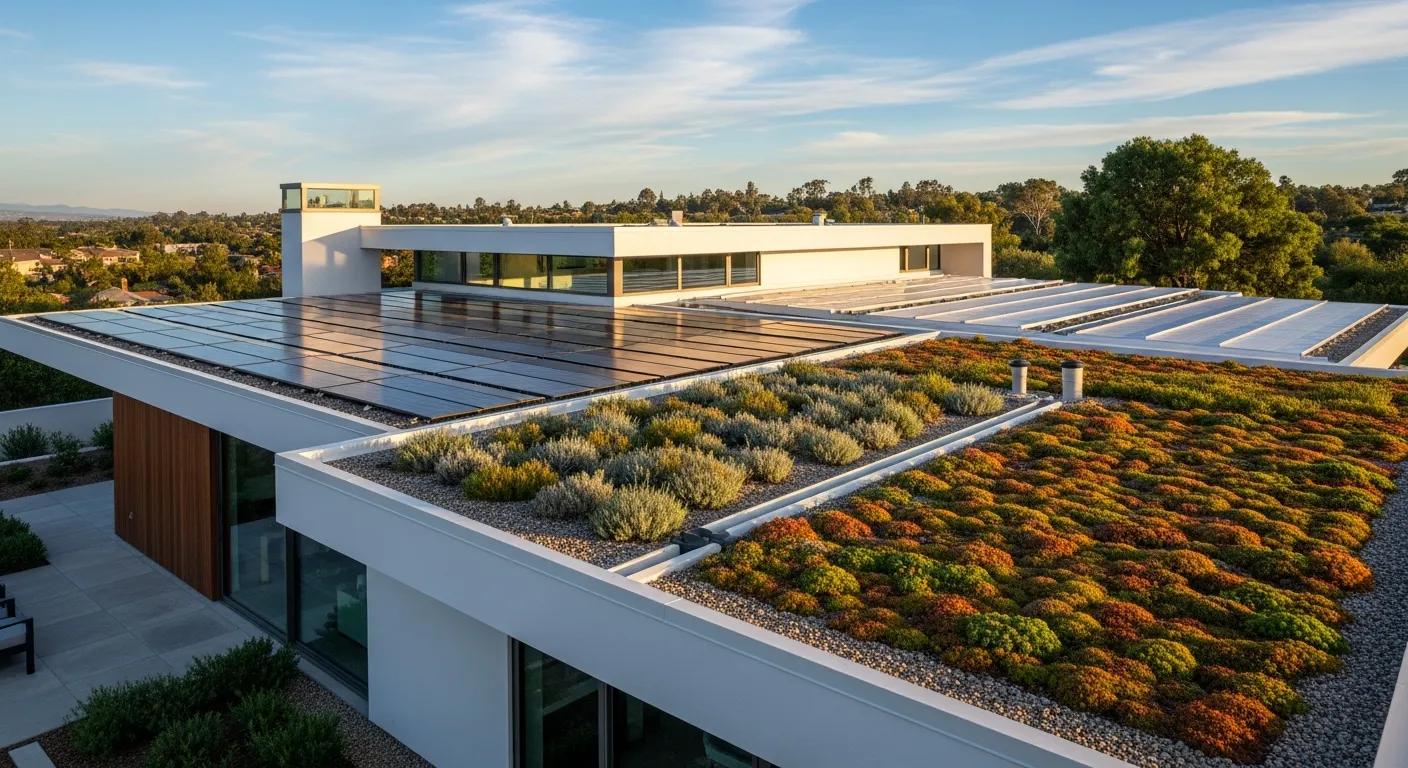
Discover five commercial roofing technologies transforming building operations in 2026. From rooftop solar and cool membranes to smart monitoring and green roofs, learn how property managers in Texas and Oklahoma are cutting costs and improving sustainability.
Commercial rooftop solar has become a straightforward financial decision for many building owners. With federal tax credits covering 30% of installation costs through 2032 and accelerated depreciation benefits, the payback period for a well-designed commercial system typically runs 5-8 years. For property managers evaluating solar, the key considerations are how the installation affects your existing roof warranty, whether your structure can handle the additional load, and whether to own the system outright or work through a Power Purchase Agreement (PPA).
Rooftop solar arrays for commercial buildings typically utilize ballasted or mechanically attached racking systems on flat roofs. Ballasted systems use weight to secure panels, minimizing roof penetrations, while mechanically attached systems bolt directly to the roof structure, offering greater wind uplift resistance. Leading commercial panels from manufacturers like SunPower Maxeon and JinkoSolar Tiger Neo, combined with robust mounting systems from IronRidge or Unirac, ensure high performance and durability. Bifacial panels are also gaining traction, capturing sunlight from both sides, especially effective on highly reflective cool roof surfaces.
Key Commercial Solar Considerations:
-
Cost & ROI: Commercial solar costs typically range from $1.50-$2.50 per watt installed, significantly lower than residential systems. With current incentives, ROI timelines are often 5-8 years.
-
System Size: Typical commercial systems range from 100kW to 1MW, tailored to the building's energy consumption.
-
Warranty Coordination: Most membrane manufacturers require involvement in solar installation planning to maintain roof warranties, emphasizing the need for integrated project management.
-
Financing: Beyond ownership, Power Purchase Agreements (PPAs) allow building owners to pay for electricity generated by a third-party-owned system, often with no upfront cost. PACE (Property Assessed Clean Energy) financing offers another attractive option for commercial energy improvements.
-
Structural Load: A critical assessment of the existing roof structure is necessary to ensure it can support the additional weight of solar arrays.
Beyond active generation, passive strategies like cool roof technology offer a complementary path to lower energy bills.
How Does Cool Roof Technology Improve Commercial Building Energy Efficiency and Comfort?
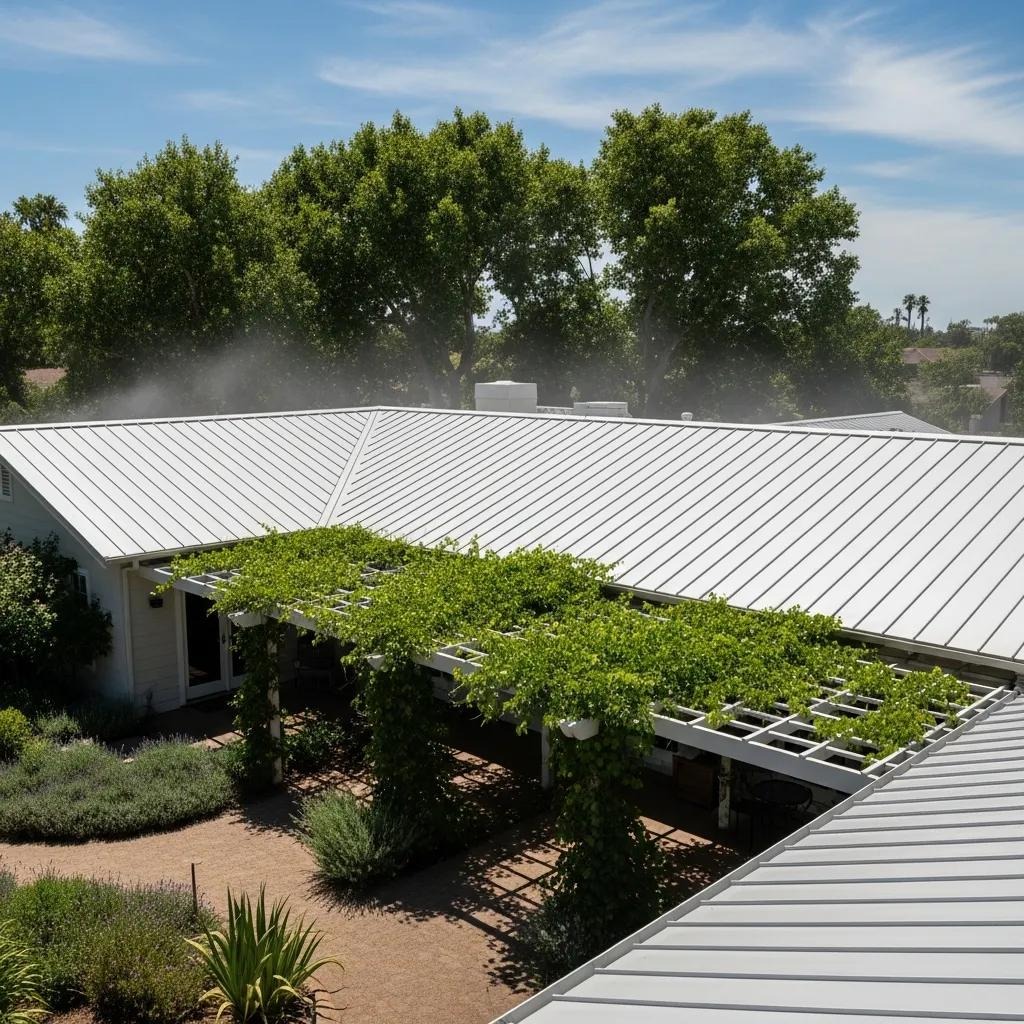
Cool roof technology improves energy efficiency by increasing solar reflectance and thermal emittance, reducing heat absorbed into the building envelope and lowering peak cooling loads. Mechanically, cool roofs reflect a greater fraction of incoming solar radiation and emit absorbed heat more effectively than conventional roofs, keeping interior temperatures and ceiling plenum temperatures lower and reducing HVAC runtime. Benefits include measurable cooling bill reductions (up to 10–30% in warm climates, with peak cooling demand reductions of 11-27% confirmed by EPA data), improved indoor comfort for occupants, and mitigation of urban heat island effects in dense neighborhoods. Cool roof choices vary by material and application method, coatings, light-colored membranes (TPO, PVC), and reflective metal finishes, so selection should match climate, roof type (flat vs. pitched), and durability expectations. Understanding the material differences helps facility managers decide whether cool roof retrofits or full membrane replacements provide the best lifecycle value for their specific building and climate.
For a 50,000 sq ft warehouse in Dallas running air conditioning from April through October, upgrading from a dark EPDM roof to a white TPO membrane can reduce annual cooling costs by $8,000-$15,000. The membrane itself may cost only marginally more than a conventional replacement, making cool roof technology one of the highest-ROI improvements available.
Research further emphasizes the critical role of these properties in achieving significant cooling benefits.
Solar Reflectance & Thermal Emittance for Cool Roofs
Research from Anand and colleagues (2021) found that boosting a roof's solar reflectance produced cooling gains exceeding 30 W/m² during summer months, while increasing thermal emittance from 0.5 to 0.9 added roughly another 10 W/m² of cooling capacity. Their analysis of Phoenix and Atlanta confirmed that reflectance matters more than emittance for most applications, though emittance becomes negligible above 0.7. **(Note: This research applies to high-performance Passive Daytime Radiative Cooling (PDRC) materials with solar reflectance of 0.96 and emissivity of 0.97-0.98.)**
What Types of Cool Roof Materials Are Available and How Do They Work?
Common cool roof materials include reflective acrylic or silicone coatings applied over existing membranes, light-colored single-ply membranes (TPO, PVC), and metal roofs with reflective finishes; each reduces heat gain through high solar reflectance or emissivity. Reflective coatings are frequently the most cost-effective retrofit for aged membranes and work by forming a bright, emissive surface layer, while TPO and PVC membranes provide built-in reflectivity with durable seams suited to flat roofs. Metal roofs can be finished with reflective paints or pre-coated panels to achieve both longevity and cooling benefits, particularly on steep slopes where runoff and drainage are key. Durability and maintenance differ: coatings may require reapplication every 10–20 years (silicone usually 15 years, elastomeric 10-20 years, acrylic 5-15 years), membranes last longer with seam maintenance, and metal roofs offer long lifespans with occasional repainting. Recognizing these trade-offs helps property managers match material life-cycle costs to expected energy savings.
What Are the Environmental and Cost-Saving Benefits of Cool Roofs for Commercial Buildings?
Cool roofs can reduce peak cooling energy use by 10–30% in warm climates, lowering HVAC runtimes and extending equipment life while cutting greenhouse gas emissions associated with electricity generation. Beyond direct building owner savings, cool roofs reduce rooftop and neighborhood temperatures, contributing to urban heat island mitigation and improved outdoor comfort in dense areas. Lifecycle cost savings depend on climate, energy prices, and roof condition; regions with high cooling loads see the fastest payback. For facility managers in Texas and Oklahoma, where summers are long and intense with over 200 cooling degree days in DFW, cool roofs can significantly reduce air conditioning costs. Colder climates might offset some benefits with slightly higher winter heating demand. Some commercial insurers offer premium reductions for cool roof installations, recognizing the reduced risk of heat-related membrane degradation and lower interior humidity levels that protect stored goods. Incentives and utility rebate programs sometimes apply to cool roof projects, improving economics. Cool roofs are also increasingly specified in municipal building codes, and Texas PACE programs can help finance these energy improvements. These environmental and cost impacts guide facility managers toward combining cool roof measures with insulation and ventilation upgrades for maximum effect.
Next, we look at Spray Polyurethane Foam (SPF) roofing, a seamless solution focused on durability and insulation.
What is Spray Polyurethane Foam (SPF) Roofing and Its Commercial Advantages?
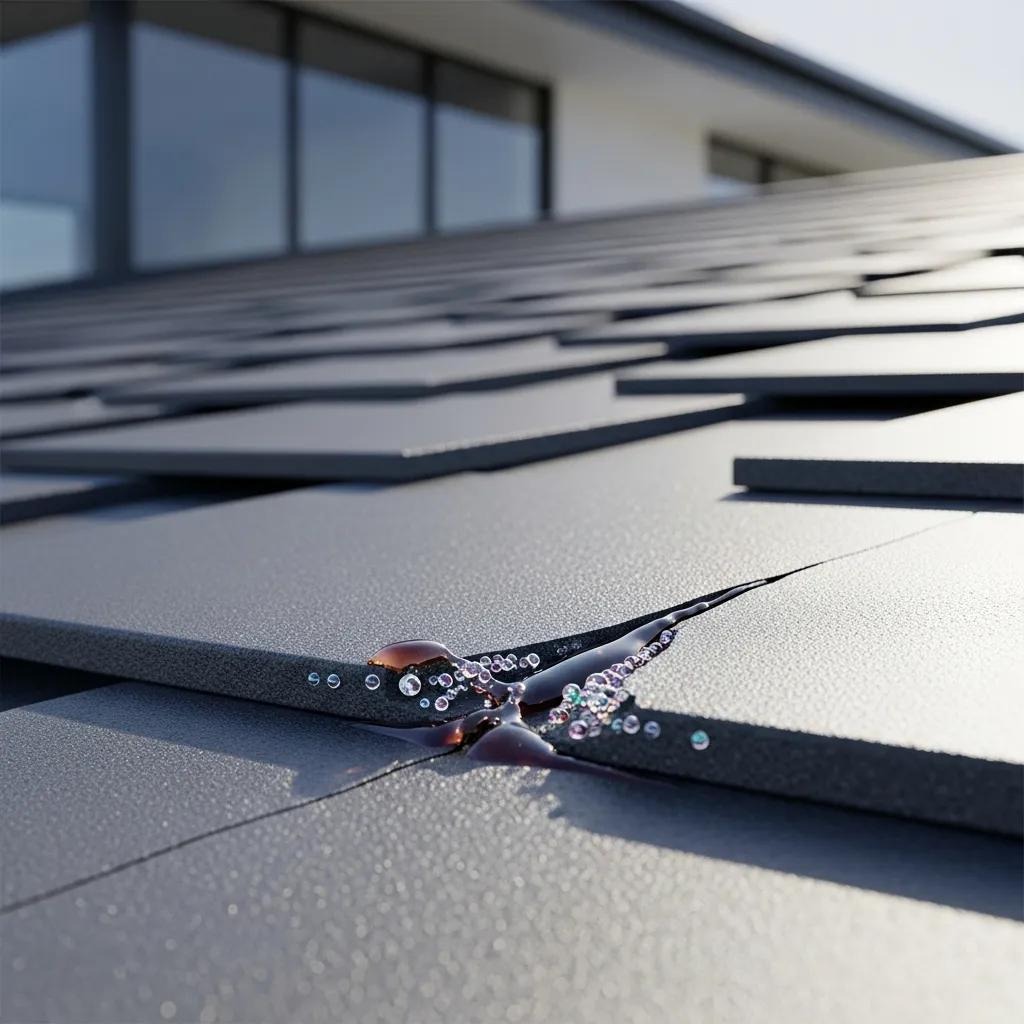
Spray polyurethane foam (SPF) roofing creates a seamless, self-flashing membrane that conforms to complex roof geometry without the joints and seams that typically fail first on commercial roofs. The closed-cell foam provides both waterproofing and insulation in a single application, with R-values of 6.0-7.0 per inch. For buildings with numerous rooftop penetrations, HVAC curbs, or irregular shapes, SPF eliminates the detail work that accounts for most commercial roof failures.
SPF systems require periodic recoating (typically every 10-15 years) to maintain UV protection, but the underlying foam can last 30+ years with proper maintenance. For facility managers dealing with older buildings that have accumulated multiple roof layers, SPF can often be applied directly over existing roofing, avoiding costly tear-off and disposal.
How Does SPF Roofing Provide Seamless Protection and Insulation?
SPF roofing is applied as a liquid, which then expands and cures into a solid, monolithic layer. This seamless application eliminates the need for traditional seams, which are common points of failure in other roofing systems. The foam adheres directly to the substrate, creating a strong bond that resists wind uplift and prevents lateral water migration. Its closed-cell structure provides exceptional thermal resistance, significantly reducing heat transfer through the roof deck and lowering energy consumption for heating and cooling. This dual function of waterproofing and insulation makes SPF a highly efficient and durable choice for commercial properties.
What Are the Maintenance and Durability Features of SPF Roofing?
The primary maintenance for an SPF roof involves periodic recoating of the elastomeric topcoat, typically every 10-15 years, to protect the foam from UV degradation and weathering. This recoating process is less disruptive and costly than a full roof replacement. With proper recoating, the underlying foam can last for decades, making SPF a long-term investment. SPF roofs are also highly resistant to ponding water and hail impact, though severe hail can cause damage that requires repair. Regular inspections are recommended to identify any areas needing repair or recoating, ensuring the system maintains its integrity and performance over its extended lifespan.
How Do Smart Roof Monitoring Systems Integrate Technology for Commercial Building Protection?
For facility managers responsible for protecting millions of dollars in inventory, equipment, or tenant improvements, smart roof monitoring provides something invaluable: advance warning. A moisture sensor that catches a developing leak three months before it becomes visible can mean the difference between a $2,000 repair and a $200,000 insurance claim. These systems place sensors in strategic roof areas to measure parameters like moisture, temperature, strain, and acoustic events, then transmit data via local gateways or cellular networks for real-time alerts and trend analysis. Building protection outcomes include earlier leak detection, storm-damage alerts, and predictive maintenance scheduling, which together reduce repair costs and minimize interior damage risk. Integration with building energy management and solar generation systems can also optimize energy flows by correlating roof temperature and panel performance data. Privacy, data ownership, and long-term sensor reliability are practical considerations that property managers should evaluate when adopting smart roof monitoring. Current commercial smart roofing systems typically integrate with Building Management Systems (BMS) rather than consumer smart building platforms.
What Sensors and IoT Devices Are Used in Smart Roof Monitoring Systems?
Smart roof monitoring systems commonly use moisture sensors, temperature probes, strain gauges, and specialized acoustic sensors for hail impact detection, along with visual inspection tools such as roof-mounted cameras or periodic drone surveys to capture condition data. Verified commercial systems include Sense Monitoring from Poland with S-One deflection and DSW water sensors, SIHGA Monitorix ROOF IOT from Austria for temperature, humidity, and water level, VILPE Sense from Finland for smart moisture monitoring, Roof Monitor from the US for live load monitoring, and dedicated hail detection systems like HailSens IoT (KISTERS), Hailios, and Sommer HDI. Moisture sensors detect capillary wicking or ponding that precedes leaks, while strain gauges reveal movement at seams or flashing that can lead to failures; acoustic sensors specifically identify hail or debris impact events. Typical deployment places sensors at vulnerable locations, valleys, penetrations, and drains, and aggregates their outputs through a local hub that sends alerts to facility managers or contractors. Data outputs include time-stamped alerts, trend charts for moisture ingress, and event logs that support warranty claims or insurance assessments. Understanding sensor roles and placement helps property managers choose systems that deliver the most actionable insights for their roof type.
How Do Smart Roofs Enable Predictive Maintenance and Energy Management?
Smart roofs enable predictive maintenance by combining continuous sensor data with threshold-based alerts and analytics that identify anomalies before they become failures; for example, rising ceiling plenum temperatures and localized moisture trends can trigger inspections that prevent mold and structural damage. Analytics platforms correlate sensor signals, moisture spikes with storm events or strain increases after wind gusts, to prioritize repairs and reduce unnecessary routine inspections, improving maintenance efficiency and lowering long-term costs. Integration with solar systems allows performance baselining where a drop in panel output combined with temperature anomalies can indicate soiling or partial shading, prompting cleaning or trimming. Predictive workflows: detect → alert → inspect → repair, shorten response times and translate into measurable savings in repair costs and reduced interior damage risk.
Commercial roof monitoring systems typically cost $0.25-$0.75 per square foot for initial installation, with annual monitoring fees of $0.05-$0.15 per square foot. For a 100,000 sq ft facility, that's $25,000-$75,000 upfront and $5,000-$15,000 annually. Compare that to the average commercial water damage claim of $88,000 (per IBHS data), and the math often works in favor of monitoring, particularly for buildings with high-value contents or business interruption exposure. In North Texas and Oklahoma, where severe thunderstorms and hail events are common from March through June, acoustic hail sensors provide documentation that can accelerate insurance claims processing. When a sensor records the exact time, duration, and intensity of a hail event, there's no dispute about whether damage occurred during a covered storm.
What Is Green Roof Installation and Its Impact on Commercial Building Sustainability?
Green roofs are vegetated roof systems that layer waterproofing, root barriers, drainage, substrate, and plants to create living roofs that provide insulation, stormwater retention, and habitat in urban settings. Designed as either extensive (lighter, low-maintenance plantings) or intensive (deeper soils, diverse plantings, sometimes accessible), green roofs insulate buildings by adding thermal mass and reducing heat flow through the roof deck, lowering heating and cooling loads seasonally. They capture and slow stormwater runoff, reducing volume and peak flow into municipal systems, and contribute to urban biodiversity by providing green corridors and pollinator habitat. Installation requires structural assessment for load-bearing capacity, robust waterproofing, and properly engineered drainage to avoid water infiltration; these considerations shape feasibility and project cost.
How Are Green Roofs Designed and Installed for Maximum Ecological Benefits?
Green roof design centers on a clear stack: waterproof membrane, root barrier, drainage layer, filter fabric, lightweight engineered substrate, and selected vegetation, each performing distinct roles to protect the building and support plant health. Plant selection favors drought-tolerant, shallow-rooted species like sedums for extensive systems and a broader palette for intensive roofs that support shrubs or even small trees where structure allows. Designing for biodiversity involves creating microhabitats, varying substrate depths, and including native species to support pollinators and birds, while engineered drainage and overflow provisions prevent ponding that can harm roofs or structure. Common pitfalls include insufficient roof reinforcement, inadequate waterproofing details, and underestimating maintenance for certain plant mixes; following best-practice layer specifications and selecting climate-appropriate plants maximizes ecological returns.
What Are the Insulation, Stormwater Management, and Aesthetic Advantages of Green Roofs for Commercial Properties?
A green roof works like a living blanket over your building. The soil and plants add insulation, the evaporation pulls heat away, and the shade keeps the underlying membrane from baking in the sun. Some facilities see their cooling bills drop 10-30% after installation. Stormwater retention metrics vary by design, but extensive green roofs often retain 50–80% of rainfall events in place, reducing peak runoff and relieving municipal drainage systems during storms. Aesthetically, green roofs enhance building aesthetics and can increase property value by creating usable green space or visually appealing rooftop landscapes, which appeals to tenants seeking sustainability features or amenity spaces. Maintenance needs, periodic irrigation, plant management, and drain inspections, are ongoing but often offset by reduced roof membrane exposure to UV and thermal cycling, translating into longer membrane life and combined environmental benefits.
For commercial buildings seeking LEED certification, green roofs can contribute points across multiple categories: Sustainable Sites, Water Efficiency, and Heat Island Reduction. A well-designed green roof can provide 2-4 LEED points, which for buildings on the margin between certification levels can be the deciding factor. Municipal stormwater fees are increasingly tied to impervious surface area. In cities like Houston and Austin, green roofs can reduce these fees by 25-50% depending on coverage and retention capacity. For a large commercial building, this can translate to $5,000-$20,000 in annual fee reductions. Green roofs in Texas require careful plant selection for the extreme summer heat. Native sedums and buffalo grass perform better than species from cooler climates. Irrigation systems are typically required, adding to installation and operating costs. The most successful Texas green roof installations are on buildings where the owner values the amenity space or sustainability credentials enough to justify the additional maintenance investment.
2024-2025 Developments in Green Roofs
Recent developments in green roof technology and policy include Denver's mandate for green roofs on buildings over 25,000 sq ft, and New York City's expanded Green Roof Tax Abatement Program in 2025, offering a $5.23/sq ft credit. A significant emerging trend is Bio-solar green roofs, which combine vegetation with integrated PV panels. The plants cool the solar panels, improving their efficiency by 10-15%, while the panels provide partial shade for the plants, creating a synergistic system.
Emerging Roofing Technologies to Watch in 2024-2026
Beyond the established innovations, several cutting-edge roofing technologies are poised to make a significant impact in the coming years, offering even greater potential for energy efficiency, resilience, and sustainability for commercial properties.
Passive Daytime Radiative Cooling (PDRC)
Passive Daytime Radiative Cooling (PDRC) materials represent a breakthrough in thermal management, capable of achieving sub-ambient temperatures even under direct sunlight. These advanced materials boast exceptionally high solar reflectance (up to 0.96) and thermal emittance, allowing them to reflect nearly all incoming solar radiation and efficiently radiate absorbed heat away from the building. Testing has shown PDRC materials can reduce daytime roof temperatures by as much as 24.8°C (43.4%), offering unparalleled cooling benefits without consuming any energy. For warehouse and distribution facilities with limited HVAC capacity, PDRC coatings offer cooling benefits without electrical load. Early adopters include cold chain logistics companies looking to reduce refrigeration costs and data centers seeking to supplement mechanical cooling.
Blue-Green Roofs
Blue-Green Roofs are hybrid systems that combine the ecological benefits of traditional green roofs with enhanced stormwater management capabilities. These innovative designs integrate vegetated surfaces with underlying water detention and storage layers, allowing them to capture, retain, and slowly release significantly larger volumes of rainwater. This not only reduces peak stormwater runoff and alleviates pressure on municipal drainage systems but also provides additional evaporative cooling and supports a wider range of plant species by ensuring consistent moisture availability. Several Texas municipalities now require stormwater detention for new commercial construction. Blue-green roofs can satisfy these requirements while providing the other benefits of vegetated roofing, potentially eliminating the need for underground detention tanks that consume valuable site area.
Perovskite-Silicon Tandem Solar Cells
Perovskite-Silicon Tandem Solar Cells are an exciting development in Building-Integrated Photovoltaics (BIPV) that promise to revolutionize solar energy generation. By stacking a perovskite solar cell on top of a traditional silicon cell, these tandem structures can capture a broader spectrum of sunlight, leading to significantly higher efficiencies—projected to exceed 30%. This technology is expected to drive 20-30% cost reductions by 2027, making next-generation solar arrays and other BIPV applications more powerful and affordable. When tandem cell technology reaches commercial scale production, the improved efficiency will mean more power generation per square foot of roof space, a significant advantage for buildings with limited roof area relative to their energy consumption.
For property managers and facility directors evaluating these technologies, the decision framework differs from residential: What's the total cost of ownership over the expected hold period? How does each option affect operating expenses, tenant satisfaction, and building value? What's the risk profile for your specific contents and operations?
In Texas and Oklahoma's commercial roofing market, we're seeing the strongest adoption of cool roof membranes (driven by obvious energy savings) and smart monitoring systems (driven by hail exposure and insurance considerations). Solar installations are accelerating as incentives and financing options improve. Green roofs remain a niche application, typically justified by amenity value or sustainability requirements rather than pure ROI.
The most sophisticated building owners are combining technologies: a white TPO membrane with embedded moisture sensors, or a solar array installed over a cool roof membrane. These integrated approaches require careful coordination between roofing contractors and specialty installers, but deliver compounding benefits that justify the additional planning effort.
Conclusion
Embracing innovative roofing technologies can significantly reduce operating costs while enhancing energy efficiency and sustainability for commercial properties. From solar arrays to cool roofs and smart monitoring systems, each solution offers unique benefits that align with modern facility management needs. By exploring these advancements, property managers can make informed decisions that not only protect their investments but also contribute to a greener future. Discover our comprehensive resources to help you implement these technologies effectively today.
Ready to reduce operating costs with advanced roofing technology?
Contact TriVAN Roofing for a free commercial roof assessment. Our experts will evaluate your building's potential for solar integration, cool roof retrofits, smart monitoring systems, and other cost-saving technologies tailored to Texas and Oklahoma climates. Discover which innovations offer the best ROI for your property. Schedule your complimentary technology assessment today.
Contact Us Today