Commercial Flat Roof Replacement in Texas: A Complete Guide for Building Owners and Facility Managers
| By TriVAN Roofing | 12 min read
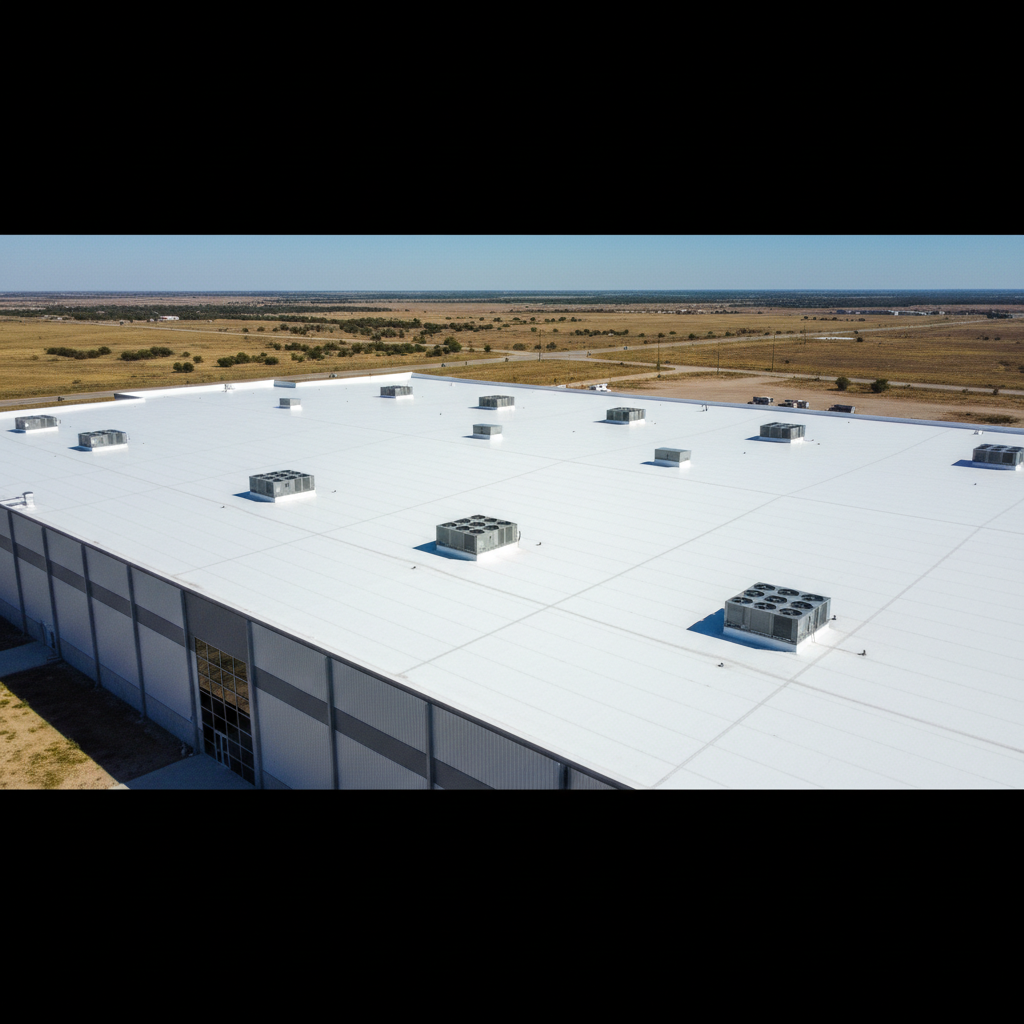
Replacing a commercial flat roof in Texas? This guide covers the repair vs. replace decision, system options (TPO, PVC), costs, and how to choose a contractor for TX/OK's extreme weather. Get a 20-year plan for your capital investment.
Categories: Roofing Materials
For a building owner in Frisco or a facility manager in Oklahoma City, a commercial flat roof replacement is not just another line item on a capital budget. It is a 15 to 25-year investment in the single most critical asset protecting your entire operation. The decision is made more consequential by our unique regional climate. The guidance that works for a building in a moderate climate simply does not apply in Texas and Oklahoma. Our combination of extreme summer heat, one of the highest frequencies of severe hail in the country, and wide daily temperature cycling creates a brutal performance environment. A poorly specified or installed roof will fail here much faster than it would elsewhere.
This reality means that the choices you make—from the membrane type to the attachment method to the contractor you hire—carry more weight. This guide is designed specifically for facility managers and building owners in Texas and Oklahoma who are navigating this process. We will walk through the decision framework, system options, realistic timelines, and budgeting considerations you need to make a sound, long-term decision for your facility.
The Core Decision: Repair, Restore, or Replace?
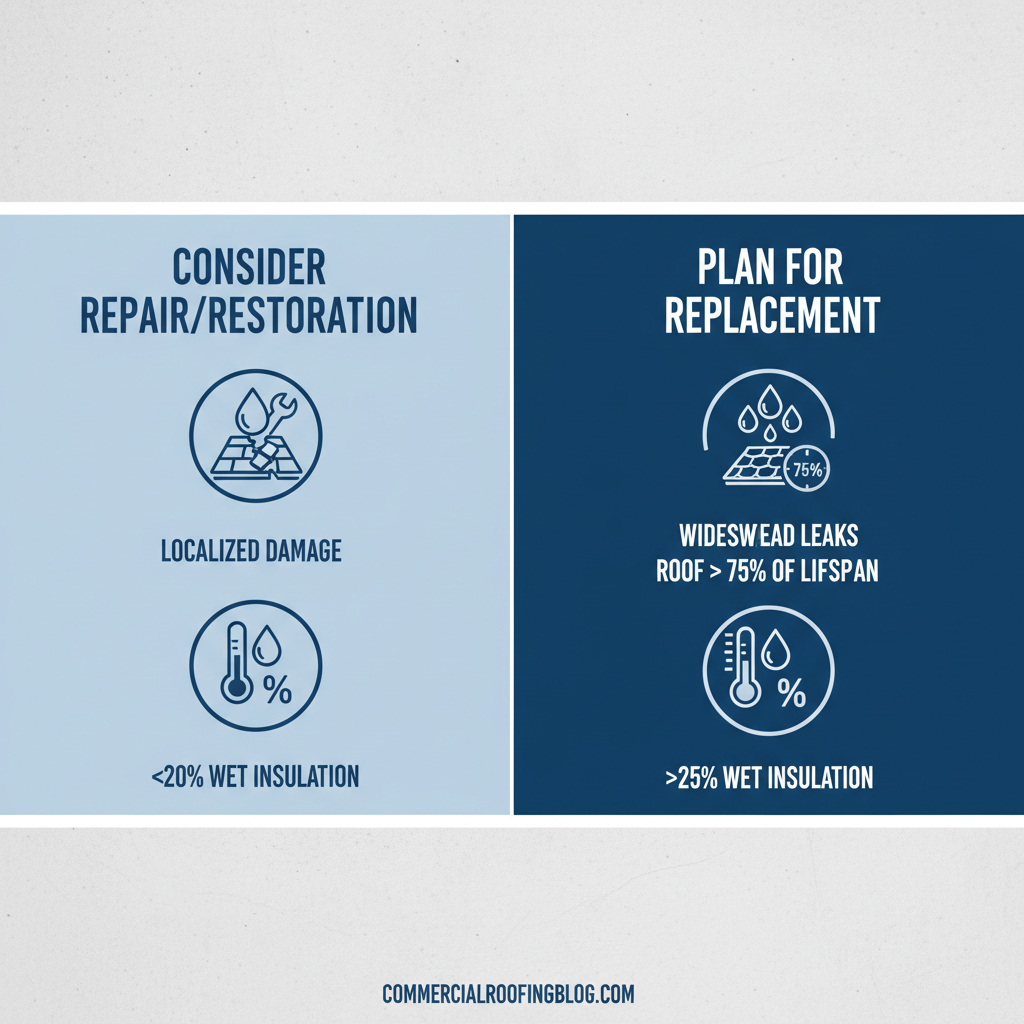
Before you start researching materials or soliciting bids, the first question to answer is whether a full replacement is truly necessary. Many roofs with localized issues can have their lives extended with professional repairs or restoration, saving significant capital. The decision between repairing, restoring, or replacing your roof is the most important one you will make. The answer determines the entire course of your project, budget, and operational planning for the coming year. Generally, the decision hinges on four key factors.
1. Roof Age vs. Expected Lifespan
Every roofing system has an expected service life. A 15-year TPO roof that is 18 years old and failing is a clear replacement candidate. A 12-year-old TPO roof with seam failures, however, presents a more complex decision. Is the failure due to a localized installation error or a sign of systemic breakdown? A professional assessment is needed to distinguish between premature failure that might be repaired and a roof that has simply reached the end of its functional life.
2. Extent of Wet Insulation
This is often the most critical factor. Once water penetrates the membrane and saturates the underlying insulation, the roof's thermal performance is compromised, and the risk of deck corrosion and mold growth increases. A roofing professional can use non-destructive thermal imaging and confirm findings with core sampling to determine the percentage of saturated insulation. While there is no universal rule, many consultants agree that if 25% or more of the roof area has wet insulation, a full replacement is almost always the most fiscally responsible path. Tearing out and replacing small, scattered wet areas is often not practical or cost-effective.
3. Repair Cost vs. Replacement Cost
Consider the "25% rule" as a financial guideline. If the estimated cost of repairs on a roof that is past 60% of its expected life exceeds 25% of the total cost of a new roof, replacement becomes the more logical investment. Spending a large sum to patch a roof that will likely need replacement in a few years is often a poor use of capital. A full replacement comes with a new manufacturer warranty and resets the clock on your roof's service life.
4. Operational Constraints
Sometimes, the "when" dictates the "what." A school that can only perform major construction during the summer break has a different set of options than a 24/7 manufacturing facility. If a roof is failing but the building cannot be taken out of service for a full tear-off, a temporary restoration or phased replacement might be necessary. Understanding your building's operational schedule is a key part of the initial planning conversation.
Commercial Flat Roof System Options for Texas
Once you have confirmed that replacement is the right path, the next step is selecting the right system. For building owners in Texas and Oklahoma, the choice primarily comes down to a few key systems, each with a distinct profile of cost, longevity, and performance characteristics.
TPO (Thermoplastic Olefin) Single-Ply
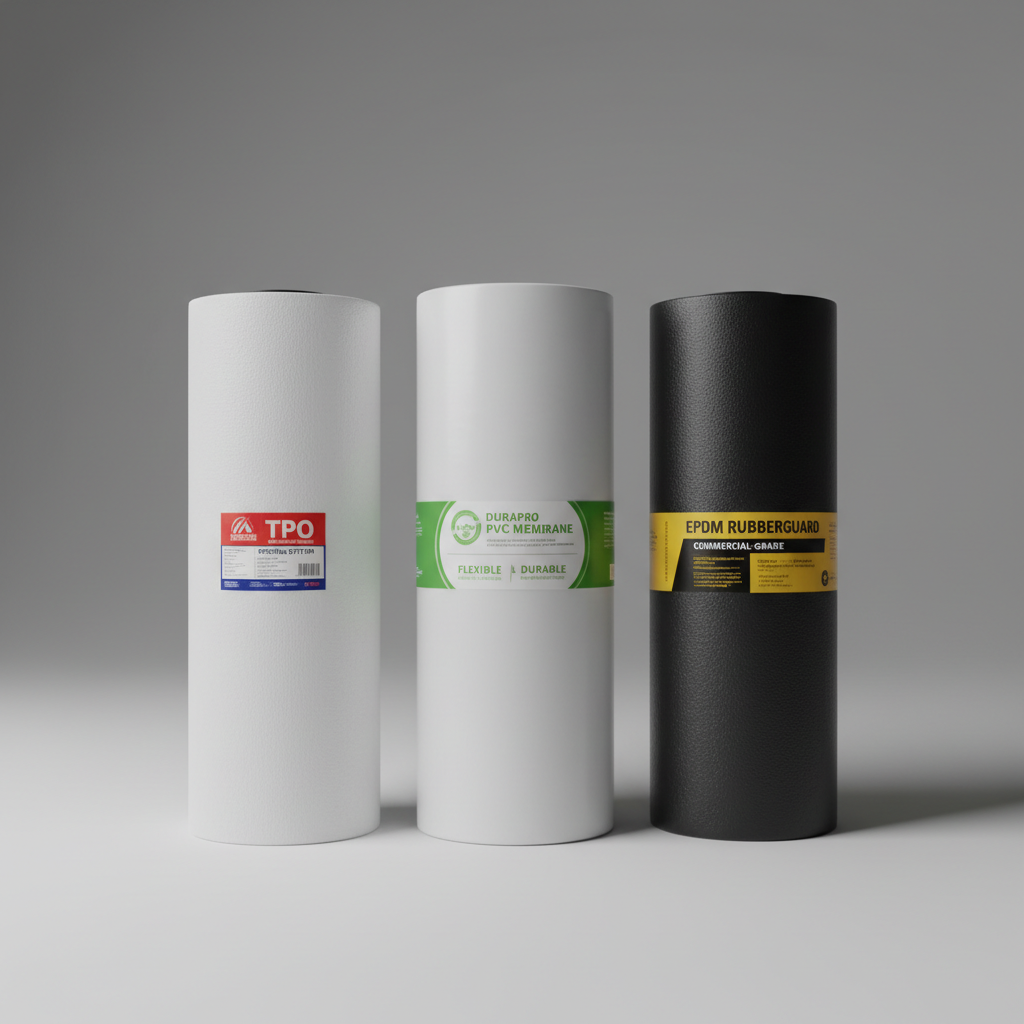
TPO is the most widely specified commercial roofing membrane in Texas, and for good reason. Its white, reflective surface is highly effective at reducing a building's cooling load during brutal Texas summers. It offers good resistance to punctures and tears and can be installed either fully adhered or mechanically attached. As the market leader, there is a wide range of manufacturers and certified installers. The rise of TPO and PVC membranes has shifted the market away from older asphalt-based systems for many applications.
- Installed Cost: $8.50 - $11.50 per square foot
- Expected Lifespan: 15 - 20 years
- Best For: Most standard commercial, warehouse, and office buildings without significant chemical or grease exposure.
PVC (Polyvinyl Chloride) Single-Ply
PVC is TPO's tougher cousin. While it also features a reflective white surface, its key advantage is superior chemical resistance. This makes PVC the mandatory specification for facilities like restaurants (animal fats), food processing plants, and manufacturing buildings where chemical exhaust is present. TPO can break down when exposed to these substances. PVC is more expensive than TPO, but in the right application, it is the only choice for long-term performance.
- Installed Cost: $10.00 - $13.50 per square foot
- Expected Lifespan: 20 - 25 years
- Best For: Restaurants, food processing, manufacturing with chemical exposure, and buildings requiring the highest durability.
EPDM (Ethylene Propylene Diene Monomer) Single-Ply
EPDM, a synthetic rubber membrane, has the longest real-world performance track record of any single-ply system. It is extremely durable and flexible. However, its standard black color is a significant disadvantage in Texas, as it absorbs heat and increases cooling costs. While reflective white EPDM options exist, they are often more expensive and less common than TPO or PVC, which are inherently white. It remains a viable option but is specified less frequently in our region compared to cooler climates.
- Installed Cost: $8.00 - $11.00 per square foot
- Expected Lifespan: 20 - 30 years
- Best For: Colder climates or applications where heat absorption is not a primary concern.
Modified Bitumen
Modified Bitumen is an evolution of traditional asphalt built-up roofing (BUR). It consists of multiple layers of asphalt-impregnated sheets, often with a granular surface. It has a proven history of performance in Texas and offers excellent durability. However, the installation process is more labor-intensive, and it is steadily being replaced by the speed, energy efficiency, and clean installation of single-ply systems in many new projects.
- Installed Cost: $7.00 - $10.00 per square foot
- Expected Lifespan: 15 - 20 years
- Best For: Buildings with heavy foot traffic or where a multi-ply system is preferred.
Standing Seam Metal
While often associated with sloped roofs, standing seam metal is a premium option for some commercial flat roof applications, especially on low-slope buildings. It offers the longest lifespan of any system and exceptional durability against hail and wind. However, this performance comes at a significant cost premium, often 80-120% more than a single-ply system. It is a lifetime roof, but its cost makes it a niche choice for most commercial facilities.
- Installed Cost: $15.00 - $25.00 per square foot
- Expected Lifespan: 30 - 50+ years
- Best For: High-profile architectural buildings or owners prioritizing maximum lifespan over initial cost.
Understanding the Commercial Roof Replacement Timeline
One of the most common mistakes facility managers make is underestimating the time required for a planned replacement project. It is not a quick process. From the day you decide to act until the day the crew arrives on-site can take several months. A well-managed project follows a clear sequence with realistic timeframes for each stage.
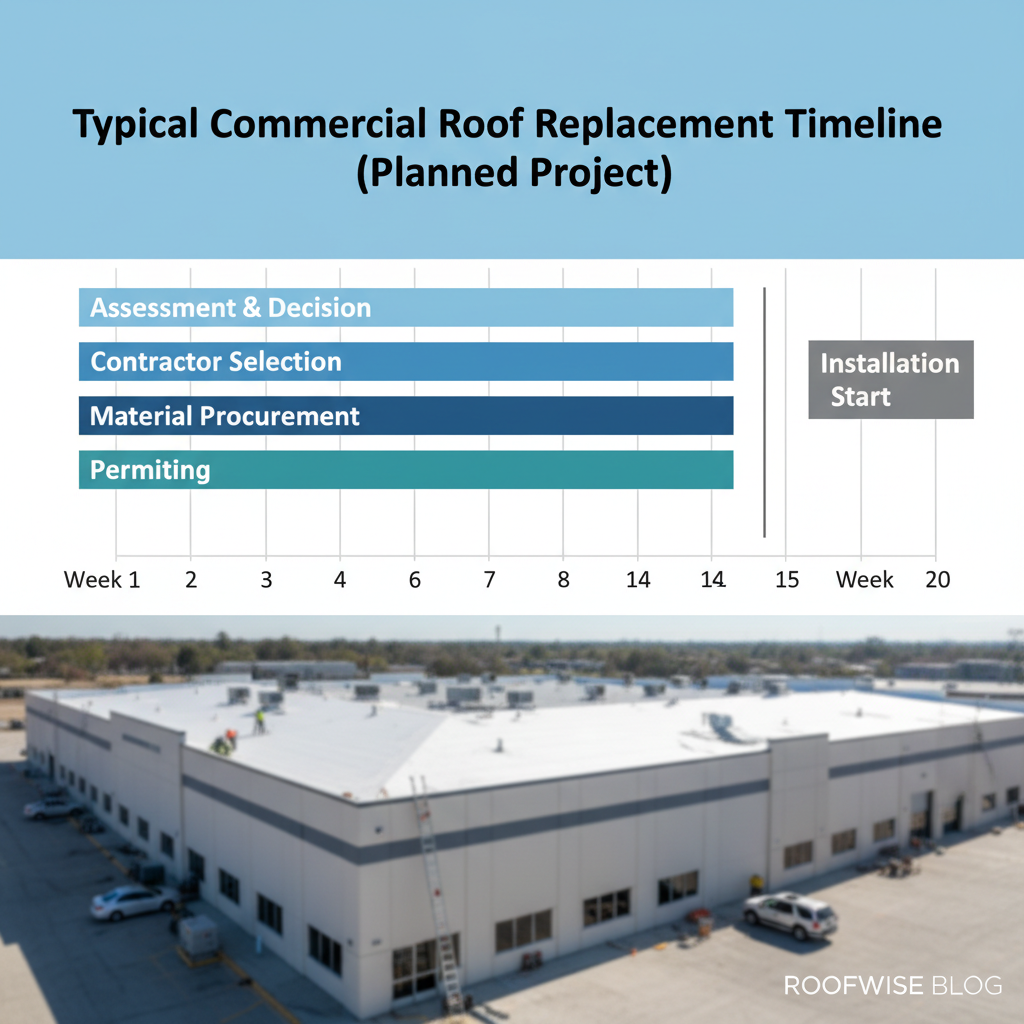
- Professional Assessment & Decision (1-2 weeks): An initial inspection, thermal scan, core sampling, and delivery of a detailed report with recommendations.
- Contractor Selection (4-6 weeks): This critical phase includes soliciting bids, holding pre-bid meetings, evaluating detailed proposals, verifying insurance and certifications, checking references, negotiating, and finally awarding a contract. Rushing this step is a recipe for problems.
- Material Procurement (4-8 weeks): Once a contract is signed, the contractor orders the specified membrane, insulation, and other components from the manufacturer. Lead times can vary significantly based on the time of year and specific materials.
- Permitting (2-4 weeks): Most jurisdictions in Texas and Oklahoma can issue a permit within a few weeks. However, some larger municipalities or projects requiring extensive energy compliance reviews can take 6-8 weeks.
When you add it all up, the reality is clear. Total timeline from decision to installation start: 10 to 20 weeks for a planned project, which means facility managers who want summer installation need to be in contractor conversations by January or February at the latest. An emergency replacement can compress this schedule, but it always comes with higher costs, fewer contractor choices, and limited material options.
Texas-Specific Factors That Drive Performance
Specifying a roof in DFW or OKC is not the same as specifying one in a milder climate. The system must be engineered to handle our specific environmental stresses. Ignoring these factors during the design and specification phase leads to premature failure.
Extreme Summer Heat and Solar Load
The Dallas-Fort Worth area averages 30-40 days per year over 100°F. This sustained, intense solar radiation punishes roofing materials. This is why cool, reflective white membranes like TPO and PVC are the standard for our region. They can reduce a roof's surface temperature by up to 50-60°F compared to a black roof, which lowers a building's cooling costs and extends the life of the membrane by reducing thermal stress.
Hail Impact Resistance
Texas is the hail capital of the United States, averaging an incredible 902 major hail events in 2025 alone. A standard roofing system may not be enough. For critical facilities, specifying an enhanced system is a wise investment. This can include using a thicker 80-mil membrane instead of the standard 60-mil, adding a high-density fiberglass-reinforced cover board beneath the membrane for extra support, or selecting a system with a specific FM Global VSH (Very Severe Hail) rating.
Thermal Cycling Stress
It is not just the heat; it is the swing. A roof surface can be 160°F on a summer afternoon and cool to 90°F overnight. In winter, it can go from a freezing 30°F to a sunny 65°F in hours. This constant expansion and contraction puts immense stress on seams and attachment points. A quality installation, using the correct number and pattern of fasteners, is critical to resist this fatigue over two decades.
Severe Wind Uplift
Texas and Oklahoma are home to severe convective storms that produce intense wind gusts. Every commercial roof replacement must be designed to meet the specific wind uplift requirements of the building code, calculated under ASCE 7-22. This calculation considers the building's height, location (corner, edge, or field of the roof), and surrounding terrain to determine the necessary attachment pattern to prevent a peel-off during a major storm.
Choosing the Right Contractor: A Summary
The best roofing system in the world will fail if installed improperly. The contractor you choose is arguably more important than the material you select. While a full guide to vetting a commercial roofing contractor is essential reading, the summary criteria are clear and non-negotiable.
- Manufacturer Certifications: Look for elite-level status, which is earned, not bought. As a Duro-Last Elite Contractor and GAF Master Elite Certified firm, TriVAN is in the top 2-3% of all roofing contractors nationwide. Always verify these certifications directly with the manufacturer.
- Verifiable Insurance: Ask for the certificate of insurance and call the carrier to confirm the policy is active and provides adequate coverage for a project of your size.
- Safety Record: Request the contractor's Experience Modification Rate (EMR). A rate below 1.0 indicates a safety record better than the industry average.
- Local, Comparable References: A qualified contractor should be able to provide you with a list of recent, local projects of a similar size and scope to your own.
- Public Entity Procurement: For schools, cities, and county governments, a contractor who is an approved vendor through TIPS cooperative purchasing contracts can satisfy procurement requirements and dramatically streamline the bidding process.
Capital Planning and Budgeting for a 2026 Roof Replacement
A roof replacement is a major capital expenditure that requires careful budgeting. The price per square foot is only the beginning. For a detailed breakdown, our comprehensive commercial roofing cost guide is the best resource, but a top-level budget should always include:
- Base Installation Cost: The core price for materials and labor.
- Tear-Off and Disposal: The cost to remove and legally dispose of the old roofing system.
- Deck Repair Contingency: You never know the true condition of the underlying structural deck until the old roof is removed. It is wise to budget a contingency of 20-30% of the base cost for potential deck repairs.
- Permitting and Engineering Fees: Costs associated with municipal permits and any required third-party engineering.
- Occupied Building Premium: If the project requires special scheduling or accommodations to work around ongoing operations, expect a cost premium.
A critical note on 2026 planning: Due to ongoing supply chain issues and tariffs, material costs have seen significant volatility. Current 2026 market conditions show single-ply membrane costs are 12-18% higher and metal roofing is up to 60% higher than pre-2024 pricing. Any budget developed using old data will be inaccurate. It is essential to get current pricing from a qualified contractor.
Ultimately, a commercial roof replacement is not just about stopping leaks. It is about protecting your assets, managing energy costs, and ensuring operational continuity for decades to come. By understanding the unique challenges of our Texas and Oklahoma climate and following a structured process for evaluation and selection, you can transform this major expense into a smart, long-term investment. Viewing this project as one component of a proactive roof asset management program ensures your facility remains protected and your capital is deployed effectively for years to come.
Tags: flat roof replacement Texas, commercial flat roof replacement, flat roof replacement cost Texas, commercial roof replacement guide, how to replace commercial flat roof, flat roof replacement DFW, commercial roofing guide Texas, flat roof replacement cost per square foot Texas, commercial flat roof replacement cost 2026, flat roof replacement options Texas